
Measuring, the fundamental act of quantifying the world around us, forms the bedrock of countless scientific endeavors, engineering marvels, and even the simplest daily tasks. While a myriad of measurement systems exist, each with its own history and purpose, the metric system, and specifically the centimeter, has become a dominant force in global scientific and industrial communities. This article delves into the significance of the centimeter as a unit of length within the broader context of measurement, exploring its origins, applications, and the underlying principles that make it a cornerstone of precision.
The story of the centimeter is inextricably linked to the French Revolution and its ambitious project of creating a rational and universal system of measurement. Prior to this era, Europe was a patchwork of local and often inconsistent units, leading to considerable confusion and hindering trade and scientific collaboration. The revolutionaries sought to establish a system based on natural phenomena, a departure from arbitrary historical units.
The Birth of the Metre and its Divisors
The foundational unit of the metric system, the metre, was intended to represent one ten-millionth of the distance from the North Pole to the Equator along the meridian passing through Paris. This ambitious definition, while eventually refined, laid the groundwork for a decimal-based system where units could be easily divided and multiplied. The metric system was officially adopted in France in 1799. The need for finer measurements led to the creation of prefixes that denote fractions and multiples of the base unit. The prefix “centi-“, derived from the Latin word for “hundred,” signifies one-hundredth. Thus, the centimeter (cm) was defined as one-hundredth of a metre. This elegant simplicity allowed for a hierarchical structure of measurement, from the astronomical scale of a kilometre to the microscopic scale of a millimetre.
Early Adoption and the Spread of the Metric System
While embraced by revolutionary France, the widespread adoption of the metric system, and by extension the centimeter, was not instantaneous. It faced resistance from entrenched traditions and vested interests. However, its inherent logic, internal consistency, and the growing need for standardization in international trade and scientific research gradually propelled its acceptance. Prussia, for instance, adopted metric units in the mid-19th century, a significant endorsement that influenced other German states and beyond. The convenience of a decimal system, where calculations involving measurements become significantly more straightforward compared to systems with awkward fractions, proved to be a powerful driver. The centimeter, as a practical and manageable subdivision of the metre, quickly found its niche in everyday applications.
The kaub gauge is a critical measurement for understanding river navigation and water levels, particularly in the context of the Rhine River. For further insights into the significance of the kaub gauge and its implications for shipping and environmental monitoring, you can refer to a related article that discusses these topics in detail. To explore this article, click here: Related Article on Kaub Gauge.
The Centimeter in Practice: Applications Across Disciplines
The centimeter’s versatility makes it an indispensable tool across a vast spectrum of human activity. Its size strikes a balance between being precise enough for delicate tasks and large enough for readily observable measurements, making it a ubiquitous unit in both scientific inquiry and everyday life.
Scientific Inquiry: From Biology to Astrophysics
In the realm of biology, the centimeter serves as a crucial unit for measuring organisms, organs, and anatomical features. For instance, the growth of a seedling might be tracked in centimeters, or the size of a specific cell cluster within a petri dish could be reported in millimeters or centimeters, depending on the scale. In chemistry, reaction rates or the dimensions of experimental apparatus might be specified using centimeters. Even in astrophysics, while larger units like light-years dominate, the relative sizes of celestial bodies or the dimensions of instruments used for observation might be expressed in meters and, by extension, their subdivisions like centimeters. The centimeter allows scientists to quantify observations with a degree of precision that is both practical for reporting and sufficient for drawing meaningful conclusions.
Precision in the Microscopic and the Macroscopic
While the meter is the base unit for length, the centimeter bridges the gap between macro-level observations and the finer details that are crucial for understanding phenomena. For example, in material science, the thickness of a thin film might be measured in nanometers or micrometers, but the overall dimensions of a sample or the diameter of a wire could be readily expressed in centimeters. Similarly, in geology, the erosion rate of a rock face might be discussed in millimeters per year, but the width of a fissure or the extent of a mineral deposit could be easily described in meters and then broken down into centimeters for more detailed mapping. This scalability of the metric system, with the centimeter as a key intermediary, is a testament to its design.
Engineering and Manufacturing: The Blueprint for Precision
The engineering and manufacturing sectors rely heavily on precise measurements, and the centimeter plays a vital role in their processes. Whether it’s designing a new piece of machinery, constructing a building, or fabricating intricate electronic components, the centimeter provides a standardized and dependable measure.
Architectural Plans and Structural Integrity
In architecture and construction, blueprints are meticulously drawn to scale, and dimensions are expressed in meters and centimeters. The height of a room, the width of a doorway, or the length of a span are all critical measurements that ensure structural integrity and functionality. A deviation of even a few centimeters can have significant consequences, affecting the load-bearing capacity of a structure or the usability of a space. The centimeter, in this context, becomes a language of precision that engineers and builders speak fluently.
The Fabrication of Goods: From Consumer Products to Aerospace Parts
From the assembly line of a car manufacturer to the specialized workshops creating aerospace components, the centimeter is a constant reference point. The dimensions of parts must be exact to ensure they fit together seamlessly and function as intended. Tolerances, the allowable variation in size, are often specified in fractions of a millimeter or in centimeters, dictating the precision required during manufacturing. The centimeter, therefore, acts as a critical bridge between design intent and physical realization.
Everyday Life: A Familiar Unit of Measure
Beyond the specialized realms of science and industry, the centimeter has permeated our daily lives, often without conscious thought. It’s the unit we encounter when measuring children’s heights, the dimensions of furniture, or the size of ingredients for a recipe.
Consumer Goods and Packaging
The dimensions of many consumer goods, from clothing sizes to the dimensions of packaged food, are often provided in centimeters, particularly in regions that have fully adopted the metric system. This allows for easy comparison and informed purchasing decisions, ensuring that items fit into designated spaces or meet specific aesthetic requirements. For instance, when selecting a new television, its screen size is typically described diagonally in inches, but its physical dimensions (width and height) are often also provided in centimeters.
DIY Projects and Home Improvement
For the hobbyist or homeowner engaged in do-it-yourself projects, the centimeter is an essential tool. Measuring for shelves, cutting materials for crafts, or planning a garden layout all involve the use of a measuring tape or ruler marked in centimeters. The ease with which centimeters can be divided and understood makes them ideal for tasks that require a reasonable degree of accuracy without the need for highly specialized scientific instruments.
The Kaub Gauge and the Centimeter: A Nexus of Precision
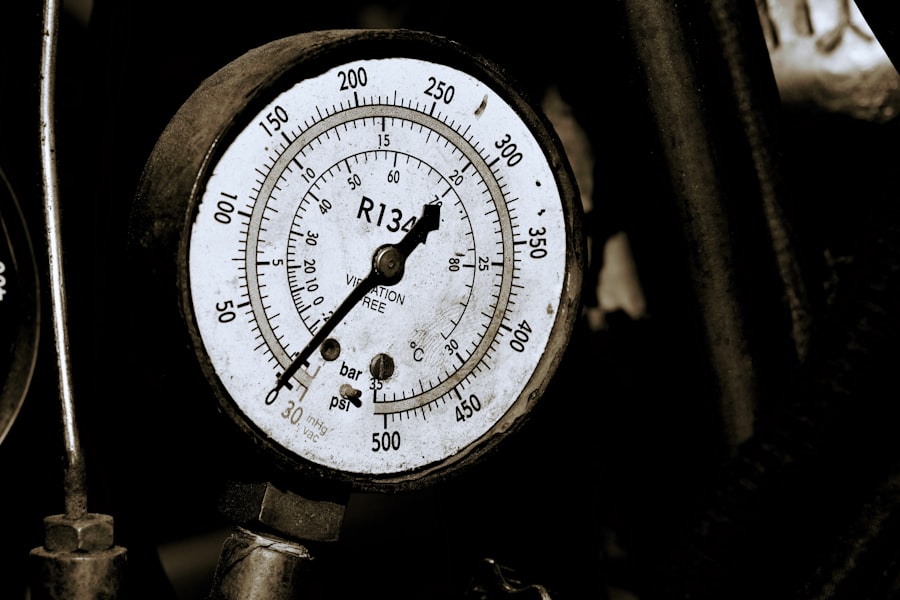
The name “Kaub Gauge” within the context of measuring in centimeters suggests a specific instrument or system designed to leverage the precision offered by this unit. While the precise origin and nature of the “Kaub Gauge” might require further specific definition (as it is not a universally recognized standard like the Vernier caliper or micrometer), we can infer its purpose as a tool that embodies the importance of the centimeter in achieving accurate measurements.
The Kaub Gauge as a Microcosm of Measurement Accuracy
Imagine a finely tuned instrument. The Kaub Gauge, in this analogy, represents that instrument. If it is designed to measure in centimeters, it signifies a level of precision that is neither overly broad nor excessively granular for its intended application. It provides a tangible representation of how the centimeter serves as a practical and effective unit for a specific set of measurement needs. It’s like a craftsman choosing the right chisel for a particular task; the Kaub Gauge, by focusing on the centimeter, demonstrates an understanding of the appropriate scale for measurement.
The Kaub Gauge’s Role in Contextualizing Centimeter Measurement
The existence of a named gauge dedicated to centimeter measurements implies that there are specific scenarios where this unit offers the optimal balance of precision and comprehensibility. Perhaps the Kaub Gauge is used in a particular industry where dimensions typically fall within this range, or it’s designed for educational purposes to illustrate the practical application of the metric system. Regardless of its specific application, its existence underscores the value and utility of the centimeter as a unit of measurement capable of supporting dedicated measuring instruments.
Applications Requiring Sub-Metre Precision
The Kaub Gauge, by focusing on centimeters, highlights applications that demand a level of precision finer than the meter but perhaps not as acute as the millimeter or micrometer. This could include tasks such as:
- Manufacturing of small to medium-sized components: Where parts need to fit with a certain degree of accuracy, but atom-level precision is not required.
- Quality control of consumer products: Ensuring that dimensions of items conform to specifications for aesthetic or functional purposes.
- Laboratory setups and experimental apparatus: Where components need to be assembled with consistent spacing or alignment.
- Educational demonstrations: Illustrating measurement principles in a way that is relatable and practical.
The Kaub Gauge’s Contribution to Measurement Standards
If the Kaub Gauge is a widely accepted instrument within a particular field, it contributes to the standardization of measurements within that domain. By providing a reliable and consistent way to measure in centimeters, it helps ensure that all users are speaking the same quantitative language. This is crucial for reproducibility of experiments, interchangeability of parts, and the overall advancement of knowledge and technology.
The Centimeter’s Place in the Metric Hierarchy: A Balanced Perspective

The metric system is often visualized as a ladder, with each rung representing a power of ten. The centimeter occupies a specific rung on this ladder, offering a practical dimension that bridges the gap between larger and smaller units.
From Kilometres to Millimetres: The Metric Continuum
The kilometer (km) is used for vast distances, like those between cities. The meter (m) is the standard unit for everyday lengths, such as the height of a room. Below the meter, we find the decimeter (dm) which is 10 centimeters. Then comes the centimeter (cm), followed by the millimeter (mm), which is one-tenth of a centimeter, and further down to the micrometer (µm) and nanometer (nm) for microscopic scales. The centimeter, therefore, is a crucial intermediary, providing a manageable scale for a wide array of measurements that are too large for millimeters but too small for meters.
The Advantage of the Decimals: Simplifying Calculations
One of the most significant advantages of the metric system, and by extension the centimeter, is its decimal nature. Unlike systems with arbitrary fractions (like inches and feet), converting between units in the metric system is as simple as moving a decimal point. For example, 1.5 meters is equal to 150 centimeters, and 0.75 meters is 75 centimeters. This inherent simplicity drastically reduces the potential for calculation errors and accelerates the pace of scientific and industrial work. The Kaub Gauge, by operating within this decimal framework, inherits these benefits, allowing for straightforward interpretation and utilization of its measurements.
Practicality vs. Ultimate Precision: Finding the Right Tool
The choice of measurement unit, and by extension the gauge used, is always a question of practicality and the required level of precision. While scientists may need to measure in nanometers for atomic-level studies, and surveyors may work with kilometers for land mapping, the centimeter often hits a sweet spot for many applications. The Kaub Gauge, by focusing on centimeters, demonstrates an understanding of this balance, providing a tool that is precise enough for many important tasks without being overly complex or difficult to use. It’s the equivalent of choosing a high-quality hammer when you need to drive a nail, rather than a diamond-cutting laser.
The kaub gauge is a crucial measurement for determining the navigability of the Rhine River, particularly during low water periods. Understanding its significance can be enhanced by exploring related topics, such as the impact of river levels on shipping and trade. For more in-depth information, you can read this insightful article on the subject at MyGeoQuest, which discusses various factors influencing river navigation and the importance of maintaining critical centimeters in water levels.
The Future of Measurement: Centimeters in an Evolving World
| Kaub Gauge Level (cm) | Water Status | Impact on Navigation | Flood Risk | Remarks |
|---|---|---|---|---|
| 0 – 50 cm | Low | Navigation normal | Minimal | Safe for all vessels |
| 51 – 100 cm | Moderate | Minor restrictions for large vessels | Low | Monitor for changes |
| 101 – 150 cm | High | Navigation difficult for large vessels | Moderate | Possible delays |
| 151 – 200 cm | Very High | Navigation restricted | High | Flood warnings issued |
| Above 200 cm | Critical | Navigation closed | Severe | Emergency measures in place |
As technology advances and our understanding of the universe deepens, the ways in which we measure continue to evolve. However, the fundamental principles of standardization and precision remain paramount. The centimeter, as a well-established and widely understood unit, is poised to remain a vital component of our measurement toolkit.
Continued Relevance in Education and Industry
The centimeter will undoubtedly continue to be a cornerstone of education, providing students with a tangible and accessible way to learn about length and scale. In industry, its established presence means that existing systems, tooling, and training are all built around it. The cost and complexity of universally replacing such a deeply ingrained unit would be prohibitive for many sectors.
The Role of Digitalization in Centimeter Measurement
The digital revolution has transformed how we record and process measurements. Even when using a physical gauge like the Kaub Gauge that measures in centimeters, the data is often digitized for analysis and storage. This allows for the creation of vast datasets, advanced simulations, and the development of sophisticated algorithms that rely on precise dimensional information. The centimeter, in this digital realm, becomes a discrete data point within a larger computational landscape.
Evolving Precision: When Centimeters Might Be Insufficient
While the centimeter remains highly relevant, there are growing areas of science and technology that demand even greater precision. Advanced nanotechnology, quantum computing, and cutting-edge medical imaging may require measurements in angstroms or even smaller units. In these scenarios, while the centimeter might still be used conceptually to define larger structures or contexts, the actual measurement tools will operate at much finer scales. The Kaub Gauge, in this light, represents a specific point in the spectrum of measurement precision.
The centimeter, therefore, is more than just a unit of length; it is a testament to the power of standardization, the elegance of the metric system, and the practical needs of a world that requires quantification. The existence of tools like the Kaub Gauge, dedicated to measuring within this unit, further solidifies its importance across a diverse range of applications, from the grand designs of engineering to the intricate details of scientific discovery. It serves as a reliable yardstick, a steady hand in the ongoing quest to understand and shape our physical reality.
FAQs
What is a Kaub gauge?
A Kaub gauge is a specialized measuring instrument used primarily in hydrology and river engineering to measure water levels and flow characteristics in rivers and streams.
What does “critical centimeters” refer to in the context of a Kaub gauge?
“Critical centimeters” refers to the specific water level measurements at which significant changes in flow behavior occur, such as the transition from subcritical to supercritical flow, which are important for flood forecasting and river management.
How is a Kaub gauge installed and used?
A Kaub gauge is typically installed at a fixed point along a riverbank or bridge pier. It consists of a calibrated scale or sensor that records water height in centimeters, allowing for continuous monitoring of water levels.
Why are measurements in centimeters important for Kaub gauges?
Measurements in centimeters provide precise and detailed data on water levels, which is crucial for detecting small but significant changes in river flow that can impact flood risk assessments and hydraulic modeling.
Where are Kaub gauges commonly used?
Kaub gauges are commonly used in Europe, especially in Germany, and other regions with detailed river monitoring programs to support water management, flood control, and environmental studies.