
Junior miners, often overlooked in the grand narrative of global resource extraction, play a surprisingly vital role in the intricate and capital-intensive process of lithium exploration. While major corporations possess the financial clout and infrastructure for large-scale production, it is frequently the nimble and research-driven junior mining companies that undertake the initial, high-risk work of discovering new lithium deposits. These entities act as the foundational layer of the lithium supply chain, the prospectors of the modern age, diligently sifting through the earth’s crust in search of the vital element that powers our transitioning world. Understanding their contribution requires a closer look at their operational landscape, the challenges they face, and the indispensable niche they occupy.
The journey of any lithium deposit from geological anomaly to a commercially viable resource begins with exploration. This phase is characterized by a high degree of uncertainty and a significant capital outlay with no guarantee of success. Junior miners are the primary actors in this initial frontier. They are the ones who pour over geological maps, analyze regional surveys, and venture into remote or underexplored territories, seeking the telltale signs of lithium mineralization.
Geological Prospecting and Target Generation
The fundamental act of lithium exploration is rooted in understanding the Earth’s complex geological history. Junior geologists and geophysicists meticulously study rock formations, soil composition, and water sources for indicators of lithium presence.
Understanding Lithium Occurrence
Lithium, unlike more common metals, is not typically found in concentrated metallic veins. Instead, it is more commonly found dissolved in brines (salty groundwater) or locked within hard-rock minerals such as spodumene, petalite, and lepidolite. Junior explorers must therefore develop a sophisticated understanding of the geological environments conducive to these formations. This involves studying ancient lake beds, volcanic ash deposits, and areas with specific fault lines that can trap briny waters. They are the detectives, piecing together geological clues to find the hidden treasure.
Geophysical and Geochemical Surveys
Before any drilling commences, junior companies invest heavily in non-invasive exploration techniques. Geophysical methods, such as magnetic, radiometric, and gravity surveys, can help identify subsurface structures that might host lithium deposits. Geochemical surveys, which involve analyzing soil and rock samples for abnormal concentrations of lithium and other associated elements, provide more direct evidence of potential mineralization. These surveys are akin to an early diagnostic phase, helping to narrow down the vastness of potential exploration areas.
The Vanguard of the Drill Bit
Once promising targets are identified, junior miners are the ones who typically initiate the expensive and labor-intensive process of drilling. This is where the real subsurface investigation begins, transforming theoretical possibilities into tangible data.
Reconnaissance Drilling Programs
The initial drilling efforts by junior companies are often designed to be exploratory in nature. These reconnaissance programs aim to confirm the presence of lithium-bearing minerals or brines and to establish the initial dimensions and grade of a potential deposit. The success rate at this stage is notoriously low, making it a significant financial gamble. These early drills are like exploratory probes, testing the waters and gauging the shallow depths for any signs of the precious element.
Defining Potential Resource Sizes
If the initial drilling yields positive results, junior miners will then embark on more systematic drilling programs to delineate the extent and continuity of the lithium mineralization. This involves infill drilling to better understand the geological model and to provide a more robust estimate of the potential resource size. This is the phase where the outline of a potentially valuable discovery begins to emerge, like sketching the contours of an undiscovered island.
Junior miners play a crucial role in the exploration and development of lithium resources, which are essential for the growing demand in battery technology and electric vehicles. Their agility and focus on exploration allow them to identify and develop new lithium projects, often in regions with untapped potential. For a deeper understanding of the dynamics at play in this sector, you can read a related article on lithium exploration and the contributions of junior miners at MyGeoQuest.
Navigating the Hurdles: Challenges Faced by Junior Explorers
The path of a junior lithium explorer is fraught with challenges, from securing adequate funding to overcoming the inherent risks of geological uncertainty and regulatory hurdles. These companies operate on a tightrope, balancing ambition with the pragmatic realities of the mining industry.
Funding the Exploration Frontier
One of the most significant barriers for junior miners is the sheer cost of exploration. Finding and developing a mineral deposit is a capital-intensive undertaking that requires substantial financial resources.
The Capital Intensive Nature of Exploration
From purchasing sophisticated exploration equipment to hiring specialized personnel and funding extensive drilling campaigns, the expenses quickly mount. Junior companies often rely on equity financing, venture capital, and sometimes strategic partnerships with larger corporations to raise the necessary capital. Without this influx of funds, the dream of discovery remains just that – a dream. Securing this “seed capital” is the lifeblood that allows these ventures to take root.
The Role of Venture Capital and Stock Markets
Junior mining companies are predominantly publicly traded, allowing them to raise funds through the issuance of shares on stock exchanges. Venture capital firms also play a crucial role, specializing in providing funding to early-stage exploration companies with high growth potential, albeit with significant risk. The stock market acts as a barometer, reflecting investor confidence in the potential of these early-stage ventures.
Geological Uncertainty and Technical Risks
The very nature of exploration means grappling with immense geological uncertainty. What looks promising on the surface may not translate to significant findings underground.
The High Failure Rate in Exploration
Statistics consistently show that only a tiny fraction of exploration projects ever result in a commercially viable mine. Junior companies accept this inherent risk as part of the business model, understanding that a few successful discoveries can offset many failures. They are playing a numbers game, placing their bets on the geological dice.
Technical Challenges in Resource Estimation
Even when lithium is found, accurately estimating the quantity and quality of the resource is a complex technical challenge. Junior geologists must employ sophisticated modeling techniques and conduct extensive assaying to provide reliable resource estimates, which are crucial for attracting further investment and eventual development. This is akin to a skilled cartographer mapping out uncharted territories with a high degree of precision.
The Vital Link: Bridging the Gap to Production

Junior miners are not just about discovery; they also serve as a crucial bridge between initial exploration and the eventual large-scale production of lithium. They de-risk projects to a certain extent, making them more attractive to larger entities.
De-Risking Prospects for Larger Players
By undertaking the most speculative and capital-intensive phases of exploration, junior miners essentially de-risk projects for major mining companies. They prove that a mineralized zone exists and provide initial data on its potential.
The Farm-in and Joint Venture Model
A common model involves junior miners forming “farm-in” or “joint venture” agreements with larger companies. Under these agreements, the junior company grants the larger company the option to earn a stake in the project by funding further exploration and development work. This provides the junior with much-needed capital and expertise, while the larger company gains access to promising projects without the initial, high-risk investment. It’s a symbiotic relationship, where the smaller entity provides the fertile ground, and the larger entity provides the resources to cultivate it.
The Acquisition Pathway
Alternatively, successful junior explorers may find their projects acquired outright by larger corporations that possess the financial capacity for mine development. This provides a significant return for the junior company’s shareholders and allows the deposit to be brought into production. These acquisitions are the ultimate payoff for the junior’s diligence and risk-taking.
Building the Foundation for Future Supply
The discoveries made by junior miners directly contribute to the future global supply of lithium. Without their proactive exploration efforts, many promising deposits would likely remain undiscovered.
Expanding the Global Lithium Pipeline
Every successful exploration program initiated by a junior company adds a potential new source to the global lithium pipeline. This is critical for meeting the ever-increasing demand for lithium, driven by the growth of electric vehicles and renewable energy storage. They are continually adding new tributaries to the river of lithium supply.
Encouraging Innovation in Exploration Techniques
The competitive nature of the junior mining sector also drives innovation in exploration techniques and technologies. Juniors are often more agile and willing to adopt new methods that larger companies might be slower to implement. This can lead to more efficient and effective discovery processes for all involved. Their pioneering spirit often pushes the boundaries of what is possible in the field.
Illustrative Examples of Junior Miner Impact
The history of mineral exploration is replete with examples of junior miners making significant discoveries that have fundamentally altered the supply landscape. While specific project names and details can be complex, the pattern of their contribution is clear.
The Discovery of Spodumene Deposits
Many of the world’s significant hard-rock lithium deposits, particularly those rich in spodumene, were initially identified and advanced by junior exploration companies. These companies, driven by a specific focus on pegmatite-hosted minerals, ventured into historically overlooked terrains.
Early Advancements in Hard-Rock Lithium
Before the current surge in lithium demand, juniors were the ones actively exploring for pegmatite occurrences that contained lithium-bearing minerals like spodumene. Their persistent efforts in regions with known pegmatite activity laid the groundwork for future development. They were the quiet architects, sketching the initial blueprints for critical resource extraction.
Technological Advancements Driven by Junior Efforts
The exploration and early-stage evaluation of these hard-rock deposits often necessitated the development of specialized sampling and assaying techniques. Juniors, facing funding constraints, were often incentivized to find more cost-effective and efficient ways to assess their discoveries. This practical necessity often spurred innovation.
Exploring Brine Deposits in Emerging Regions
The prolific brine-hosted lithium deposits, particularly in South America’s “Lithium Triangle,” were also subjects of early exploration by junior companies. These ventures involved high technical and logistical challenges.
The Pioneering Work in South America
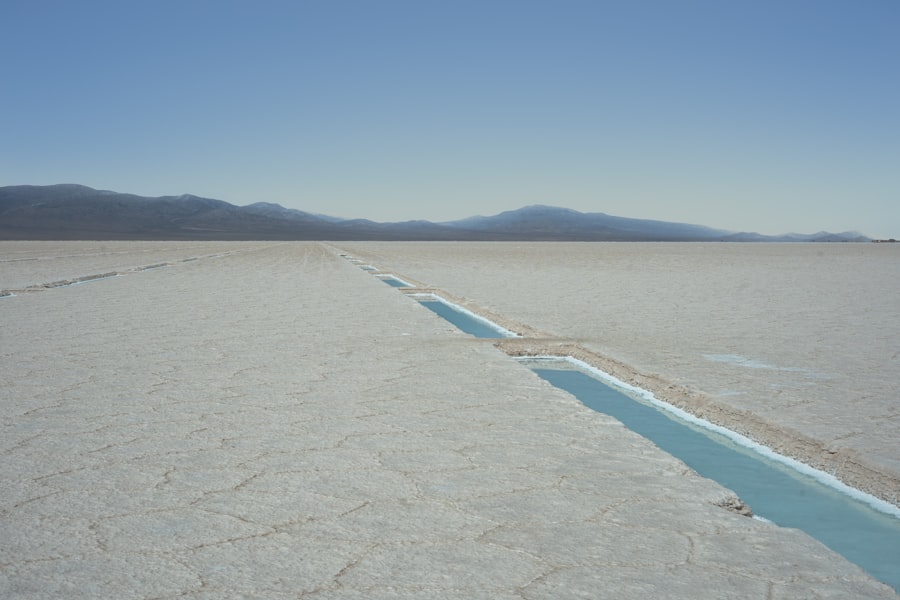
Junior miners were among the first to systematically investigate the brine potential of salt flats (salares) in Argentina, Chile, and Bolivia. Their work involved understanding complex hydrological systems and developing appropriate sampling methods for hypersaline environments. They were the first to navigate these ethereal, salt-crusted landscapes in search of the dissolved mineral.
Challenges of Brine Chemistry and Extraction
The unique chemistry of these brines presents its own set of challenges, from high concentrations of impurities to the vast areas that need to be covered. Junior companies often developed innovative approaches to characterize these brines and assess their economic viability, paving the way for subsequent, larger-scale development. Understanding and taming these mineral-rich watery realms was their initial conquest.
Junior miners play a crucial role in the exploration and development of lithium resources, which are essential for the growing demand in electric vehicle batteries and renewable energy storage. Their agility and innovative approaches often allow them to identify and develop lithium deposits that larger companies may overlook. For further insights into the dynamics of junior miners in this sector, you can read more in this informative article on lithium exploration at MyGeoQuest. By understanding their contributions, stakeholders can better appreciate the evolving landscape of the lithium market.
The Future Landscape: Junior Miners in a Growing Market
| Metric | Description | Role of Junior Miners | Impact on Lithium Exploration |
|---|---|---|---|
| Exploration Budget | Funds allocated for lithium exploration activities | Typically smaller budgets but focused on high-potential areas | Enables targeted exploration, often leading to discovery of new deposits |
| Project Pipeline | Number of lithium exploration projects underway | Often manage multiple early-stage projects | Increases overall exploration activity and potential resource base |
| Geographical Focus | Regions where exploration is conducted | Focus on underexplored or emerging lithium regions | Expands geographic diversity of lithium supply sources |
| Innovation & Technology | Use of advanced exploration techniques | Adopt cutting-edge technologies to improve discovery success | Enhances efficiency and accuracy in identifying lithium deposits |
| Partnerships & Joint Ventures | Collaborations with larger mining companies or investors | Leverage partnerships to access capital and expertise | Accelerates project development and reduces financial risk |
| Resource Discovery Rate | Frequency of new lithium resource identification | High discovery rate due to focused exploration efforts | Contributes significantly to global lithium resource growth |
| Market Influence | Impact on lithium supply and pricing | Smaller market share but critical in early-stage supply chain | Supports market diversification and supply security |
As the demand for lithium continues to escalate, the role of junior miners is likely to become even more critical. They will be essential in unlocking new deposits and ensuring a diverse and resilient global supply chain.
Meeting the Exponential Demand Curve
The energy transition is a relentless tide, and the demand for lithium is its primary fuel. Junior miners are vital in keeping pace with this exponential curve, ensuring that the supply can meet the ever-growing need. Without their proactive exploration, a bottleneck could form, hindering the transition. They are the scouts charting new territories to ensure the caravan of progress has sufficient provisions.
Diversifying the Lithium Supply Chain
Over-reliance on a few major producers or geographical regions can create supply chain vulnerabilities. Junior miners, by exploring in new and diverse locations, contribute to a more diversified and resilient global lithium supply. This diversification acts as a shock absorber, protecting the world from potential disruptions. They are the gardeners planting seeds in many different soils, ensuring a robust harvest.
Contributing to Technological Advancements in Extraction
The unique characteristics of newly discovered lithium deposits often require innovative extraction technologies. Junior miners, working at the forefront of these discoveries, may partner with technology providers or even develop their own novel approaches to economically liberate lithium from various geological sources. They are often the incubators for the next generation of lithium extraction technologies, born from the practical necessity of their discoveries.
In conclusion, the junior mining sector, with its inherent risks and pioneering spirit, is an indispensable engine for lithium exploration. They are the initial spark that ignites the process of discovery, meticulously unearthing the potential resources that will fuel our future. While they may operate in the shadows of larger corporations, their contributions are fundamental to ensuring a robust and sustainable global lithium supply, thereby playing a vital role in the ongoing energy revolution.
FAQs
What are junior miners in the context of lithium exploration?
Junior miners are smaller, often early-stage mining companies that focus on exploring and developing lithium deposits. They typically operate with limited resources compared to major mining corporations and play a crucial role in discovering new lithium sources.
Why are junior miners important in lithium exploration?
Junior miners are important because they undertake the initial exploration and development of lithium projects, often in regions that are underexplored. Their work helps identify viable lithium deposits, which can then attract investment from larger companies for further development and production.
How do junior miners contribute to the lithium supply chain?
Junior miners contribute by discovering and proving lithium resources, which form the foundation of the lithium supply chain. Their exploration activities increase the global lithium resource base, supporting the growing demand for lithium in batteries and electric vehicles.
What challenges do junior miners face in lithium exploration?
Junior miners often face challenges such as limited funding, technical risks, regulatory hurdles, and competition from larger companies. Additionally, lithium exploration requires specialized knowledge and equipment, which can be costly for smaller firms.
How do junior miners attract investment for lithium projects?
Junior miners attract investment by demonstrating the potential of their lithium projects through geological surveys, drilling results, and resource estimates. They often raise capital through equity financing, partnerships, or joint ventures with larger mining companies or investors interested in the lithium market.