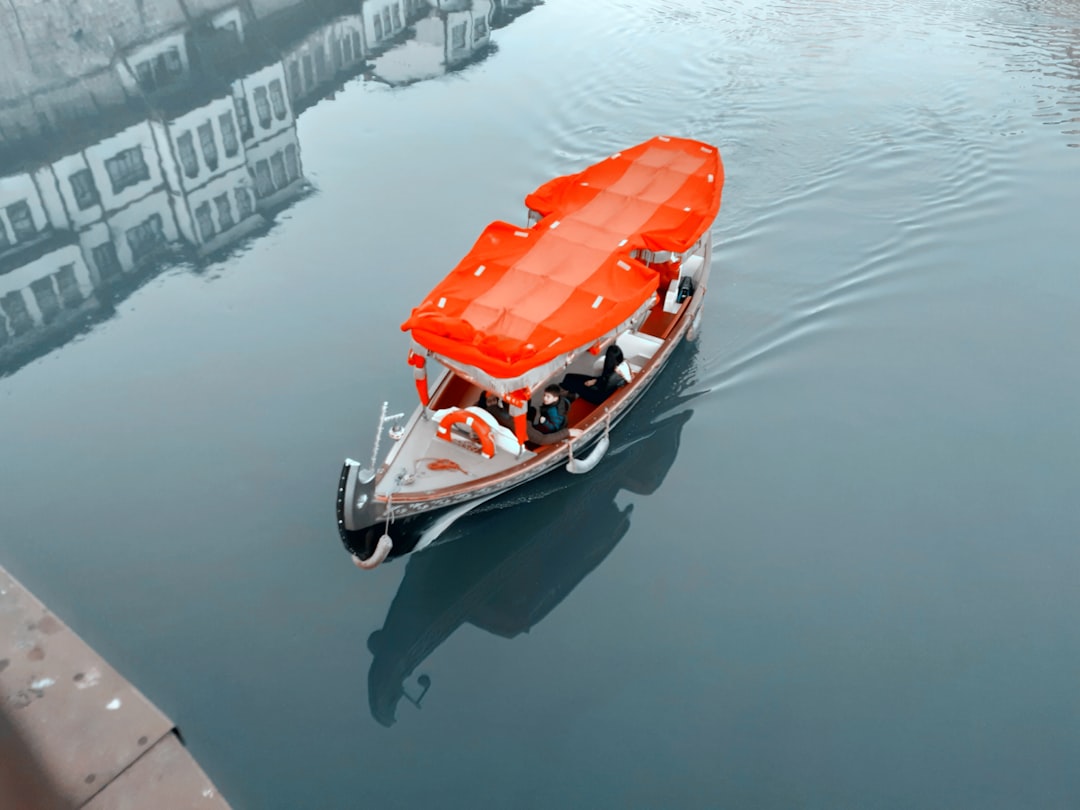
The development of waterborne transportation has been intrinsically linked to the ability of vessels to navigate various water depths. For millennia, the challenge of accessing shallow waterways, often the arteries of commerce and exploration, has spurred innovation in hull design. Traditional barges, while robust and capable of carrying significant loads, often require considerable water depth, limiting their operational reach. This has led to a persistent demand for designs that can efficiently operate in shallower environments, a demand that has been met by a series of ingenious solutions collectively termed “innovative shallow draft barge design.”
The necessity for barges capable of navigating shallow waters is multifaceted, stemming from both economic and logistical considerations. Many inland waterways, crucial for connecting production centers to markets, are naturally shallow or become so due to seasonal variations in rainfall, siltation, or man-made obstructions.
Economic Drivers for Shallow Draft Vessels
The economic rationale behind shallow draft barge design is straightforward: increased accessibility translates directly to expanded market reach and reduced logistical costs.
Access to Remote Resources
Numerous natural resources, such as timber, minerals, and agricultural products, are often located in areas accessible primarily by inland waterways. If these waterways are too shallow for conventional vessels, the cost of extracting and transporting these resources increases dramatically, often rendering them uneconomical to exploit. Shallow draft barges act as a vital bridge, enabling these valuable resources to enter the global supply chain. They allow industry to tap into veins of wealth previously hidden by the limitations of water depth.
Connecting Underserved Markets
Developing regions, particularly those with extensive river systems, often face infrastructure challenges. Paved roads and rail lines may be sparsely distributed or non-existent. In such scenarios, shallow draft barges become the lifeblood of commerce, connecting remote communities and isolated industries to larger markets. Their ability to traverse a wider network of waterways can stimulate local economies and improve the quality of life for residents.
Reduced Infrastructure Investment
Compared to the substantial investment required to dredge and maintain deeper channels, the development and deployment of shallow draft barges can offer a more cost-effective solution for improving waterborne trade. While dredging is a continuous and often expensive undertaking, designing vessels that can adapt to existing conditions requires a different kind of ingenuity, one focused on vessel optimization rather than environmental alteration.
Logistical Advantages in Inland Navigation
The operational flexibility offered by shallow draft barges is a significant logistical advantage, particularly in complex inland waterway networks.
Navigating Seasonal Fluctuations
Many rivers experience significant seasonal variations in water levels. During dry seasons, depths can decrease considerably, making navigation impossible for standard barges. Shallow draft designs allow for continuous operation, minimizing disruptions to supply chains. They are like amphibious vehicles of the waterway, able to adapt to changing tides and currents.
Accessing Smaller Tributaries and Estuaries
Traditional barges are often restricted to major river channels, leaving smaller tributaries and complex estuarine environments unexplored for commercial purposes. Shallow draft designs can unlock these secondary routes, creating more direct and efficient transit paths, thereby reducing transit times and overall shipping distances.
Reduced Towing Requirements and Fuel Consumption
In some cases, shallow draft barges may require less powerful tugboats or can even operate with reduced towing configurations due to their lower resistance in shallower water. This can lead to a reduction in fuel consumption and operational costs.
Recent advancements in shallow draft barge design have been highlighted in an insightful article that explores innovative approaches to enhancing efficiency and sustainability in maritime transport. This article delves into the latest technologies and materials being utilized to improve the performance of shallow draft barges, making them more adaptable to various waterway conditions. For more information on this topic, you can read the full article here: Shallow Draft Barge Design Innovation.
Evolution of Shallow Draft Design Principles
The pursuit of shallow draft capability has driven a continuous evolution of hull form, material science, and propulsion systems. Early solutions were often rudimentary, but over time, sophisticated engineering principles have been applied.
Hull Form Optimization
The primary area of innovation lies in the shape and configuration of the barge’s hull. The goal is to displace enough water to support the load while minimizing the draft.
The Pontoon or Catamaran-Style Hull
One of the most prevalent and effective solutions is the adoption of a pontoon or catamaran-style hull. Instead of a single, deep hull, these designs utilize two or more parallel hulls with a relatively flat deck spanning between them.
Hydrodynamic Efficiency in Shallow Water
The separation of the hulls creates a wider, more stable platform with a shallower submerged volume. This configuration often exhibits superior hydrodynamic efficiency in shallow water compared to a monohull of equivalent carrying capacity. The water can flow more freely around the spaced hulls, reducing drag compared to a single, wider hull that would displace more water.
Increased Deck Space and Stability
Pontoon designs inherently offer greater deck space relative to their draft. This is advantageous for carrying bulky cargo. Furthermore, the split hull design generally provides enhanced stability, crucial when operating in unpredictable inland waters.
Box-Shaped Hulls with Flat Bottoms
For certain applications, particularly where maximizing cargo volume within a specific size constraint is paramount, box-shaped hulls with flat bottoms have been employed. While this can lead to increased resistance, careful consideration of length-to-beam ratios and the use of specialized coatings can mitigate some drawbacks.
Considerations for Planing and Resistance
Flat-bottomed hulls can experience increased frictional drag and potential for slamming in choppy conditions. However, in very calm, shallow waters, their simplicity and cargo-carrying efficiency can make them a viable option. Designers must carefully balance the trade-offs between draft, resistance, and stability.
Shallow-V and Chine Hulls
Some designs incorporate shallow-V or chine sections in the hull bottom. These features can help to break up the water flow, reduce wetted surface area in certain conditions, and improve directional stability in some shallow draft applications.
Hydrodynamic Benefits of Chines and Shallow-Vs
Chines, or sharp angles along the hull, can help to lift the hull slightly at speed, reducing wetted surface. A shallow-V hull can offer a compromise between the stability of a flat bottom and the seakeeping abilities of a deeper-V hull, albeit with a slight increase in draft.
Material Innovation and Lightweight Construction
The principle of reducing weight is always a crucial factor in minimizing draft for a given loading capacity. Advances in materials and construction techniques have played a significant role.
Aluminum Alloys
The use of lightweight yet strong aluminum alloys has become increasingly common in shallow draft barge construction. Aluminum offers a favorable strength-to-weight ratio, allowing for lighter hulls without compromising structural integrity.
Corrosion Resistance and Reduced Maintenance
Aluminum’s inherent corrosion resistance, particularly in brackish or freshwater environments, can lead to reduced maintenance costs and extended service life. This is a significant advantage over steel in applications where corrosion is a persistent concern.
Composite Materials
For highly specialized applications, or where extreme weight reduction is paramount, composite materials like fiberglass reinforced polymers (FRP) are being explored. These materials offer exceptional strength-to-weight ratios.
Durability and Design Flexibility
Composites can offer excellent durability and allow for complex hull shapes to be formed with relative ease, providing designers with greater flexibility in optimizing performance. However, their higher initial cost can be a barrier for widespread adoption in standard cargo barge applications.
Propulsion System Integration
The choice and integration of propulsion systems are critical for ensuring maneuverability and efficiency in shallow waters.
Enhanced Maneuverability with Azimuthing Thrusters
The inclusion of azimuthing thrusters (also known as steerable thrusters) has revolutionized maneuverability for shallow draft vessels. These thrusters can rotate 360 degrees, providing powerful thrust in any direction.
Precise Control in Confined Spaces
The ability to vector thrust precisely makes these barges incredibly agile, allowing them to navigate narrow channels, docks, and tight turning basins with ease, often without the need for conventional rudders. This is akin to giving the barge a set of independent, steerable propellers.
Reduced Need for Powerful Tugs
In many scenarios, vessels equipped with azimuthing thrusters can operate with significantly reduced or even no traditional tugboat assistance, leading to considerable cost savings and operational efficiencies.
Jet Propulsion Systems
For extremely shallow environments where propellers could be susceptible to damage from grounding or debris, jet propulsion systems offer an alternative. Water is drawn into an intake and expelled at high velocity through a nozzle, providing thrust.
Protection from Submerged Obstacles
Jet drives offer a protected propeller system, significantly reducing the risk of damage from submerged objects. This is a crucial consideration for vessels operating in environments where the bottom is unpredictable.
Trade-offs in Efficiency and Speed
While offering protection, jet drives can sometimes be less efficient than traditional propellers at lower speeds and may not be suitable for very high-speed applications.
Shallow-Water Propeller Designs
Even with traditional propeller systems, specialized designs exist for shallow water. These include flush-mounted propellers, ducted propellers, and propellers with protective cages.
Minimizing Propeller Exposure
These designs aim to minimize the exposure of the propeller blades to the seabed and other submerged obstacles, thereby reducing the risk of damage.
Application Areas and Case Studies
The implementation of innovative shallow draft barge designs spans a wide array of industries and geographical regions. Their adaptability has made them indispensable tools in various logistical challenges.
Inland River Transportation
The most obvious and perhaps the most impactful application of shallow draft barges is in the realm of inland river transportation, where the natural limitations of water depth are a constant concern.
The Mississippi River System and its Tributaries
The vast network of the Mississippi River and its tributaries in the United States is a prime example. Many of these waterways, while critical for transporting commodities like grain, coal, and chemicals, experience fluctuating water levels. Shallow draft barge designs enable continuous navigation, ensuring the efficient flow of goods.
European Inland Waterways
Similarly, the extensive inland waterway networks of Europe, including the Rhine, Danube, and inland canals, benefit from shallow draft designs, allowing for efficient movement of goods between major industrial and population centers. These waterways are the arteries of European industry.
South American River Systems
In South America, rivers like the Amazon and its tributaries present unique challenges due to their vastness and often shallow, dynamic nature. Shallow draft barges are crucial for connecting remote Amazonian communities and for transporting resources from the interior to coastal ports.
Coastal and Estuarine Operations
Beyond major river systems, shallow draft barges are also well-suited for operations in coastal areas and estuaries, where tidal fluctuations and sandbars can create navigational hazards.
Barrier Island and Coastal Resource Access
Accessing resources or serving communities located behind barrier islands, or along shallow tidal creeks, often requires vessels with very low drafts. These barges can navigate these sensitive environments with minimal disruption.
Ferry and Shuttle Services in Shallow Bays
In some regions, shallow draft barges are employed as ferry or shuttle services across shallow bays or inlets, providing essential transport links where deeper water channels are either absent or uneconomical to maintain.
Specialized Cargo Handling
The unique characteristics of shallow draft barges lend themselves to handling specific types of cargo with greater efficiency.
Offshore Wind Farm Construction Support
The construction of offshore wind farms often involves the transport of large components to shallow nearshore sites. Specialized shallow draft barges are designed to access these locations safely and efficiently, acting as mobile platforms for installation.
Aquaculture and Marine Salvage Operations
In aquaculture, where pens and facilities are often located in shallow coastal waters, shallow draft barges are used for transporting feed, equipment, and harvested products. They also find utility in marine salvage operations in shallow areas where conventional recovery vessels cannot access.
Future Trends and Innovations
The field of shallow draft barge design is not static. Ongoing research and development are continuously pushing the boundaries of what is possible, seeking greater efficiency, sustainability, and adaptability.
Autonomous Navigation and Remote Operation
The integration of autonomous navigation systems and remote operation capabilities is poised to transform shallow draft barge operations.
Reduced Crewing Requirements and Enhanced Safety
Autonomous barges could lead to reduced crewing requirements, lowering operational costs. Furthermore, by removing human operators from potentially hazardous environments, the overall safety of operations can be enhanced.
Optimized Route Planning and Efficiency
Sophisticated algorithms can optimize routing and speed in real-time, accounting for changing water levels, currents, and traffic, leading to significant improvements in efficiency and fuel economy. This is like granting the barge a prescient awareness of the waterway.
Enhanced Sustainability and Environmental Considerations
A growing focus on environmental sustainability is driving innovation in barge design, particularly concerning emissions and impact on aquatic ecosystems.
Electric and Hybrid Propulsion Systems
The development and adoption of electric and hybrid propulsion systems for barges offer a pathway to significantly reduce or eliminate local emissions, contributing to cleaner air and water quality in inland waterways.
Bio-inspired Hull Designs and Reduced Wake
Research into bio-inspired hull forms, mimicking the efficient movement of marine life, could lead to designs that generate less wake and sediment disturbance, minimizing environmental impact on sensitive aquatic habitats.
Modular and Adaptable Barge Systems
The concept of modular barge systems, where deck sections can be easily configured or transformed, offers increased versatility.
Tailoring Capacity and Configuration
These modular systems allow operators to quickly adapt the barge’s configuration and carrying capacity to suit specific cargo requirements, reducing the need for multiple specialized vessels.
Ease of Maintenance and Repair
Modular designs can also simplify maintenance and repair processes, as individual components can be replaced or serviced more readily, minimizing downtime.
The ongoing evolution of shallow draft barge design is a testament to human ingenuity in overcoming environmental limitations. As the demand for efficient and adaptable waterborne transportation continues to grow, these innovative vessels will undoubtedly play an increasingly vital role in connecting communities, facilitating trade, and unlocking the potential of waterways previously deemed inaccessible. They are the nimble navigators of our liquid highways, charting new courses for commerce and progress.
FAQs
What is a shallow draft barge?
A shallow draft barge is a type of vessel designed to operate in waters with limited depth. It has a flat bottom and a minimal draft, allowing it to navigate shallow rivers, coastal areas, and inland waterways where deeper vessels cannot go.
Why is innovation important in shallow draft barge design?
Innovation in shallow draft barge design is crucial to improve efficiency, increase cargo capacity, enhance stability, and reduce environmental impact. New design techniques and materials can lead to better performance and cost savings in transportation.
What are some common design features of innovative shallow draft barges?
Innovative shallow draft barges often incorporate lightweight materials, optimized hull shapes for reduced resistance, modular construction for flexibility, and advanced propulsion systems. These features help improve maneuverability and fuel efficiency.
How do shallow draft barges benefit industries and commerce?
Shallow draft barges enable transportation of goods in areas inaccessible to larger ships, facilitating trade in inland and coastal regions. They support industries such as agriculture, construction, and energy by providing cost-effective and reliable cargo movement.
What environmental considerations are involved in shallow draft barge design innovation?
Design innovations focus on minimizing environmental impact by reducing fuel consumption, lowering emissions, and preventing waterway damage. Eco-friendly materials and technologies are also integrated to promote sustainable maritime operations.