This article examines “Global Capital: A Financialized Geography,” a documentary exploring the intricate relationship between global finance and the spatial organization of the world. The film delves into how financial flows, market logic, and the pursuit of profit reshape landscapes, cities, and human lives across the planet.
The Invisible Hand and Tangible Realities
“Global Capital” begins by establishing a fundamental premise: that financial forces, often perceived as abstract, have concrete and profound impacts on the physical world. The documentary illustrates this through a series of case studies, demonstrating how investment decisions, speculative bubbles, and the deindustrialization of one region can lead to the rapid development or decay of another. The metaphor of an invisible hand guiding economic activity is critically examined, revealing the very tangible consequences that this “hand” leaves upon the earth. The film challenges the notion that finance is a detached entity, arguing instead that it is an active agent in sculpting geography.
The City as a Financial Hub
A significant portion of the documentary is dedicated to analyzing the role of cities within the global financial system. It portrays major financial centers – London, New York, Hong Kong, Singapore – not merely as places of business, but as nodes in a vast network of capital accumulation. The film dissects how these cities are remade to cater to the needs of the financial industry, with soaring skyscrapers, exclusive residential enclaves for the wealthy, and infrastructure designed to facilitate global transactions. This relentless drive for financial supremacy, “Global Capital” suggests, often comes at the expense of affordable housing, public services, and the well-being of ordinary citizens. The city, in this context, becomes a stage for financial performance, where urban space is valued and altered according to its capacity to generate financial returns.
The Geography of Inequality
The documentary starkly illustrates how financialization exacerbates existing inequalities and creates new ones. It contrasts the glittering prosperity of financial districts with the forgotten peripheries and neglected neighborhoods that bear the brunt of economic restructuring. The movement of capital, often described as a quest for higher returns, can lead to job losses in one area as factories relocate to others perceived as offering cheaper labor or more lax regulations. This geographic unevenness of development is a recurring theme, demonstrating how the benefits of global finance are not distributed equitably. The film uses sweeping aerial shots juxtaposed with intimate portrayals of affected communities to emphasize this disconnect.
In exploring the intricate connections between finance and geography, the documentary on financialized geography offers a compelling perspective on how economic forces shape spatial dynamics. For a deeper understanding of these themes, you can refer to a related article that delves into the implications of financialization on urban development and land use. This article provides valuable insights and complements the documentary’s findings. You can read it here: Financialized Geography: Understanding the Impact on Urban Spaces.
The Mechanisms of Financialization
Deregulation and the Unchaining of Capital
“Global Capital” traces the historical trajectory of financial deregulation, arguing that a deliberate policy choice to loosen the reins on financial markets has been a key driver of contemporary financialization. The film explains how this process has allowed for the proliferation of complex financial instruments and the increased mobility of capital. The metaphor of a river breaking its banks is employed to describe how unfettered capital flows can flood and inundate economies, sometimes with destructive consequences. The documentary interviews scholars and policymakers who offer critical perspectives on the ideology that champions market liberation above all else.
The Rise of Financial Instruments
The documentary unpacks some of the key financial instruments that underpin the global financial system, such as derivatives, hedge funds, and sovereign wealth funds. It strives to demystify these complex tools, explaining how they operate and how they interact with real economies. The film illustrates how these instruments can be used to manage risk, but also how they can amplify it, leading to systemic instability. The labyrinthine nature of these financial products is highlighted, suggesting that their complexity can obscure their potential dangers from both regulators and the public.
The Role of Credit and Debt
Credit and debt are presented as central pillars of financialized geography. “Global Capital” explores how the expansion of credit has fueled consumption, investment, and indeed, the very growth of financial markets. However, it also examines the darker side of this reliance on debt, particularly in light of sovereign debt crises and the proliferation of household indebtedness. The film argues that debt can become a form of geographic control, as countries and individuals become beholden to international financial institutions and creditors. The impact of austerity measures, often imposed as a condition for debt repayment, is depicted as further reshaping public services and urban landscapes.
Geographies of Production and Consumption
The Global Supply Chain: A Financialized Network
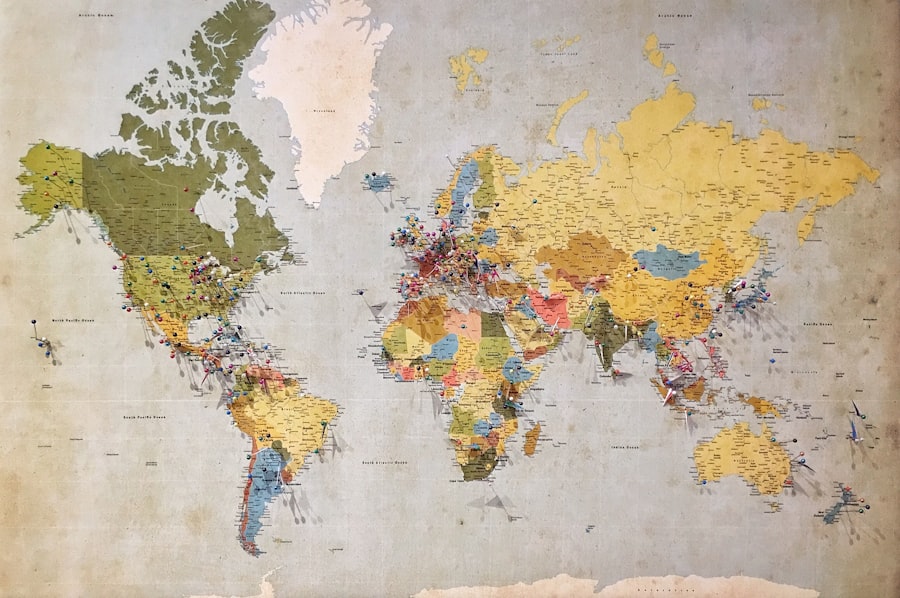
The documentary delves into the intricate global supply chains that characterize modern production. It argues that these chains, while seemingly about the movement of goods, are deeply intertwined with financial logic. The pursuit of cost reduction, efficiency, and profit maximization dictates the location of factories, the sourcing of raw materials, and the distribution of finished products. The film offers examples of how financial incentives, such as tax breaks and subsidies, influence where production takes place. The invisible threads of finance, in this context, connect disparate parts of the world through the arteries of trade and manufacturing.
The Transformation of Rural Landscapes
Beyond urban centers, “Global Capital” also examines the impact of financialization on rural geographies. The rise of agribusiness, driven by global commodity markets and investor speculation, is presented as a force that transforms agricultural practices, land ownership patterns, and the livelihoods of rural communities. The film contrasts traditional farming with large-scale, industrialized agriculture, highlighting the pressures exerted by global market demands. The taming of the land for financial gain is a recurring observation as the documentary explores how agricultural output is increasingly treated as a financial asset.
The Footprint of Consumption
The documentary links global production with global consumption, demonstrating how financialization fuels a culture of consumerism. The accessibility of credit, the marketing of goods, and the constant drive for new products all contribute to a global demand that has significant geographic consequences. The film explores the environmental impact of this consumption, from resource extraction to waste generation, and argues that financial metrics often fail to adequately account for these externalities. The insatiable appetite of the market, fueled by financial innovation, leaves an indelible mark on the planet.
The Power of Financial Institutions

Banks and the Architects of Financial Space
“Global Capital” dedicates significant attention to the role of major banking institutions and other financial corporations. It portrays them not merely as intermediaries, but as powerful actors that shape economic policy, influence government decisions, and actively construct financial space. The documentary provides insights into how these institutions operate and the immense influence they wield over national and international economies. The cathedrals of finance, the towering headquarters of these institutions, are presented as symbols of their power and reach.
International Financial Institutions and Global Governance
The film scrutinizes the role of international financial institutions such as the International Monetary Fund (IMF) and the World Bank. It argues that these bodies, often influenced by the interests of powerful member states and financial elites, play a critical role in shaping the financialized geography of developing nations. The imposition of structural adjustment programs and the promotion of neoliberal policies are examined as mechanisms that can lead to increased debt, privatization, and the integration of national economies into the global financial system on terms often unfavorable to the local populations. The benevolent facade of global cooperation is questioned as the documentary explores the underlying financial imperatives.
The Regulatory Challenge
A central concern raised by “Global Capital” is the ongoing challenge of regulating the global financial system. The film highlights the difficulties in achieving effective international oversight and the constant dynamic between innovation in financial products and the lagging capacity of regulatory bodies. The ever-moving target of financial regulation is a persistent theme, as the industry consistently devises new ways to operate beyond the reach of established rules. The documentary suggests that the imbalance of power between the financial industry and regulatory bodies remains a critical issue.
In exploring the intricate connections between finance and geography, the documentary on financialized geography provides a compelling look at how economic systems shape our spatial realities. For those interested in delving deeper into this topic, a related article can be found at My Geo Quest, which discusses the implications of financialization on urban development and social inequality. This resource complements the documentary by offering additional insights into the ways financial practices influence geographical landscapes.
The Future of Financialized Geography
| Metric | Description | Value | Source |
|---|---|---|---|
| Documentary Title | Name of the documentary | Financialized Geography | Film Production |
| Release Year | Year the documentary was released | 2023 | Film Database |
| Duration | Length of the documentary in minutes | 90 | Film Production |
| Budget | Estimated production budget | 500,000 | Producer Report |
| Box Office Revenue | Revenue generated from screenings | 1,200,000 | Box Office Data |
| Viewership | Number of viewers across platforms | 250,000 | Streaming Analytics |
| Critical Rating | Average critic score (out of 100) | 85 | Review Aggregator |
| Audience Rating | Average audience score (out of 100) | 78 | Viewer Surveys |
| Geographic Focus | Main regions covered in the documentary | Global, with emphasis on North America and Europe | Content Synopsis |
| Key Themes | Primary topics addressed | Financialization, Urban Development, Real Estate Markets | Content Synopsis |
Resistance and Alternatives
While “Global Capital” paints a critical picture of financialized geography, it also touches upon movements and initiatives that seek to challenge the dominant paradigm. The film offers glimpses of alternative economic models, community-based finance, and efforts to promote more equitable and sustainable development. The seeds of change germinating in unexpected places are presented as a counterpoint to the overwhelming forces of global finance. The documentary does not offer simple solutions but encourages critical engagement with the prevailing economic order.
The Enduring Impact on Human Lives
The documentary concludes by reiterating the profound impact of financialized geography on the everyday lives of people across the globe. From the affordability of housing to the availability of public services, from employment opportunities to environmental quality, financial decisions and market forces are shown to be deeply embedded in the fabric of human existence. The film serves as a powerful reminder that the abstract world of finance is, in reality, a potent force shaping the tangible world we inhabit, and thereby, the lived experiences of billions. “Global Capital: A Financialized Geography” urges viewers to understand these connections and to consider the implications for the future of our planet and its inhabitants.
▶️ STOP: The Middle Corridor Is A Death Trap
FAQs
What is a financialized geography documentary?
A financialized geography documentary explores how financial markets, institutions, and practices influence the spatial organization of cities, regions, and countries. It examines the impact of finance on real estate, urban development, and economic inequalities across different geographic areas.
Why is financialized geography important to study?
Studying financialized geography helps us understand how global finance shapes urban landscapes, housing markets, and regional economies. It reveals the connections between financial flows and social issues such as gentrification, displacement, and economic segregation.
What topics are typically covered in a financialized geography documentary?
Such documentaries often cover topics like real estate speculation, the role of investment funds in urban development, the effects of mortgage lending practices, the globalization of property markets, and the socio-economic consequences of financialization on local communities.
Who might benefit from watching a financialized geography documentary?
Students, researchers, urban planners, policymakers, and anyone interested in economics, geography, urban studies, or social justice can benefit from these documentaries. They provide insights into how financial systems affect spatial and social dynamics.
Where can I find financialized geography documentaries?
Financialized geography documentaries can be found on educational streaming platforms, documentary film festivals, university libraries, and online video services such as YouTube or Vimeo. Some may also be available through organizations focused on urban studies or economic justice.