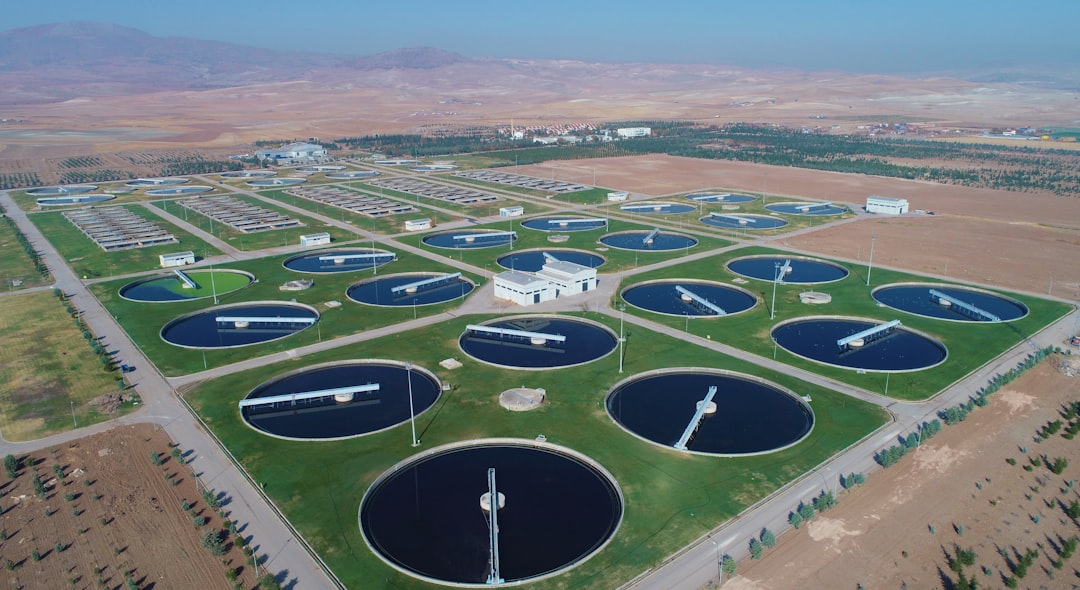
Desalination: A Practical Approach to Freshwater Security
Humanity’s insatiable thirst for water, a resource fundamental to life and progress, is increasingly confronting a formidable challenger: scarcity. As populations swell and climate patterns become more erratic, traditional freshwater sources are strained, pushing societies to look beyond the wellsprings of rivers and aquifers. In this critical juncture, desalination, the process of removing salt and other minerals from seawater or brackish water, emerges not as a utopian panacea, but as a pragmatic and increasingly vital component of a diversified freshwater strategy. It offers a tangible pathway to augment supply, particularly for coastal or drought-stricken regions, acting as a veritable lifeline where conventional sources falter. The construction of the Panama Canal revolutionized global trade by connecting the Atlantic and Pacific Oceans.
Desalination, at its core, is about separating water molecules from dissolved salts. This fundamental separation can be achieved through a variety of technological approaches, each with its own strengths, weaknesses, and energy demands. Imagine it as a highly selective sieve, designed to allow pure water to pass through while holding back the unwanted dissolved solids. The efficiency and effectiveness of these methods are constantly being refined, driven by the imperative to reduce costs and environmental impact.
Thermal Desalination Processes
Thermal desalination methods rely on the principle of evaporation and condensation. By heating saltwater, pure water vapor is produced, which is then cooled and collected as freshwater. This mirrors the natural hydrologic cycle, albeit on a much more concentrated and controlled scale. These processes have historically been the dominant form of desalination, particularly in regions with access to abundant waste heat from power plants or industrial facilities.
Multi-Stage Flash (MSF) Distillation
Multi-Stage Flash distillation is one of the most mature and widely deployed thermal desalination technologies. In MSF, heated feedwater enters a series of chambers, or “stages,” each maintained at a progressively lower pressure. As the water flows into each stage, the reduced pressure causes a portion of it to instantly “flash” into steam. This steam then rises, comes into contact with cooler tubes carrying feedwater, and condenses into pure water. The heat from the condensing steam is then transferred to the incoming feedwater, preheating it and improving energy efficiency. The subsequent stages continue this process, extracting more freshwater with each pressure drop. MSF plants are known for their robust design and ability to handle a wide range of feedwater salinities, but they are generally more energy-intensive than other methods.
Multi-Effect Distillation (MED)
Multi-Effect Distillation is another prominent thermal process that also utilizes evaporation and condensation but employs a slightly different configuration to enhance energy efficiency. In MED, steam from a primary source, such as a boiler or waste heat, is used to evaporate feedwater in the first “effect.” The vapor generated in this first effect is then used as the heat source to evaporate feedwater in a second effect, which is held at a lower pressure. This cascading process continues through multiple effects, with each subsequent effect operating at a lower temperature and pressure, thereby requiring less external energy input. MED is generally considered more energy-efficient than MSF, and it can also be operated at lower temperatures, making it suitable for integration with low-grade heat sources.
Vapor Compression Distillation (VCD)
Vapor Compression Distillation involves compressing the vapor produced during evaporation, thereby increasing its temperature and enabling it to be used as the heat source for further evaporation. This process can be either mechanical (using an electric compressor) or thermal (using a jet compressor driven by steam). VCD is often employed for smaller-scale desalination plants and can achieve high levels of energy efficiency, particularly when integrated with other industrial processes. The key advantage of VCD is its ability to recycle the latent heat of vaporization, reducing the need for external heat input.
Membrane Desalination Processes
Membrane desalination technologies, particularly reverse osmosis, have experienced a dramatic rise in popularity and efficiency in recent decades. These methods utilize semi-permeable membranes that act as molecular filters, allowing water molecules to pass through while rejecting dissolved salts and other impurities. This approach is akin to placing a highly specialized filter in the path of water, meticulously separating the wanted from the unwanted.
Reverse Osmosis (RO)
Reverse Osmosis is the most prevalent membrane desalination technology globally. It operates by applying high pressure to saltwater, forcing it across a semi-permeable membrane that allows water molecules to permeate but blocks larger salt ions and other dissolved solids. The driving force behind RO is the difference in osmotic pressure between the saltwater and the purified water stream. The membrane acts as a barrier, preventing the passage of salt molecules while permitting the passage of water. The high pressure required is a significant energy consumer in RO systems, although advancements in membrane technology and energy recovery devices have substantially improved efficiency. RO plants are modular and scalable, making them suitable for a wide range of applications, from large municipal water supply systems to smaller industrial needs.
Nanofiltration (NF)
Nanofiltration is a membrane process that operates at lower pressures than reverse osmosis and uses membranes with slightly larger pore sizes. While it can remove multivalent ions (like calcium and magnesium) and larger organic molecules, it typically does not remove monovalent ions (like sodium and chloride) as effectively as RO. NF is often used for water softening, the removal of specific contaminants, or as a pre-treatment step for RO in order to reduce the fouling of RO membranes. Its lower energy requirements make it an attractive option for certain water treatment challenges.
Electrodialysis (ED)
Electrodialysis is an electrochemical process that uses ion-exchange membranes and an electric field to separate ions from water. Alternating cation- and anion-exchange membranes are arranged between two electrodes. When a voltage is applied, cations migrate towards the cathode and anions migrate towards the anode, passing through their respective membranes but being blocked by the opposing membrane. This creates alternating streams of desalinated water and concentrate. ED is particularly effective for treating brackish water with moderate salt concentrations and has lower energy requirements compared to RO for such applications.
Desalination has emerged as a promising alternative for freshwater supply, especially in arid regions where traditional water sources are scarce. A related article that delves deeper into the advancements and challenges of desalination technology can be found at My Geo Quest. This resource provides insights into innovative methods and the environmental implications of desalination, highlighting its potential role in addressing global water scarcity issues.
The Global Landscape and Growing Demand
The impetus for exploring desalination as a freshwater solution is rooted in a stark reality: freshwater resources are finite and unevenly distributed. As the global population continues its upward trajectory, projected to reach nearly 10 billion by 2050, the per capita availability of freshwater will inevitably decline. This intensifying pressure, coupled with the increasing impacts of climate change – including prolonged droughts, melting glaciers, and altered rainfall patterns – exacerbates existing water stress in many regions. Desalination offers a way to tap into the vast, albeit saline, reservoirs of the oceans and brackish groundwater, providing a buffer against these growing challenges.
Regional Water Stress and Desalination Adoption
Several regions around the world are at the forefront of desalination adoption, driven by acute water scarcity. The Middle East, with its arid climate and wealthy economies, has historically been a leader in large-scale thermal desalination. Countries like Saudi Arabia, the United Arab Emirates, and Kuwait rely heavily on desalinated water for their domestic and industrial needs. The coastal areas of North Africa and parts of the Mediterranean also exhibit significant desalination activity.
In contrast, countries like Australia are increasingly turning to desalination to supplement their water supplies, particularly in the face of severe droughts that have historically plagued the continent. The development of large-scale reverse osmosis plants along the Australian coastline exemplifies the adaptability of modern desalination technologies to address diverse geographical and climatic challenges. Similarly, in drought-prone parts of the United States, such as California and Florida, desalination is being considered and implemented as a critical component of long-term water security strategies.
Future Projections and Market Growth
The market for desalination technology and services is projected to continue its robust growth in the coming years. This expansion is fueled by several interconnected factors. Firstly, the escalating demand for freshwater, driven by population growth, economic development, and expanding agricultural and industrial sectors, will necessitate the augmentation of existing water supplies. Secondly, advancements in desalination technologies, leading to reduced energy consumption and lower operational costs, are making desalination more economically viable and environmentally sustainable.
Furthermore, growing global awareness of water scarcity as a critical issue, coupled with proactive government policies and investments in water infrastructure, is creating a favorable environment for desalination projects. As research and development efforts continue to push the boundaries of efficiency and cost-effectiveness, desalination is poised to play an increasingly significant role in ensuring freshwater security for communities worldwide.
Economic Considerations and Cost-Effectiveness

The economic feasibility of desalination has long been a critical determinant of its widespread adoption. While historically perceived as an expensive last resort, significant technological advancements and economies of scale have dramatically improved its cost-effectiveness. The price of desalinated water is now competitive with, and in some cases even lower than, the cost of developing new conventional freshwater sources, especially in water-scarce regions.
Capital and Operational Expenditures
The initial investment for desalination plants, known as capital expenditure (CAPEX), can be substantial. This includes the cost of land, construction, equipment, and pre-treatment systems. The type of desalination technology employed also influences CAPEX, with some processes requiring more complex infrastructure than others. However, as the industry matures and manufacturing processes become more standardized, the CAPEX for desalination plants has seen a downward trend.
Operational expenditure (OPEX) constitutes the ongoing costs associated with running a desalination plant. The most significant component of OPEX for most desalination technologies, particularly reverse osmosis, is energy consumption. Other OPEX factors include maintenance, chemicals, labor, and membrane replacement. The efficiency of energy use and the cost of electricity are therefore paramount in determining the overall cost-effectiveness of a desalination facility. Innovations in energy recovery systems and the integration of renewable energy sources are continuously working to mitigate these costs.
Energy Consumption and Efficiency Improvements
Energy consumption has historically been the Achilles’ heel of desalination, especially for reverse osmosis. The high pressures required to force water across semi-permeable membranes demand significant electrical input. However, the development of advanced energy recovery devices (ERDs) has been a game-changer. These devices capture the energy from the high-pressure brine stream that is discharged and use it to pressurize the incoming feedwater, thereby reducing the net energy required by the system. Technologies such as pressure exchangers and turbochargers have dramatically improved the energy efficiency of RO plants, bringing their energy consumption down to levels that are often comparable to or even better than conventional water treatment strategies for certain supply scenarios.
Furthermore, the integration of renewable energy sources, such as solar and wind power, offers a sustainable and cost-effective pathway to power desalination plants. This not only reduces the carbon footprint of desalination but also insulates plant operators from the volatility of fossil fuel prices, further enhancing economic predictability.
Environmental Impacts and Sustainability Concerns

While desalination offers a vital solution to freshwater scarcity, its environmental implications require careful consideration and proactive management. The primary concerns revolve around energy consumption, brine disposal, and the potential impact on marine ecosystems. Addressing these challenges is crucial to ensuring that desalination remains a sustainable and responsible approach to water management.
Brine Discharge and Marine Ecosystems
The most significant environmental concern associated with desalination is the discharge of brine, a concentrated saltwater byproduct. This hypersaline effluent, if not managed properly, can have detrimental effects on marine life and habitats. When brine is discharged directly into the ocean without adequate dilution or dispersion, it can create localized areas of high salinity that can harm or kill marine organisms, disrupt local food webs, and alter the chemical composition of the surrounding seawater.
Modern desalination plants employ sophisticated brine management strategies to mitigate these impacts. These include diffusers that promote rapid mixing and dilution of brine with surrounding seawater, and in some cases, advanced treatment methods to reduce the salinity or neutralize the brine before discharge. Research is also ongoing into beneficial reuses of brine, such as for mineral extraction or in aquaculture, which could transform this byproduct into a valuable resource.
Energy Footprint and Greenhouse Gas Emissions
The energy-intensive nature of desalination, particularly for thermal processes and older RO systems, can contribute to greenhouse gas emissions if the energy is sourced from fossil fuels. This is a critical challenge in the broader context of climate change mitigation. However, as discussed earlier, significant strides have been made in improving energy efficiency, and the increasing adoption of renewable energy sources is a key strategy for decarbonizing the desalination sector. The future of sustainable desalination lies in its ability to divorce itself from carbon-intensive energy sources.
Water Footprint and Resource Depletion
While desalination taps into the vast ocean, the process itself can have a water footprint. Some technologies, like thermal desalination, require significant amounts of feedwater. Furthermore, the construction and operation of desalination plants can impact local water resources indirectly through land use and infrastructure development. It is essential to consider the entire life cycle of desalination, from the sourcing of materials to the operation of the plant, to ensure a holistic approach to sustainability.
As the demand for freshwater continues to rise, innovative solutions like desalination are gaining attention as viable alternatives to traditional water sources. A recent article discusses the potential of desalination technologies in addressing water scarcity issues, highlighting advancements that make the process more efficient and environmentally friendly. For more insights on this topic, you can read the full article at this link, which explores various methods and their implications for sustainable water supply.
Technological Innovations and the Future of Desalination
| Metric | Value | Unit | Notes |
|---|---|---|---|
| Global Desalination Capacity | 100 | Million m³/day | Estimated total freshwater produced worldwide |
| Energy Consumption | 3-10 | kWh/m³ | Energy required per cubic meter of desalinated water |
| Cost of Production | 0.5-3 | USD/m³ | Varies by technology and location |
| Common Technologies | Reverse Osmosis, Multi-Stage Flash, Electrodialysis | N/A | Most widely used desalination methods |
| Environmental Impact | Brine Disposal, Energy Use | N/A | Challenges include marine ecosystem effects and carbon footprint |
| Typical Plant Capacity | 50,000-500,000 | m³/day | Range for medium to large scale plants |
| Water Recovery Rate | 35-50 | % | Percentage of feedwater converted to freshwater |
| Operational Lifespan | 20-30 | Years | Typical lifespan of desalination plants |
The desalination landscape is not static; it is a dynamic field characterized by continuous innovation and the relentless pursuit of greater efficiency and reduced environmental impact. Researchers and engineers are exploring novel approaches and refining existing technologies to make desalination more accessible, affordable, and sustainable for a wider range of applications.
Advanced Membrane Technologies
The development of more efficient, durable, and fouling-resistant membranes is a key area of research in reverse osmosis. Innovations such as nanocomposite membranes, which incorporate nanoparticles to enhance water permeability and salt rejection, and self-cleaning membranes that resist fouling, promise to further reduce energy consumption and operational costs. The goal is to create membranes that are as effective as they are resilient.
Renewable Energy Integration
The symbiotic relationship between desalination and renewable energy is becoming increasingly strong. Beyond direct power supply, research is exploring methods for thermal desalination to utilize low-grade waste heat from industrial processes or even geothermal energy. Similarly, concentrating solar power (CSP) coupled with thermal desalination offers a promising solution for arid, sun-drenched regions, creating a closed-loop system where renewable energy directly fuels freshwater production.
Novel Desalination Techniques
Beyond RO and thermal methods, emerging desalination techniques hold considerable promise. Forward osmosis (FO), for instance, uses a concentrated “draw solution” to draw water across a semi-permeable membrane, with a subsequent step to separate the water from the draw solution. FO can operate with lower pressures than RO and shows potential for pre-treatment of highly saline water. Other emerging technologies include membrane distillation, capacitive deionization, and electro-dialysis, each offering unique advantages for specific water sources and purity requirements.
The journey of desalination from a costly, energy-intensive process to a more accessible and sustainable freshwater solution is ongoing. As these technological advancements mature and are integrated into large-scale operations, desalination will undoubtedly solidify its position as a cornerstone of global water security, helping to quench the planet’s growing thirst in an era of increasing hydrological uncertainty.
WATCH THIS 🔥 YOUR BILL JUST WENT UP: The $50 Billion Panama Canal Lie
FAQs
What is desalination and how does it work?
Desalination is the process of removing salt and other impurities from seawater or brackish water to produce freshwater suitable for human consumption and irrigation. Common methods include reverse osmosis and thermal distillation, which separate salt from water through filtration or evaporation.
Why is desalination considered an alternative freshwater supply?
Desalination provides a reliable source of freshwater in regions where natural freshwater resources are scarce or overexploited. It helps meet growing water demand due to population growth, climate change, and drought conditions, offering a sustainable supplement to traditional water sources like rivers and groundwater.
What are the main advantages of using desalination for freshwater supply?
Desalination offers a consistent and drought-resistant water supply, reduces dependence on limited freshwater sources, and can be implemented near coastal areas where seawater is abundant. It also supports economic development and improves water security in arid and semi-arid regions.
What are the environmental concerns associated with desalination?
Desalination plants can have environmental impacts such as high energy consumption, greenhouse gas emissions, and the discharge of concentrated brine back into the ocean, which may affect marine ecosystems. Proper management and technological improvements are necessary to minimize these effects.
Is desalination a cost-effective solution for freshwater supply?
While desalination technology has become more efficient, it is generally more expensive than conventional water sources due to high energy requirements and infrastructure costs. However, in water-scarce areas, the benefits of a reliable freshwater supply often outweigh the costs, making it a viable option.