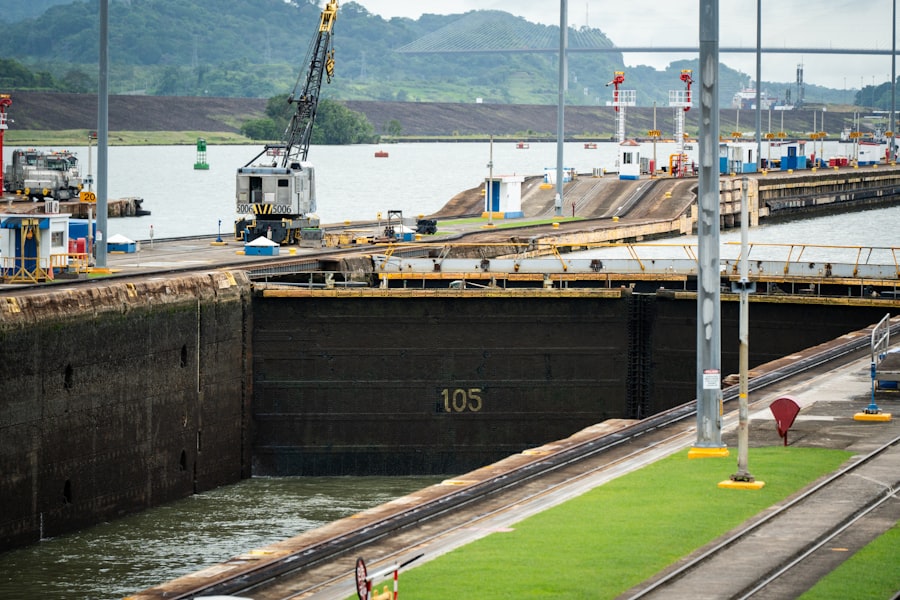
The Panama Canal represents one of history’s most significant engineering accomplishments, with origins tracing to the early 16th century when Spanish explorers first conceived of connecting the Atlantic and Pacific Oceans through the Isthmus of Panama. Serious construction efforts began in 1881 when France, led by Ferdinand de Lesseps—architect of the Suez Canal—launched the initial project.
The United States assumed control of the project in 1904 following a treaty with newly independent Panama, which had separated from Colombia. American engineers John Frank Stevens and subsequently George Washington Goethals directed the construction phase. The U.S.
effort succeeded largely through comprehensive public health initiatives that controlled malaria and yellow fever, diseases that had severely impacted previous workers. The Panama Canal opened on August 15, 1914, fundamentally altering international shipping routes and maritime commerce.
Key Takeaways
- The Panama Canal has played a crucial role in global trade by significantly reducing shipping times between oceans.
- Environmental concerns related to the canal include ecosystem disruption and water resource management.
- Alternative shipping routes are being explored to address capacity limits and geopolitical risks associated with the Panama Canal.
- Developing alternative routes faces challenges such as high costs, technological demands, and political complexities.
- Technological advancements and successful case studies suggest promising potential for alternative routes to reshape future global trade dynamics.
The Importance of the Panama Canal for Global Trade
The Panama Canal serves as a critical artery for global trade, significantly reducing travel time for ships between the Atlantic and Pacific Oceans. Prior to its construction, vessels had to navigate around the treacherous Cape Horn at the southern tip of South America, a journey that could take weeks. The canal allows ships to traverse this distance in mere hours, facilitating faster delivery of goods and reducing shipping costs.
This efficiency has made it an indispensable route for international shipping, with thousands of vessels passing through each year. Moreover, the canal plays a vital role in connecting major economies and trade partners. It is particularly important for countries in North America and Asia, as it enables them to exchange goods more efficiently.
The canal has also contributed to the growth of global supply chains, allowing manufacturers to source materials from different parts of the world and deliver finished products to markets quickly. As global trade continues to expand, the significance of the Panama Canal remains paramount in ensuring that goods flow smoothly across international borders.
Environmental Concerns Surrounding the Panama Canal
While the Panama Canal has undoubtedly facilitated global trade, it has also raised significant environmental concerns. The construction and operation of the canal have led to substantial ecological changes in the region. Deforestation, habitat destruction, and alterations to local waterways have had lasting impacts on biodiversity.
The canal’s expansion projects have further exacerbated these issues, leading to increased sedimentation and pollution in surrounding ecosystems. Additionally, the introduction of invasive species through ships traversing the canal poses a threat to native flora and fauna. These species can disrupt local ecosystems, outcompeting native species for resources and altering habitats.
Environmentalists have raised alarms about these consequences, advocating for more sustainable practices in managing the canal’s operations. Balancing economic interests with environmental preservation remains a critical challenge for policymakers and stakeholders involved in the canal’s management.
Alternative Routes to the Panama Canal
In light of the challenges posed by reliance on the Panama Canal, various alternative routes have been proposed and explored. One notable option is the Nicaragua Canal, which aims to create a new shipping route through Nicaragua’s Lake Cocibolca and connecting rivers. This ambitious project has garnered significant attention due to its potential to alleviate congestion in the Panama Canal and provide an alternative for larger vessels that may not fit through its locks.
Another alternative is the Arctic shipping routes that have gained traction due to climate change melting polar ice caps. These routes offer a shorter passage between Europe and Asia but come with their own set of challenges, including unpredictable weather conditions and limited infrastructure. As global shipping patterns evolve, these alternative routes present opportunities for diversifying maritime trade while reducing dependence on traditional pathways like the Panama Canal.
The Potential Benefits of Alternative Routes
| Alternative Route | Location | Distance (nautical miles) | Estimated Transit Time | Capacity (TEU per year) | Key Advantages | Challenges |
|---|---|---|---|---|---|---|
| Nicaragua Canal | Nicaragua | 278 | 12-14 hours | 5 million | Wider and deeper than Panama Canal, can handle larger ships | Environmental concerns, political instability, high construction cost |
| Tehuantepec Route | Mexico (Isthmus of Tehuantepec) | Approx. 200 (land crossing) | 6-8 hours (including land transport) | N/A (intermodal transport) | Shorter land crossing, existing rail infrastructure | Requires transshipment, infrastructure upgrades needed |
| Trans-Isthmus Railway (Costa Rica) | Costa Rica | Approx. 120 (land crossing) | 5-7 hours (including land transport) | N/A (intermodal transport) | Short land crossing, potential for rail upgrades | Limited capacity, requires investment in rail infrastructure |
| Arctic Route (Northern Sea Route) | Arctic Ocean | Approx. 5,600 (Europe to Asia) | 10-15 days (seasonal) | Varies | Shorter Europe-Asia route, reduces fuel consumption | Ice conditions, limited seasonal window, high risk |
| Expanded Panama Canal | Panama | 50 | 8-10 hours | 14 million | Existing infrastructure, handles larger ships after expansion | Congestion, maintenance costs |
The development of alternative routes to the Panama Canal could yield numerous benefits for global trade. Firstly, these routes could help alleviate congestion in the Panama Canal, which often experiences bottlenecks due to high traffic volumes. By providing additional pathways for shipping, alternative routes could enhance overall efficiency in maritime logistics.
Furthermore, alternative routes may offer cost savings for shipping companies. Depending on their location and infrastructure, these routes could reduce fuel consumption and transit times, translating into lower operational costs. Additionally, they could provide access to new markets and trade opportunities that were previously difficult to reach via traditional routes.
As global trade continues to evolve, these benefits could play a crucial role in shaping future shipping strategies.
The Challenges of Developing Alternative Routes
Despite their potential advantages, developing alternative routes to the Panama Canal is fraught with challenges. One significant hurdle is securing funding for large-scale infrastructure projects. Many proposed routes require substantial investment in construction and maintenance, which can be difficult to obtain amid competing priorities and economic uncertainties.
Moreover, environmental concerns often complicate development efforts. Projects like the Nicaragua Canal face opposition from environmental groups who argue that they could lead to irreversible damage to delicate ecosystems. Navigating regulatory frameworks and obtaining necessary permits can be time-consuming and contentious processes that delay progress.
Additionally, geopolitical factors can influence the feasibility of alternative routes, as countries may have differing interests in promoting or opposing such initiatives.
The Impact of Alternative Routes on Global Trade
The emergence of alternative routes could significantly reshape global trade dynamics. If successful, these routes may lead to a more diversified shipping landscape where no single route dominates maritime traffic. This diversification could enhance resilience against disruptions caused by natural disasters or geopolitical tensions that might affect traditional pathways like the Panama Canal.
Moreover, alternative routes could foster competition among shipping companies, potentially driving down costs for consumers. As new pathways open up opportunities for trade, businesses may benefit from increased access to markets and improved supply chain efficiency. However, this shift could also pose challenges for existing infrastructure and logistics networks that are heavily reliant on established routes.
Technological Advancements in Alternative Route Development
Technological advancements play a crucial role in developing alternative routes to the Panama Canal. Innovations in navigation systems, vessel design, and environmental monitoring are paving the way for safer and more efficient maritime travel through uncharted territories. For instance, advancements in satellite technology enable real-time tracking of vessels, allowing for better route planning and risk management.
Additionally, improvements in ship design are making it possible for larger vessels to navigate previously inaccessible waterways. These advancements not only enhance operational efficiency but also contribute to reducing environmental impacts by optimizing fuel consumption and minimizing emissions. As technology continues to evolve, it will likely play an increasingly important role in shaping the future of maritime trade routes.
Political and Economic Implications of Alternative Routes
The development of alternative routes carries significant political and economic implications on both regional and global scales. Countries involved in these projects may experience shifts in power dynamics as they gain control over new trade pathways. This can lead to increased geopolitical tensions as nations vie for influence over critical maritime routes.
Economically, alternative routes can create new opportunities for investment and job creation in regions where infrastructure is developed. However, they can also disrupt existing economic structures reliant on traditional shipping lanes. Policymakers must navigate these complexities carefully to ensure that developments benefit local communities while fostering international cooperation.
Case Studies of Successful Alternative Route Projects
Several case studies illustrate successful alternative route projects that have emerged in response to challenges faced by traditional shipping lanes. One notable example is the Northern Sea Route (NSR) along Russia’s Arctic coast. As climate change continues to open up this passageway during summer months, it has become an increasingly viable option for shipping between Europe and Asia.
The NSR has seen growing interest from shipping companies looking to capitalize on shorter transit times. Another example is the expansion of rail networks connecting China with Europe through initiatives like China’s Belt and Road Initiative (BRI). This overland route offers an alternative to maritime shipping while providing faster delivery times for goods transported between these regions.
These case studies highlight how innovative approaches can address logistical challenges while creating new opportunities for international trade.
The Future of Alternative Routes to the Panama Canal
Looking ahead, the future of alternative routes to the Panama Canal appears promising yet uncertain. As global trade continues to evolve in response to changing economic conditions and environmental considerations, stakeholders will need to remain adaptable in their strategies for developing new pathways. The ongoing impacts of climate change may further influence shipping patterns and necessitate innovative solutions.
By fostering dialogue and cooperation among stakeholders—governments, businesses, environmental groups—countries can work towards sustainable solutions that balance economic growth with ecological preservation. Ultimately, as maritime trade continues to adapt to an ever-changing landscape, alternative routes will likely play an increasingly vital role in shaping its future trajectory.
The Panama Canal has long been a critical route for maritime trade, but discussions about alternative passages have gained traction in recent years. One such alternative is highlighted in an article on MyGeoQuest, which explores various routes that could potentially alleviate congestion in the canal. For more insights on this topic, you can read the article here: MyGeoQuest.
WATCH THIS! 🌍 THE $15 TRILLION GAMBLE: What Happens If The Strait of Malacca Closes For One Week?
FAQs
What is the Panama Canal alternative?
The Panama Canal alternative refers to other routes or projects designed to provide a passage for maritime vessels between the Atlantic and Pacific Oceans, bypassing the Panama Canal. These alternatives aim to reduce congestion, lower transit times, or accommodate larger ships.
Why are alternatives to the Panama Canal being considered?
Alternatives are considered due to limitations in the Panama Canal’s capacity, size restrictions for ships (Panamax and Neopanamax limits), congestion, and the desire for more efficient or cost-effective shipping routes.
What are some examples of Panama Canal alternatives?
Examples include the Nicaragua Canal project (proposed but not completed), the Suez Canal route, the Northwest Passage through the Arctic (seasonal and climate-dependent), and overland transport options like railways or pipelines.
Is the Nicaragua Canal operational as an alternative?
No, the Nicaragua Canal was a proposed mega-project intended to rival the Panama Canal, but it has not been completed and remains inactive due to financial, environmental, and political challenges.
How does the Suez Canal compare as an alternative?
The Suez Canal connects the Mediterranean Sea to the Red Sea, providing a route between Europe and Asia but does not connect the Atlantic and Pacific Oceans directly. It serves different shipping routes and is not a direct alternative to the Panama Canal for transoceanic traffic.
Can the Northwest Passage serve as a Panama Canal alternative?
The Northwest Passage, located in the Arctic, can serve as a seasonal alternative for some vessels, especially during summer months when ice coverage is reduced. However, it is not a reliable year-round alternative due to harsh weather and ice conditions.
Are there overland alternatives to the Panama Canal?
Yes, overland alternatives include railways and pipelines that transport goods or oil between the Atlantic and Pacific coasts, but these are generally less efficient and more costly for large-scale maritime cargo compared to canal transit.
What are the environmental concerns related to Panama Canal alternatives?
Environmental concerns include habitat disruption, deforestation, water resource management, and impacts on local communities. Large infrastructure projects like canals can significantly affect ecosystems and biodiversity.
How does the Panama Canal expansion affect the need for alternatives?
The Panama Canal expansion, completed in 2016, allows larger ships (Neopanamax vessels) to transit, increasing capacity and reducing some pressure for alternatives. However, growing global trade and ship sizes continue to drive interest in additional routes.
Are Panama Canal alternatives economically viable?
Many proposed alternatives face significant financial, technical, and political challenges, making them less economically viable compared to the established Panama Canal. Cost, demand, and geopolitical factors influence their feasibility.