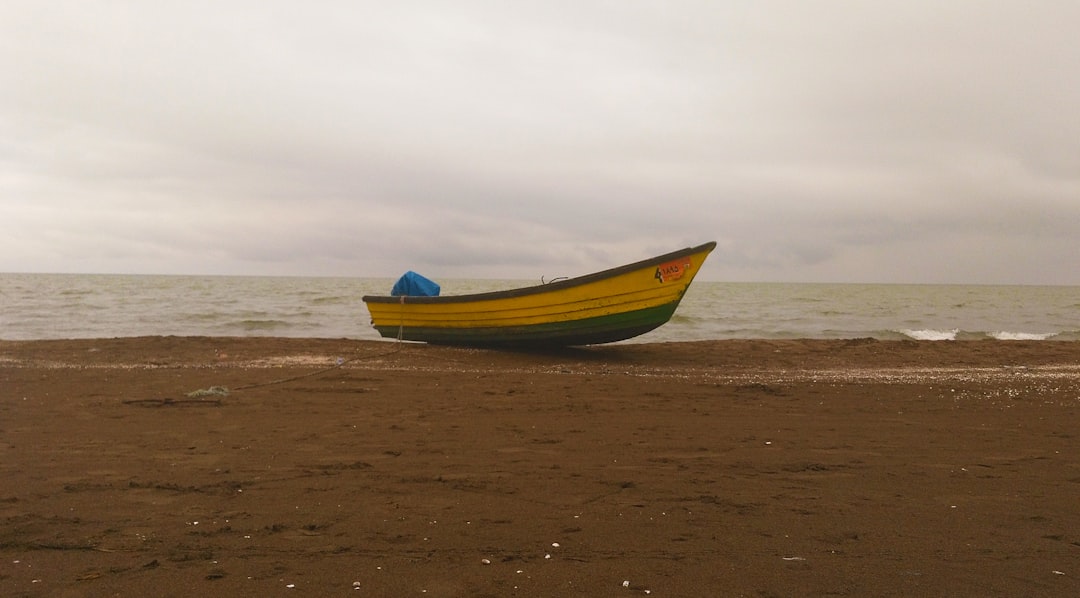
The Caspian Sea, a vast inland body of water straddling the borderlands of Europe and Asia, is undergoing a profound transformation. Its surface area, once a symbol of continental permanence, is demonstrably shrinking. This contraction is not an isolated phenomenon but rather a complex response to shifting climatic conditions, amplified by intricate feedback loops that accelerate the very changes they are driven by. Understanding these feedback mechanisms is crucial to predicting the future of this unique ecosystem and its implications for the myriad species and human populations that depend upon it.
The most visible manifestation of the Caspian Sea’s crisis is its declining water level. This is not a simple linear decrease but a dynamic process influenced by a confluence of factors, each playing a role in this ecological drama. The evaporation rate, a silent but relentless force, is at the forefront of this change.
Drivers of Increased Evaporation
- Rising Air Temperatures: Global climate change is manifesting in the Caspian region through a discernible warming trend. Higher air temperatures translate directly into an increased demand for moisture from the water surface. Imagine the sea acting like a giant sponge, and a warmer atmosphere is a more powerful wringer. This elevated temperature pushes more water molecules into the gaseous state, escaping into the atmosphere.
- Altered Atmospheric Circulation Patterns: Changes in global weather systems are influencing the movement of air masses over the Caspian. Shifts in prevailing winds can affect humidity levels and wind speed, both of which play a critical role in evaporation. For instance, increased aridity in surrounding landmasses, driven by these altered patterns, can lead to drier air masses being swept across the sea, intensifying the evaporative process.
- Reduced Inflow: While not directly an evaporation factor, the reduced influx of freshwater from the major rivers feeding the Caspian – notably the Volga, Ural, and Terek – is inextricably linked. As less water enters the system, it becomes more susceptible to the depredations of evaporation. This is akin to a bathtub with a slowly dripping faucet while the drain is fully open; the water level inevitably falls.
The Role of Salinity
The Caspian Sea is not a uniform body of water; its salinity varies considerably, particularly in the northern regions where freshwater inflow is more significant. Changes in salinity have a subtle yet important impact on evaporation rates.
- Inverse Relationship with Salinity: Generally, the higher the salinity of a water body, the lower its evaporation rate. This is because dissolved salts interfere with the transition of water molecules from liquid to gas. In essence, the salts act as tiny anchors, holding water molecules more tightly. As the Caspian Sea shrinks, and its volume decreases relative to the salt content, regional salinity could increase in certain areas, potentially creating localized attenuation of evaporation. However, this is a complex interplay, and the dominant driver remains the increased evaporative demand from a warming climate.
Recent studies have highlighted the concerning phenomenon of evaporation feedback loops in the Caspian Sea, which could have significant implications for regional climate patterns and water management. For a deeper understanding of this issue and its potential impacts, you can read a related article on this topic at My Geo Quest. This resource provides valuable insights into the environmental changes affecting the Caspian Sea and the broader implications for surrounding ecosystems.
Unraveling the Feedback Loops: A Cascade of Consequences
The evaporation from the Caspian Sea is not a standalone event. It triggers a cascade of interconnected processes that can amplify the initial change, creating self-reinforcing cycles. These feedback loops are the unsung architects of the sea’s accelerating decline.
The Salt-Water Intrusion Feedback
As the sea level drops, the relative contribution of freshwater from rivers diminishes, leading to an increase in overall salinity. This has particularly pronounced effects on the delicate estuarine environments where rivers meet the sea.
- Diminished Freshwater Plumes: The large freshwater plumes that typically extend from river mouths act as buffers against saltwater intrusion. As water levels fall, these plumes shrink, allowing the denser, saltier Caspian water to push further inland. This intrusion can degrade freshwater habitats essential for fish spawning grounds and migratory routes.
- Impact on Coastal Ecosystems: The altered salinity gradients disrupt the delicate balance of coastal ecosystems. Species adapted to brackish water may be stressed or displaced, potentially leading to significant shifts in biodiversity. This is akin to a carefully orchestrated symphony where one instrument is suddenly playing the wrong notes, throwing the entire composition into disarray.
The Atmospheric Moisture Feedback
The increased evaporation from the Caspian Sea releases a significant amount of water vapor into the atmosphere. This locally increased atmospheric moisture can, in turn, influence local weather patterns, creating a complex feedback loop.
- Potential for Increased Local Precipitation: In some scenarios, the increased atmospheric moisture could theoretically lead to enhanced local precipitation downwind from the Caspian. However, the prevailing atmospheric circulation patterns often dictate that this moisture is transported away from the region, rather than being recycled as rain or snow. This highlights the importance of understanding regional atmospheric dynamics.
- The Paradox of Aridification: Paradoxically, while more water is evaporating, the aridification of the surrounding landmasses may continue or even accelerate. This is because the overall trend of global warming is pushing many regions towards drier conditions, and the Caspian’s own contribution to atmospheric moisture might be a localized phenomenon within a broader pattern of water scarcity.
The Albedo Feedback Loop
The surface of the Caspian Sea, being a large body of water, has a low albedo, meaning it absorbs a significant amount of solar radiation. As the sea shrinks, and is replaced by exposed land and salt flats, the dominant surface type changes.
- Replacement of Water with Land: The receding shoreline exposes vast areas of dry land and salt-encrusted flats. These surfaces generally have a higher albedo than water, reflecting more solar radiation back into space.
- Potential for Localized Cooling: A higher albedo would, in theory, lead to a localized cooling effect. However, this effect is likely to be dwarfed by the overarching warming trend driven by greenhouse gas emissions. Furthermore, the salt flats themselves can absorb more heat than bare soil, complicating the net effect. The interplay between increased evaporation (warming) and increased albedo (cooling potential) in a warming world is a delicate balancing act.
Beyond Evaporation: Other Contributing Factors

While evaporation is a primary driver, it is critical to acknowledge that the Caspian Sea’s plight is not solely a tale of disappearing water. Other significant factors contribute to its declining fortunes, often interacting with and exacerbating the effects of evaporation.
Reduced River Inflow: The Lifeline Dwindles
The freshwater inflow into the Caspian Sea is dominated by three major rivers: the Volga, the Ural, and the Terek. Any reduction in their discharge has a direct and significant impact on the sea’s water balance.
- Anthropogenic Water Use: Across the Volga basin, extensive irrigation projects, industrial water consumption, and the construction of dams and reservoirs have significantly reduced the amount of water reaching the Caspian. This is effectively stemming the lifeline of the sea.
- Climate Change Impacts on River Basins: Climate change is also affecting the headwaters of these rivers. Changes in snowpack melt, altered precipitation patterns, and increased evaporation from the river systems themselves contribute to reduced flow.
Changes in Precipitation Patterns
While not directly a cause of increased evaporation, changes in regional precipitation patterns can influence the overall water balance of the Caspian basin.
- Regional Aridification: Many areas within the Caspian basin are experiencing increased aridity due to global warming. This means less rainfall to replenish groundwater sources and supplement river flows.
- Impact on Snowpack: The timing and volume of snowmelt in the mountains feeding the rivers are crucial. Warmer winters can lead to less snow accumulation and earlier, more rapid melting, altering the seasonal flow regimes of the rivers.
Ecological and Societal Ramifications

The shrinking of the Caspian Sea is not merely an abstract environmental concern; it carries profound ecological and societal consequences that ripple across the region.
Biodiversity Under Threat
The Caspian Sea is a biodiversity hotspot, home to unique species found nowhere else on Earth. Its ecological integrity is intricately linked to its water volume and salinity.
- Endemic Species: The Caspian seal, sturgeon species (renowned for caviar), and various fish and invertebrate species are highly adapted to the specific conditions of the Caspian. As these conditions change, their survival is jeopardized. The classic example is the sturgeon, whose life cycle is intimately tied to specific riverine and marine salinity gradients.
- Habitat Loss and Fragmentation: The receding shoreline leads to a loss and fragmentation of critical habitats, including spawning grounds, feeding areas, and migratory corridors. This is like dismantling a vast, interconnected network of bridges and arteries, making movement and survival increasingly difficult.
Economic and Geopolitical Impacts
The Caspian Sea is a vital resource for the surrounding nations, supporting industries such as fishing, oil and gas extraction, and transportation. Its decline has significant economic and geopolitical ramifications.
- Fisheries Collapse: The sturgeon fisheries, once a cornerstone of the regional economy, have been decimated by overfishing and habitat degradation. The decline of other commercially important fish species also impacts local economies.
- Oil and Gas Infrastructure: The infrastructure for oil and gas extraction, often located near the coast, is becoming increasingly vulnerable to changing water levels and erosion. This poses risks to both the environment and economic operations.
- Water Scarcity and Migration: Reduced water availability from rivers feeding the Caspian and the shrinking sea itself can exacerbate water scarcity in surrounding areas, potentially leading to social unrest and population migration.
Recent studies have highlighted the concerning phenomenon of Caspian Sea evaporation feedback loops, which can significantly impact regional climate patterns and ecosystems. For a deeper understanding of this issue, you can explore a related article that discusses the implications of these feedback mechanisms on local biodiversity and water resources. This insightful piece can be found at this link, where you will find valuable information on the broader environmental consequences of changing water levels in the Caspian Sea.
The Path Forward: Mitigation and Adaptation
| Metric | Value | Unit | Description |
|---|---|---|---|
| Average Annual Evaporation Rate | 800 | mm/year | Estimated average evaporation from the Caspian Sea surface |
| Sea Surface Temperature Increase | 0.3 | °C per decade | Observed warming trend contributing to increased evaporation |
| Salinity Increase Rate | 0.05 | ppt/year | Increase in parts per thousand due to evaporation exceeding inflow |
| Feedback Loop Strength | 1.2 | Dimensionless | Ratio indicating amplification of evaporation due to warming |
| Annual Precipitation Over Sea | 200 | mm/year | Average rainfall reducing net evaporation |
| Net Water Loss | 600 | mm/year | Evaporation minus precipitation, indicating water deficit |
| Impact on Regional Climate | Moderate | N/A | Evaporation feedback influences local humidity and temperature |
Addressing the crisis of the Caspian Sea requires a multi-pronged approach that tackles both the drivers of evaporation and the broader impacts of climate change.
International Cooperation and Governance
The Caspian Sea is bordered by five nations (Russia, Kazakhstan, Turkmenistan, Iran, and Azerbaijan), each with its own interests and responsibilities. Effective governance is paramount.
- Joint Environmental Monitoring: Establishing robust and coordinated environmental monitoring programs across the basin is essential to track changes, understand feedback loops, and inform policy decisions.
- Water Sharing Agreements: Negotiating and implementing equitable and sustainable water-sharing agreements for the major rivers feeding the Caspian is crucial to ensure sufficient freshwater inflow.
- Transboundary Environmental Agreements: Developing comprehensive transboundary environmental agreements that address pollution, habitat protection, and sustainable resource management is vital.
Climate Change Mitigation and Adaptation Strategies
The Caspian’s predicament is a microcosm of the global climate crisis. Addressing the root causes is as important as managing the symptoms.
- Global Greenhouse Gas Reduction: Reducing global greenhouse gas emissions is the ultimate solution to mitigating further warming, which is a primary driver of increased evaporation.
- Water Management Reforms: Implementing efficient water management practices in agriculture, industry, and urban areas across the Caspian basin can help conserve freshwater resources and reduce the strain on river systems.
- Ecosystem Restoration and Conservation: Investing in programs for ecosystem restoration, such as wetland rehabilitation and the protection of key habitats, can enhance the resilience of the Caspian’s natural systems.
- Economic Diversification: For communities heavily reliant on Caspian resources, diversifying economies away from over-reliance on potentially declining industries can foster greater long-term stability.
The future of the Caspian Sea hangs in the balance, a stark reminder of the interconnectedness of our planet’s systems. By unraveling the complex feedback loops that are accelerating its evaporation and decline, we gain a clearer understanding of the challenges ahead and the urgent need for coordinated action. The sea’s receding waters serve as a potent metaphor, a visible testament to the consequences of unchecked environmental change and a call to embrace a future of sustainable stewardship.
FAQs
What is the Caspian Sea evaporation feedback loop?
The Caspian Sea evaporation feedback loop refers to the process where increased evaporation rates from the sea surface lead to changes in local climate and water levels, which in turn can further influence evaporation. This cycle can create a feedback mechanism affecting the sea’s hydrology and surrounding environment.
How does evaporation affect the water level of the Caspian Sea?
Evaporation removes water from the Caspian Sea’s surface, reducing its overall volume and lowering water levels. When evaporation rates increase due to higher temperatures or climatic changes, the sea’s water level can drop significantly, impacting ecosystems and human activities.
What factors influence evaporation rates in the Caspian Sea?
Evaporation rates in the Caspian Sea are influenced by temperature, humidity, wind speed, solar radiation, and atmospheric pressure. Seasonal variations and climate change can also alter these factors, leading to fluctuations in evaporation intensity.
Why are feedback loops important in understanding the Caspian Sea’s climate?
Feedback loops are important because they help explain how changes in one aspect of the Caspian Sea’s environment, such as evaporation, can trigger further changes that either amplify or mitigate the initial effect. Understanding these loops is crucial for predicting future climate impacts and managing water resources.
What are the potential environmental impacts of increased evaporation in the Caspian Sea?
Increased evaporation can lead to lower water levels, which may result in habitat loss for aquatic and coastal species, increased salinity, and negative effects on fisheries and local economies. It can also contribute to regional climate changes, affecting agriculture and human settlements around the sea.