The political landscape in many countries has become increasingly polarized, with individuals and groups aligning themselves firmly with one ideology or another. This divide is not merely a matter of differing opinions; it reflects deep-seated values, beliefs, and identities that shape how people perceive the world around them. The roots of this division can often be traced back to historical events, cultural shifts, and economic disparities that have influenced societal norms and expectations.
As individuals become more entrenched in their viewpoints, the ability to engage in constructive dialogue diminishes, leading to a cycle of misunderstanding and hostility. Moreover, the rise of social media and 24-hour news cycles has exacerbated this divide. Information is often filtered through echo chambers, where individuals are exposed primarily to viewpoints that reinforce their existing beliefs.
This phenomenon creates a sense of tribalism, where loyalty to one’s political group supersedes the willingness to engage with opposing perspectives. As a result, the political divide not only shapes public discourse but also affects personal relationships, community dynamics, and even family ties. Understanding this complex landscape is crucial for anyone seeking to navigate the challenges posed by political polarization.
Key Takeaways
- The political divide is a deep-rooted issue that affects society on multiple levels.
- The impact of the political divide on society can lead to polarization, tribalism, and a lack of civil discourse.
- Building bridges and fostering empathy are essential strategies for healing the political divide.
- Overcoming polarization and tribalism requires establishing common ground and building trust through civil discourse.
- Education plays a crucial role in bridging the political divide and creating a united vision for the future.
The Impact of the Political Divide on Society
The ramifications of the political divide extend far beyond the realm of politics; they permeate various aspects of society, influencing everything from social interactions to economic policies. Communities that are sharply divided often experience heightened tensions, leading to conflicts that can escalate into violence or social unrest. This fragmentation can erode trust among citizens, making it difficult for communities to come together to address common challenges such as poverty, education, and public health.
When individuals view each other through the lens of political affiliation rather than shared humanity, collaboration becomes nearly impossible. In addition to social discord, the political divide can have significant implications for governance and policy-making. Elected officials may find themselves catering more to their party’s base than to the needs of their constituents, resulting in legislation that fails to address pressing issues.
This partisanship can lead to gridlock in government, where meaningful progress is stymied by ideological battles. As a consequence, citizens may become disillusioned with the political process altogether, feeling that their voices are not heard or valued. The impact of this divide is profound, affecting not only individual lives but also the very fabric of society.
Strategies for Building Bridges
To address the challenges posed by political polarization, it is essential to implement strategies aimed at fostering understanding and cooperation among diverse groups. One effective approach is to create opportunities for dialogue that bring together individuals from different political backgrounds. These conversations can take place in various settings, such as community forums, workshops, or even informal gatherings.
By encouraging open and respectful discussions, participants can share their perspectives and experiences, ultimately leading to greater empathy and understanding. Another strategy involves promoting initiatives that focus on common goals rather than differences. Community service projects, for instance, can unite individuals across the political spectrum in pursuit of shared objectives.
When people work together towards a common cause—be it improving local parks, addressing food insecurity, or supporting education—they begin to see each other as allies rather than adversaries. This collaborative spirit can help dismantle stereotypes and foster a sense of belonging that transcends political affiliations.
The Role of Empathy in Healing the Political Divide
| Metrics | Data |
|---|---|
| Number of Empathy Workshops | 50 |
| Percentage of Participants Reporting Increased Understanding | 80% |
| Number of Bipartisan Conversations Initiated | 100 |
| Percentage of Participants Reporting Reduced Hostility | 75% |
Empathy plays a crucial role in bridging the political divide by allowing individuals to connect on a human level. When people take the time to understand the experiences and emotions of others, they are more likely to challenge their preconceived notions and biases. Empathy encourages individuals to step outside their own perspectives and consider the motivations and struggles of those with differing viewpoints.
Moreover, fostering empathy requires active listening—a skill that is often overlooked in today’s fast-paced world. By genuinely listening to others without interrupting or formulating responses in advance, individuals can create an environment where everyone feels valued and heard.
This practice not only enhances communication but also builds trust among participants. As empathy grows within communities, it becomes easier to address contentious issues collaboratively, paving the way for healing and reconciliation.
Overcoming Polarization and Tribalism
Overcoming polarization and tribalism necessitates a concerted effort from individuals and communities alike. One effective method is to challenge the narratives that perpetuate division. Media outlets and social platforms often amplify extreme viewpoints, which can distort public perception and fuel animosity.
By seeking out diverse sources of information and engaging with a variety of perspectives, individuals can cultivate a more nuanced understanding of complex issues. Additionally, it is essential to recognize the common humanity that exists beneath political labels. People are often motivated by similar desires for safety, prosperity, and belonging, regardless of their political affiliations.
By focusing on these shared values rather than divisive rhetoric, individuals can foster connections that transcend ideological boundaries. Engaging in activities that promote inclusivity—such as community dialogues or interfaith initiatives—can help dismantle barriers and encourage collaboration among diverse groups.
The Importance of Civil Discourse
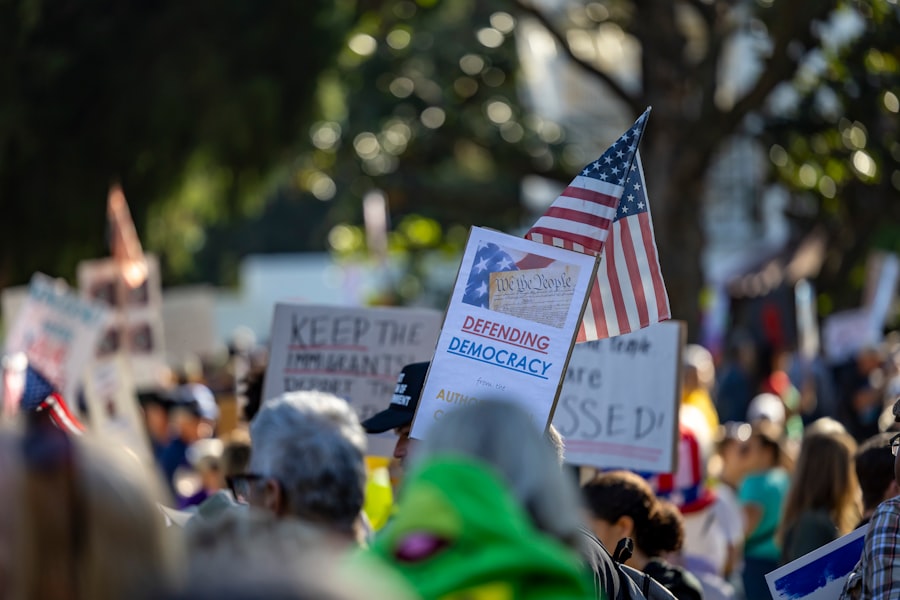
Civil discourse is fundamental to a healthy democracy and serves as a cornerstone for addressing political divides. Engaging in respectful conversations allows individuals to express their opinions while also considering alternative viewpoints. This practice not only enriches public debate but also cultivates an atmosphere where differing ideas can coexist without devolving into hostility or aggression.
To promote civil discourse, it is vital for individuals to adopt a mindset of curiosity rather than defensiveness. Approaching discussions with an open heart and mind encourages participants to ask questions and seek clarification rather than resorting to personal attacks or dismissive comments. Educational institutions can play a significant role in fostering civil discourse by incorporating programs that teach students how to engage in constructive conversations about contentious topics.
By equipping future generations with these skills, society can work towards reducing polarization and fostering a culture of respect.
Building Trust and Establishing Common Ground
Building trust among individuals with differing political beliefs is essential for creating a more cohesive society. Trust is often eroded by misinformation and negative stereotypes; therefore, it is crucial for communities to engage in activities that promote transparency and accountability. Initiatives such as town hall meetings or community forums can provide platforms for open dialogue where citizens can voice their concerns and ask questions directly to their representatives.
Establishing common ground is another vital component of bridging the political divide. Identifying shared interests—such as economic stability, education reform, or environmental protection—can serve as a foundation for collaboration. When individuals focus on what unites them rather than what divides them, they are more likely to work together towards solutions that benefit everyone involved.
This approach not only fosters cooperation but also reinforces the idea that diverse perspectives can contribute positively to collective goals.
The Power of Listening and Understanding
Listening is an often-underestimated skill that holds immense power in bridging divides. Active listening involves fully engaging with what others are saying without formulating responses while they speak. This practice allows individuals to absorb information deeply and respond thoughtfully rather than reactively.
By prioritizing listening over speaking, participants can create an environment where everyone feels valued and respected. Understanding goes hand-in-hand with listening; it requires individuals to reflect on what they have heard and consider its implications. When people take the time to understand the experiences and emotions behind differing viewpoints, they are more likely to find commonalities that foster connection.
This process not only enhances interpersonal relationships but also contributes to a broader culture of empathy within society.
Fostering Collaboration and Compromise
Collaboration is essential for overcoming political divides and achieving meaningful progress on pressing issues. When individuals from different backgrounds come together to work towards shared goals, they can leverage their diverse perspectives to generate innovative solutions. Collaborative efforts can take many forms—community projects, policy advocacy groups, or even informal gatherings focused on problem-solving.
Compromise is another critical aspect of fostering collaboration. In a polarized environment, individuals may feel compelled to hold steadfastly to their positions; however, true progress often requires finding middle ground. Encouraging a mindset of flexibility allows participants to explore alternative solutions that may not align perfectly with their original beliefs but still address the needs of all parties involved.
By prioritizing collaboration over confrontation, communities can work towards solutions that benefit everyone.
The Role of Education in Bridging the Divide
Education plays a pivotal role in bridging the political divide by equipping individuals with critical thinking skills and fostering an understanding of diverse perspectives. Schools and educational institutions have the opportunity to create curricula that emphasize civic engagement, media literacy, and respectful discourse. By teaching students how to analyze information critically and engage thoughtfully with differing viewpoints, educators can prepare future generations for active participation in democracy.
Moreover, educational initiatives that promote dialogue across political lines can help dismantle stereotypes and foster empathy among students. Programs that encourage students from different backgrounds to collaborate on projects or engage in discussions about contentious issues can create lasting connections that transcend ideological boundaries. By prioritizing education as a tool for bridging divides, society can cultivate informed citizens who are equipped to navigate complex political landscapes.
Moving Forward: Creating a United Vision for the Future
As society grapples with the challenges posed by political polarization, it is essential to envision a united future where collaboration and understanding prevail over division and hostility. This vision requires collective effort from individuals, communities, and institutions alike. By prioritizing empathy, civil discourse, and collaboration, society can work towards creating an environment where diverse perspectives are valued rather than vilified.
It involves recognizing that while differences may exist, shared humanity binds individuals together in pursuit of common goals. By fostering an inclusive culture that celebrates diversity while promoting unity, society can pave the way for a brighter future—one where collaboration triumphs over division and understanding prevails over animosity.
To address the pressing issue of America’s political divide, one insightful article that offers potential solutions is available at