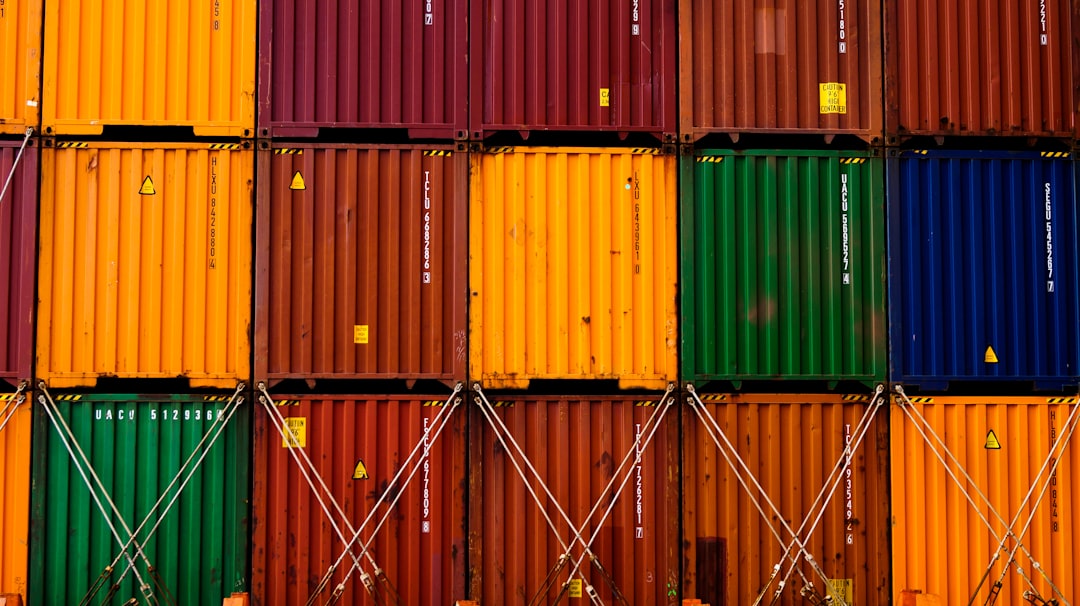
Chokepoint vulnerability in global trade describes critical bottlenecks in international supply chains where disruptions can cause substantial delays and economic damage. These chokepoints typically consist of narrow maritime passages, including straits, canals, and ports, through which large volumes of cargo must transit. These locations function as essential conduits for international commerce, with disruptions from geopolitical conflicts, natural disasters, or operational failures creating widespread economic impacts that extend far beyond the immediate geographic area.
The growing complexity and interconnectedness of global supply chains has amplified chokepoint risks. Modern trade networks increasingly depend on just-in-time delivery systems and lean inventory management, making them more susceptible to disruptions at critical transit points. Blockages or delays at major chokepoints can halt manufacturing operations, escalate shipping costs, and create shortages of consumer goods and raw materials.
Effective management of chokepoint vulnerability requires coordinated efforts from businesses, governments, and international organizations to develop resilient trade infrastructure and contingency planning mechanisms.
Key Takeaways
- Chokepoints are critical narrow passages in global trade routes that can significantly disrupt supply chains.
- Key chokepoints include the Suez Canal, Strait of Hormuz, and Panama Canal, each vital for international shipping.
- Vulnerabilities at chokepoints can lead to major economic losses, supply delays, and increased geopolitical tensions.
- Strategies to mitigate risks involve diversifying routes, investing in technology, and enhancing international cooperation.
- Technological innovations and case studies highlight ways to better manage chokepoint disruptions and their environmental and social impacts.
Understanding the Impact of Chokepoints on Global Trade
The impact of chokepoints on global trade is multifaceted, affecting not only the immediate flow of goods but also broader economic stability. When a chokepoint is compromised, it can lead to significant delays in shipping schedules, which in turn disrupts supply chains that rely on timely deliveries. For instance, if a major shipping lane is blocked, vessels may be forced to reroute, leading to longer transit times and increased fuel costs.
This can create a cascading effect throughout the supply chain, where manufacturers face delays in receiving raw materials and retailers struggle to keep shelves stocked. Moreover, the economic implications of chokepoint disruptions extend beyond immediate logistical challenges.
In some cases, companies may even face contractual penalties for failing to deliver goods on time. The uncertainty created by potential chokepoint vulnerabilities can also deter investment and hinder economic growth, as businesses may be reluctant to commit resources in an environment characterized by unpredictability.
Identifying Key Chokepoints in Global Trade Routes

Several key chokepoints are critical to the functioning of global trade routes. The Strait of Hormuz, for example, is one of the most significant maritime chokepoints in the world, through which a substantial portion of the world’s oil supply is transported. Any disruption in this strait can have immediate and far-reaching consequences for global energy markets.
Similarly, the Suez Canal serves as a vital passage for container ships traveling between Europe and Asia. The blockage of this canal in 2021 by the Ever Given container ship highlighted just how quickly global trade can be affected by a single incident. Other notable chokepoints include the Strait of Malacca, which is crucial for trade between Asia and the West, and the Panama Canal, which facilitates maritime traffic between the Atlantic and Pacific Oceans.
Each of these chokepoints plays a pivotal role in shaping global trade dynamics. Their strategic importance means that they are often at the center of geopolitical tensions, making them susceptible to disruptions that can have widespread implications for international commerce.
The Role of Chokepoints in Global Supply Chain Disruptions
Chokepoints play a critical role in global supply chain disruptions, acting as potential bottlenecks that can halt the flow of goods and services. When a chokepoint is compromised—whether through natural disasters like hurricanes or human-made events such as blockades—the consequences can be severe. For instance, during the COVID-19 pandemic, various chokepoints experienced significant disruptions due to port closures and labor shortages, leading to widespread delays in shipping and increased costs for businesses.
The interconnected nature of modern supply chains means that disruptions at one chokepoint can have cascading effects throughout the entire system. A delay in one region can lead to shortages in another, forcing companies to scramble for alternative suppliers or transportation routes. This not only increases operational costs but also strains relationships with customers who expect timely deliveries.
As businesses strive to maintain efficiency and meet consumer demand, understanding the role of chokepoints becomes essential for developing robust supply chain strategies.
Strategies for Mitigating Chokepoint Vulnerability in Global Trade
| Chokepoint | Location | Annual Trade Volume (Million Tons) | Percentage of Global Maritime Trade | Primary Commodities | Vulnerability Factors |
|---|---|---|---|---|---|
| Strait of Hormuz | Between Persian Gulf and Gulf of Oman | 21,000 | 20% | Oil, Natural Gas | Geopolitical tensions, military conflicts |
| Strait of Malacca | Between Malaysia and Indonesia | 80,000 | 25% | Oil, Manufactured Goods, Containers | Piracy, narrow channel, congestion |
| Panama Canal | Panama | 300 | 5% | Containers, Bulk Cargo | Infrastructure limits, weather disruptions |
| Bab el-Mandeb | Between Yemen and Djibouti | 4,800 | 4% | Oil, Containers | Regional conflicts, piracy |
| Strait of Gibraltar | Between Spain and Morocco | 2,000 | 3% | Containers, Oil | Traffic congestion, geopolitical risks |
To mitigate chokepoint vulnerability in global trade, businesses and governments must adopt proactive strategies that enhance resilience and adaptability. One effective approach is diversifying supply chains by sourcing materials from multiple suppliers across different regions. This strategy reduces reliance on any single chokepoint and allows companies to pivot quickly in response to disruptions.
Additionally, investing in alternative transportation routes—such as rail or air freight—can provide valuable options when maritime routes are compromised. Another critical strategy involves leveraging technology to improve visibility and communication within supply chains. Advanced tracking systems and data analytics can help businesses monitor shipments in real-time, allowing them to anticipate potential delays and make informed decisions about rerouting or adjusting inventory levels.
Furthermore, fostering collaboration among stakeholders—such as suppliers, logistics providers, and government agencies—can enhance collective preparedness for potential disruptions at chokepoints.
The Geopolitical Implications of Chokepoint Vulnerability
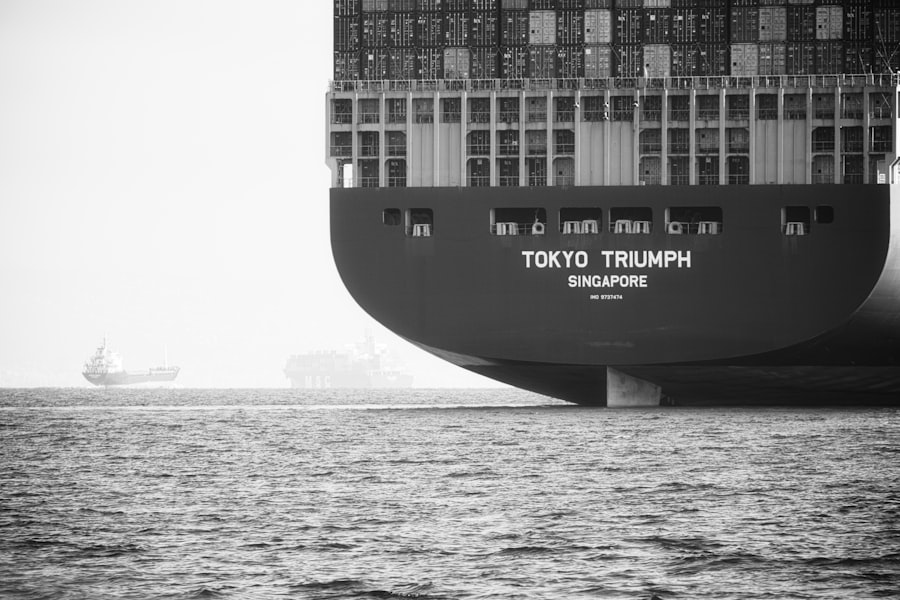
Chokepoint vulnerability is not only an economic concern but also a geopolitical one. The strategic importance of key maritime routes often places them at the center of international relations and conflicts. Nations may seek to exert control over these chokepoints to secure their economic interests or enhance their geopolitical influence.
For example, tensions in the South China Sea have raised concerns about access to vital shipping lanes and the potential for military confrontations. Moreover, chokepoint vulnerabilities can exacerbate existing geopolitical tensions between nations. Disruptions at critical junctures may lead to retaliatory actions or escalations in conflict, further destabilizing regions that are already fraught with tension.
As countries navigate these complexities, understanding the geopolitical implications of chokepoint vulnerabilities becomes essential for policymakers seeking to maintain stability in global trade.
Technological Innovations for Managing Chokepoint Vulnerability
Technological innovations play a pivotal role in managing chokepoint vulnerability within global trade networks. The advent of digital technologies has transformed how businesses approach logistics and supply chain management. For instance, blockchain technology offers enhanced transparency and traceability throughout supply chains, enabling stakeholders to track shipments more effectively and respond swiftly to disruptions.
Additionally, artificial intelligence (AI) and machine learning algorithms can analyze vast amounts of data to predict potential chokepoint disruptions based on historical patterns and real-time information. By leveraging these technologies, companies can develop more resilient supply chain strategies that account for potential vulnerabilities at critical junctures. Furthermore, advancements in automation and robotics can streamline operations at ports and logistics hubs, reducing bottlenecks and improving overall efficiency.
Case Studies of Chokepoint Disruptions in Global Trade
Several case studies illustrate the profound impact of chokepoint disruptions on global trade. The blockage of the Suez Canal by the Ever Given container ship in March 2021 serves as a prime example. The incident halted traffic through one of the world’s busiest maritime routes for six days, leading to an estimated $9 billion in daily losses for global trade.
The event underscored how quickly a single disruption could ripple through supply chains worldwide, affecting industries ranging from automotive to consumer goods. Another notable case is the ongoing tensions in the Strait of Hormuz, where geopolitical conflicts have raised concerns about oil supply security. Incidents involving attacks on tankers or military confrontations have led to fluctuations in oil prices and heightened uncertainty within energy markets.
These case studies highlight not only the economic ramifications of chokepoint vulnerabilities but also their potential to disrupt entire industries and economies.
The Economic Costs of Chokepoint Vulnerability
The economic costs associated with chokepoint vulnerability are substantial and multifaceted. Delays caused by disruptions at critical junctures can lead to increased shipping costs as companies seek alternative routes or modes of transportation. These additional expenses can erode profit margins and ultimately be passed on to consumers through higher prices for goods.
Moreover, the long-term economic implications can be even more severe. Businesses may face reputational damage due to their inability to deliver products on time, leading to lost customers and diminished market share. In extreme cases, prolonged disruptions can result in layoffs or business closures, further exacerbating economic challenges within affected regions.
As such, understanding the economic costs associated with chokepoint vulnerabilities is essential for businesses aiming to navigate an increasingly complex global trade landscape.
The Environmental and Social Impacts of Chokepoint Vulnerability
Chokepoint vulnerability also carries significant environmental and social implications that extend beyond immediate economic concerns. Disruptions at critical junctures can lead to increased emissions from rerouted shipping traffic or longer transit times as vessels seek alternative routes. This not only contributes to climate change but also exacerbates air quality issues in coastal regions where shipping traffic is concentrated.
Socially, communities dependent on industries affected by chokepoint disruptions may face job losses or reduced economic opportunities during periods of instability. For instance, port workers may experience layoffs during prolonged disruptions at maritime chokepoints, leading to increased unemployment rates in affected areas. Addressing these environmental and social impacts requires a holistic approach that considers not only economic resilience but also sustainability and community well-being.
Navigating Chokepoint Vulnerability in Global Trade
Navigating chokepoint vulnerability in global trade presents both challenges and opportunities for businesses and policymakers alike. As global trade continues to evolve amidst increasing complexity and interdependence, understanding the significance of these critical junctures becomes paramount. By adopting proactive strategies that enhance resilience—such as diversifying supply chains, leveraging technology, and fostering collaboration—stakeholders can better prepare for potential disruptions.
Moreover, recognizing the geopolitical implications of chokepoint vulnerabilities is essential for maintaining stability within international trade networks. As nations grapple with competing interests over strategic maritime routes, fostering dialogue and cooperation will be crucial for mitigating risks associated with chokepoints. Ultimately, addressing chokepoint vulnerability requires a comprehensive approach that balances economic interests with environmental sustainability and social responsibility—ensuring that global trade remains resilient in an ever-changing landscape.
A related article that delves deeper into this topic can be found at this link, where it discusses the implications of chokepoints on global commerce and potential strategies for mitigating risks. Understanding these vulnerabilities is crucial for businesses and governments alike as they navigate the complexities of international trade.
WATCH THIS! 🌍 THE $15 TRILLION GAMBLE: What Happens If The Strait of Malacca Closes For One Week?
FAQs
What is a global trade chokepoint?
A global trade chokepoint is a narrow passage or strategic location through which a significant portion of international maritime trade passes. These chokepoints are critical for the efficient movement of goods and energy supplies between regions.
Why are global trade chokepoints considered vulnerable?
Global trade chokepoints are vulnerable because their narrow geography makes them susceptible to disruptions caused by geopolitical conflicts, piracy, natural disasters, or accidents. Any blockage or restriction can significantly impact global supply chains and trade flows.
What are some examples of major global trade chokepoints?
Major global trade chokepoints include the Strait of Hormuz, the Suez Canal, the Panama Canal, the Strait of Malacca, and the Bab el-Mandeb Strait. These locations are vital for the transit of oil, goods, and raw materials.
How can disruptions at trade chokepoints affect the global economy?
Disruptions at trade chokepoints can lead to delays, increased shipping costs, and shortages of goods and energy supplies. This can cause price volatility, impact manufacturing and consumption, and slow down economic growth worldwide.
What measures are taken to mitigate vulnerabilities at global trade chokepoints?
Measures include enhancing maritime security, diversifying trade routes, investing in alternative infrastructure, international cooperation to ensure safe passage, and developing contingency plans to manage potential disruptions.
How does geopolitical tension influence the security of trade chokepoints?
Geopolitical tensions can increase the risk of conflicts or blockades at chokepoints, threatening the free flow of trade. Countries may use control or influence over these areas as leverage in international relations.
Can technological advancements help reduce the risks associated with trade chokepoints?
Yes, advancements such as improved navigation systems, real-time monitoring, autonomous vessels, and enhanced communication technologies can improve safety and efficiency, helping to mitigate risks at chokepoints.
Are there alternative routes to bypass major global trade chokepoints?
In some cases, alternative routes exist, such as longer maritime paths or overland transport corridors. However, these alternatives may be less efficient, more costly, or have limited capacity compared to primary chokepoints.
What role do international organizations play in managing trade chokepoint vulnerabilities?
International organizations facilitate cooperation among countries to ensure maritime security, establish regulations, coordinate responses to emergencies, and promote the free flow of trade through critical chokepoints.
How can businesses prepare for potential disruptions at global trade chokepoints?
Businesses can diversify supply chains, maintain inventory buffers, develop flexible logistics strategies, monitor geopolitical developments, and collaborate with partners to enhance resilience against chokepoint disruptions.