
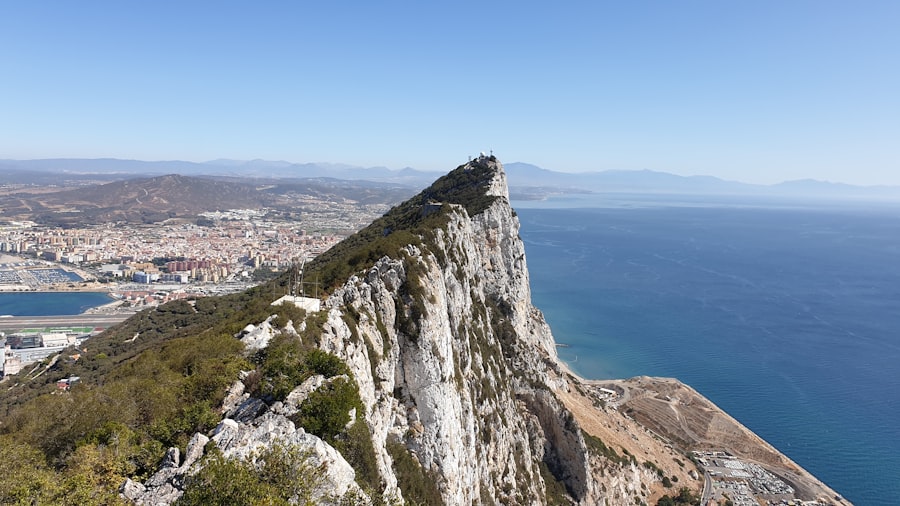
The Gibraltar border dispute has its roots in a complex history of territorial claims and geopolitical tensions. Located at the southern tip of the Iberian Peninsula, Gibraltar is a British Overseas Territory that has been a point of contention between the United Kingdom and Spain for centuries. The territory, which covers just 6.7 square kilometers, is strategically significant due to its position at the entrance to the Mediterranean Sea.
The British took control of Gibraltar in 1704 during the War of the Spanish Succession, and it was formally ceded to Britain in the Treaty of Utrecht in 1713. Since then, Spain has maintained a claim over the territory, viewing it as an integral part of its national sovereignty. The dispute has been characterized by a series of diplomatic tensions, border restrictions, and cultural clashes.
Over the years, Gibraltar has developed its own identity, distinct from that of Spain, with a unique blend of British and Mediterranean influences. The local population, known as Gibraltarians, overwhelmingly identifies as British and has consistently expressed a desire to remain under British sovereignty. This sentiment was notably reflected in the 2002 referendum, where Gibraltarians voted against proposals for shared sovereignty with Spain.
The ongoing dispute has not only affected diplomatic relations but has also had significant implications for trade, travel, and daily life for those living in and around the border.
Key Takeaways
- The Gibraltar Border Agreement resolves longstanding disputes between Gibraltar and Spain, improving cross-border cooperation.
- Key provisions include streamlined border controls and enhanced trade and travel facilitation.
- The agreement received mixed reactions locally but was largely welcomed by the international community.
- Implementation will require ongoing negotiation to address potential challenges and ensure smooth operations.
- The deal positively influences Gibraltar-Spain relations and has broader implications for EU regional stability.
Negotiations Leading up to the Agreement
In recent years, the Gibraltar border dispute has seen renewed efforts towards negotiation and resolution. The changing political landscape in Europe, particularly following Brexit, has prompted both Spain and the United Kingdom to reassess their positions regarding Gibraltar. The departure of the UK from the European Union created a new urgency for both parties to address the practical implications of border management and cooperation.
As a result, informal talks began to take shape, focusing on issues such as trade facilitation, security cooperation, and the rights of citizens living on both sides of the border. These negotiations were marked by a willingness from both sides to engage in dialogue and seek common ground. High-level meetings between British and Spanish officials took place, with an emphasis on finding solutions that would benefit both Gibraltarians and Spaniards alike.
The discussions were not without their challenges; historical grievances and national pride often complicated the process. However, both parties recognized that a stable and cooperative relationship was essential for economic prosperity and regional stability. As negotiations progressed, it became clear that a formal agreement was within reach, setting the stage for a new chapter in Gibraltar-Spain relations.
Key Points of the Gibraltar Border Agreement
The Gibraltar Border Agreement represents a significant milestone in the long-standing dispute between Gibraltar and Spain. One of the key points of the agreement is the establishment of streamlined border procedures aimed at facilitating trade and travel between Gibraltar and Spain. This includes measures to reduce waiting times at border crossings and enhance customs cooperation.
By simplifying these processes, both parties hope to boost economic activity and improve the quality of life for residents who frequently cross the border for work or leisure. Another important aspect of the agreement is the commitment to joint security initiatives. Recognizing that both Gibraltar and Spain face common challenges related to crime and terrorism, the agreement outlines collaborative efforts to enhance security measures along the border.
This includes information sharing between law enforcement agencies and coordinated responses to potential threats. Additionally, the agreement emphasizes respect for the rights of individuals on both sides of the border, ensuring that Gibraltarians can continue to enjoy their freedoms while fostering a spirit of cooperation with their Spanish neighbors.
Reaction from Gibraltar and Spain
The reaction to the Gibraltar Border Agreement has been mixed, reflecting the diverse perspectives within both communities. In Gibraltar, many residents welcomed the agreement as a positive step towards improving relations with Spain. The prospect of reduced border delays and enhanced economic opportunities resonated with Gibraltarians who rely on cross-border movement for work and commerce.
Local leaders expressed optimism that this agreement could pave the way for further collaboration in areas such as tourism and cultural exchange. Conversely, there were voices of skepticism within Gibraltar regarding any perceived concessions made to Spain. Some residents feared that increased cooperation could lead to a dilution of their British identity or an erosion of their autonomy.
In Spain, reactions were similarly varied; while some officials praised the agreement as a pragmatic solution to longstanding issues, others criticized it as insufficient in addressing Spain’s territorial claims over Gibraltar. This divergence in reactions underscores the complexity of national identities and historical grievances that continue to shape perceptions on both sides.
Implications for Trade and Travel
| Metric | Details | Value | Unit | Notes |
|---|---|---|---|---|
| Agreement Date | Official signing date of the Gibraltar Border Agreement | June 2025 | Month/Year | Marks the formalization of border arrangements |
| Border Crossing Points | Number of official border crossing points established | 3 | Count | Includes pedestrian and vehicular crossings |
| Average Daily Crossings | Estimated number of people crossing the border daily | 15,000 | People | Based on pre-agreement traffic data |
| Customs Checks Duration | Average time taken for customs checks at the border | 10 | Minutes | Reduced from previous average of 25 minutes |
| Trade Volume | Monthly trade volume crossing the border | 5,000 | Tonnes | Includes goods transported between Gibraltar and Spain |
| Security Personnel | Number of security staff deployed at the border | 120 | Personnel | Jointly managed by Gibraltar and Spanish authorities |
| Border Operating Hours | Daily hours during which the border is open | 24 | Hours | Ensures continuous flow of people and goods |
The implications of the Gibraltar Border Agreement for trade and travel are expected to be profound. By streamlining border procedures, both Gibraltar and Spain aim to enhance economic ties that have historically been hampered by bureaucratic hurdles. The agreement is anticipated to facilitate smoother movement of goods and services across the border, benefiting businesses on both sides.
For Gibraltar, which relies heavily on tourism and cross-border trade, this could translate into increased revenue and job creation. Travelers crossing the border can also expect improvements in their daily experiences. With reduced waiting times at checkpoints and enhanced cooperation between customs authorities, individuals will find it easier to navigate their commutes or leisure trips.
This newfound efficiency may encourage more people to explore opportunities on either side of the border, fostering greater cultural exchange and social interaction. Ultimately, these changes could contribute to a more integrated regional economy that benefits both Gibraltarians and Spaniards alike.
International Response to the Agreement

The international response to the Gibraltar Border Agreement has been largely supportive, with various stakeholders recognizing its potential to foster stability in a historically contentious region. European Union officials have expressed approval for the agreement as a constructive step towards resolving issues arising from Brexit. The EU’s interest in maintaining good relations between member states and neighboring territories underscores its commitment to regional stability.
Additionally, other countries with interests in European affairs have taken note of this development. The United States, for instance, has historically maintained close ties with both Spain and the UK; thus, it views this agreement as a positive move towards reducing tensions in an area critical for international shipping routes. Observers from various sectors have highlighted that successful negotiations could serve as a model for resolving other territorial disputes around the world, showcasing diplomacy’s potential to bridge divides.
Future of Gibraltar-Spain Relations
The future of Gibraltar-Spain relations appears more hopeful following the signing of the border agreement. While historical grievances will not disappear overnight, there is a growing recognition on both sides that collaboration can yield tangible benefits. The agreement lays a foundation for ongoing dialogue and cooperation in various sectors beyond trade and security, including environmental protection and cultural initiatives.
As both parties move forward, it will be essential for them to build on this momentum by continuing to engage in constructive discussions. Future negotiations could explore additional areas of mutual interest, such as joint tourism campaigns or shared infrastructure projects that enhance connectivity between Gibraltar and Spain. By fostering goodwill and understanding, there is potential for a more harmonious relationship that respects each party’s identity while promoting shared prosperity.
Implementation of the Agreement
The successful implementation of the Gibraltar Border Agreement will require concerted efforts from both governments. Establishing clear timelines for rolling out new border procedures will be crucial in ensuring that residents experience tangible benefits as soon as possible. Both sides must work collaboratively to develop training programs for customs officials and law enforcement personnel tasked with enforcing new protocols.
Moreover, public awareness campaigns will play an essential role in informing residents about changes resulting from the agreement. By communicating effectively with citizens on both sides of the border, authorities can help alleviate concerns about potential disruptions while fostering enthusiasm for improved cross-border relations. Continuous monitoring and evaluation will also be necessary to address any unforeseen challenges that may arise during implementation.
Potential Challenges and Obstacles
Despite the optimism surrounding the Gibraltar Border Agreement, several challenges could hinder its successful implementation. One significant obstacle may be political resistance from factions within both Gibraltar and Spain that oppose any form of compromise or cooperation. Nationalist sentiments can be strong on both sides; thus, any perceived concessions could provoke backlash from those who prioritize sovereignty over collaboration.
Additionally, logistical challenges related to infrastructure may arise as new procedures are put into place. Upgrading border facilities to accommodate increased traffic or implementing new technology for customs processing may require substantial investment and time. Both governments must remain committed to addressing these challenges proactively while maintaining open lines of communication with their respective populations.
Impact on the European Union
The Gibraltar Border Agreement holds implications not only for bilateral relations but also for broader European Union dynamics. As Brexit continues to reshape relationships within Europe, this agreement serves as an example of how neighboring territories can navigate complex issues through diplomacy rather than conflict. The EU may view this development as an opportunity to reinforce its role as a facilitator of dialogue among member states.
By demonstrating that cooperation is possible even amid historical tensions, this agreement could contribute positively to EU cohesion efforts while reinforcing principles of mutual respect among member states.
Looking Ahead: What the Agreement Means for the Region
Looking ahead, the Gibraltar Border Agreement represents a significant turning point in regional relations between Gibraltar and Spain. It signals a willingness from both parties to prioritize collaboration over conflict while acknowledging each other’s unique identities. As trade flows improve and travel becomes more accessible, there is potential for increased economic interdependence that benefits communities on both sides.
Moreover, this agreement could serve as a catalyst for broader regional cooperation beyond just trade and travel issues. By fostering dialogue around shared challenges such as environmental sustainability or public health concerns, Gibraltar and Spain may find common ground that transcends historical grievances. Ultimately, if both parties commit to nurturing this newfound spirit of collaboration, they may pave the way for a more prosperous future characterized by mutual respect and understanding in an increasingly interconnected world.
In light of the recent Gibraltar border agreement reached in June 2025, it is essential to explore the implications of this development on regional relations and trade. For a deeper understanding of the context surrounding this agreement, you can read a related article that discusses the historical background and potential future impacts of the border negotiations. Check it out here: Gibraltar Border Agreement Insights.
WATCH THIS! The $10 Trillion Secret: What Happens If The Strait of Gibraltar Closes For Good
FAQs
What is the Gibraltar Border Agreement of June 2025?
The Gibraltar Border Agreement of June 2025 is a treaty between the United Kingdom, Spain, and Gibraltar aimed at improving border management, facilitating smoother cross-border movement, and enhancing cooperation on security and customs matters.
Why was the Gibraltar Border Agreement signed in June 2025?
The agreement was signed to address ongoing challenges related to border delays, customs checks, and regulatory coordination following Brexit, ensuring that people and goods can move more efficiently between Gibraltar and Spain.
Who are the parties involved in the Gibraltar Border Agreement?
The agreement involves three parties: the United Kingdom, the Government of Gibraltar, and the Kingdom of Spain.
What are the main provisions of the Gibraltar Border Agreement?
Key provisions include streamlined customs procedures, enhanced cooperation on border security, mutual recognition of certain regulatory standards, and measures to facilitate daily cross-border commuting.
How does the agreement affect residents of Gibraltar and neighboring Spanish areas?
The agreement aims to reduce border waiting times, simplify travel documentation requirements, and improve economic and social ties by making cross-border movement easier for residents and workers.
Does the agreement impact Gibraltar’s sovereignty?
The agreement focuses on practical border management and does not alter the sovereignty status of Gibraltar, which remains a British Overseas Territory.
How will the agreement be implemented and monitored?
Implementation will be overseen by joint committees comprising representatives from the UK, Gibraltar, and Spain, with regular reviews to ensure compliance and address any issues.
What role does the European Union play in the Gibraltar Border Agreement?
While the EU is not a direct party to the agreement, it supports cooperation frameworks that facilitate border management between Gibraltar and Spain, especially given Spain’s EU membership.
When did the Gibraltar Border Agreement come into effect?
The agreement was signed in June 2025 and came into effect shortly thereafter, following ratification by the involved parties.
Where can I find the full text of the Gibraltar Border Agreement?
The full text is typically published on the official government websites of the United Kingdom, Gibraltar, and Spain, as well as in official legal and diplomatic records.