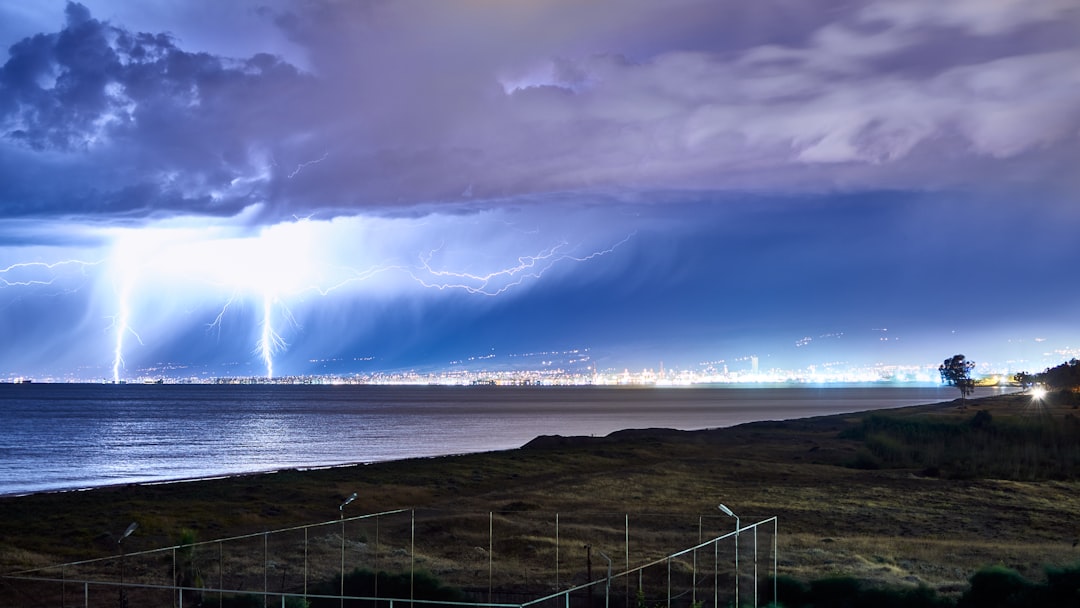
The accuracy of geomagnetic storm forecasting holds significant importance in today’s technologically driven society.
As society becomes increasingly reliant on technology, the need for precise forecasting becomes paramount.
Accurate predictions can help mitigate the risks associated with these storms, allowing for timely interventions that protect infrastructure and ensure the safety of individuals. Moreover, the implications of geomagnetic storms extend beyond immediate technological concerns. They can also impact navigation systems, aviation safety, and even the health of astronauts in space.
The ability to forecast these storms with a high degree of accuracy can lead to better preparedness and response strategies, ultimately safeguarding both human life and technological assets. As such, the scientific community continues to prioritize advancements in forecasting techniques to enhance the reliability of geomagnetic storm predictions.
Key Takeaways
- Accurate geomagnetic storm forecasting is crucial for protecting Earth and space technologies.
- Current forecasting faces challenges due to limited data and complex solar-terrestrial interactions.
- Advances in monitoring technology and data analysis are improving prediction capabilities.
- Collaboration among researchers and integration of space weather studies enhance forecasting models.
- Increasing public awareness and preparedness is essential to mitigate the impacts of geomagnetic storms.
Current Challenges in Geomagnetic Storm Forecasting
Despite the advancements made in geomagnetic storm forecasting, several challenges persist that hinder the accuracy and reliability of predictions. One of the primary obstacles is the inherent complexity of solar activity and its unpredictable nature. Solar flares and coronal mass ejections (CMEs) can occur with little warning, making it difficult for scientists to provide timely forecasts.
The chaotic behavior of the sun adds layers of uncertainty to models that attempt to predict geomagnetic storms, often leading to discrepancies between forecasts and actual events. Additionally, the vastness of space and the limitations of current observational technologies pose significant challenges. While satellites and ground-based observatories provide valuable data, gaps in coverage can lead to incomplete information about solar activity.
This lack of comprehensive data can result in missed opportunities for accurate forecasting. Furthermore, the integration of data from various sources remains a complex task, as inconsistencies in measurement techniques can complicate analysis and interpretation.
Advancements in Geomagnetic Storm Monitoring Technology

In recent years, advancements in geomagnetic storm monitoring technology have shown promise in improving forecasting accuracy. The development of sophisticated satellites equipped with advanced sensors has enhanced the ability to monitor solar activity in real-time. These satellites can capture detailed images of solar flares and CMEs, providing critical data that can be used to predict potential geomagnetic storms.
The increased resolution and sensitivity of these instruments allow scientists to observe solar phenomena with unprecedented clarity. Moreover, the implementation of machine learning algorithms has revolutionized data analysis in this field. By processing vast amounts of data from multiple sources, these algorithms can identify patterns and correlations that may not be immediately apparent to human analysts.
This capability enables more accurate predictions by refining models based on historical data and real-time observations. As technology continues to evolve, the integration of artificial intelligence into geomagnetic storm monitoring holds great potential for enhancing forecasting capabilities.
The Role of Solar Activity in Geomagnetic Storms
Solar activity plays a crucial role in the occurrence and intensity of geomagnetic storms. The sun undergoes an approximately 11-year cycle of solar activity, characterized by varying levels of sunspots, solar flares, and CMEs. During periods of heightened solar activity, the likelihood of geomagnetic storms increases significantly.
Understanding this relationship is essential for accurate forecasting, as it allows scientists to anticipate potential storm events based on solar conditions. Furthermore, the mechanisms behind solar activity are complex and multifaceted. The interactions between magnetic fields on the sun’s surface and within its atmosphere contribute to the generation of solar flares and CMEs.
These explosive events release vast amounts of energy and charged particles into space, which can subsequently interact with Earth’s magnetic field. By studying these processes in greater detail, researchers can improve their understanding of how solar activity influences geomagnetic storms, leading to more reliable forecasting models.
Improving Data Collection and Analysis for Geomagnetic Storm Forecasting
| Forecasting Model | Accuracy (%) | Lead Time (hours) | False Alarm Rate (%) | Miss Rate (%) | Data Source |
|---|---|---|---|---|---|
| NOAA SWPC | 75 | 12 | 20 | 15 | Solar wind & magnetometer data |
| NASA CCMC | 70 | 24 | 25 | 20 | Solar wind, ACE satellite |
| Machine Learning Model A | 82 | 6 | 18 | 10 | Historical geomagnetic indices |
| Empirical Model B | 65 | 3 | 30 | 25 | Solar wind parameters |
| Hybrid Model C | 78 | 18 | 22 | 12 | Solar wind & machine learning |
Enhancing data collection methods is vital for improving geomagnetic storm forecasting accuracy. The establishment of a global network of observatories dedicated to monitoring solar activity and geomagnetic conditions is essential for gathering comprehensive data. These observatories can provide real-time measurements of solar wind parameters, magnetic field fluctuations, and other relevant factors that contribute to geomagnetic storm development.
In addition to expanding observational networks, improving data analysis techniques is equally important. The integration of diverse datasets from various sources can lead to a more holistic understanding of geomagnetic storms. By employing advanced statistical methods and machine learning techniques, researchers can analyze large datasets more effectively, identifying trends and anomalies that may indicate impending storm events.
This approach not only enhances forecasting accuracy but also contributes to a deeper understanding of the underlying processes driving geomagnetic storms.
Enhancing Model Development for Geomagnetic Storm Prediction

The development of robust models for geomagnetic storm prediction is a critical area of research that requires ongoing attention. Current models often rely on simplified assumptions about solar activity and its effects on Earth’s magnetosphere. To improve their predictive capabilities, researchers must incorporate more complex physical processes into these models.
This includes accounting for the intricate interactions between solar wind particles and Earth’s magnetic field, as well as considering the influence of other space weather phenomena. Collaboration between different scientific disciplines is essential for advancing model development. By integrating insights from astrophysics, plasma physics, and computational modeling, researchers can create more comprehensive models that accurately simulate geomagnetic storm dynamics.
Additionally, ongoing validation efforts using historical data can help refine these models over time, ensuring that they remain relevant as new observational data becomes available.
Collaborative Efforts in Geomagnetic Storm Forecasting Research
Collaboration among researchers, institutions, and international organizations is crucial for advancing geomagnetic storm forecasting research. The complexity of space weather phenomena necessitates a multidisciplinary approach that brings together experts from various fields. Collaborative efforts can lead to the sharing of data, resources, and expertise, ultimately enhancing the overall understanding of geomagnetic storms.
International partnerships have already begun to take shape in this area, with organizations such as NASA, NOAA, and ESA working together to improve forecasting capabilities. These collaborations facilitate joint research initiatives, data sharing agreements, and coordinated observational campaigns that enhance global monitoring efforts. By fostering a spirit of cooperation among scientists worldwide, the field can make significant strides toward more accurate and timely geomagnetic storm predictions.
The Impact of Geomagnetic Storms on Earth and Space Technology
The impact of geomagnetic storms on Earth and space technology cannot be overstated. These storms can disrupt satellite operations by causing communication failures or damaging sensitive electronic components. For instance, increased radiation levels during a geomagnetic storm can lead to satellite malfunctions or even complete failures, resulting in significant financial losses for companies reliant on satellite technology.
On Earth, geomagnetic storms can induce currents in power lines that may lead to voltage fluctuations or even blackouts in electrical grids. The 1989 Quebec blackout serves as a stark reminder of the potential consequences when geomagnetic storms are not adequately forecasted or prepared for. As society continues to depend on advanced technology for everyday functions, understanding and mitigating the impacts of geomagnetic storms becomes increasingly critical.
Integrating Space Weather Research into Geomagnetic Storm Forecasting
Integrating space weather research into geomagnetic storm forecasting is essential for developing a comprehensive understanding of these phenomena. Space weather encompasses a range of conditions influenced by solar activity, including cosmic rays, solar wind variations, and radiation hazards. By considering these factors alongside geomagnetic storm predictions, researchers can create a more holistic view of space weather impacts on Earth.
This integration requires collaboration between different scientific disciplines and institutions focused on space weather research. By sharing knowledge and resources across fields such as astrophysics, meteorology, and engineering, researchers can develop more effective forecasting models that account for a wider range of variables influencing geomagnetic storms. Ultimately, this interdisciplinary approach will enhance preparedness efforts and improve response strategies during significant space weather events.
Public Awareness and Preparedness for Geomagnetic Storms
Raising public awareness about geomagnetic storms is crucial for fostering preparedness at both individual and community levels. Many people remain unaware of the potential impacts these storms can have on daily life and technology. Educational initiatives aimed at informing the public about the nature of geomagnetic storms and their effects can empower individuals to take proactive measures in case of severe events.
By promoting awareness and preparedness efforts within communities, society can better navigate the challenges posed by these natural phenomena.
Future Directions in Geomagnetic Storm Forecasting Research
Looking ahead, future directions in geomagnetic storm forecasting research will likely focus on enhancing predictive capabilities through technological advancements and interdisciplinary collaboration. As observational technologies continue to evolve, researchers will have access to increasingly detailed data about solar activity and its effects on Earth’s magnetosphere. Moreover, ongoing developments in machine learning and artificial intelligence will play a pivotal role in refining forecasting models.
By harnessing these technologies to analyze vast datasets more efficiently, scientists can improve their understanding of complex relationships between solar activity and geomagnetic storms. In conclusion, as society becomes more reliant on technology that is vulnerable to space weather events like geomagnetic storms, continued investment in research and development will be essential for improving forecasting accuracy and enhancing preparedness efforts worldwide.
Recent advancements in geomagnetic storm forecasting accuracy have been highlighted in a related article that discusses the latest techniques and technologies being employed to improve predictions. For more in-depth information, you can read the article here: Geomagnetic Storm Forecasting Techniques. This resource provides valuable insights into how scientists are enhancing their models to better anticipate the impacts of solar activity on Earth’s magnetic field.
FAQs
What is a geomagnetic storm?
A geomagnetic storm is a temporary disturbance of the Earth’s magnetosphere caused by solar wind shock waves and/or cloud of magnetic field that interact with the Earth’s magnetic field.
Why is forecasting geomagnetic storms important?
Forecasting geomagnetic storms is important because these storms can disrupt satellite operations, communication systems, navigation systems, and power grids, potentially causing significant technological and economic impacts.
How accurate are current geomagnetic storm forecasts?
Current geomagnetic storm forecasts have improved over the years but still face challenges. Accuracy varies depending on the models used, data availability, and the complexity of solar and geomagnetic interactions. Forecasts typically provide warnings hours to a few days in advance with varying confidence levels.
What methods are used to forecast geomagnetic storms?
Forecasting methods include monitoring solar activity such as solar flares and coronal mass ejections (CMEs) using satellites, analyzing solar wind parameters, and using computer models to simulate the interaction between solar emissions and Earth’s magnetosphere.
What factors affect the accuracy of geomagnetic storm forecasts?
Factors include the quality and timeliness of solar observation data, the complexity of solar wind and magnetic field interactions, limitations in modeling techniques, and the inherent unpredictability of solar events.
Can geomagnetic storm forecasts predict the storm’s intensity?
Forecasts can estimate the potential intensity of geomagnetic storms based on solar wind speed, density, and magnetic field orientation, but precise intensity predictions remain challenging due to the complex nature of space weather.
How far in advance can geomagnetic storms be forecasted?
Geomagnetic storms can typically be forecasted from several hours up to a few days in advance, depending on the detection of solar events like CMEs and the speed at which solar wind travels toward Earth.
Are there any organizations that provide geomagnetic storm forecasts?
Yes, organizations such as the National Oceanic and Atmospheric Administration (NOAA), the European Space Agency (ESA), and various space weather prediction centers provide geomagnetic storm forecasts and alerts.
How can individuals and industries use geomagnetic storm forecasts?
Individuals and industries can use forecasts to prepare for potential disruptions by safeguarding electronic equipment, adjusting satellite operations, protecting power grids, and planning communication and navigation activities accordingly.
Is geomagnetic storm forecasting expected to improve in the future?
Yes, ongoing advancements in satellite technology, data analysis, and modeling techniques are expected to improve the accuracy and lead time of geomagnetic storm forecasts in the future.