
Tibet, often referred to as the “Roof of the World,” occupies a unique position in the heart of Asia, characterized by its vast plateaus and towering mountain ranges. This region, which spans approximately 1.2 million square kilometers, is not only the highest region on Earth but also serves as a critical geographical nexus connecting several major countries, including China, India, Nepal, and Bhutan. The Tibetan Plateau, with its average elevation exceeding 4,500 meters, plays a pivotal role in influencing the climate and hydrology of the surrounding areas.
The rivers that originate from this plateau, such as the Indus, Brahmaputra, and Yangtze, are lifelines for millions of people downstream, underscoring Tibet’s significance in terms of water resources. Moreover, Tibet’s geographical location has endowed it with strategic importance throughout history.
The rugged terrain and high-altitude environment have historically limited access, making it a challenging area for military incursions and trade. This geographical isolation has allowed Tibet to develop a distinct cultural identity while simultaneously serving as a buffer zone that mitigates conflicts between neighboring powers. As such, understanding Tibet’s geographical significance is essential for comprehending its historical role and contemporary relevance in regional dynamics.
Key Takeaways
- Tibet’s geographical location at the crossroads of Asia makes it a strategically significant region for regional security and stability.
- Throughout history, Tibet has served as a buffer zone between powerful neighboring empires, playing a crucial role in preventing conflicts and maintaining peace in the region.
- Tibet’s stability and autonomy are essential for ensuring peace and security in the surrounding areas, including India, China, and other neighboring countries.
- The political status of Tibet has a significant impact on the dynamics of the region, influencing the relationships between neighboring countries and the overall stability of the region.
- Tibet’s rich cultural and religious heritage promotes peace and harmony, contributing to the overall stability of the region and beyond.
Historical context of Tibet as a buffer zone
Historically, Tibet has functioned as a buffer zone between major empires and nations, particularly during periods of geopolitical tension. The region’s strategic location has made it a focal point for various powers seeking to expand their influence in Asia. During the 19th century, the Great Game between the British Empire and Tsarist Russia highlighted Tibet’s role as a contested space where both powers sought to assert their dominance.
The British viewed Tibet as a critical area to secure their interests in India, while Russia aimed to extend its reach into Central Asia. This historical context illustrates how Tibet’s geographical position has rendered it a significant player in international relations. In addition to its role in imperial rivalries, Tibet has also been a site of cultural exchange and interaction among neighboring civilizations.
The Silk Road, which facilitated trade between East and West, passed through regions adjacent to Tibet, allowing for the exchange of goods, ideas, and cultural practices. This historical interplay has contributed to Tibet’s unique cultural landscape while reinforcing its position as a buffer zone that fosters dialogue and understanding among diverse peoples. The historical context of Tibet as a buffer zone is thus marked by both conflict and cooperation, shaping its identity as a region of significance in the broader geopolitical landscape.
Tibet’s role in maintaining stability in the region
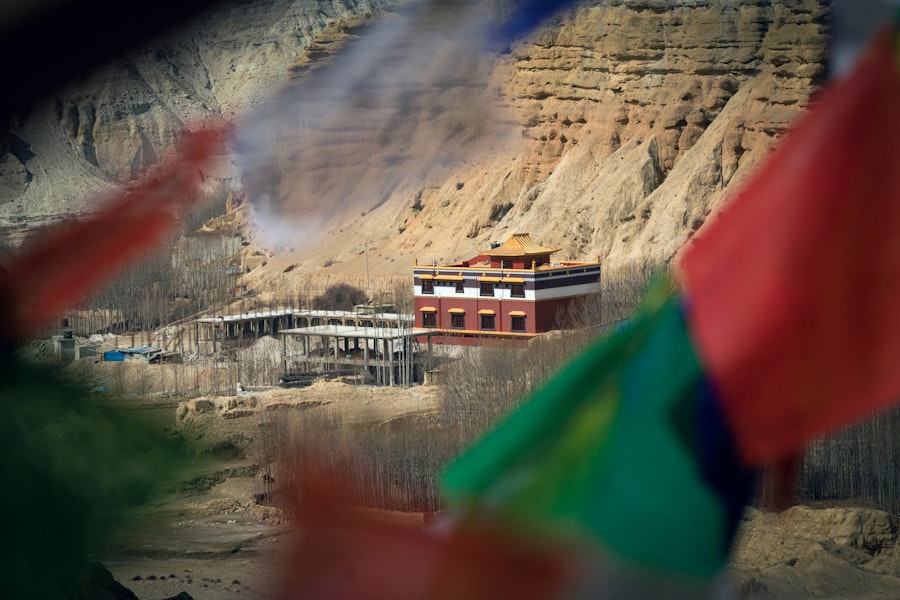
Tibet’s geographical and cultural characteristics have positioned it as a stabilizing force in the region. Its high-altitude terrain acts as a natural barrier that can deter military aggression and facilitate peaceful coexistence among neighboring countries. The Tibetan Plateau’s unique ecosystem also plays a crucial role in maintaining regional stability by providing essential water resources that support agriculture and livelihoods downstream.
As such, Tibet’s environmental health is intrinsically linked to the stability of surrounding nations. Furthermore, Tibet’s rich cultural heritage and spiritual traditions promote values of peace and compassion that resonate beyond its borders. The teachings of Tibetan Buddhism emphasize harmony with nature and respect for all living beings, fostering an ethos that encourages dialogue rather than conflict.
This cultural dimension enhances Tibet’s role as a mediator in regional disputes, allowing it to serve as a platform for dialogue among nations with differing interests. By promoting understanding and cooperation, Tibet contributes to maintaining stability in an otherwise volatile region.
Tibet’s influence on neighboring countries
| Neighboring Country | Influence of Tibet |
|---|---|
| India | Historical and cultural influence, especially in the northern regions |
| Nepal | Shared religious and cultural ties, influence of Tibetan Buddhism |
| China | Political and historical influence, especially in the context of the Tibetan independence movement |
| Bhutan | Cultural and religious influence, especially in the practice of Tibetan Buddhism |
Tibet’s influence extends beyond its borders, impacting the political, cultural, and economic landscapes of neighboring countries. The region’s spiritual traditions have inspired movements for peace and non-violence across Asia and beyond. Tibetan Buddhism has gained followers worldwide, with its teachings influencing various social and political movements that advocate for human rights and environmental sustainability.
This spiritual influence fosters connections between Tibetans and people from diverse backgrounds, creating a network of solidarity that transcends national boundaries. Economically, Tibet serves as a vital link between China and South Asia. The region’s natural resources, including minerals and water, are of significant interest to neighboring countries seeking to enhance their economic development.
Additionally, trade routes that traverse Tibet facilitate commerce between China and India, contributing to regional economic integration. This economic interdependence underscores Tibet’s role as a bridge between nations, highlighting its importance in fostering cooperation and mutual benefit among neighboring countries.
The impact of Tibet’s political status on regional dynamics
The political status of Tibet remains a contentious issue that significantly impacts regional dynamics. Since the incorporation of Tibet into the People’s Republic of China in the 1950s, tensions have persisted between Tibetan aspirations for autonomy and China’s central government policies. This political situation has implications not only for Tibetans but also for neighboring countries that are closely monitoring developments in the region.
The ongoing struggle for Tibetan self-determination has led to international attention and advocacy efforts aimed at promoting human rights and cultural preservation. Moreover, Tibet’s political status influences relationships between China and its neighbors. Countries such as India have historically supported Tibetan autonomy movements due to their own geopolitical interests in counterbalancing China’s influence in the region.
This complex interplay of politics creates a delicate balance where Tibet’s status can either exacerbate tensions or serve as an opportunity for dialogue among nations seeking stability in the face of competing interests.
Tibet’s cultural and religious significance in promoting peace
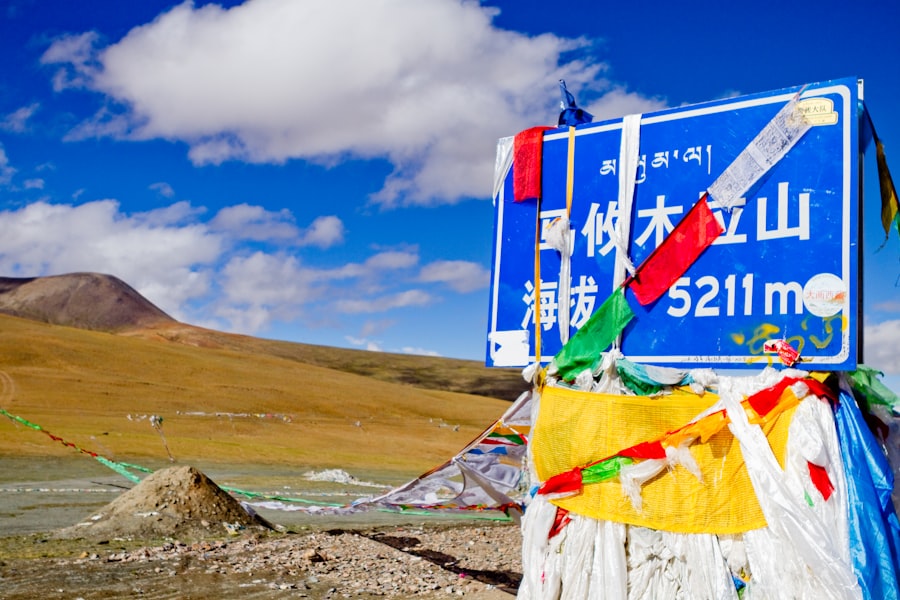
Tibet’s rich cultural heritage and religious traditions play a vital role in promoting peace both within its borders and beyond. Tibetan Buddhism emphasizes principles such as compassion, mindfulness, and non-violence, which resonate deeply with individuals seeking peaceful resolutions to conflicts. The Dalai Lama, as a prominent spiritual leader, has become an international symbol of peace and reconciliation, advocating for dialogue over violence in addressing disputes.
Cultural festivals and rituals celebrated by Tibetan communities also serve as platforms for fostering understanding among diverse groups. These events often attract visitors from around the world who come to experience Tibetan culture firsthand. By sharing their traditions and values with others, Tibetans contribute to building bridges across cultures and promoting a sense of global interconnectedness rooted in mutual respect and understanding.
Environmental importance of Tibet in maintaining ecological balance
Tibet’s environmental significance cannot be overstated; it is often referred to as the “Third Pole” due to its vast glaciers and snow-capped mountains that store freshwater resources essential for billions of people downstream. The Tibetan Plateau acts as a critical watershed for major river systems in Asia, including the Indus, Ganges, Brahmaputra, Yangtze, and Mekong rivers.
Additionally, Tibet’s unique biodiversity contributes to global ecological balance. The region is home to numerous endemic species adapted to its harsh environment, making it an important area for conservation efforts. Protecting these ecosystems not only benefits local communities but also supports global efforts to combat climate change by maintaining carbon sinks and promoting sustainable land use practices.
Thus, Tibet’s environmental importance extends far beyond its borders, highlighting its role as a crucial player in global ecological health.
Tibet’s role in international relations and diplomacy
Tibet’s unique position in international relations is shaped by its historical context as well as contemporary geopolitical dynamics. The ongoing struggle for Tibetan autonomy has garnered significant international attention, leading to diplomatic efforts aimed at addressing human rights concerns and advocating for greater autonomy within China. Various countries have engaged with Tibetan leaders in exile to promote dialogue on these issues while navigating complex relationships with China.
Moreover, Tibet serves as a focal point for discussions on broader issues such as climate change, cultural preservation, and human rights advocacy. International organizations and non-governmental organizations often highlight Tibet’s situation as part of their broader missions to promote social justice and environmental sustainability. By engaging with these global issues through the lens of Tibetan experiences, advocates contribute to shaping international discourse on human rights and environmental protection.
Challenges and threats to Tibet’s role as a buffer zone
Despite its historical significance as a buffer zone, Tibet faces numerous challenges that threaten its ability to maintain this role effectively. One major challenge is the increasing militarization of the region by neighboring powers seeking to assert their influence over strategic territories. This militarization can escalate tensions between nations and undermine the peaceful coexistence that has characterized Tibet’s historical role as a mediator.
Additionally, environmental degradation poses significant threats to Tibet’s ecological balance and its capacity to provide essential resources for surrounding countries. Climate change impacts such as glacial melting threaten water security for millions downstream while also jeopardizing biodiversity within the region itself. These environmental challenges further complicate Tibet’s ability to function effectively as a buffer zone amid growing geopolitical tensions.
Strategies for preserving Tibet’s role as a buffer zone
To preserve Tibet’s role as a buffer zone amidst these challenges requires concerted efforts from multiple stakeholders at local, national, and international levels. Promoting dialogue among neighboring countries is essential for fostering mutual understanding and cooperation on shared challenges such as water management and environmental conservation. Establishing collaborative frameworks that prioritize sustainable development can help mitigate tensions while ensuring equitable access to resources.
Furthermore, supporting initiatives aimed at preserving Tibetan culture and promoting human rights can strengthen the region’s identity as a peaceful mediator in international relations. Engaging with Tibetan communities both within China and in exile can facilitate grassroots movements advocating for autonomy while fostering connections across borders that transcend political divisions.
The future of Tibet’s crucial role in regional security and stability
The future of Tibet’s role as a buffer zone hinges on addressing both internal dynamics within the region itself and external pressures from neighboring powers. As geopolitical tensions continue to evolve in Asia, there is potential for renewed focus on diplomacy centered around shared interests such as environmental sustainability and cultural preservation. By leveraging its unique position at the crossroads of major civilizations while advocating for peacebuilding initiatives rooted in compassion and understanding, Tibet can continue playing an essential role in promoting regional security.
Ultimately, safeguarding this crucial buffer zone requires collective action from all stakeholders involved—governments, civil society organizations, local communities—working together towards common goals that prioritize stability over conflict while respecting the rich cultural heritage that defines this remarkable region known as Tibet.
Tibet has historically served as a crucial buffer zone between major powers in Asia, particularly between India and China. This strategic role has shaped not only regional politics but also cultural exchanges and conflicts. For a deeper understanding of Tibet’s geopolitical significance, you can read more in this related article: Tibet: The Buffer Zone of Asia.
WATCH THIS! Tibet’s Emptiness Is No Accident
FAQs
What is Tibet’s role as a buffer zone?
Tibet has historically served as a buffer zone between China and its neighboring countries, including India, Nepal, and Bhutan. Its geographical location has made it a strategic area for maintaining stability and security in the region.
How does Tibet’s geography contribute to its role as a buffer zone?
Tibet’s mountainous terrain and high altitude make it a natural barrier between China and its neighboring countries. This geographical feature has historically made it difficult for military forces to traverse, thus serving as a buffer between different regions.
What are the geopolitical implications of Tibet’s role as a buffer zone?
Tibet’s status as a buffer zone has significant geopolitical implications, as it affects the relationships and dynamics between China and its neighboring countries. It has also been a point of contention in international politics, particularly in relation to China’s control over the region.
How has Tibet’s role as a buffer zone evolved over time?
Tibet’s role as a buffer zone has evolved over time, particularly in the context of changing geopolitical dynamics and international relations. The region’s strategic importance has shifted in response to various historical events and geopolitical developments.
What are the implications of Tibet’s role as a buffer zone for regional security?
Tibet’s role as a buffer zone has implications for regional security, as it has historically influenced the military and political strategies of neighboring countries. The region’s stability and security have been of concern to both China and its neighboring countries.