
Tibet has long been a focal point in the complex tapestry of Sino-Indian relations, serving as both a geographical and cultural bridge between the two nations. Historically, Tibet was not merely a remote region; it was a significant player in the dynamics of power and influence in Asia. The historical ties between Tibet and India date back centuries, with Buddhism acting as a conduit for cultural exchange and mutual influence.
The spiritual and philosophical connections established during this period laid the groundwork for a relationship that would later be complicated by geopolitical tensions.
The borders that define the region today were not always clear-cut, and the historical claims of sovereignty have fueled disputes that continue to this day.
As both nations seek to assert their influence in the region, Tibet’s historical role becomes increasingly relevant, shaping the narratives and policies that govern Sino-Indian relations.
Key Takeaways
- Tibet has historically played a significant role in shaping Sino-Indian border relations, with its influence dating back centuries.
- China’s annexation of Tibet has had a profound impact on Sino-Indian border disputes, leading to increased tensions and territorial claims.
- The 1962 Sino-Indian War was heavily influenced by Tibet’s role, and its aftermath continues to affect Sino-Indian relations to this day.
- The exile of the Dalai Lama has had a lasting effect on Sino-Indian relations, with India providing refuge to the Tibetan spiritual leader.
- Tibet’s strategic importance in the context of Sino-Indian border disputes cannot be understated, as it continues to be a key factor in the region’s geopolitical dynamics.
The impact of Tibet’s annexation by China on Sino-Indian border disputes
The annexation of Tibet by China in 1950 marked a turning point in Sino-Indian relations, fundamentally altering the geopolitical landscape of the region. Following the incorporation of Tibet into the People’s Republic of China, India found itself facing a new reality where its northern neighbor had expanded its territorial claims. This shift not only intensified existing border disputes but also introduced new complexities into the relationship between the two countries.
The McMahon Line, which had been established during British colonial rule, became a contentious point of reference, with China rejecting its legitimacy and asserting claims over large swathes of territory. The consequences of Tibet’s annexation were profound, leading to heightened military tensions along the border. The Indian government, concerned about its national security, began to bolster its military presence in the region, which in turn prompted China to do the same.
This military buildup created an atmosphere of suspicion and hostility, further complicating diplomatic efforts to resolve border disputes. The annexation of Tibet thus served as a catalyst for a series of confrontations that would define Sino-Indian relations for decades to come.
Tibet’s role in the 1962 Sino-Indian War and its aftermath
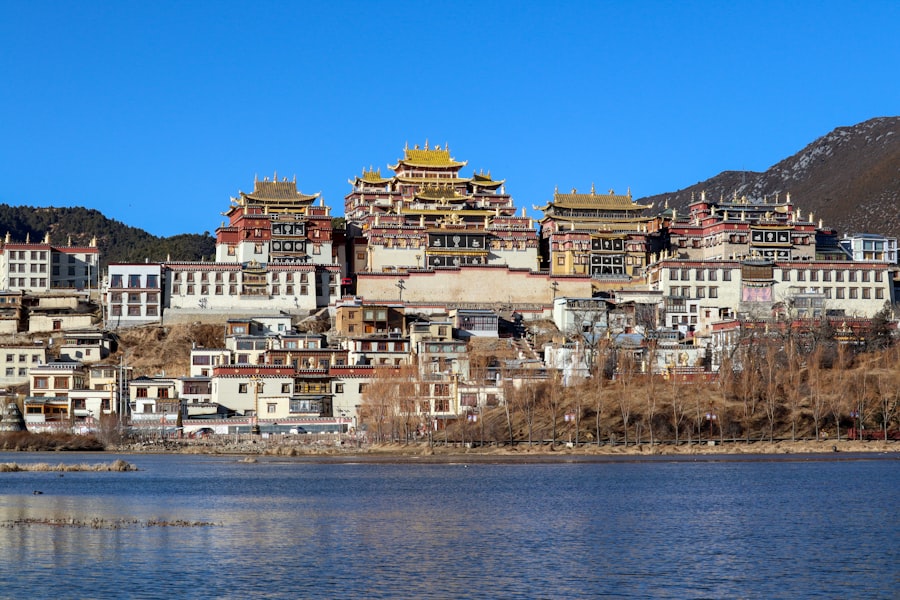
The 1962 Sino-Indian War was a direct manifestation of the unresolved tensions stemming from Tibet’s annexation. The conflict erupted over border disputes that had been simmering since the early 1950s, with both nations claiming rights to territories that were strategically significant. Tibet’s geographical position played a crucial role in the war, as it served as a battleground for military engagements and a focal point for national pride on both sides.
The war resulted in a decisive victory for China, which not only solidified its control over Tibet but also altered the balance of power in the region. In the aftermath of the war, the implications for Sino-Indian relations were profound. The conflict left deep scars on both nations, fostering an atmosphere of mistrust that would persist for years.
India’s defeat prompted a reevaluation of its defense strategies and foreign policy, leading to increased military spending and a more assertive stance in regional affairs. Conversely, China emerged from the war with a strengthened position, emboldened by its territorial gains and newfound confidence on the international stage. The legacy of the 1962 war continues to shape Sino-Indian relations, with both countries remaining wary of each other’s intentions along their shared border.
The Dalai Lama’s exile and its effect on Sino-Indian relations
| Year | Event | Effect on Sino-Indian Relations |
|---|---|---|
| 1959 | The Dalai Lama flees to India | Strains relations between India and China |
| 1962 | Sino-Indian War | Further deterioration of relations |
| 1987 | Dalai Lama’s visit to Arunachal Pradesh | China protests, leading to tensions |
| 2017 | India allows Dalai Lama to visit disputed region | China expresses anger and warns of consequences |
The flight of the Dalai Lama to India in 1959 marked another pivotal moment in Sino-Indian relations, as it brought Tibetan issues to the forefront of international discourse. The Dalai Lama’s arrival not only symbolized Tibetan resistance against Chinese rule but also positioned India as a sanctuary for Tibetan culture and identity. This development was met with strong disapproval from China, which viewed India’s support for the Dalai Lama as an affront to its sovereignty over Tibet.
Consequently, this event further strained diplomatic ties between the two nations. The presence of the Dalai Lama in India has had lasting implications for Sino-Indian relations. His advocacy for non-violence and autonomy for Tibet has garnered international support, complicating China’s narrative regarding its governance of Tibet.
As India continues to host the Dalai Lama and support Tibetan refugees, it finds itself caught between maintaining its commitment to human rights and navigating its complex relationship with China. This delicate balancing act has led to ongoing tensions, as China perceives India’s support for Tibetan autonomy as a challenge to its territorial integrity.
Tibet’s strategic importance in the context of Sino-Indian border disputes
Tibet’s strategic importance cannot be overstated when considering Sino-Indian border disputes. Geographically, Tibet serves as a natural barrier between India and China, with its high-altitude terrain presenting both challenges and opportunities for military operations. Control over this region allows China to project power into South Asia while simultaneously securing vital water resources that flow from Tibetan rivers into India.
For India, maintaining access to these water sources is crucial for its agricultural and economic stability. Moreover, Tibet’s location has implications for regional security dynamics. The presence of military installations and infrastructure development in Tibet by China has raised alarms in New Delhi, prompting India to enhance its own military capabilities along the border.
This strategic competition has led to an arms race of sorts, with both nations seeking to establish dominance in this critical region. As such, Tibet remains at the heart of ongoing border disputes, influencing military strategies and diplomatic negotiations between China and India.
The influence of Tibetan culture and religion on Sino-Indian border relations

Tibetan culture and religion have played a significant role in shaping Sino-Indian border relations throughout history. Buddhism, which originated in India and found fertile ground in Tibet, has fostered deep cultural ties between the two nations. This shared spiritual heritage has often served as a bridge for dialogue and understanding, even amidst political tensions.
However, China’s attempts to assert control over Tibetan religious practices have led to friction with India, where Buddhism is revered as an integral part of its cultural identity. The preservation of Tibetan culture is not merely an issue of heritage; it is also intertwined with national identity for both countries. For India, supporting Tibetan culture is seen as an affirmation of its commitment to pluralism and human rights.
Conversely, China’s efforts to suppress Tibetan religious practices are viewed as an infringement on cultural autonomy. This cultural dimension adds another layer of complexity to Sino-Indian relations, as both nations navigate their historical ties while grappling with contemporary geopolitical realities.
Tibet’s significance in the context of China’s Belt and Road Initiative and its impact on Sino-Indian relations
Tibet’s significance has been further amplified by China’s Belt and Road Initiative (BRI), which aims to enhance connectivity across Asia through infrastructure development. As part of this initiative, China has invested heavily in transportation networks and economic corridors that traverse Tibet, linking it more closely with other regions within China and beyond. This development has raised concerns in India regarding China’s expanding influence in South Asia and its potential implications for regional security.
India perceives the BRI as a challenge to its own strategic interests, particularly given that some projects encroach upon territories claimed by India. The construction of roads and railways through Tibet not only facilitates Chinese access to critical resources but also enhances China’s ability to project military power along its borders with India. As such, Tibet’s role within the BRI underscores the ongoing competition between China and India for influence in the region, further complicating their already fraught relationship.
The role of Tibetan refugees in shaping Sino-Indian border relations
The influx of Tibetan refugees into India following China’s annexation has had a profound impact on Sino-Indian border relations. These refugees have not only sought asylum but have also become vocal advocates for Tibetan rights and autonomy on the international stage. Their presence in India has contributed to a growing awareness of Tibetan issues globally, placing additional pressure on China regarding its policies in Tibet.
The plight of Tibetan refugees has also influenced India’s domestic politics and foreign policy. By providing refuge to Tibetan exiles, India has positioned itself as a champion of human rights while simultaneously navigating its complex relationship with China. This duality creates tension within India’s foreign policy framework, as it seeks to balance support for Tibetan autonomy with the need for stable relations with its northern neighbor.
Consequently, Tibetan refugees play a crucial role in shaping public perception and diplomatic discourse surrounding Sino-Indian border relations.
The impact of Chinese infrastructure development in Tibet on Sino-Indian border dynamics
Chinese infrastructure development in Tibet has significantly altered the dynamics along the Sino-Indian border. The construction of roads, railways, and military installations has enhanced China’s logistical capabilities in the region, allowing for rapid troop mobilization and resource allocation during times of tension. This development poses challenges for India, which must contend with an increasingly fortified Chinese presence along their shared border.
Moreover, these infrastructure projects have implications beyond military considerations; they also facilitate economic integration within China while potentially marginalizing Indian interests in the region. As China continues to invest heavily in infrastructure development in Tibet, India faces pressure to respond strategically to maintain its own influence along the border. This ongoing competition underscores the importance of infrastructure as a key factor shaping Sino-Indian relations.
The influence of Tibetan activism and international support on Sino-Indian border relations
Tibetan activism has emerged as a significant force influencing Sino-Indian border relations in recent years. Activists advocating for Tibetan rights have garnered international attention and support from various governments and organizations worldwide. This global solidarity has placed additional pressure on China regarding its policies in Tibet while simultaneously elevating Tibetan issues within international discourse.
India’s role as a host nation for Tibetan activists further complicates its relationship with China. By providing a platform for Tibetan voices advocating for autonomy and human rights, India positions itself as an ally to those seeking justice while navigating its own geopolitical interests with China. This dynamic creates tension within Sino-Indian relations as both nations grapple with competing narratives surrounding sovereignty and human rights.
the future of Tibet’s influence on Sino-Indian border relations
As both China and India continue to navigate their complex relationship shaped by historical grievances and contemporary challenges, Tibet remains a critical factor influencing their interactions along the border. The historical significance of Tibet, coupled with its strategic importance and cultural ties between the two nations, ensures that it will remain at the forefront of discussions regarding sovereignty and territorial integrity. Looking ahead, it is likely that Tibet will continue to serve as both a point of contention and a potential avenue for dialogue between China and India.
As global dynamics shift and new challenges emerge, both nations may find opportunities for cooperation rooted in their shared history while grappling with ongoing disputes over territory and governance. Ultimately, how each nation approaches these issues will shape not only their bilateral relationship but also broader regional stability in South Asia.
For a deeper understanding of this complex issue, you can read more in the article available at My Geo Quest, which explores the historical context and current implications of Tibet’s role in the ongoing tensions between China and India.
WATCH THIS! Tibet’s Emptiness Is No Accident
FAQs
What is Tibet’s role in the Sino-Indian border?
Tibet’s role in the Sino-Indian border is significant as it shares a border with India and has been a point of contention between the two countries.
How has Tibet’s role in the Sino-Indian border affected the relationship between China and India?
The border dispute involving Tibet has been a major source of tension between China and India, leading to military conflicts and ongoing diplomatic negotiations.
What is the historical background of Tibet’s role in the Sino-Indian border dispute?
The historical background of the Sino-Indian border dispute involving Tibet dates back to the British colonial era and the subsequent Chinese occupation of Tibet.
What are the current developments in the Sino-Indian border dispute related to Tibet?
Current developments in the Sino-Indian border dispute related to Tibet include ongoing border tensions, military build-ups, and diplomatic efforts to resolve the issue.
How does Tibet’s role in the Sino-Indian border dispute impact the geopolitical dynamics of the region?
Tibet’s role in the Sino-Indian border dispute has significant implications for the geopolitical dynamics of the region, affecting alliances, security concerns, and regional stability.