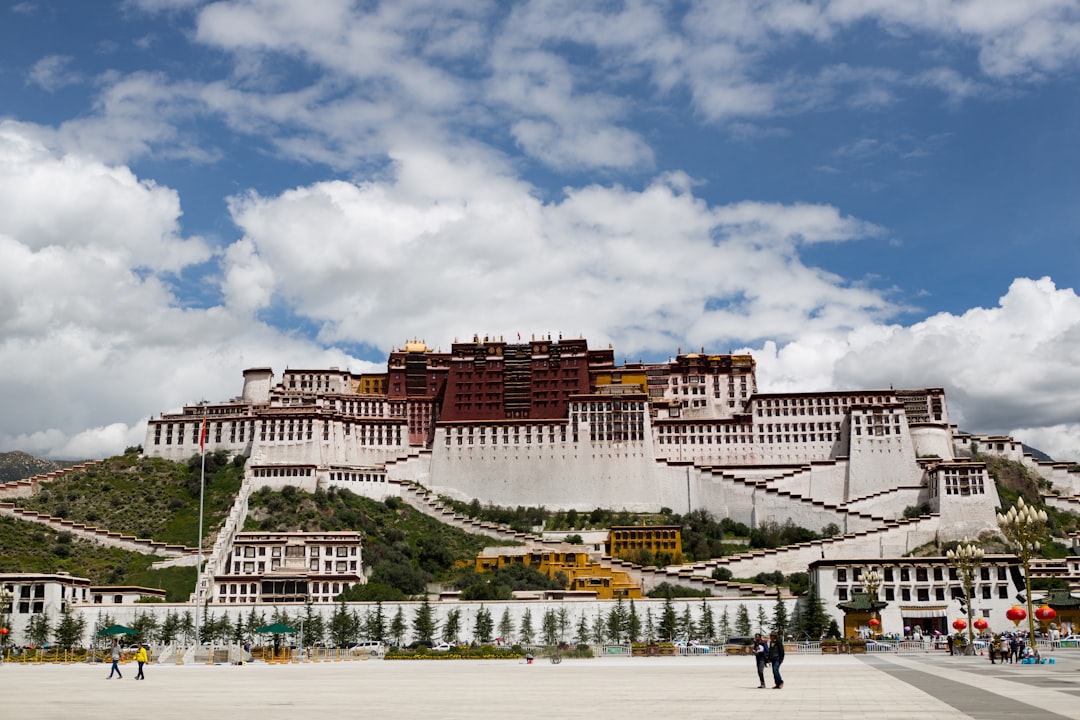
Tibet, often referred to as the “Roof of the World,” holds a unique position in the geopolitical landscape of Asia. Nestled high in the Himalayas, it is not only a region of breathtaking natural beauty but also a critical area of strategic interest for several nations. Its geographical location serves as a natural barrier and a bridge between major powers, including China, India, and Nepal.
The significance of Tibet extends beyond its borders, influencing regional stability, water security, and environmental dynamics. As global attention increasingly turns toward the implications of climate change and resource management, Tibet’s role in these discussions becomes ever more crucial. The geopolitical importance of Tibet is underscored by its rich cultural heritage and historical significance.
The region has long been a center for Buddhism and Tibetan culture, attracting pilgrims and scholars alike. However, its strategic value has often overshadowed its cultural identity in the eyes of global powers. The interplay between Tibet’s cultural richness and its geopolitical significance creates a complex narrative that shapes international relations in the region.
Understanding this duality is essential for grasping the current dynamics at play in Tibet and its surrounding areas.
Key Takeaways
- Tibet’s strategic location has made it a key player in regional politics, with implications for neighboring countries.
- China’s control and influence in Tibet have significant geopolitical implications, impacting regional dynamics and international relations.
- Tibet’s role in water security and transboundary river issues is crucial, affecting downstream countries and regional stability.
- Tibet’s influence on climate change and environmental security has global implications, making it a matter of international concern.
- Tibet’s potential for conflict and peacebuilding efforts requires attention from the international community for future prospects in its geopolitical importance.
Historical Background of Tibet’s Geopolitical Significance
Historically, Tibet has been a land of diverse influences and interactions. Its position along ancient trade routes facilitated exchanges between China, India, and Central Asia, making it a melting pot of cultures and ideas. The Silk Road, which traversed parts of Tibet, not only contributed to economic prosperity but also established Tibet as a significant player in regional politics.
The historical ties between Tibet and neighboring countries have laid the groundwork for contemporary geopolitical tensions and alliances. The 20th century marked a turning point in Tibet’s history, particularly with the incorporation of the region into the People’s Republic of China in 1950. This event fundamentally altered Tibet’s political landscape and its relationships with neighboring countries.
The subsequent decades saw significant changes in governance, culture, and demographics within Tibet, leading to ongoing debates about autonomy and human rights. The historical context of Tibet’s geopolitical significance is essential for understanding the current challenges it faces and the aspirations of its people.
China’s Control and Influence in Tibet
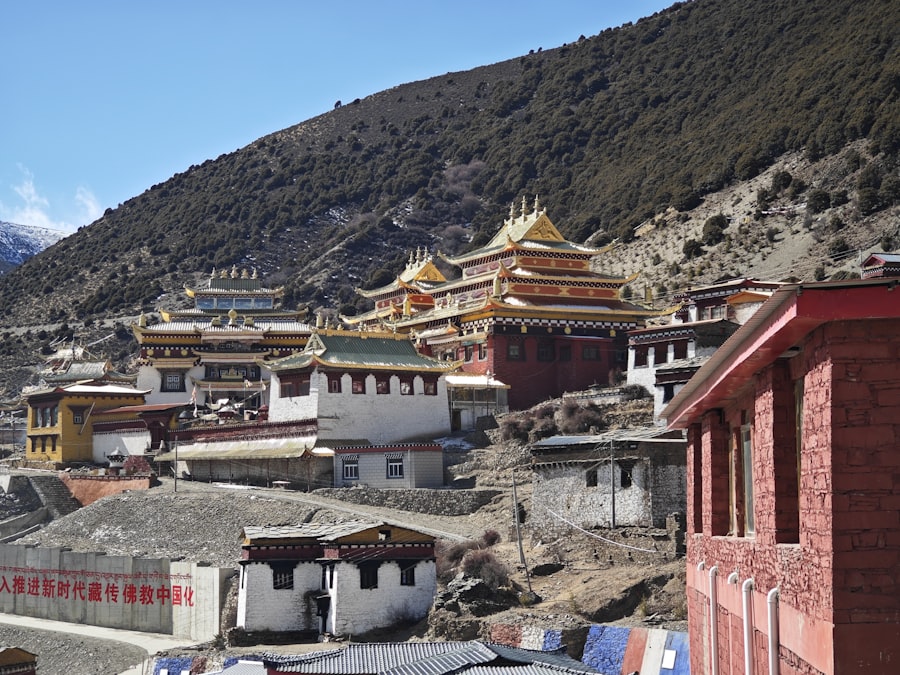
China’s control over Tibet has been characterized by a complex interplay of governance, cultural assimilation, and economic development. Since the 1950s, the Chinese government has implemented policies aimed at integrating Tibet into the broader national framework. This has included infrastructure development, economic investment, and efforts to promote Mandarin as the primary language.
While these initiatives have brought some benefits to the region, they have also sparked concerns about cultural erosion and the suppression of Tibetan identity. The Chinese government’s influence extends beyond mere governance; it encompasses efforts to reshape Tibetan society and promote loyalty to the state. This has led to tensions between Tibetan nationalists seeking greater autonomy and the Chinese authorities determined to maintain control.
The situation is further complicated by international scrutiny and advocacy for human rights in Tibet, which often puts China on the defensive. The dynamics of control and influence in Tibet are emblematic of broader issues related to national sovereignty, cultural preservation, and human rights.
Tibet’s Strategic Location and its Impact on Regional Politics
| Aspect | Impact |
|---|---|
| Geopolitical Importance | Tibet’s location provides strategic advantage for influencing regional politics |
| Bordering Countries | China, India, Nepal, Bhutan |
| Resource Control | Tibet’s control over water resources impacts neighboring countries |
| Political Tensions | Tibet’s status creates tensions between China and other countries |
Tibet’s strategic location at the crossroads of several major countries makes it a focal point for regional politics. Bordered by India to the south, Nepal to the west, and China to the north and east, Tibet serves as a buffer zone that influences security dynamics in South Asia. The region’s high-altitude terrain presents both challenges and opportunities for military strategy, making it a critical area for defense considerations among neighboring nations.
The geopolitical implications of Tibet’s location are particularly evident in the context of India-China relations.
The 1962 Sino-Indian War was partly rooted in these territorial disagreements, highlighting how Tibet’s strategic significance can escalate into conflict.
As regional powers continue to assert their interests in Tibet, the potential for diplomatic engagement or confrontation remains a pressing concern.
Tibet’s Role in Water Security and Transboundary River Issues
Tibet is often referred to as Asia’s water tower due to its vast glaciers and river systems that feed major rivers such as the Yangtze, Yellow River, Ganges, and Brahmaputra. These rivers are vital for millions of people across several countries, making water security a critical issue linked to Tibet’s geopolitical importance. As climate change impacts glacial melt and water availability, the management of these transboundary rivers becomes increasingly contentious.
The potential for conflict over water resources is heightened by competing demands from upstream and downstream countries. For instance, China’s plans for dam construction on rivers originating in Tibet have raised concerns among neighboring countries like India and Bangladesh about water flow and ecological impacts. The delicate balance between development and environmental sustainability underscores the need for cooperative frameworks that address water security while respecting the rights of all stakeholders involved.
Tibet’s Influence on Climate Change and Environmental Security

Tibet’s unique environment plays a significant role in global climate dynamics. The region’s glaciers are crucial indicators of climate change, with their rapid melting posing risks not only to local ecosystems but also to communities dependent on glacial meltwater for agriculture and drinking water. As climate change accelerates, Tibet’s environmental security becomes intertwined with broader global concerns about sustainability and resource management.
The ecological challenges facing Tibet are compounded by human activities such as mining, deforestation, and urbanization. These activities threaten biodiversity and disrupt traditional livelihoods while contributing to environmental degradation. Addressing these issues requires a multifaceted approach that incorporates local knowledge, sustainable practices, and international cooperation.
As global awareness of climate change grows, Tibet’s environmental challenges may garner increased attention from policymakers seeking solutions that balance development with ecological preservation.
Tibet’s Impact on India-China Relations
The relationship between India and China is one of the most consequential geopolitical dynamics in Asia, with Tibet serving as a critical factor in this equation. Both nations view Tibet through different lenses: India sees it as a buffer zone against Chinese expansionism, while China views it as an integral part of its territory. This divergence has led to ongoing tensions that manifest in border disputes, military posturing, and diplomatic maneuvering.
The Dalai Lama’s exile in India since 1959 further complicates this relationship. His presence has become a symbol of Tibetan resistance against Chinese rule, drawing international attention to human rights issues in Tibet. India’s support for Tibetan autonomy has strained its relations with China, leading to periodic confrontations along their shared border.
As both nations navigate their complex relationship, Tibet remains a flashpoint that could either exacerbate tensions or serve as an opportunity for dialogue.
Tibet’s Role in the Belt and Road Initiative
China’s Belt and Road Initiative (BRI) aims to enhance connectivity across Asia through infrastructure development projects. Tibet plays a pivotal role in this initiative due to its strategic location connecting China with South Asia. The construction of roads, railways, and energy projects in Tibet is seen as a means to bolster China’s economic influence while facilitating trade routes with neighboring countries.
However, the BRI’s implementation in Tibet raises concerns about environmental sustainability and cultural preservation. Critics argue that large-scale infrastructure projects could exacerbate existing tensions between Tibetan communities and the Chinese government while threatening fragile ecosystems. Balancing economic development with respect for local cultures will be crucial for ensuring that the BRI benefits all stakeholders involved rather than exacerbating existing inequalities.
International Interest in Tibet and its Implications
Tibet has garnered significant international interest over the years due to its unique cultural heritage and ongoing human rights issues. Advocacy groups around the world have raised awareness about the plight of Tibetan people under Chinese rule, calling for greater autonomy and respect for human rights. This international attention has implications for China’s foreign relations as it seeks to project an image of stability while facing criticism from various quarters.
The involvement of international actors in Tibetan affairs can lead to both positive outcomes—such as increased awareness of human rights issues—and negative consequences—such as heightened tensions between China and other nations. As global geopolitics evolve, the international community’s stance on Tibet will continue to shape its future trajectory within broader regional dynamics.
Tibet’s Potential for Conflict and Peacebuilding Efforts
The potential for conflict in Tibet remains a pressing concern given its complex geopolitical landscape. Historical grievances, cultural suppression, and resource competition contribute to an environment ripe for tension. However, there are also opportunities for peacebuilding efforts that could foster dialogue between Tibetan communities and Chinese authorities.
Engaging local stakeholders in discussions about governance, cultural preservation, and resource management can pave the way for more sustainable solutions that address grievances while promoting stability. International organizations can play a role in facilitating these dialogues by providing platforms for negotiation and collaboration among various parties involved.
Future Prospects for Tibet’s Geopolitical Importance
As global dynamics continue to shift, Tibet’s geopolitical importance is likely to evolve alongside changing regional relationships and environmental challenges. Its strategic location will remain significant for major powers seeking influence in Asia while grappling with issues related to water security, climate change, and cultural preservation. The future prospects for Tibet hinge on finding a balance between development aspirations and respect for local identities.
Engaging in constructive dialogue among stakeholders—both within Tibet and beyond—will be essential for navigating the complexities of this unique region. Ultimately, how the international community addresses these challenges will shape not only Tibet’s future but also broader regional stability in Asia.
Tibet’s geopolitical significance today is underscored by its strategic location and the ongoing tensions between major powers in the region. For a deeper understanding of these dynamics, you can read the article on this topic at com/’>My Geo Quest, which explores the implications of Tibet’s status on international relations and regional stability.
WATCH THIS! Tibet’s Emptiness Is No Accident
FAQs
What is the geopolitical significance of Tibet today?
Tibet holds geopolitical significance due to its location as a buffer zone between China and India, as well as its proximity to other key countries in the region such as Nepal and Bhutan.
How does Tibet’s geopolitical significance impact international relations?
Tibet’s geopolitical significance impacts international relations by influencing the dynamics between China and India, as well as other neighboring countries. It also plays a role in the broader geopolitical competition in the region.
What are the key geopolitical factors at play in Tibet today?
Key geopolitical factors in Tibet today include China’s control over the region, India’s strategic interests, the impact on regional stability, and the influence of major powers such as the United States and Russia.
How does Tibet’s geopolitical significance affect regional security?
Tibet’s geopolitical significance affects regional security by shaping the strategic calculations of neighboring countries and major powers, as well as influencing the potential for conflict or cooperation in the region.
What are the implications of Tibet’s geopolitical significance for global politics?
Tibet’s geopolitical significance has implications for global politics by contributing to the broader competition and cooperation among major powers, as well as influencing the balance of power in the Asia-Pacific region.