China’s icebreaker fleet has emerged as a significant player in the realm of polar exploration and maritime operations. As the Arctic and Antarctic regions become increasingly accessible due to climate change, the need for capable icebreakers has never been more pressing. These vessels are not merely tools for navigation; they serve as platforms for scientific research, resource exploration, and geopolitical strategy.
The expansion of China’s icebreaker capabilities reflects its ambitions to assert influence in these critical areas, marking a pivotal shift in the dynamics of polar governance and international relations. The strategic importance of icebreakers cannot be overstated. They facilitate safe passage through icy waters, enabling countries to conduct research, transport goods, and assert territorial claims.
As global interest in the polar regions intensifies, China’s investment in its icebreaker fleet underscores its commitment to becoming a dominant force in polar affairs. This article delves into the history, development, and future prospects of China’s icebreaker fleet, exploring its role in international relations and environmental stewardship.
History and Development of China’s Icebreaker Fleet
The history of China’s icebreaker fleet is relatively recent compared to that of other nations with established polar capabilities. The first significant step was taken in 1993 with the launch of the “Xuelong” (Snow Dragon), which was primarily designed for scientific research in the Antarctic. This vessel marked China’s entry into the exclusive club of nations capable of operating in polar waters.
Over the years, the fleet has expanded to include several other vessels, each equipped with advanced technology and designed for specific missions. As China’s economic and scientific ambitions grew, so did its investment in icebreaking technology. The construction of the “Xuelong 2,” launched in 2018, represented a leap forward in terms of capabilities.
This vessel is not only larger but also more technologically advanced than its predecessor, allowing for extended missions in harsher conditions. The development of China’s icebreaker fleet reflects a broader strategy to enhance its presence in the polar regions, driven by both scientific curiosity and geopolitical interests.
Role and Importance of Icebreakers in Polar Regions

Icebreakers play a crucial role in facilitating access to the polar regions, which are becoming increasingly important for various reasons, including climate research, natural resource exploration, and shipping routes. These vessels are essential for conducting scientific research, as they provide safe platforms for scientists to study climate change, marine ecosystems, and glaciology. The ability to navigate through thick ice allows researchers to gather data that is vital for understanding global climate patterns and their implications.
Moreover, icebreakers are instrumental in ensuring safe navigation for commercial shipping routes that are opening up due to melting ice. The Northern Sea Route, for instance, has gained attention as a potential shortcut between Europe and Asia. As more vessels seek to traverse these waters, the presence of icebreakers becomes essential to ensure safe passage and mitigate risks associated with ice hazards.
Thus, China’s investment in its icebreaker fleet not only supports scientific endeavors but also positions the country as a key player in emerging maritime trade routes.
Comparison of China’s Icebreaker Fleet with Other Countries
| Country | Number of Icebreakers | Icebreaker Class |
|---|---|---|
| China | 2 | Snow Dragon Class |
| Russia | 40 | Various classes including Arktika, Taymyr, and Yamal |
| United States | 2 | Healy Class |
| Canada | 6 | Various classes including Terry Fox and Louis S. St-Laurent |
When comparing China’s icebreaker fleet with those of other nations, it becomes evident that while China has made significant strides, it still lags behind some established powers like Russia and the United States. Russia boasts the largest and most advanced fleet of icebreakers globally, with a long history of operating in Arctic waters. The Russian fleet includes nuclear-powered icebreakers capable of breaking through thick ice year-round, giving it a distinct advantage in terms of operational capability.
In contrast, China’s fleet is still developing its capabilities but has shown remarkable progress in a short period. The focus on building modern vessels equipped with cutting-edge technology indicates a commitment to enhancing its operational capacity. While China may not yet match Russia’s extensive experience or fleet size, its rapid advancements suggest that it is positioning itself as a formidable competitor in polar operations.
This competition could lead to increased tensions as nations vie for influence over the increasingly accessible polar regions.
Technological Advancements in China’s Icebreaker Fleet
Technological innovation has been at the forefront of China’s efforts to enhance its icebreaker fleet. The “Xuelong 2,” for instance, is equipped with state-of-the-art navigation systems, advanced communication technologies, and enhanced hull designs that allow it to operate more efficiently in icy conditions. These advancements not only improve operational safety but also enable longer missions and more complex scientific research endeavors.
Furthermore, China is investing in research and development to create even more advanced icebreakers in the future. This includes exploring hybrid propulsion systems that could reduce fuel consumption and emissions during operations. As environmental concerns grow regarding polar activities, such innovations will be crucial for ensuring that China’s icebreaking operations align with global sustainability goals.
The emphasis on technology reflects a broader trend within China’s maritime strategy to leverage innovation for strategic advantage.
Challenges and Risks Faced by China’s Icebreaker Fleet
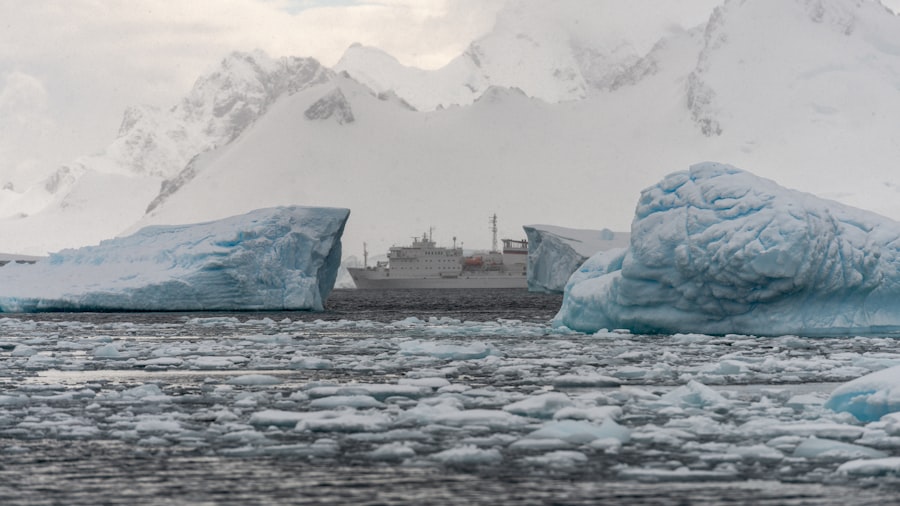
Despite its advancements, China’s icebreaker fleet faces several challenges and risks that could impact its operations and ambitions in polar regions. One significant challenge is the harsh environmental conditions inherent to polar navigation. Icebreakers must contend with unpredictable weather patterns, shifting ice conditions, and extreme temperatures that can affect their operational capabilities.
These factors necessitate continuous training for crews and ongoing maintenance for vessels to ensure they remain effective. Additionally, geopolitical tensions pose risks to China’s operations in polar waters. As nations increasingly assert their claims over Arctic territories and resources, competition can lead to conflicts or diplomatic disputes.
China’s growing presence may be viewed with suspicion by other Arctic nations, particularly those with established interests in the region. Navigating these complex geopolitical landscapes will require careful diplomacy and strategic planning to mitigate risks associated with international relations.
International Collaborations and Partnerships in Polar Research
China recognizes the importance of collaboration in polar research and has actively sought partnerships with other countries engaged in similar endeavors. Through initiatives such as the Arctic Council and various bilateral agreements, China has established itself as a cooperative player in international polar research efforts. These collaborations facilitate knowledge sharing, resource pooling, and joint scientific missions that enhance understanding of polar ecosystems and climate change.
Moreover, partnerships with countries like Russia and Norway have allowed China to leverage existing expertise while contributing its own technological advancements. Such collaborations not only strengthen scientific research but also foster goodwill among nations with competing interests in the polar regions. By positioning itself as a collaborative partner rather than an adversary, China aims to build a reputation as a responsible stakeholder in global polar governance.
Economic and Strategic Implications of China’s Icebreaker Fleet
The economic implications of China’s icebreaker fleet extend beyond mere navigation; they encompass resource exploration and potential access to untapped reserves beneath the polar ice. As melting ice opens new frontiers for oil, gas, and mineral extraction, China’s investment in icebreakers positions it favorably to capitalize on these opportunities. The ability to navigate icy waters safely enhances China’s prospects for securing energy resources critical to its economic growth.
Strategically, the presence of a robust icebreaker fleet allows China to assert its interests more effectively in the Arctic region. By demonstrating its capability to operate in these challenging environments, China can strengthen its claims over maritime routes and resources while enhancing its geopolitical influence. This dual focus on economic gain and strategic positioning underscores the multifaceted role that icebreakers play within China’s broader national strategy.
Environmental Impact and Sustainability of Icebreaking Operations
As China expands its icebreaker fleet and operations in polar regions, environmental considerations have become increasingly important. Icebreaking activities can disrupt delicate ecosystems and contribute to environmental degradation if not managed responsibly. Recognizing this challenge, China has begun implementing measures aimed at minimizing the ecological footprint of its operations.
Efforts include adopting cleaner technologies for vessel propulsion and implementing strict operational protocols designed to protect marine life during research missions. Additionally, China is engaging with international environmental organizations to align its practices with global sustainability standards. By prioritizing environmental stewardship alongside its ambitions in polar regions, China aims to balance economic interests with ecological responsibility.
Future Plans and Expansion of China’s Icebreaker Fleet
Looking ahead, China has ambitious plans for further expanding its icebreaker fleet. The government has outlined goals for constructing additional vessels equipped with even more advanced technologies capable of operating under extreme conditions. These plans reflect a recognition of the growing importance of polar regions for national security, economic development, and scientific research.
Moreover, as climate change continues to reshape the Arctic landscape, China is likely to adapt its strategies accordingly. Future expansions may focus on enhancing capabilities for year-round operations or developing specialized vessels tailored for specific missions such as environmental monitoring or resource exploration. This proactive approach underscores China’s commitment to becoming a leading player in global polar affairs.
China’s Icebreaker Fleet as a Global Polar Power
In conclusion, China’s icebreaker fleet represents a significant component of its broader ambitions in polar regions.
While challenges remain—ranging from environmental concerns to geopolitical tensions—the potential benefits of an expanded icebreaker fleet are substantial.
As climate change continues to alter the dynamics of polar access and resource availability, China’s role will likely grow more prominent in international discussions surrounding these issues. By balancing economic interests with environmental stewardship and collaborative efforts, China aims to establish itself as a responsible leader in global polar affairs—a status that could redefine power dynamics within this critical region for years to come.
China’s icebreaker fleet has been a topic of significant interest as the country continues to expand its capabilities in polar research and navigation. A related article that delves into the strategic importance and advancements of China’s icebreaker fleet can be found on MyGeoQuest. This article provides insights into how China is leveraging its icebreaker fleet to enhance its presence in the Arctic and Antarctic regions, highlighting the technological innovations and geopolitical implications of this expansion.