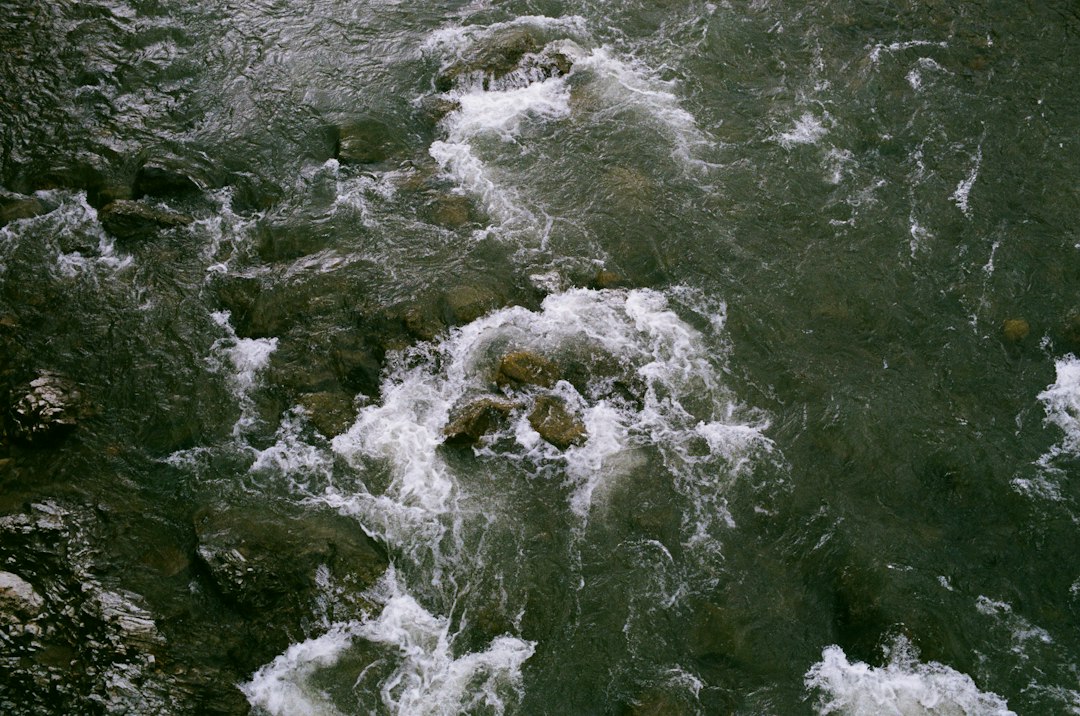
The intricate dance of braided streams, characterized by their multiple, intertwining channels, is a fundamental process in fluvial geomorphology. These dynamic systems, often found in environments with abundant sediment supply and relatively steep gradients, are sculpted by a complex interplay of flow hydraulics, sediment characteristics, and topographic controls. Understanding braided stream dynamics and sediment transport is crucial for a wide range of applications, from managing water resources and predicting flood hazards to restoring degraded riverine ecosystems. The constant shifting of channels, the formation and abandonment of bars, and the pervasive movement of sediment define the ephemeral yet persistent nature of these fluvial landscapes. This article delves into the key processes that govern braided stream behavior, exploring the mechanisms that drive their evolution and the implications of their dynamic nature.
The Anatomy of a Braided River System
Braided rivers are not simply a collection of random channels. They possess a distinct structural organization that arises from the interplay of water and sediment. The defining feature, of course, is the presence of multiple channels that diverge and reconverge around stable or semi-stable landforms, primarily mid-channel bars. These bars are not static features; they are actively built, eroded, and reworked by the flowing water, creating a constantly evolving mosaic of channels and islands.
Channel Morphology and Bar Formation
The formation of braided channels is intimately linked to the development and fate of mid-channel bars. When a river encounters an obstruction or a sudden reduction in flow capacity, sediment can deposit, initiating the formation of a bar. As water levels fluctuate, particularly during floods, erosion at the upstream end of a bar and deposition at its downstream end are common. This continuous process of erosion and deposition can lead to the bar splitting into smaller segments, or it can cause channels to migrate or bifurcate. The degree of braiding, often quantified by metrics like the braiding index (the ratio of total channel length to the length of the main channel belt), is directly influenced by the sediment load and the flow regime. High sediment loads, especially gravel and sand, are a prerequisite for significant bar development and the subsequent branching of channels.
Sediment Size and Bed Stability
The type of sediment that a river carries plays a pivotal role in its braiding behavior. Rivers with a high proportion of coarse sediment, such as gravel and cobbles, are more prone to braiding. The larger sediment particles provide the building blocks for robust mid-channel bars that can withstand the erosive forces of the flow. Finer sediments, like sand and silt, can also contribute to bar formation, but the bars may be more ephemeral and less effective at forcing channel bifurcation. The stability of the riverbed, influenced by grain size distribution, sediment cohesiveness, and the presence of armor layers (larger stones that protect finer material underneath), directly impacts how easily channels can form and migrate. A highly unstable bed, characterized by frequent movement of sediment, is conducive to dynamic channel adjustments and thus, braiding.
Braided stream dynamics and sediment transport are crucial topics in understanding river morphology and ecosystem health. A related article that delves deeper into these themes can be found at MyGeoQuest, where researchers explore the intricate relationships between sediment load, flow variability, and the formation of braided river systems. This resource provides valuable insights into how these factors influence not only the physical landscape but also the biological communities that depend on these dynamic environments.
Hydrologic Controls on Braided Stream Dynamics

The flow regime of a river – its discharge, velocity, and fluctuation patterns – is a primary driver of braided stream dynamics. Variations in water levels, particularly extreme events, dictate the erosive and depositional processes that shape the channels and bars.
Discharge Variability and Flood Events
Discharge variability is arguably the most significant hydrologic factor influencing braided rivers. Periods of high discharge, such as during flood events, are critical for braiding. During floods, water levels rise, increasing flow velocity and the capacity of the river to transport sediment. This increased energy can scour the bed, erode existing bars, and transport large volumes of sediment downstream. However, it is the rapid fluctuations in discharge, particularly the transition from flood to falling flow, that often initiate channel avulsion and the formation of new channels or the abandonment of old ones. As floodwaters recede, the flow can no longer sustain the entire channel network, leading to deposition in areas of lower velocity, often around the edges of bars, and the preferential flow through deeper, more efficient channels.
Flow Resistance and Turbulence
The complex, often irregular, geometry of braided rivers inherently leads to higher flow resistance and increased turbulence compared to single-thread channels. The presence of numerous bars, islands, and shallow riffles disrupts the smooth, laminar flow characteristic of more uniform channels. This increased turbulence, while contributing to sediment entrainment and transport, also dissipates energy, leading to localized areas of deposition. The inter-channel areas often experience lower velocities, fostering sediment accumulation and the growth of bars. Understanding the spatial distribution of flow velocity and turbulence within a braided system is key to predicting where erosion and deposition will occur, and consequently, how the channel network will evolve.
Sediment Transport: The Engine of Braiding

Sediment transport is the lifeblood of a braided river. The availability, movement, and deposition of sediment are the fundamental processes that create and sustain the characteristic braided morphology.
Bedload Transport and Bar Construction
The movement of sediment along the riverbed, known as bedload transport, is particularly important in braided rivers. This includes rolling, sliding, and saltating (bouncing) of gravel, sand, and cobbles. During high flows, the capacity of the river to move bedload increases dramatically. This mobile sediment is then deposited in areas where the flow velocity decreases, such as behind obstructions or on the downstream side of existing bars. These depositional areas become the sites for new bar formation and growth. The continuous supply of bedload sediment from upstream and the inherent instability of the bed material are essential for the sustained construction and evolution of the mid-channel bars that define braided rivers.
Suspended Load and Finer Sediment Deposition
While bedload transport is critical for bar construction, suspended load – finer sediment like sand, silt, and clay carried within the water column – also plays a role. During high flows, large amounts of fine sediment can be suspended. As the flow velocity decreases, particularly in slower-moving inter-channel areas or during falling stages, this suspended sediment can settle out, contributing to the fine sediment layers within bars or forming finer sediment deposits on the floodplain. This deposition of finer material can influence the vegetation establishment on bars, which in turn can affect bar stability and further channel evolution.
Factors Influencing Braided River Evolution
Beyond the direct influence of hydrology and sediment transport, several other factors shape the long-term evolution of braided river systems. These include the geological setting, the influence of vegetation, and human interventions.
Topographic and Geologic Controls
The underlying topography and geology of a region exert significant control over braided river development. Rivers flowing across relatively flat, unconsolidated alluvial plains are more likely to braid than those confined by steep, resistant valley walls. The availability of erodible sediment, a direct consequence of the local geology, is a primary factor. Rivers incising through soft, unconsolidated sediments will have a higher sediment supply, fostering braiding. Conversely, rivers flowing over bedrock or through narrow, stable valleys will tend to maintain more single-thread channels. The gradient of the river also plays a role; steeper gradients generally lead to higher flow velocities and greater sediment transport capacity, favoring braiding.
The Role of Vegetation
Vegetation can have a profound and often complex impact on braided stream dynamics. Initially, bars in braided rivers are typically bare, unvegetated surfaces subject to frequent inundation and erosion. However, as bars stabilize, even temporarily, pioneer species can colonize them. This vegetation can increase the stability of the bar surface by binding sediment with roots and by slowing down water flow at the surface, promoting further deposition. In some cases, established vegetation can even lead to the complete stabilization of a bar and the eventual avulsion of channels around it, potentially simplifying the braided pattern over time. Conversely, in some environments, vegetation can also directly influence channel initiation by creating flow obstructions.
Recent studies on braided stream dynamics and sediment transport have highlighted the complex interactions between flow patterns and sediment deposition. For a deeper understanding of these processes, you can explore a related article that discusses the influence of channel morphology on sediment transport efficiency. This insightful piece can be found at this link, where you will discover how variations in stream structure can significantly affect sediment movement and landscape evolution.
Implications and Applications of Braided Stream Dynamics
| Parameter | Unit | Description | Typical Range | Relevance to Braided Stream Dynamics |
|---|---|---|---|---|
| Discharge (Q) | m³/s | Volume of water flowing per second | 10 – 5000 | Controls flow velocity and sediment transport capacity |
| Slope (S) | m/m | Channel bed gradient | 0.001 – 0.05 | Influences flow energy and sediment mobility |
| Median Grain Size (D50) | mm | Median sediment particle size | 0.1 – 100 | Determines sediment transport mode and channel stability |
| Flow Velocity (V) | m/s | Speed of water flow | 0.1 – 3.0 | Affects sediment entrainment and deposition |
| Channel Width (W) | m | Width of the active channel | 5 – 200 | Determines flow distribution and braiding intensity |
| Bedload Transport Rate (qb) | kg/s/m | Mass of sediment moving along the bed per unit width | 0.01 – 50 | Indicates sediment supply and channel evolution |
| Suspended Sediment Concentration (SSC) | mg/L | Mass of sediment suspended in water | 10 – 2000 | Impacts sediment deposition and water quality |
| Braiding Index (BI) | Dimensionless | Ratio of total channel length to valley length | 1.0 – 3.0 | Quantifies degree of channel braiding |
| Bankfull Depth (d) | m | Depth of flow at bankfull stage | 0.5 – 5.0 | Relates to channel capacity and sediment transport |
Understanding the dynamic processes within braided rivers is not merely an academic pursuit. It has significant practical implications for managing natural resources, mitigating hazards, and restoring ecological health.
Flood Hazard Assessment and Management
Braided rivers are inherently prone to frequent and often dramatic changes in their channel configuration. This dynamism poses significant challenges for flood hazard assessment and management. The constant shifting of channels means that flood inundation patterns can change rapidly, making it difficult to establish reliable flood plain maps. Furthermore, the development of large, complex bar systems can act as obstacles to floodwaters, potentially leading to localized flooding upstream of these features or increased flood intensity downstream as constricted flows are released. Effective flood management in braided river systems requires sophisticated modeling that accounts for the dynamic nature of the channels and their sediment transport capabilities.
Ecosystem Restoration and Geomorphic Engineering
The unique habitats created by braided rivers, including gravel bars, shallow riffles, and backwater areas, support diverse aquatic and riparian ecosystems. For restoration efforts, understanding braided stream dynamics is crucial for designing interventions that promote the natural geomorphic processes essential for habitat maintenance and creation. Geomorphic engineering approaches aim to mimic natural processes, such as by introducing sediment or creating initial obstructions, to encourage the formation of braided characteristics and the associated habitats. This can involve strategies to increase sediment supply, reduce bank stabilization, or manage flow regimes to promote channel bifurcation and bar formation, ultimately enhancing biodiversity and ecological resilience.

This River is Literally Erasing Islands
FAQs
What is a braided stream?
A braided stream is a type of river channel that consists of a network of small, interconnected channels that divide and rejoin multiple times, creating a braided appearance.
How does sediment transport occur in braided streams?
Sediment transport in braided streams is primarily driven by the high energy of the flowing water, which can pick up and transport a large amount of sediment due to the multiple channels and high flow velocities.
What factors influence braided stream dynamics?
Factors such as stream gradient, sediment supply, flow velocity, channel width, and channel slope can all influence the dynamics of braided streams and how they evolve over time.
Why are braided streams important in terms of sediment transport?
Braided streams play a crucial role in sediment transport as they have the capacity to transport large amounts of sediment downstream, which can impact river morphology, habitats, and ecosystems in the surrounding areas.
How do braided streams differ from meandering streams?
Braided streams differ from meandering streams in that they have multiple interconnected channels that frequently split and rejoin, while meandering streams have a single, sinuous channel that curves back and forth in a smooth, snake-like pattern.