The Unseen Journeys of Debris Over Ridges
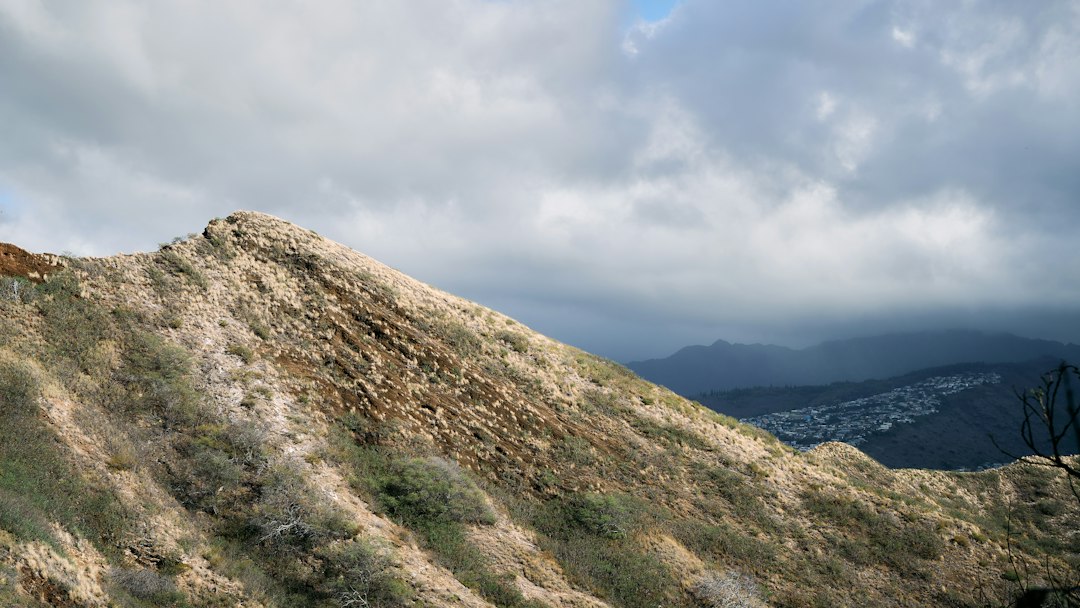
The landscape is a dynamic tapestry, constantly reshaped by the subtle yet powerful interplay of natural forces. Among these forces, the movement of debris across ridgelines stands as a compelling example of how elements conspire to sculpt the terrain. Whether it’s a solitary leaf tumbling down a mountainside or a cascade of rock fragments dislodged by erosion, the journey of debris over these elevated crests is a fascinating phenomenon governed by a complex interplay of gravity, wind, and the inherent properties of the transported material. Understanding this process is crucial for a variety of disciplines, from geomorphology and ecology to disaster preparedness and even urban planning in mountainous regions. This article delves into the mechanics of how debris navigates these prominent topographic features, exploring both the inherent pull of gravity and the often-overlooked influence of wind.
In exploring the fascinating dynamics of how debris crosses ridges, one can gain deeper insights by referring to the related article on MyGeoQuest. This resource delves into the geological processes and environmental factors that influence debris movement across various terrains. For more information, you can read the article here: MyGeoQuest.
The Dominant Hand of Gravity: Pulling Debris Downhill
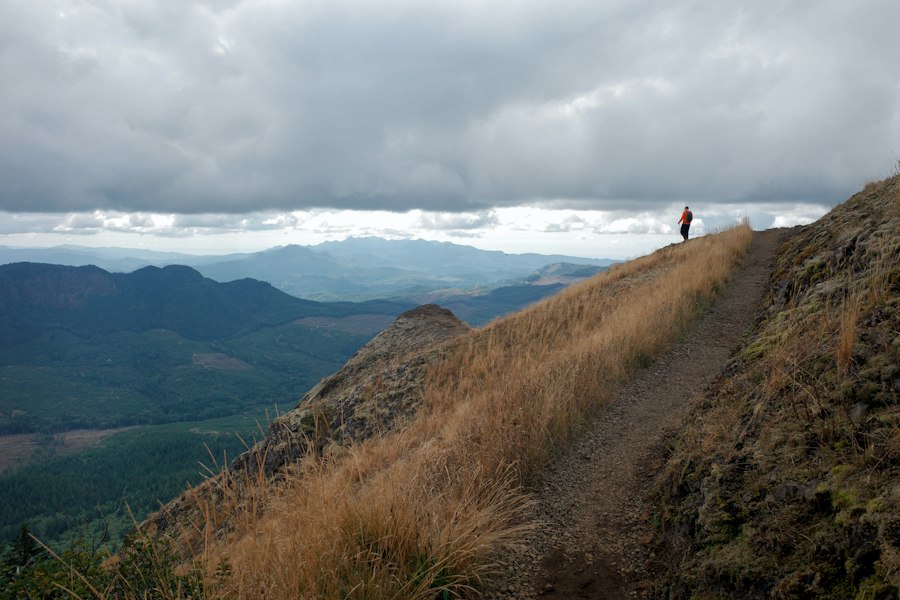
Gravity, the ubiquitous force that governs the motion of all objects with mass, is the primary driver of debris movement downslope. Once an object or particle is situated on a slope, gravity exerts a continuous pull towards the lowest point. The steeper the slope, the greater the component of gravitational force acting parallel to the surface, thus increasing the likelihood and speed of movement. This fundamental principle is the bedrock upon which all understanding of debris transport over ridges is built.
Initiating the Descent: Triggers for Mass Movement
While gravity is the constant force, it’s often a specific trigger that initiates the actual movement of debris. These triggers can be natural events that destabilize slopes, overcoming the frictional forces and cohesive bonds that hold materials in place. Understanding these triggers is key to predicting when and where debris transport is most likely to occur.
Water’s Role in Slope Saturation
Water is arguably the most common and potent trigger for debris movement. Rainfall, snowmelt, or even fluctuations in groundwater levels can saturate the soil and rock. As pore spaces within the material fill with water, the effective stress between particles decreases. This reduction in inter-particle friction significantly weakens the slope’s stability. Additionally, the added weight of the water itself contributes to the overall downward force. Rapid or intense precipitation events, especially after prolonged dry periods, can lead to rapid saturation and destabilization, causing landslides, debris flows, and rockfalls. The increased lubrication provided by water can allow even relatively gentle slopes to become susceptible to movement.
Seismic Activity and Ground Shaking
Earthquakes, with their powerful seismic waves, can induce significant ground shaking. This shaking can temporarily liquefy saturated soils or dislodge rocks and debris that were already precariously perched. The inertia of the debris, combined with the violent, oscillating motion of the ground, can easily overcome the forces holding it in place. Regions prone to seismic activity often exhibit landscapes scarred by past landslides and rockfalls, testament to the erosive power of earthquakes. Even minor tremors can be sufficient to initiate movement on slopes that are already close to their failure point.
Freeze-Thaw Cycles and Frost Wedging
In colder climates, the process of freeze-thaw cycling plays a significant role in rock and soil fragmentation and subsequent downslope movement. Water seeps into existing cracks and pores in rocks. When the temperature drops below freezing, this water turns to ice, expanding and exerting immense pressure on the surrounding material. This pressure can widen existing cracks or create new ones. With repeated freeze-thaw cycles, rocks can break apart into smaller fragments, increasing the amount of loose debris available for transport. As these fragments accumulate at the base of slopes, they can become dislodged by other triggers, contributing to talus slopes and scree fields that are susceptible to gravitational pull.
Vegetation Loss and Uprooting
Vegetation plays a crucial role in stabilizing slopes by anchoring soil with its root systems. Deforestation, wildfires, or disease can lead to widespread vegetation loss. Without this natural reinforcement, soils become more prone to erosion and mass movement. Uprooted trees, especially those on steep slopes, can dislodge significant amounts of soil and rock, initiating a cascade of debris downslope. Furthermore, the loss of vegetation can lead to increased surface runoff, exacerbating the effects of water saturation.
The Mechanics of Downslope Motion
Once initiated, the movement of debris over a ridge is governed by a set of physical principles. The type of movement – be it a slow creep, a rapid slide, or a fluid flow – depends on the material properties, the slope gradient, and the presence of water.
Creep: The Slow, Persistent Advance
Soil creep is a slow, almost imperceptible downslope movement of soil and regolith. It occurs over extended periods, often so gradually that it is only noticeable through long-term observation of features like tilted fence posts or curved tree trunks. Creep is driven by a combination of factors, including the expansion and contraction of soil particles due to wetting and drying cycles, frost heave and thaw, and the burrowing activity of animals. While each individual movement is tiny, the cumulative effect over centuries can result in significant downslope displacement of material, eventually contributing to the debris that may eventually cross a ridge.
Slides and Slumps: Coherent Mass Movements
Slides and slumps involve the movement of a coherent mass of soil or rock along a distinct failure surface. In a landslide, the mass typically moves as a single unit, often with a steep head scarp and a depositional toe. Slumps, on the other hand, involve rotational movement along a curved failure surface, resulting in a series of terraced steps. The steepness of the slope and the degree of saturation are critical factors influencing the likelihood and type of slide or slump. These movements can dislodge large volumes of material, including boulders and trees, which then continue their journey downslope.
Flows: The Fluidity of Debris
Debris flows are characterized by the rapid movement of a liquefied mixture of water, rock, soil, and vegetation. They are essentially slurries that can travel at high speeds, carrying large boulders and debris downstream. The high water content is crucial for their fluidity, reducing friction and allowing for rapid transport. These flows often originate from steep mountain slopes and can inundate valleys, causing significant destruction. Rockfalls involve the free-fall of individual rocks or boulders from a cliff face. The size and velocity of the falling debris depend on the height of the fall and the rock’s structural integrity.
The Subtle Yet Significant Influence of Wind
While gravity provides the constant downward pull, wind often plays a crucial, though sometimes understated, role in the transport of debris across ridges. Its influence can range from nudging small particles to actively contributing to larger-scale erosional processes. The interaction between wind and the terrain creates a dynamic system where even seemingly insignificant air currents can have a cumulative impact on the movement of materials.
Wind’s Aerodynamic Forces: Lifting and Pushing Particles
Wind exerts both lift and drag forces on loose debris. Smaller, lighter particles like sand grains and leaf litter are particularly susceptible to wind erosion. The wind’s speed determines the magnitude of these forces. As wind speed increases, so does its ability to dislodge, lift, and transport particles. This process is known as aeolian erosion. On ridgelines, where exposed surfaces are common, wind can effectively pick up and carry these smaller debris fragments.
Saltation: The Bouncing Motion of Sand and Small Debris
Saltation is a primary mode of aeolian sediment transport. It describes the process where particles, typically between 0.05 and 1 millimeter in diameter, are lifted from the surface by the wind, travel a short distance, and then fall back to the ground, often dislodging other particles upon impact. This bouncing motion allows sand grains and other small debris to move across the landscape, including over and down ridges. The energy for saltation comes from the wind, and the trajectory of the particles is influenced by wind speed, particle size and density, and the surface roughness.
Suspension: Fine Particles Carried Aloft
Finer particles, such as dust, silt, and even very small fragments of rock and organic matter, can be suspended in the air by even moderate winds. These particles can be carried over long distances, sometimes for hundreds or thousands of kilometers. When wind speeds are high enough, these suspended particles can be transported over mountain ridges and deposited on the leeward side, or further down into valleys. This is how dust storms can impact distant ecosystems and how volcanic ash can be distributed globally. The deposition of fine debris can alter soil composition and vegetation patterns.
Wind’s Role in Larger Debris Transport
While wind’s direct impact on large boulders is negligible, it can indirectly facilitate their movement by contributing to erosional processes that loosen them or by acting in conjunction with other forces.
Wind Erosion and Weathering
Wind can contribute to weathering by abrading rock surfaces. Over time, the constant impact of wind-borne particles can wear away at rock, creating pits, grooves, and weakening the overall structure. This process, known as abrasion, can lead to the fragmentation of larger rocks, creating smaller debris that is then more susceptible to wind transport or gravitational movement. In arid and semi-arid environments, where vegetation cover is sparse, wind erosion can be a significant factor in shaping the landscape and contributing to debris accumulation at the base of slopes.
Wind’s Interaction with Water and Gravity
Wind can enhance the effects of water and gravity. For instance, strong winds can exacerbate the effects of surface runoff by creating turbulence, which can increase the erosive power of water. On slopes with loose debris, strong gusts of wind can, in some cases, provide the initial impetus to dislodge particles, especially if they are already precariously balanced. While the primary force is still gravity, wind can act as a secondary trigger, particularly for lighter, more mobile debris. Imagine a gust of wind hitting a pile of dry leaves and twigs precariously balanced on the edge of a ridge; the wind might be the final nudge that sends them tumbling.
The Anatomy of Debris: Properties Influencing Movement
The physical characteristics of the debris itself play a pivotal role in how it moves across ridges. Size, shape, density, and surface texture all influence the forces that act upon it, dictating its susceptibility to gravity and wind, and the manner in which it travels.
Size and Shape: The Aerodynamics and Inertia of Debris
The size of a debris particle is a primary determinant of its mobility. Small particles, like sand grains, are easily lifted and transported by wind through saltation and suspension. Larger particles, such as pebbles and small rocks, are more reliant on gravitational forces and require steeper slopes or more powerful triggers like water flows or rockfalls to be moved. The shape of debris also matters. Angular fragments may interlock, providing more stability, while rounded objects might roll more easily. For wind transport, a more aerodynamic shape will be more readily lifted and carried than a flat, plate-like object of the same mass.
Density and Surface Texture: Resistance to Movement
Denser materials, such as solid rock fragments, are less susceptible to wind transport than less dense materials like dry leaves or organic matter. For gravitational movement, density influences the inertia of the object – a heavier object requires a greater force to initiate and sustain movement. Surface texture affects both friction and aerodynamic drag. Rough surfaces can create more turbulence in the wind, potentially increasing lift for some particles, but also increasing drag. For particles in contact with the ground, surface texture will influence the frictional forces that resist movement. Smoother particles might slide more easily once initiated.
Cohesion and Fragmentation: The Internal Strength of Debris
The internal strength and cohesion of the material from which debris originates are critical. Solid rock, with its inherent structural integrity, will break into fragments through weathering and erosion, and these fragments will then behave as individual pieces of debris. Soil, on the other hand, can have varying degrees of cohesion depending on its composition (clay, silt, sand) and moisture content. Wet soil is often less cohesive than dry soil. The degree to which debris is fragmented will also dictate its susceptibility to transport. A single, large, cohesive block will be less likely to move than a collection of smaller, loose fragments.
In recent studies, researchers have explored the fascinating dynamics of how debris crosses ridges, shedding light on the processes that influence sediment transport and landscape evolution. For a deeper understanding of these mechanisms, you can refer to a related article that discusses the various factors affecting debris movement in mountainous regions. This insightful piece can be found here, providing valuable information for those interested in geomorphology and environmental science.
The Ridge as a Barrier and a Pathway
| Metric | Description | Typical Values | Measurement Method |
|---|---|---|---|
| Debris Size | Average diameter or length of debris particles crossing the ridge | 1 mm to 10 cm | Sieving and visual inspection |
| Debris Velocity | Speed at which debris moves over or through the ridge | 0.1 to 5 m/s | High-speed cameras, Doppler radar |
| Debris Volume | Total volume of debris crossing the ridge per unit time | 0.01 to 10 m³/hour | Flow meters, volumetric sampling |
| Crossing Frequency | Number of debris crossing events per hour | 1 to 50 events/hour | Time-lapse video analysis |
| Ridge Slope Angle | Angle of the ridge which affects debris crossing | 5° to 45° | Inclinometer, topographic survey |
| Debris Composition | Material makeup of debris (organic, mineral, mixed) | Varies by location | Laboratory analysis, spectroscopy |
| Wind Speed | Wind velocity influencing debris movement over ridge | 0 to 20 m/s | Anemometer |
| Water Flow Rate | Rate of water flow that can carry debris across ridge | 0 to 2 m³/s | Flow meters |
Ridges, by their very definition, are elevated landforms that present a challenge to downslope movement. However, they are not impenetrable barriers. Instead, they often act as conduits, funnels, and transition zones for debris transport. The crest of a ridge, while a high point, also represents a transition between two opposing slopes.
Crossing the Summit: Strategies for Debris
The journey of debris over a ridge is not always a simple downhill slide. Several factors influence how it manages to traverse this elevated divide.
Tumbling and Rolling Down the Leeward Slope
Once debris reaches the crest of a ridge, gravity will naturally pull it down the other side. If the debris is composed of loose fragments, it will tumble and roll. The steepness and surface conditions of the leeward slope will determine the speed and extent of this movement. Larger rocks might bounce or skid, while smaller particles will roll and slide. The presence of obstacles like vegetation or other rocks can slow or alter the trajectory of the moving debris.
Wind-Assisted Migration Over the Crest
Wind can play a significant role in moving debris over the crest of a ridge, especially for lighter materials. A strong gust of wind blowing from the windward side of the ridge can lift and carry particles across the summit and onto the leeward side. This is particularly evident in areas with sparse vegetation and loose, fine-grained sediment. The wind acts like a conveyor belt, transporting materials that might otherwise be trapped or moved more slowly by gravity alone. Over time, this wind-driven transport can lead to the accumulation of debris on the leeward slopes.
Dislodgement and Avalanche Initiation
In cases of significant mass movement events, such as landslides or rock avalanches, the entire slope can become destabilized. In such scenarios, the debris does not simply cross the ridge; it overwhelms it. Large volumes of rock and soil can surge upwards and over the ridge crest, effectively bypassing the natural barrier. This is often a catastrophic event driven by immense forces, where the momentum of the moving mass allows it to surmount topographic features that would otherwise impede its progress. The ridge then becomes a temporary obstacle, rather than a complete barrier, during such extreme events.
Deposition and Accumulation Patterns
The destination of debris after crossing a ridge is heavily influenced by the topography on the leeward side. Gentle slopes might lead to gradual deposition, while steeper slopes can result in rapid accumulation.
Talus Slopes and Scree Fields
At the base of cliffs and steep slopes, accumulated rock fragments are often referred to as talus slopes or scree fields. These are classic depositional environments for debris that has tumbled and rolled down from above. The angle of repose, which is the steepest angle at which a pile of unconsolidated material remains stable, dictates the shape and extent of these features. Over time, these accumulated debris fields can become colonized by specialized vegetation adapted to the harsh conditions. Ridges can act as sources for the material that forms these talus slopes.
Debris Fans and Alluvial Plains
As debris flows and other waterborne transport mechanisms move downslope, they can emerge from confined channels onto flatter areas, forming debris fans. These are cone-shaped accumulations of sediment where the flow loses velocity and deposits its load. If these fans merge, they can form extensive alluvial plains. Ridges often funnel debris into these depositional zones, acting as the source areas for the material that builds these larger landforms. The pattern of deposition can significantly alter local hydrology and soil development.
Ecological and Anthropogenic Implications of Debris Transport
The movement of debris across ridges has profound implications for both natural ecosystems and human activities. It shapes landscapes, influences biodiversity, and can pose risks to infrastructure and communities.
Reshaping Ecosystems: Soil and Nutrient Distribution
The transport of debris is a fundamental process in nutrient cycling and soil formation. As organic matter, soil particles, and mineral fragments are moved across ridges, they are redistributed across the landscape. This can lead to the enrichment of otherwise nutrient-poor areas or the depletion of others. For example, windblown dust can bring essential minerals to distant locations, supporting plant growth. Conversely, landslides can strip away fertile topsoil, creating barren areas that require significant time for ecological recovery. The availability of water and nutrients is directly linked to the movement of debris, influencing plant communities and the animals that depend on them.
Colonization and Succession on New Surfaces
The deposition of new debris, whether from rockfalls or windblown sediments, creates new surfaces for ecological colonization. Pioneer species, often hardy plants adapted to unstable conditions, are the first to establish themselves. Over time, as soil develops and conditions stabilize, a succession of plant communities can emerge, leading to the development of more complex ecosystems. Ridges, by acting as pathways for debris, can facilitate this process across different altitudinal zones and habitats. The arrival of new material can therefore initiate entirely new ecological trajectories.
Human Impacts and Management Challenges
Understanding debris transport is vital for human societies, particularly in mountainous regions. It informs land-use planning, infrastructure development, and disaster mitigation strategies.
Risks to Infrastructure and Settlements
Debris flows, landslides, and rockfalls can pose significant threats to human settlements, roads, railways, and other infrastructure located in mountainous areas or in the path of moving debris. The immense destructive power of these events necessitates careful risk assessment and mitigation measures. Understanding the pathways and triggers for debris transport allows for the identification of hazard zones and the implementation of protective measures, such as retaining walls, debris nets, and early warning systems.
Forestry, Agriculture, and Land Management
In forestry and agriculture, the movement of debris can have both positive and negative consequences. Soil erosion downslope can deplete arable land, while the deposition of nutrient-rich sediments can enhance soil fertility in other areas. Land management practices, such as reforestation and terracing, are often employed to stabilize slopes and reduce the risk of debris transport. Awareness of how debris moves across ridges informs these practices, helping to minimize erosion and protect valuable land resources.
Climate Change Considerations
Climate change is projected to influence debris transport in several ways. Changes in precipitation patterns, including more intense rainfall events, can increase the frequency and magnitude of water-induced mass movements. Thawing permafrost in mountainous regions can destabilize slopes, leading to increased rockfalls and landslides. Understanding how these climatic shifts might alter debris transport patterns is crucial for adapting land management and disaster preparedness strategies to future environmental conditions. The dynamic nature of debris movement underscores the need for ongoing research and monitoring.

The Social Security Mistake At 62 That Could Ruin Your Spouse’s Retirement
FAQs
How does debris cross a ridge?
Debris can cross a ridge through various natural processes such as landslides, rockfalls, or avalanches. These events can dislodge material from the ridge and transport it downslope.
What factors influence the movement of debris across a ridge?
The movement of debris across a ridge can be influenced by factors such as the steepness of the slope, the type of material involved, weather conditions, and the presence of vegetation or other obstacles.
Can debris crossing a ridge pose a danger to nearby areas?
Yes, debris crossing a ridge can pose a significant danger to nearby areas, especially if it leads to landslides or avalanches that can impact communities, infrastructure, and natural habitats downslope.
Are there ways to mitigate the risks associated with debris crossing a ridge?
There are various strategies to mitigate the risks associated with debris crossing a ridge, including implementing early warning systems, conducting slope stabilization measures, and land use planning to avoid building in high-risk areas.
What are some examples of notable incidents involving debris crossing a ridge?
Notable incidents involving debris crossing a ridge include the Oso landslide in Washington state in 2014, the Thredbo landslide in Australia in 1997, and the Vaiont Dam disaster in Italy in 1963, all of which resulted in significant loss of life and property damage.