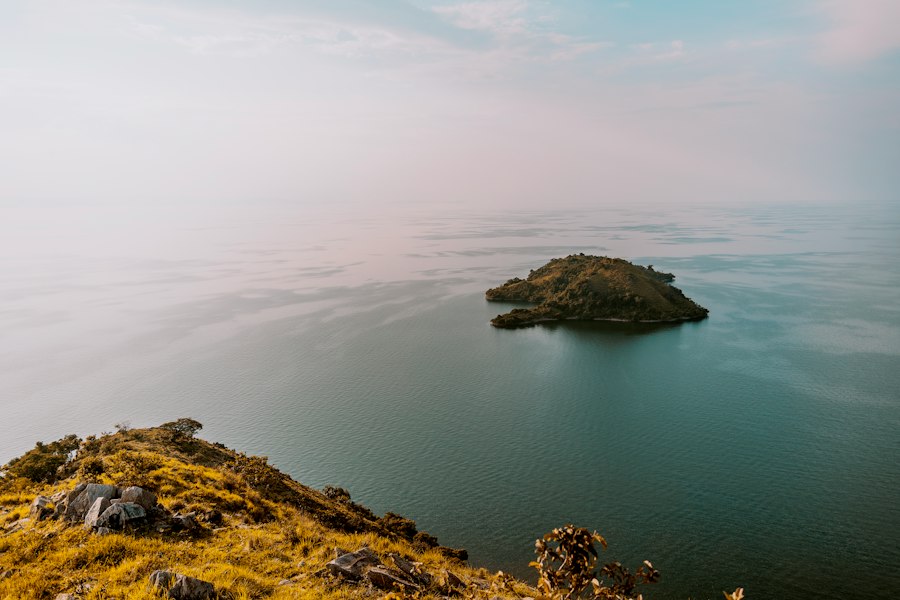
Lake Kivu, a vast expanse of shimmering blue straddling the border between Rwanda and the Democratic Republic of Congo, presents a picturesque tableau. Its tranquil surface, dotted with islands and fringed by verdant hills, belies a volatile secret. Beneath this serene facade lies a potent cocktail of dissolved gases, a ticking time bomb that has captivated and concerned scientists for decades. The very geological processes that formed this magnificent lake have also imbued it with a dangerous potential, one that could erupt with devastating consequences if not properly understood and managed. This article delves into the unseen dangers lurking within Lake Kivu, exploring the scientific basis of its hazards, the potential impacts of an eruption, and the ongoing efforts to mitigate this unique environmental threat.
The Deep-Seated Origin of Kivu’s Volatile Nature
The genesis of Lake Kivu’s peculiar danger is intrinsically linked to its geological setting. Situated within the East African Rift Valley, a colossal tectonic feature where the Earth’s crust is slowly tearing apart, Kivu is a product of volcanic activity. This rift system is characterized by numerous volcanoes, many of which are still active, and a subsurface plumbing system rich in magma. The immense pressures and high temperatures associated with these geological forces play a crucial role in the lake’s unique chemical composition.
Volcanic Activity and Gas Solubility
The East African Rift is a region of intense volcanic activity, and Lake Kivu is no exception. The lake basin itself is a caldera, a large volcanic crater formed by the collapse of land following a volcanic eruption. Beneath the lakebed, magma chambers lie relatively close to the surface. These heat sources drive hydrothermal activity, injecting hot, mineral-rich fluids into the lake’s depths. Crucially, these fluids are also saturated with dissolved gases, primarily carbon dioxide (CO2) and methane (CH4).
The immense depth of Lake Kivu, reaching over 490 meters in places, creates hydrostatic pressure that allows these gases to remain dissolved in the water. Think of it like a giant soda bottle; the pressure keeps the carbon dioxide from escaping. In shallower lakes, this pressure is insufficient to hold such high concentrations of dissolved gases, and they would naturally release into the atmosphere. However, Kivu’s considerable depth acts as a natural containment system, trapping vast quantities of CO2 and CH4 in its lower layers. Scientists estimate that the lake holds approximately 250 cubic kilometers of dissolved CO2 and 60 cubic kilometers of methane, a staggering volume that dwarfs any other known limnic eruption potential worldwide.
The Role of Stratification
Lake Kivu exhibits a pronounced form of thermal stratification. This means the lake is divided into distinct layers based on temperature, density, and chemical composition. The upper layers are relatively warm and well-mixed by winds and surface currents. Below this, a thermocline separates the warmer epilimnion from the colder, denser hypolimnion. It is in this deep, stagnant hypolimnion that the majority of the dissolved gases are concentrated.
This stratification is a critical factor in the potential for a limnic eruption. The density difference between the upper and lower water layers acts as a barrier, preventing the dissolved gases from naturally migrating to the surface and escaping. This creates a state of supersaturation, where the water holds more dissolved gas than it normally could under atmospheric pressure. Any disturbance that can overcome this density barrier, or the sheer accumulation of gas over time, could trigger a catastrophic release. The concentration of methane in the deeper layers is particularly concerning, as methane is highly flammable, adding another layer of danger to the dissolved gas threat.
Lake Kivu, known for its stunning beauty and serene waters, harbors hidden hazards that pose significant risks to the surrounding communities and ecosystems. For a deeper understanding of these dangers, including the potential for volcanic gas eruptions and the impact on local fishing industries, you can explore a related article that delves into the complexities of this unique lake. To read more about these hidden hazards, visit this article.
The Specter of Limnic Eruption
The most significant and feared hazard associated with Lake Kivu is the possibility of a limnic eruption. This rare but potentially catastrophic phenomenon occurs when a large volume of dissolved gases is suddenly released from the lake’s depths, causing a gas cloud to rise to the surface and spread across the surrounding land. While not an explosive volcanic eruption in the traditional sense, the consequences can be equally devastating.
The Mechanism of Gas Release
A limnic eruption is triggered when the delicate balance of pressure and temperature that keeps the gases dissolved is disrupted. Several factors could potentially initiate such a disruption. One primary concern is seismic activity. The East African Rift is a seismically active zone, and earthquakes can cause significant agitation of the lake waters. A strong earthquake could destabilize the stratified layers, causing the denser, gas-rich hypolimnion to rise rapidly and mix with the upper layers. This mixing would reduce the hydrostatic pressure, leading to a rapid exsolution of dissolved gases.
Another potential trigger is volcanic activity directly beneath the lake. If a volcanic intrusion or a shallow magma chamber beneath the lakebed were to heat the water significantly or directly release gases into the hypolimnion, it could also lead to a rapid gas release. Landslides or underwater avalanches into the lake could also displace large volumes of water, potentially initiating the mixing process and gas release. Regardless of the specific trigger, the result is a rapid and massive upwelling of gas-saturated water.
The Consequences of a Gas Cloud
The immediate and most terrifying consequence of a limnic eruption is the formation of a massive gas cloud. As the supersaturated water rises and the pressure decreases, enormous quantities of CO2 and CH4 are released as bubbles. These gases, being denser than air, would hug the ground and spread out over the surrounding inhabited areas. Carbon dioxide is an asphyxiant; in high concentrations, it displaces oxygen, leading to suffocation. The sheer volume of CO2 released could blanket entire towns and villages, incapacitating and killing anyone exposed. The methane, being flammable, presents an additional, terrifying risk. If ignited by any spark, such as lightning or even static electricity, the methane could explode, causing widespread fires and further destruction.
The potential death toll from a full-scale limnic eruption is estimated to be in the tens, if not hundreds, of thousands. The densely populated areas surrounding Lake Kivu, including cities like Goma in Rwanda and Bukavu in the DRC, would be directly in the path of such a disaster. The economic and social impact would be catastrophic, potentially destabilizing entire regions. The memory of the 1986 Lake Nyos disaster in Cameroon, where a limnic eruption killed 31 people and is thought to have been caused by a similar geological scenario, serves as a grim reminder of the potential for such events. While Lake Kivu holds significantly more dissolved gas than Lake Nyos, the lower population density around Nyos limited the fatalities. Kivu’s surrounding populations make the stakes infinitely higher.
Unforeseen Microbial Activity and Gas Production

While the geological origin of the dissolved gases is the primary concern, ongoing biological processes within Lake Kivu contribute to the methane reservoir and present their own set of challenges. Microorganisms, thriving in the unique chemical environment of the lake, actively produce methane through a process called methanogenesis.
Lake Kivu, while a stunning natural wonder, harbors hidden hazards that pose significant risks to the surrounding communities. An insightful article that delves into these dangers can be found on My Geo Quest, where it explores the geological and environmental challenges associated with this unique lake. For those interested in understanding more about the complexities of Lake Kivu, you can read the full piece here. This resource highlights the importance of awareness and preparedness in mitigating the potential threats that lie beneath the surface of this beautiful body of water.
The Anaerobic Ecosystem
The deep, anoxic (oxygen-depleted) layers of Lake Kivu are an ideal habitat for anaerobic bacteria. These microorganisms, in the absence of oxygen, break down organic matter that sinks from the surface. As a byproduct of this decomposition, they release methane. This biological methane production acts as a continuous source, replenishing the gas reservoir. Over long periods, this process has accumulated the vast quantities of methane currently dissolved in the lake.
The complex microbial communities within Kivu are still being studied, and understanding their role in gas production is crucial for predicting future changes in the lake’s chemistry. Factors such as changes in nutrient input from surrounding land use or alterations in water temperature could influence the rate of methanogenesis. While this biological production is slower than a sudden geological release, it is a constant factor contributing to the overall hazard. The balance between gas production and potential release mechanisms is a key area of scientific investigation.
Methane Oxidation and Its Implications
While methane is produced, it can also be consumed. In the upper, oxygenated layers of the lake, aerobic bacteria can oxidize methane, converting it into carbon dioxide. This process helps to limit the amount of methane that reaches the surface. However, in

Lake Kivu’s Methane Powers Rwanda—What’s Changing Below?
FAQs
What are the hidden hazards of Lake Kivu?
The hidden hazards of Lake Kivu include the presence of dissolved methane and carbon dioxide gases in its depths, which pose a risk of sudden release and potential suffocation if not properly managed.
How do the gases in Lake Kivu pose a threat?
The gases in Lake Kivu pose a threat due to the potential for a limnic eruption, where a large amount of dissolved gases are released from the lake, leading to asphyxiation and potentially causing harm to surrounding communities.
What measures are in place to mitigate the risks associated with Lake Kivu’s gases?
To mitigate the risks associated with Lake Kivu’s gases, various methods are being implemented, such as extracting methane for energy production, degassing systems, and monitoring the gas levels to prevent a sudden release.
Are there any other environmental concerns related to Lake Kivu?
In addition to the gas hazards, Lake Kivu faces environmental concerns such as pollution from agricultural runoff, deforestation, and invasive species that can impact the lake’s ecosystem and water quality.
How can the public stay safe when visiting Lake Kivu?
To stay safe when visiting Lake Kivu, it is important to follow safety guidelines, avoid swimming in deep areas where gases may accumulate, and be aware of any warnings or advisories related to the lake’s gas levels.