
The tapestry of Belgian history is woven with threads of conquest, cultural exchange, and the enduring legacy of dominant powers. Among these, the influence of French dominance in early Belgium stands as a particularly profound and transformative chapter. From the echoes of Roman Gaul to the sophisticated administrative structures of Napoleonic rule, French language, law, and governance left an indelible mark on the very identity of the region that would eventually become Belgium. This period of French hegemony, stretching across centuries and manifesting in diverse ways, fundamentally shaped the socio-political and cultural landscape, creating a complex inheritance that continues to resonate today.
The initial seeds of French influence in what is now Belgium were sown during the Roman conquest. The Roman Empire, in its vast expansion, incorporated territories that would later form the northern reaches of Gaul. While Latin was the administrative and military language, the pervasive presence of Roman culture and the subsequent migration of Gallic tribes from further south began to lay the groundwork for a Romance language’s ascendancy.
Linguistic Entrenchment: From Vulgar Latin to Old French
The Roman legions and administrators brought with them Vulgar Latin, the spoken form of the language that gradually supplanted the indigenous Celtic tongues. Over centuries, this Latin evolved. The northernmost territories of Gaul, including present-day Belgium, experienced a gradual shift towards a language that would eventually be recognized as Old French. This linguistic evolution was not uniform; regional dialects emerged, influenced by the pre-Roman substrate and subsequent Germanic migrations. However, the prestige and widespread use of the developing French language, particularly in administrative and commercial centers, created a powerful current pulling the linguistic landscape towards a Romance identity. The regions closest to the heartland of France, such as Hainaut and parts of Flanders, showed a stronger adherence to Romance linguistic evolution.
Administrative and Legal Frameworks: The Roman Imprint
The Romans established a sophisticated administrative and legal system that, even after their departure, left a lasting impression. Roman law, with its emphasis on order, property rights, and codified statutes, provided a blueprint for future governance. While Germanic tribes later introduced their own legal traditions, the Roman framework remained influential, especially in urban centers that had been Roman municipalities. This early introduction of Roman administrative principles created a precedent for centralized governance and a structured approach to law, elements that would later be readily adopted and adapted by subsequent French rulers. The Roman concept of citizenship, though different from modern interpretations, also contributed to the development of a more formalized societal structure.
The influence of French dominance in early Belgium is a fascinating topic that highlights the complex historical relationship between the two regions. For a deeper understanding of this subject, you can explore the article available at MyGeoQuest, which delves into the cultural and political impacts of French rule in Belgium during the 18th and 19th centuries. This resource provides valuable insights into how French governance shaped the development of Belgian identity and society.
The Medieval Period: French Nobility and the Rise of Romance Influence
The medieval era witnessed a significant consolidation of French influence, largely driven by the political ambitions and cultural prestige of the French monarchy and its associated nobility. While the region was not a monolithic French entity, powerful French-speaking dukes, counts, and barons held sway over significant territories, shaping both the political and cultural trajectory.
The Duchy of Brabant and the Flemish Counties: French Vassals and Cultural Exchange
The Duchy of Brabant, for example, was a crucial territory where French linguistic and cultural norms gradually gained prominence. While the populace might have spoken local dialects, the court, the administration, and the elite were increasingly French-speaking. Similarly, the powerful Counts of Flanders, though often engaged in complex political maneuvering with both France and the Holy Roman Empire, were deeply embedded in the French feudal system. Their courts became centers of Romance culture, patronizing troubadours and adopting French chivalric ideals. This influx of French nobility and their retinues facilitated a sustained cultural exchange, with French fashion, literature, and courtly manners filtering down through the aristocratic strata.
Feudalism and its French Connections: Lordship and Loyalty
The feudal system itself, a cornerstone of medieval European society, had strong roots in French practices. The concept of homage, fealty, and the hierarchical structure of lord and vassal were deeply ingrained in the political landscape of what is now Belgium. French kings and their powerful vassals exerted influence through this system, demanding allegiance and providing protection. The intricate web of feudal obligations meant that political and military alliances often mirrored linguistic and cultural connections. Territories within present-day Belgium found themselves increasingly aligned with French powers, either through direct vassalage or through strategic marriages and treaties that cemented French influence.
The Burgundian and Habsburg Eras: A French-Speaking Elite in a Complex Polity

The Burgundian Dukes, who rose to prominence in the 15th century, played a pivotal role in further entrenching French influence. Although their territories encompassed a wide geographical area, including the Low Countries, their court and administration were decidedly French in orientation. This period saw a flourishing of French language and culture, even as the political landscape became increasingly complex under the subsequent Habsburg rule.
The Court of Burgundy: A Paragon of French Culture
The Burgundian court at Dijon and later at Brussels was a renowned center of European culture. The Dukes of Burgundy, particularly Philip the Good, were enthusiastic patrons of the arts and sciences. Their courts were attended by French-speaking nobles, scholars, and artists, creating an environment where French was the language of prestige and intellectual discourse. This patronage extended to literature, music, and visual arts, all of which bore the distinct imprint of French artistic traditions. The opulent lifestyle and sophisticated tastes of the Burgundian court set a benchmark for other European rulers, and in doing so, amplified the cultural sway of France.
The Habsburg Inheritance and the Persistence of French: Administration and Commerce
When the Habsburgs inherited the Burgundian territories, they largely continued the existing administrative structures and the reliance on a French-speaking elite. While the Habsburgs themselves were German-speaking, their governance of the Low Countries was heavily influenced by the established French administrative and legal precedents. French remained the language of government, diplomacy, and high finance. Major trading cities like Antwerp, while having a multilingual population, saw their commercial dealings and elite discourse increasingly conducted in French. This persistence of French as the language of power and commerce further solidified its position, creating a linguistic and cultural divide between the ruling classes and the broader populace.
The Age of Enlightenment and Revolution: French Ideals and the Seeds of a Belgian Identity
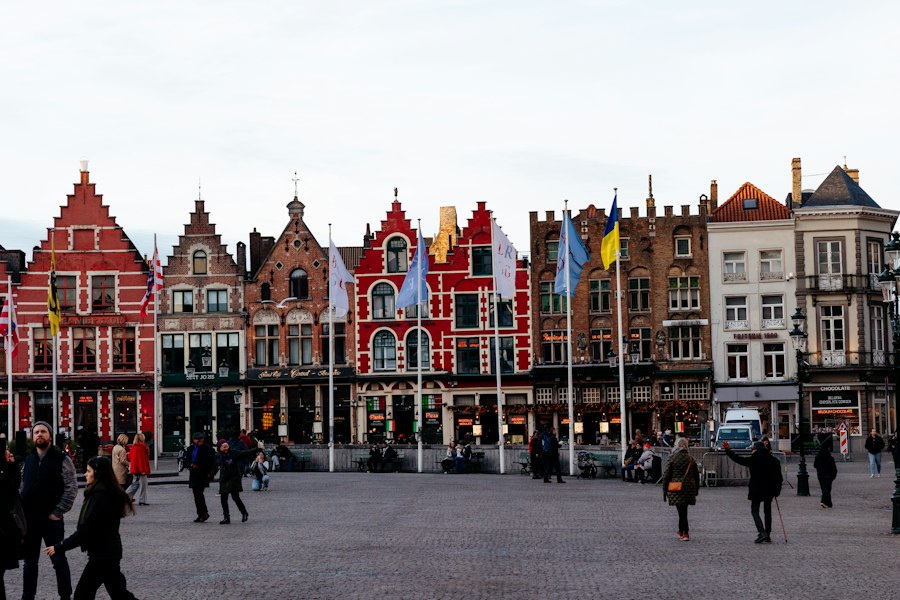
The Enlightenment, with its emphasis on reason, universal rights, and secular governance, was a period where French intellectual currents had a profound impact across Europe. This intellectual ferment, coupled with the upheavals of the French Revolution, further intensified French influence, paradoxically also sparking nascent notions of a distinct Belgian identity.
The Spread of Enlightenment Philosophy: Reason and Republicanism
French thinkers like Voltaire, Rousseau, and Montesquieu espoused ideas that resonated deeply within the educated circles of the Low Countries. Concepts of individual liberty, the separation of powers, and critiques of absolute monarchy found fertile ground. These philosophical ideas, primarily disseminated through French texts and discourse, challenged existing power structures and paved the way for new political aspirations. The spread of these ideals was intrinsically linked to the French language, as these works were primarily written and discussed in French.
The French Revolution and its Echoes: Liberation and Annexation
The French Revolution brought with it a wave of revolutionary fervor and, eventually, French military dominance. The ideals of liberty, equality, and fraternity, though often contradicted by the realities of revolutionary conquest, captivated many within the Austrian Netherlands. Initially, some saw the French as liberators from oppressive Habsburg rule. However, the subsequent annexation of these territories into the French Republic and later the Napoleonic Empire marked a period of direct French rule. This direct governance imposed French administrative systems, legal codes (like the Napoleonic Code), and the French language as the official tongue, further embedding French influence into the fabric of Belgian society. The revolutionary period, while marked by French imposition, also inadvertently fostered a sense of shared experience among the diverse peoples of the Low Countries, laying some of the groundwork for future national identity.
The historical influence of French dominance in early Belgium is a fascinating topic that sheds light on the complex cultural and political landscape of the region. This period saw significant shifts in power dynamics, as the French sought to expand their influence over neighboring territories. For a deeper understanding of this subject, you can explore a related article that delves into the intricacies of French rule and its impact on Belgian society. To read more about this intriguing aspect of history, visit this article.
The Napoleonic Era and Beyond: Codified Law, Centralization, and the Lingering Linguistic Divide
| Aspect | Details | Time Period | Impact |
|---|---|---|---|
| Language | French was the dominant language in administration, education, and culture in early Belgium, especially in Wallonia and Brussels. | 1830-1900 | French became the language of the elite and government, marginalizing Dutch and Flemish languages. |
| Political Influence | French-speaking elites held most political power in the newly independent Belgian state. | 1830-1900 | French dominance shaped national policies and governance structures. |
| Education | French was the primary language of instruction in schools and universities. | 1830-1900 | Limited access for Dutch speakers to education in their native language. |
| Media and Literature | French was the main language for newspapers, literature, and cultural production. | 1830-1900 | French culture heavily influenced Belgian arts and intellectual life. |
| Demographics | Approximately 60% of the population spoke Dutch, but French was the language of the ruling class. | 1830 | Created linguistic tensions that influenced later political movements. |
The Napoleonic era represented the zenith of direct French political and administrative control over what is now Belgium. The imposition of French laws, governance structures, and a unified administrative system had a lasting and profound impact, solidifying French influence in a way that would endure even after French rule ended.
The Napoleonic Code: A Foundation for Belgian Law
One of the most enduring legacies of French dominance is the Napoleonic Code, or the Civil Code. This comprehensive and rationalized body of law, promulgated by Napoleon, replaced the patchwork of local legal traditions that had previously governed the region. The Code emphasized clarity, uniformity, and individual rights, and its principles became the bedrock of Belgian civil law. Even after Belgium gained independence, the Napoleonic Code remained in effect, a testament to its perceived efficacy and a clear embodiment of French legal influence. This legal framework provided a unifying structure for a region previously characterized by diverse legal customs.
Centralized Administration and the French Language as the Language of State
Under Napoleonic rule, Belgium was integrated into the French administrative system. Prefects, appointed by Paris, governed the departments, and a hierarchical structure of governance was imposed. French was established as the official language of administration, education, and the judiciary. This policy, while aiming for efficiency and national unity, had significant linguistic consequences for the Flemish-speaking population. It led to the marginalization of Dutch in official spheres and created a linguistic hierarchy that would fuel future tensions and the Flemish movement. The centralized nature of this governance contrasted sharply with the more fragmented authority that had existed under earlier regimes.
The Echoes of French Hegemony: Identity and the Struggle for Linguistic Equality
The period of French dominance, from Roman times to the Napoleonic era, left an indelible mark on Belgium. The French language, legal systems, administrative structures, and cultural norms were deeply embedded. While this influence contributed to a degree of cultural and political cohesion, it also created a significant linguistic divide, particularly between the French-speaking elite and the Dutch-speaking majority. The legacy of this French hegemony would become a central theme in the subsequent development of Belgium, shaping the ongoing struggle for linguistic equality and the complex evolution of Belgian national identity. The historical imposition of French as the language of power and prestige would continue to resonate in the political and social debates of the newly independent nation.

Belgium Has a Border With No Wall — Here’s Why
FAQs
1. What was the extent of French dominance in early Belgium?
French dominance in early Belgium was significant, as the French language and culture were imposed on the region during the French Revolution and Napoleonic era.
2. How did French influence impact the development of Belgium?
The French influence in early Belgium led to the spread of French language, education, and administration, shaping the country’s cultural and political landscape.
3. Were there any resistance movements against French dominance in Belgium?
Yes, there were resistance movements in Belgium against French dominance, such as the Belgian Revolution of 1830 which ultimately led to the country’s independence from the United Kingdom of the Netherlands.
4. How did French dominance affect the economy of early Belgium?
French dominance in early Belgium had a mixed impact on the economy, as it introduced modern administrative practices but also imposed heavy taxes and regulations that hindered economic growth.
5. What legacy did French dominance leave in Belgium?
The legacy of French dominance in early Belgium can still be seen today in the country’s bilingualism, with French and Dutch being the official languages, as well as in its legal system, education, and cultural institutions.