Unraveling Oceanic Crust Formation
The Earth’s surface is a dynamic tapestry, constantly being reshaped by powerful geological forces. Dominating this ever-changing landscape is the oceanic crust, a vast and essential component of our planet. Unlike the more familiar continental crust, the oceanic crust is younger, denser, and formed primarily through volcanic processes at mid-ocean ridges. Understanding its formation is key to unlocking fundamental insights into plate tectonics, the driving engine of Earth’s geology, and the cycling of elements within our planet. This article delves into the intricate processes that create this colossal geological feature, exploring the journey of molten rock from the Earth’s mantle to the ocean floor.
The birth of oceanic crust is not a singular event but a continuous, colossal process occurring at the Earth’s divergent plate boundaries, known as mid-ocean ridges. These submerged mountain ranges stretch for tens of thousands of kilometers across the globe, representing the planet’s largest volcanic systems. Here, the Earth’s lithosphere, the rigid outer shell composed of the crust and upper mantle, is being pulled apart. This separation is driven by the convection currents within the Earth’s mantle, where hotter, less dense material rises and cooler, denser material sinks. As the lithospheric plates diverge, the underlying asthenosphere, a hotter and more ductile layer of the mantle, experiences a reduction in pressure. This depressurization is the primary trigger for melting, a process known as decompression melting.
Decompression Melting: The Catalyst for Magma Generation
The asthenosphere, primarily composed of peridotite, a dense ultramafic rock, has a melting point that is highly dependent on pressure. In the deeper mantle, the immense pressure keeps peridotite solid, even at very high temperatures. However, as tectonic plates pull apart at the mid-ocean ridges, the overlying lithosphere thins, and the asthenosphere beneath it rises. This upward movement reduces the confining pressure on the asthenospheric material. As the pressure decreases, the melting point of the peridotite drops, allowing it to begin melting and forming magma – molten rock containing dissolved gases. This magma is less dense than the surrounding solid mantle and thus begins to rise.
The Composition of Oceanic Magma: Basaltic Roots
The magma generated at mid-ocean ridges is predominantly basaltic in composition. This means it is rich in silica-poor minerals like olivine and pyroxene, and relatively low in silica content. Basaltic magma is less viscous and hotter than felsic magmas (found in continental settings), which allows it to flow more easily and erupt frequently. The composition of this mantle-derived magma is remarkably uniform across most mid-ocean ridges, reflecting the relatively homogeneous nature of the upper mantle source region. However, subtle variations can occur due to factors such as the degree of partial melting and the presence of recycled oceanic crust or sediments.
The Role of Fluids and Volatiles: Influencing Magma Ascent
While decompression melting is the primary driver, the presence of fluids and volatile substances, such as water, also plays a crucial role in magma formation and ascent. Water, released from the mantle or recycled oceanic crust, can significantly lower the melting point of peridotite. This can lead to a greater degree of partial melting and influence the composition and temperature of the generated magma. These volatiles, dissolved in the magma, also contribute to its buoyancy and can drive explosive volcanic eruptions if they are released rapidly.
Oceanic crust formation is a fascinating process that plays a crucial role in the Earth’s geology. For a deeper understanding of this topic, you can explore the article available at My Geo Quest, which provides detailed insights into the mechanisms of oceanic crust formation, including the role of tectonic plates and magma activity at mid-ocean ridges. This resource is invaluable for anyone looking to grasp the complexities of our planet’s oceanic structures.
The Mid-Ocean Ridge System: Earth’s Volcanic Factory
The mid-ocean ridge system is a vast, interconnected network of underwater mountain ranges where the majority of oceanic crust is formed. These ridges are characterized by their elevated topography, volcanic activity, and the presence of a central rift valley. The continuous spreading of the seafloor at these ridges creates new crust at a rate of approximately 2 cm per year, though this rate can vary significantly along the ridge. The process of crustal formation at mid-ocean ridges is a testament to the Earth’s internal heat engine at work.
Seafloor Spreading: The Engine of Oceanic Crust Production
Seafloor spreading is the fundamental process by which oceanic crust is created and the ocean basins widen. As the tectonic plates pull apart at the mid-ocean ridge, the molten rock from the asthenosphere rises to fill the gap. This rising magma solidifies to form new oceanic crust, effectively pushing the older crust away from the ridge crest. This constant creation and outward movement of crust is what drives plate tectonics and shapes the Earth’s surface over geological timescales. The rate of seafloor spreading is a key factor in determining the age and extent of ocean basins.
The Rift Valley: The Scars of Divergence
At the heart of most mid-ocean ridges lies a prominent rift valley. This elongated depression is a direct consequence of the tensional forces pulling the tectonic plates apart. The rift valley acts as a conduit for magma to rise to the surface, and it is within these valleys that most volcanic activity occurs. The rugged terrain and steep walls of the rift valley are a visual manifestation of the ongoing rifting process. Earthquakes are also common within rift valleys as the crust fractures and adjusts to the spreading forces.
Hydrothermal Activity: Sculpting the Seafloor
As new oceanic crust forms and is exposed to the cold ocean water, a significant amount of hydrothermal activity ensues. Cold seawater seeps into fractures and cracks in the newly formed crust, where it is heated by the underlying magma. This superheated water, rich in dissolved minerals, then rises back to the seafloor, gushing out from hydrothermal vents. These vents, often forming chimneys of precipitated minerals known as “black smokers” and “white smokers,” create unique ecosystems teeming with life that thrives in the absence of sunlight. Hydrothermal activity plays a crucial role in chemical exchange between the Earth’s crust and the oceans, influencing ocean chemistry and contributing to the deposition of valuable mineral resources.
The Layered Structure of Oceanic Crust: A Stratigraphic Record
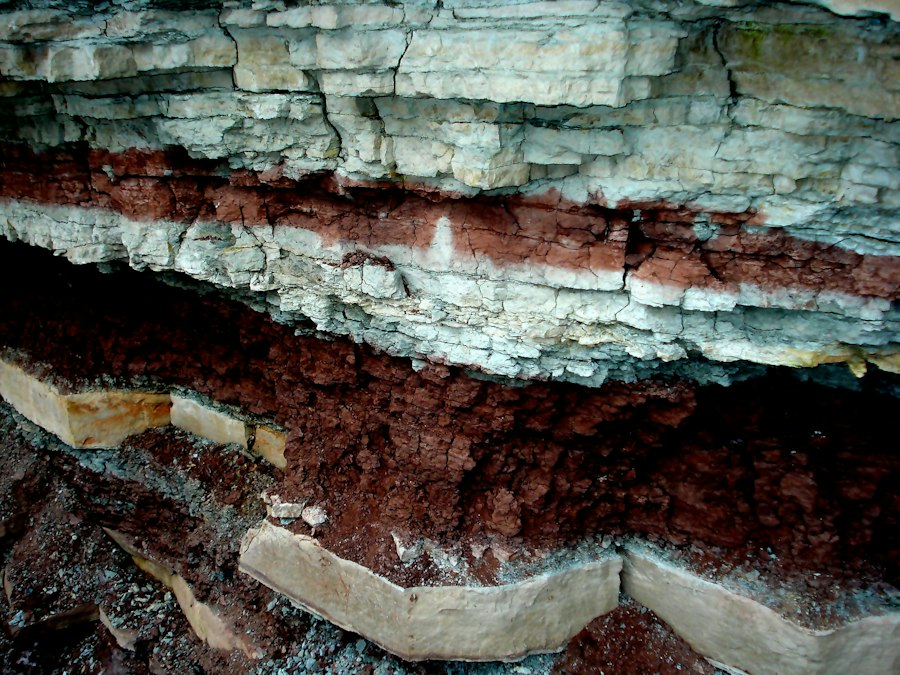
The oceanic crust is not a uniform layer but is organized into a distinct, layered structure, reflecting the different stages of its formation and solidification. This stratigraphy provides a valuable record of the processes occurring at the mid-ocean ridge. Understanding these layers is crucial for interpreting seismic data and reconstructing the history of oceanic basins.
Pillow Basalts: The Surface Expression of Volcanism
The uppermost layer of the oceanic crust, directly in contact with seawater, consists of pillow basalts. These distinctive, rounded, and tube-like structures are formed when hot basaltic lava erupts underwater and is rapidly cooled by the surrounding ocean. The rapid quenching causes the lava to solidify into a glassy or fine-grained outer shell, while the still-molten interior continues to flow, creating the characteristic pillow shape. Pillow basalts are excellent indicators of submarine volcanic activity.
Sheeted Dikes: The Plumbing System of the Ridge
Beneath the pillow basalts lies a thick sequence of sheeted dikes. These are vertical, tabular intrusions of basaltic magma that cooled and solidified in the fissures and fractures of the overlying crust. As the seafloor spreads, new magma rises to fill the widening cracks. These dikes represent the solidified pathways through which magma ascended from deeper within the crust to erupt at the surface. The interconnected nature of these dikes forms the volcanic plumbing system of the mid-ocean ridge.
The Gabbroic Layer: The Deepest Extrusion
The deepest layer of the oceanic crust is composed of gabbro. This is a coarse-grained, intrusive igneous rock that forms from the slow cooling and crystallization of magma that did not reach the seafloor. The magma that forms gabbro typically accumulates in magma chambers beneath the mid-ocean ridge. As this magma cools slowly over time, larger crystals of minerals like plagioclase feldspar and pyroxene have time to grow, resulting in the coarse-grained texture of gabbro. This layer represents the solidified magma reservoir that feeds the volcanic activity above.
The Recycling of Oceanic Crust: A Planetary Balancing Act
Oceanic crust is not a permanent feature of the Earth’s surface. Due to its higher density compared to continental crust, it is eventually recycled back into the Earth’s mantle. This process, known as subduction, is a critical component of plate tectonics and plays a vital role in regulating the Earth’s climate and chemistry over geological timescales.
Subduction Zones: Where Plates Descend
Subduction occurs at convergent plate boundaries, where two tectonic plates collide. When an oceanic plate meets either another oceanic plate or a continental plate, the denser oceanic plate is forced beneath the lighter plate and sinks into the mantle. These zones of descent are called subduction zones and are characterized by deep ocean trenches, powerful earthquakes, and volcanic arcs (chains of volcanoes that form on the overriding plate).
The Fate of Subducted Crust: Melting and Mantle Reshaping
As the oceanic crust sinks into the mantle, it is subjected to increasing pressure and temperature. Water and other volatile substances are released from the subducting slab, which lowers the melting point of the overlying mantle wedge. This melting generates magma that rises to the surface, leading to the formation of volcanic arcs. The subducted oceanic crust itself can eventually melt and become incorporated into the mantle, contributing to mantle heterogeneity and influencing future magma generation. This continuous cycle of crust formation and recycling is a fundamental process that keeps the Earth geologically active.
Impact on Ocean Chemistry and Climate: A Long-Term Perspective
The recycling of oceanic crust has profound implications for the Earth’s oceans and climate. Subduction carries significant amounts of water and carbon from the surface into the deep Earth. The release of these volatiles through volcanic activity can influence atmospheric composition and, consequently, global climate over millions of years. Understanding the rate and extent of oceanic crust recycling is therefore crucial for deciphering long-term climate cycles and the Earth’s carbon budget.
Oceanic crust formation is a fascinating process that occurs at mid-ocean ridges, where tectonic plates diverge and magma rises to create new crust. For a deeper understanding of this geological phenomenon, you can explore a related article that delves into the intricacies of plate tectonics and the role of volcanic activity in shaping the ocean floor. This informative piece can be found here, providing valuable insights into how oceanic crust is formed and its significance in the Earth’s geology.
Ongoing Research and Future Directions: Unveiling Deeper Secrets
| Metric | Description | Typical Value/Range | Unit |
|---|---|---|---|
| Crust Thickness | Thickness of newly formed oceanic crust at mid-ocean ridges | 5 – 10 | km |
| Spreading Rate | Rate at which tectonic plates move apart, creating new oceanic crust | 2 – 15 | cm/year |
| Temperature at Ridge Axis | Temperature of mantle material where oceanic crust forms | 1200 – 1400 | °C |
| Age of Oceanic Crust | Time since formation at mid-ocean ridge | 0 – 200 | million years |
| Basalt Composition | Primary rock type forming oceanic crust | Tholeiitic basalt | – |
| Magma Source Depth | Depth in mantle where partial melting occurs to form magma | 50 – 100 | km |
| Seafloor Age vs Depth | Relationship showing older crust is deeper due to cooling and subsidence | Depth increases with age approximately as square root of age | – |
Despite significant advancements, the study of oceanic crust formation remains an active and evolving field. Scientists continue to employ a range of sophisticated techniques to probe the mysteries of these dynamic geological processes, pushing the boundaries of our understanding.
Advanced Geophysical Techniques: Peering Beneath the Waves
Geophysical methods, such as seismic surveys and magnetic surveys, are indispensable tools for studying the oceanic crust. Seismic surveys use sound waves to image the subsurface structure of the crust, revealing its layered architecture and the presence of magma chambers. Magnetic surveys map variations in the Earth’s magnetic field, which are influenced by the magnetic properties of the oceanic crust, providing insights into seafloor spreading rates and the age of the ocean floor. Advanced sonar technologies are also used to create high-resolution maps of the seafloor topography, revealing features like volcanic edifices and hydrothermal vent fields.
Oceanographic Expeditions and Submersible Technology: Direct Observation
Direct observation of the mid-ocean ridge environment is crucial for understanding the processes in action. Specialized oceanographic expeditions utilize remotely operated vehicles (ROVs) and autonomous underwater vehicles (AUVs) equipped with cameras, sensors, and sampling tools to explore these remote and harsh environments. These vehicles allow scientists to witness firsthand the eruption of lavas, the formation of hydrothermal vents, and the unique life forms that inhabit these ecosystems. Submersible vehicles, capable of carrying human crews, also provide invaluable opportunities for in-situ research.
Drilling and Sampling: Unlocking the Crustal Record
Directly sampling the oceanic crust through scientific drilling provides invaluable ground truth for geophysical interpretations and laboratory analysis. Projects like the Integrated Ocean Drilling Program (IODP) deploy drilling vessels to bore into the seafloor, retrieving cores of oceanic crust. These cores allow geologists to study the mineralogy, geochemistry, and age of the crust, providing direct evidence of the processes that formed it. Analyzing these samples helps to refine models of magma generation, crystallization, and alteration.
The continuous unraveling of oceanic crust formation is not merely an academic pursuit. It is a fundamental endeavor that enhances our comprehension of plate tectonics, the forces that shape our planet, the distribution of natural resources, and the intricate interplay between Earth’s internal processes and the surface environment. As technology advances and our observational capabilities improve, the secrets held within the oceanic crust will continue to be revealed, offering ever deeper insights into the dynamic history and future of our planet.

Africa Is Splitting Apart — And a New Ocean Could Be Next
FAQs
What is oceanic crust formation?
Oceanic crust formation is the process by which new oceanic crust is created at mid-ocean ridges through volcanic activity and solidification of magma.
How does oceanic crust formation occur?
Oceanic crust formation occurs when magma rises to the surface at mid-ocean ridges, cools and solidifies, creating new crust. This process is known as seafloor spreading.
What is the role of tectonic plates in oceanic crust formation?
Tectonic plates play a crucial role in oceanic crust formation as they move apart at mid-ocean ridges, allowing magma to rise up and create new crust. This process is part of the theory of plate tectonics.
How does the age of oceanic crust vary?
The age of oceanic crust varies depending on its distance from mid-ocean ridges. Crust near the ridges is younger, while crust farther away is older. The oldest oceanic crust is around 200 million years old.
Why is understanding oceanic crust formation important?
Understanding oceanic crust formation is important because it provides insights into Earth’s geology, the movement of tectonic plates, and the processes that shape the planet’s surface. It also helps scientists study the history of the ocean basins and the evolution of the Earth’s crust.