The birth of an ocean is a monumental geological event, a process that unfolds over millions of years, reshaping the very face of our planet. It is not a sudden splash but a slow, inexorable tearing apart of continents, a ballet of immense tectonic forces that ultimately gives rise to vast expanses of water. Understanding this grand geological narrative requires delving into the deep history of Earth and appreciating the dynamic nature of its lithosphere.
The genesis of any new ocean is initiated by the process of continental rifting. This is where the solid, seemingly unyielding crust of our continents begins to stretch and thin, like a piece of taffy being pulled apart. This stretching is not a random act but is driven by immense forces originating deep within the Earth’s mantle.
Mantle Plumes and Upwelling: The Initial Push
The primary driver for continental rifting is often attributed to mantle plumes – colossal columns of unusually hot rock that rise from the Earth’s deep mantle. These plumes are thought to be relatively stationary in the mantle, while the tectonic plates drift over them. As a mantle plume impinges on the base of a lithospheric plate (the rigid outer shell of the Earth), it transfers heat, causing the overlying rock to weaken and become more ductile. This heating leads to the expansion of the rock, creating a dome-like bulge on the surface. This initial uplift is a crucial precursor, setting the stage for the subsequent fracturing.
Stress and Strain: The Lithosphere Under Tension
As the mantle plume continues to heat and dome the lithosphere, the continental crust above experiences immense tensile stress. Imagine a stressed rubber sheet; it begins to stretch. In the case of Earth’s lithosphere, this stretching causes it to fracture. These fractures, or faults, are not uniform. They often form a pattern of parallel cracks, creating zones of weakness within the continental plate. As the tension persists, these faults begin to move, with blocks of crust sliding past each other. This movement is not typically a single, clean break but a series of smaller faults and grabens (down-dropped blocks) that collectively create a rift valley.
The Rift Valley: A Scar on the Land
The most visible manifestation of early continental rifting is the formation of a rift valley. This is a long, linear depression in the Earth’s surface, often hundreds or even thousands of kilometers long. The valley floor is typically characterized by steep scarps formed by the movement along the faults. Within the rift valley, volcanic activity is common. The thinning of the lithosphere allows magma from the mantle to rise closer to the surface, erupting as lava flows and forming volcanic cones. This volcanic activity further weakens the crust and contributes to the spreading process. Examples of active rift valleys today include the East African Rift Valley, which is a prime example of a continent in the process of splitting apart.
The birth of an ocean is a fascinating geological process that involves the movement of tectonic plates and the formation of new oceanic crust. For a deeper understanding of this phenomenon, you can explore the related article that delves into the intricacies of ocean formation and its impact on Earth’s geology. To read more, visit this article.
The Birth of a Proto-Ocean: Seafloor Spreading Takes Hold
As the rift valley widens, the process of continental separation accelerates. The initial cracks deepen, and the thinned continental crust at the edges of the rift begins to subside. Eventually, the rift becomes deep enough to intersect the global sea level, allowing water to flood in. This marks a significant transition from a continental rift to a nascent ocean basin, a process often referred to as the formation of a proto-ocean or a young ocean.
Magma Intrusion and Noah’s Ark: The Ocean Floor is Born
The crucial event that transforms a flooded rift valley into a true ocean basin is the process of seafloor spreading. As the continents continue to pull apart, the lithosphere beneath the rift thins to the point where molten rock, or magma, from the asthenosphere (the partially molten layer beneath the lithosphere) can rise and erupt onto the ocean floor. This magma, predominantly basaltic in composition, cools and solidifies, forming new oceanic crust. This process is analogous to a conveyor belt: magma wells up at a central ridge, cools and solidifies, and then moves away from the ridge on either side as new crust is continuously generated. This central elevated region where new crust is formed is known as a mid-ocean ridge.
The Mid-Ocean Ridge: The Engine of the Ocean
The mid-ocean ridge is the powerhouse of ocean formation and expansion. It is a vast underwater mountain range that circles the globe, stretching for tens of thousands of kilometers. At the crest of the ridge, volcanic activity is intense, with eruptions of basaltic lava creating new seafloor. Hydrothermal vents, often teeming with unique life forms, are common along the ridge axis, releasing mineral-rich fluids into the ocean. The elevated nature of the mid-ocean ridge is due to the heat from the upwelling mantle, which makes the newly formed crust less dense and more buoyant. As the crust moves away from the ridge, it cools, becomes denser, and subsides, forming the vast abyssal plains of the ocean.
Oceanic Crust: A Unique Composition
The oceanic crust formed at mid-ocean ridges has a distinct chemical and mineralogical composition compared to continental crust. It is primarily composed of basalt, a dense, dark volcanic rock rich in iron and magnesium. This contrasts with continental crust, which is generally thicker, less dense, and composed of a wider variety of rock types, including granite. The creation of basaltic oceanic crust is fundamental to the existence of oceans, as its density allows it to form the deep basins that hold the water.
From Narrow Sea to Expansive Ocean: The Gradual Widening
The initial stages of ocean formation are characterized by a relatively narrow sea, a linear body of water separating two continents that are slowly drifting apart. Over millions of years, the process of seafloor spreading continues, and this narrow sea gradually widens. This period of growth is crucial for the development of the ocean’s unique characteristics.
The Role of Transform Faults: Accommodation Zones
As the seafloor spreads, it does not do so in a perfectly straight line. The spreading process is often offset by transform faults. These are essentially large strike-slip faults where the oceanic crust moves sideways past adjacent segments of the mid-ocean ridge. These transform faults act as accommodation zones, allowing the spreading centers to be segmented and accommodating the curvature of the Earth. They are also areas of significant seismic activity.
Sedimentation and Subsidence: Building the Ocean Floor
As new oceanic crust is generated at the mid-ocean ridge and moves away, it begins to accumulate sediments. These sediments are derived from various sources, including the weathering and erosion of continents, the remains of marine organisms, and volcanic ash. The accumulation of these sediments, combined with the cooling and densification of the oceanic crust, causes the ocean floor to subside. This subsidence creates the progressively deeper basins that are characteristic of mature ocean basins. The accumulation of thick layers of sediment over millions of years also plays a role in the geological history recorded in the ocean floor.
The Oceanographic System: A New Environment
As the ocean basin widens, a new and unique oceanographic system begins to develop. Currents start to form, driven by wind, temperature differences, and salinity variations. Marine life evolves to adapt to this expanding and dynamic environment. The presence of a large body of saltwater profoundly impacts global climate patterns, influencing weather systems and regulating Earth’s temperature. The development of marine ecosystems, from microscopic plankton to large marine mammals, is intrinsically linked to the birth and growth of the ocean.
The Mature Ocean: A Stable (for a while) Giant
Eventually, the process of seafloor spreading can lead to the formation of a mature ocean basin. These are the vast, deep oceans we are familiar with today, like the Atlantic or the Pacific. They are characterized by extensive abyssal plains, active mid-ocean ridges, and passive continental margins.
Passive and Active Margins: The Boundaries of Continents
The edges of continents that border mature ocean basins can be classified as either passive or active margins.
Passive Margins: The Gentle Slopes
Passive margins are characterized by a gentle transition from the continental landmass to the deep ocean floor. They are not associated with active plate boundaries, meaning there is no significant tectonic activity like earthquakes or volcanoes. Instead, they are formed when continents rift apart, and the newly formed oceanic crust then spreads away from the rift. The continental shelf, slope, and rise are features of a passive margin, representing the submerged edge of the continent. The Atlantic Ocean is largely bordered by passive margins.
Active Margins: The Collision Zones
Active margins, on the other hand, are located at convergent plate boundaries where oceanic crust is being subducted beneath continental crust or another oceanic plate. These margins are characterized by intense seismic and volcanic activity. Examples include the Pacific Ring of Fire, which surrounds the Pacific Ocean. Here, the oceanic crust is being consumed, leading to the formation of deep ocean trenches, volcanic arcs on the overriding plate, and frequent earthquakes. The Pacific Ocean, with its numerous subduction zones, is a prime example of an ocean basin bordered by active margins.
The Ocean Conveyor Belt: Global Circulation
In a mature ocean, a complex system of ocean currents emerges, collectively known as the “global ocean conveyor belt.” This vast network of circulating water masses plays a critical role in regulating Earth’s climate by transporting heat from the tropics towards the poles and influencing weather patterns worldwide. The density differences between water masses, driven by variations in temperature and salinity, are the primary forces behind this circulation.
Deep-Sea Trenches: The Scars of Subduction
Where oceanic crust is subducted beneath another plate, deep-sea trenches are formed. These are the deepest parts of the ocean, plunging kilometers below the surface. They are a dramatic consequence of plate tectonics and represent the zones where oceanic lithosphere is being recycled back into the Earth’s mantle. The Mariana Trench in the Pacific Ocean is the deepest known point on Earth.
The fascinating process of ocean formation is intricately tied to geological and climatic changes over millions of years. For those interested in exploring this topic further, an insightful article on the subject can be found at My Geo Quest, which delves into the various factors that contribute to the birth of an ocean. Understanding these processes not only enhances our knowledge of Earth’s history but also sheds light on the dynamic nature of our planet.
The Cycle of Continents and Oceans: The Bigger Picture
| Metric | Description | Example/Value |
|---|---|---|
| Process Name | The geological process leading to the formation of a new ocean basin | Seafloor Spreading |
| Key Mechanism | Movement of tectonic plates causing rifting and creation of oceanic crust | Divergent Plate Boundary |
| Initial Stage | Continental rifting where a landmass begins to split | East African Rift Valley |
| Time Scale | Duration for ocean formation from initial rifting to mature ocean basin | Millions of years (10-100 million years) |
| Resulting Features | New ocean basin, mid-ocean ridges, and oceanic crust | Atlantic Ocean formation |
| Driving Force | Heat and convection currents in the Earth’s mantle | Mantle Plumes and Upwelling |
| Example of Birth | Formation of the Red Sea as a young ocean | Red Sea Rift |
The birth and evolution of oceans are not isolated events but are part of a much larger, cyclical process known as the Wilson Cycle. This theory, proposed by geophysicist J. Tuzo Wilson, describes the opening and closing of ocean basins over geological timescales.
The Wilson Cycle: An Endless Dance
The Wilson Cycle proposes that continents are not fixed but are constantly moving and interacting. It begins with the rifting of a supercontinent, leading to the formation of a new ocean. As seafloor spreading continues, the ocean basin widens. Eventually, the plates carrying the continents begin to converge, leading to the closure of the ocean basin and the eventual collision of the continents, potentially forming a new supercontinent. This cycle has been repeated throughout Earth’s history, with periods of ocean formation and closure shaping the planet’s geography over millions of years.
Subduction and Recycling: The End of an Ocean
The ultimate fate of most ocean basins is closure through subduction. As seafloor spreading continues, the oceanic crust moves away from the mid-ocean ridge and cools, becoming denser. Eventually, this dense oceanic lithosphere encounters a continental margin or another piece of oceanic lithosphere and begins to sink back into the mantle at a subduction zone. This process consumes the oceanic crust and effectively closes the ocean basin. The heat generated by friction and the release of water from the subducting slab can trigger volcanic activity in the overlying plate.
The Grand Geological Narrative
The birth of an ocean is a testament to the immense power of geological forces and the dynamic nature of our planet. It is a story written in the rocks and the seas, a narrative of continental tearing, volcanic outpouring, and the slow but relentless march of tectonic plates. From the initial whispers of rifting to the thunderous roar of seafloor spreading and the eventual majestic expanse of a mature ocean, each stage is a vital chapter in Earth’s ever-evolving geological saga. Understanding these processes allows us to appreciate the profound transformations that have shaped our world and continue to do so, even as we stand on seemingly solid ground.
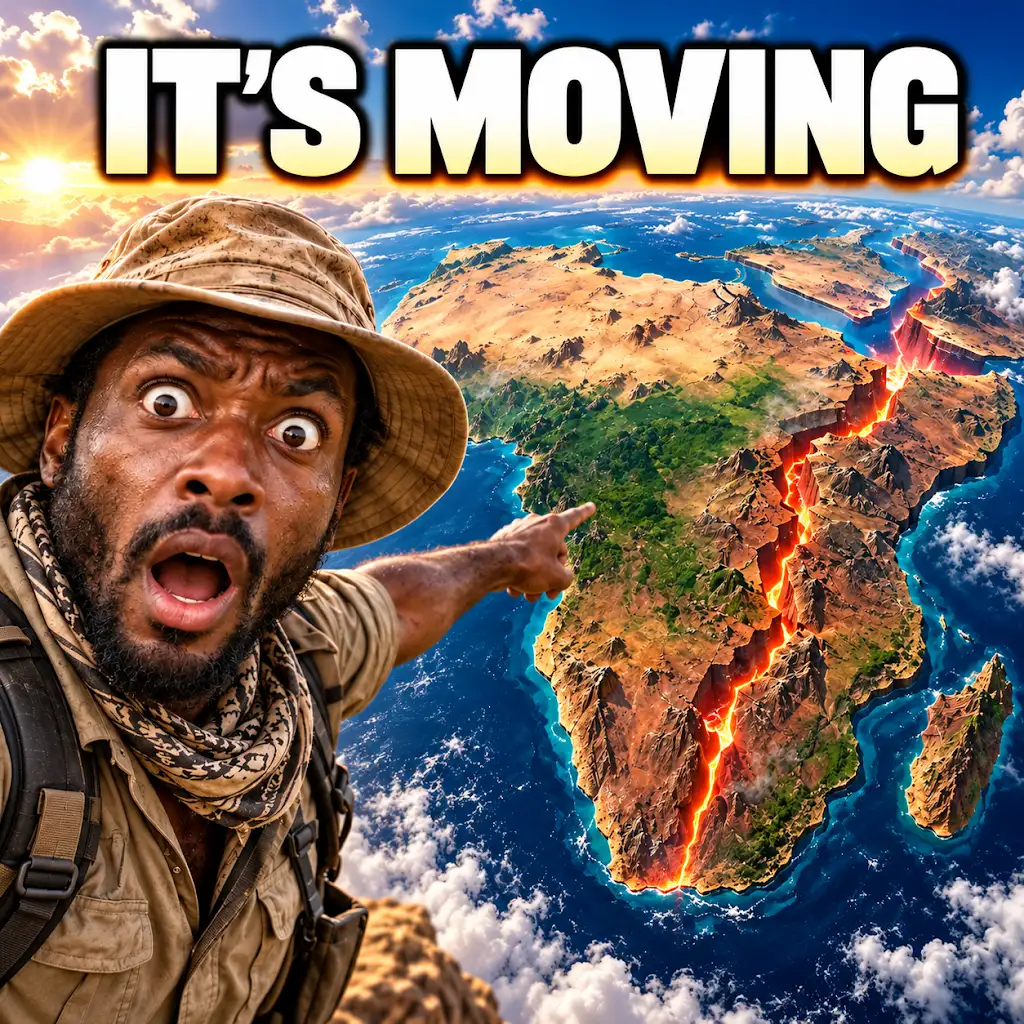
Africa Is Splitting Apart — And a New Ocean Could Be Next
FAQs
What is the process of ocean formation known as?
The process of ocean formation is known as seafloor spreading, which occurs at mid-ocean ridges where tectonic plates move apart.
How do tectonic plates play a role in the birth of an ocean?
Tectonic plates play a crucial role in the birth of an ocean by moving apart at mid-ocean ridges, allowing magma to rise up and solidify, creating new oceanic crust.
What happens to the older oceanic crust as new crust is formed?
As new oceanic crust is formed at mid-ocean ridges, the older crust is pushed away from the ridge and eventually subducted back into the mantle at deep-sea trenches.
How long does it take for an ocean to form through seafloor spreading?
The process of seafloor spreading is relatively slow, with new oceanic crust forming at a rate of a few centimeters per year. It can take millions of years for a new ocean to fully form.
What are some examples of oceans that have formed through seafloor spreading?
The Atlantic Ocean is a prime example of an ocean that has formed through seafloor spreading, with the Mid-Atlantic Ridge serving as the boundary between the North American and Eurasian plates.