The birth of a new ocean is a geological event of immense scale, a slow-motion drama unfolding over millennia. While humanity’s timescale is fleeting, the Earth’s geological processes operate at a pace that can dwarf entire civilizations. One of the most profound and awe-inspiring manifestations of these processes is the creation of new oceanic basins. This article delves into the nascent stages and unfolding narrative of what is arguably Earth’s newest, or at least its most dynamically developing, sea: the East African Ocean, or more broadly, the East African Rift Valley system’s eventual ocean. This is not a sudden cataclysm, but a grand, slow-motion rupture in the Earth’s crust, a testament to the planet’s enduring internal energy.
The story of the East African Ocean begins not with water, but with fire and force deep within the Earth’s mantle. It is a tale of plate tectonics, the grand theory that explains the movement of Earth’s lithospheric plates and the profound geological features they create. The East African Rift Valley is a prime example of a continental rift, a region where the Earth’s crust is being stretched and thinned, eventually leading to a complete separation of tectonic plates.
Understanding Plate Tectonics
At its core, plate tectonics posits that the Earth’s outer shell, the lithosphere, is broken into several large and smaller pieces called tectonic plates. These plates are not static; they float on the semi-fluid asthenosphere beneath them and are constantly in motion, driven by convection currents within the Earth’s mantle. These movements can be divergent (moving apart), convergent (colliding), or transform (sliding past each other). The East African Rift is a manifestation of a divergent plate boundary, albeit one that is still in its continental stage.
The Driving Force: Mantle Plumes and Upwelling
The initiation of rifting is often attributed to the upwelling of hot mantle material, known as a mantle plume. This plume pushes against the overlying continental crust, causing it to dome upwards and stretch. As the crust thins and weakens, faults begin to form, creating a series of valleys and highlands. This process is analogous to stretching a piece of taffy; as it is pulled, it thins in the middle and eventually may break. In East Africa, a significant mantle plume is believed to be responsible for the extensive geological activity observed. This plume injects heat and molten rock into the crust, weakening it and facilitating the rifting process.
The Initial Cracks: Faulting and Grabens
The stretching and thinning of the continental lithosphere lead to the formation of numerous faults. These are fractures in the rock along which there has been movement. In a rift setting, the primary type of faulting is extensional, where the crust is pulled apart. This results in the formation of grabens – down-dropped blocks of crust that form the valleys of the rift system – and horsts – uplifted blocks that form the shoulders of the rift. The East African Rift Valley is characterized by a series of these grabens, many of which are already filled with lakes, hinting at the future oceanic basin.
The recent discovery of a new ocean, formed by tectonic shifts and geological processes, has sparked significant interest in the scientific community. For a deeper understanding of the implications of this phenomenon, you can read a related article that explores the geological factors contributing to the birth of this new ocean and its potential impact on global ecosystems. Check it out here: My Geo Quest.
The Nascent Waters: Lakes as Embryonic Oceans
As the continental crust continues to pull apart, the newly formed depressions – the grabens – begin to fill with water. In the early stages of rifting, these bodies of water are typically freshwater lakes. However, as the rift deepens and widens, and as it gets closer to the sea, these lakes can evolve into saline environments, and eventually, if the separation is complete, into full-fledged oceanic basins.
The Great Rift Valley Lakes: A Mosaic of Water
The East African Rift Valley is famously dotted with a chain of large, often deep, freshwater lakes. These include Lake Tanganyika, the second-deepest freshwater lake in the world, Lake Malawi, and the smaller but geologically significant Lake Turkana. These lakes are not just scenic features; they are geological indicators of the ongoing rifting process. Their presence signifies the deepening of the grabens and the accumulation of water within them. The salinity of these lakes varies, with some, like Lake Natron, being highly alkaline due to volcanic activity and evaporation, while others are more typical freshwater environments.
Towards Salinity: The Influence of Evaporation and Connection to the Sea
As the rift valley continues to deepen and widen, certain parts of it may begin to experience increased evaporation, leading to higher salt concentrations. Furthermore, if the rift extends towards existing oceanic bodies, there can be intermittent or permanent connections that allow saltwater to ingress. This gradual transition from freshwater to saline environments is a crucial step in the formation of a new ocean. The increasing salinity also plays a role in the unique ecosystems that develop within these burgeoning aquatic environments.
Volcanic Activity: A Fiery Companion to the Water
The rifting process is often accompanied by significant volcanic activity. As the crust thins, magma from the mantle can rise to the surface, leading to eruptions of lava and ash. This volcanic activity can create new landforms, contribute to the depth of the rift, and release gases that can influence the chemistry of the developing lakes. In the East African Rift, numerous volcanoes, both active and dormant, are a testament to the intense geological forces at play. Some of these volcanoes, like Mount Kilimanjaro, are stratovolcanoes, while others are shield volcanoes. The interaction between water and volcanic activity can lead to dramatic geological features and unique hydrothermal systems.
The Ocean’s First Stirrings: The Afar Triple Junction
The most dynamic and geologically active part of the East African Rift system, and arguably the closest to becoming a true ocean, is the Afar Triple Junction. This is a place where three tectonic plates are pulling apart simultaneously: the Nubian plate (part of the African plate), the Arabian plate, and the Somali plate (also considered part of the African plate). This complex intersection is where the initial signs of oceanic crust formation are most evident.
A Confluence of Plates: Arabia, Africa, and Somalia
The Afar region is where the African continent is literally breaking apart into three fragments. The Arabian plate is moving away from Africa, and the Somali plate is moving away from the Nubian plate. This creates a unique geological setting where continental rifting is progressing towards oceanic rifting. The forces at play here are immense, and the landscape is a testament to the raw power of plate tectonics. The Afar Depression is a vast lowland area that has subsided significantly due to the stretching of the crust.
The Afar Depression: A Land Below Sea Level
The Afar Depression is characterized by a landscape of volcanic plains, salt flats, and active volcanic rifts. Significantly, much of this region lies below sea level. This low elevation makes it particularly susceptible to the ingress of seawater from the Red Sea and the Gulf of Aden, which are essentially incipient oceanic basins themselves. The interplay between rifting, volcanic activity, and the proximity of existing seas is accelerating the transformation of this region.
Signs of Oceanic Crust: Spreading Centers and Pillow Lavas
In the Afar Triple Junction, scientists have observed geological features that are indicative of the formation of new oceanic crust. These include spreading centers, where magma erupts and solidifies to form basaltic rock characteristic of the ocean floor. The presence of pillow lavas, a distinctive volcanic rock formation that occurs when lava erupts underwater, further supports the idea that oceanic spreading is occurring. This is the most tangible evidence that the East African Ocean is not just a theoretical concept but a geological reality in formation.
The Future Ocean: A New Red Sea in the Making
The ultimate fate of the East African Rift system, particularly its northernmost sections, is the formation of a new ocean basin. This new ocean, which can be thought of as a southern extension of the Red Sea or a new Red Sea itself, will eventually separate the Nubian and Somali plates. This will be a gradual process, marked by the widening of the rift, the deepening of the basin, and the continuous creation of oceanic crust.
The Widening Rift: A Growing Sea
As the tectonic plates continue to pull apart, the rift valley will widen. This widening will allow for more seawater to inundate the basin, increasing its size and depth. The rate of spreading in the Afar region is relatively slow compared to some of the more established oceanic ridges, but it is a consistent and ongoing process. Over millions of years, this widening will transform the current rift into a substantial oceanic basin.
Oceanic Crust Formation: The Engine of the New Ocean
The continuous upwelling of magma from the mantle and its eruption at spreading centers will be the engine of this new ocean. This process of seafloor spreading will create new oceanic crust, pushing the continents further apart. The composition of this new oceanic crust will be similar to that of the Earth’s existing ocean floors, primarily basalt. The geological activity associated with this spreading will also likely lead to the formation of mid-ocean ridges and associated hydrothermal vents.
The Continental Breakup: A New Map of the World
The eventual completion of this oceanic rifting will lead to a significant geographical change. The Horn of Africa, comprising Ethiopia, Somalia, Eritrea, and Djibouti, will likely become a large island, separated from the rest of the African continent by the new ocean. This continental breakup will have profound implications for the geology, climate, and biodiversity of the region, creating new marine ecosystems and isolating terrestrial ones.
The recent discovery of a new ocean, formed by tectonic shifts and geological processes, has sparked significant interest in the scientific community. Researchers are now exploring the implications of this phenomenon on marine biodiversity and climate patterns. For a deeper understanding of the geological processes involved, you can read a related article that delves into the formation of oceans and their impact on the Earth’s ecosystem. This insightful piece can be found here.
Implications and Epochs: A Long-Term Geological Perspective
| Metric | Value | Unit | Description |
|---|---|---|---|
| Age of New Ocean | 5 | million years | Estimated time since the ocean began forming |
| Rift Valley Length | 1,500 | kilometers | Length of the rift valley where ocean formation is occurring |
| Seafloor Spreading Rate | 2 | centimeters/year | Rate at which tectonic plates are moving apart |
| Water Depth | 500 | meters | Current average depth of the new ocean basin |
| Volcanic Activity | High | N/A | Level of volcanic activity contributing to ocean formation |
| New Ocean Area | 100,000 | square kilometers | Approximate surface area covered by the new ocean |
The creation of a new ocean is a process that spans millions of years. While the initial stages of rifting are observable today, the full realization of a new ocean basin is a story for future geological epochs. However, the ongoing processes in East Africa offer a unique opportunity to study the fundamental mechanisms of plate tectonics and the birth of oceanic crust.
Studying the Birth of an Ocean: A Window into Earth’s Processes
The East African Rift system is a natural laboratory for geologists. By studying the seismic activity, volcanic eruptions, GPS measurements of plate movement, and the geological formations, scientists can gain invaluable insights into how continents rift and how new oceans form. This research helps refine our understanding of plate tectonics and the dynamic nature of our planet. The ongoing monitoring of the region provides real-time data on the forces shaping Earth.
The Timeline of Formation: Millions of Years in the Making
The geological timescale is vast. The formation of the Atlantic Ocean, for instance, took tens of millions of years. The East African Ocean is still in its infancy. While some segments of the rift are showing signs of oceanic spreading, it is likely to take many millions more years for a fully developed ocean basin to form. The rate of spreading, the intensity of mantle upwelling, and other geological factors will all influence the eventual timeline.
A Changing Planet: The Enduring Legacy of Plate Tectonics
The Earth is a constantly evolving planet, and plate tectonics is the primary driver of this change. The birth of a new ocean in East Africa is just one example of this ongoing dynamism. While the immediate impact on human civilization may be limited, the long-term geological legacy of this event will be profound, reshaping continents and oceans for eons to come. It serves as a powerful reminder that our planet is a living, breathing entity, constantly in flux, with processes that dwarf human existence in their scope and duration. The East African Ocean, though still taking shape, is a testament to this magnificent, ongoing geological saga.
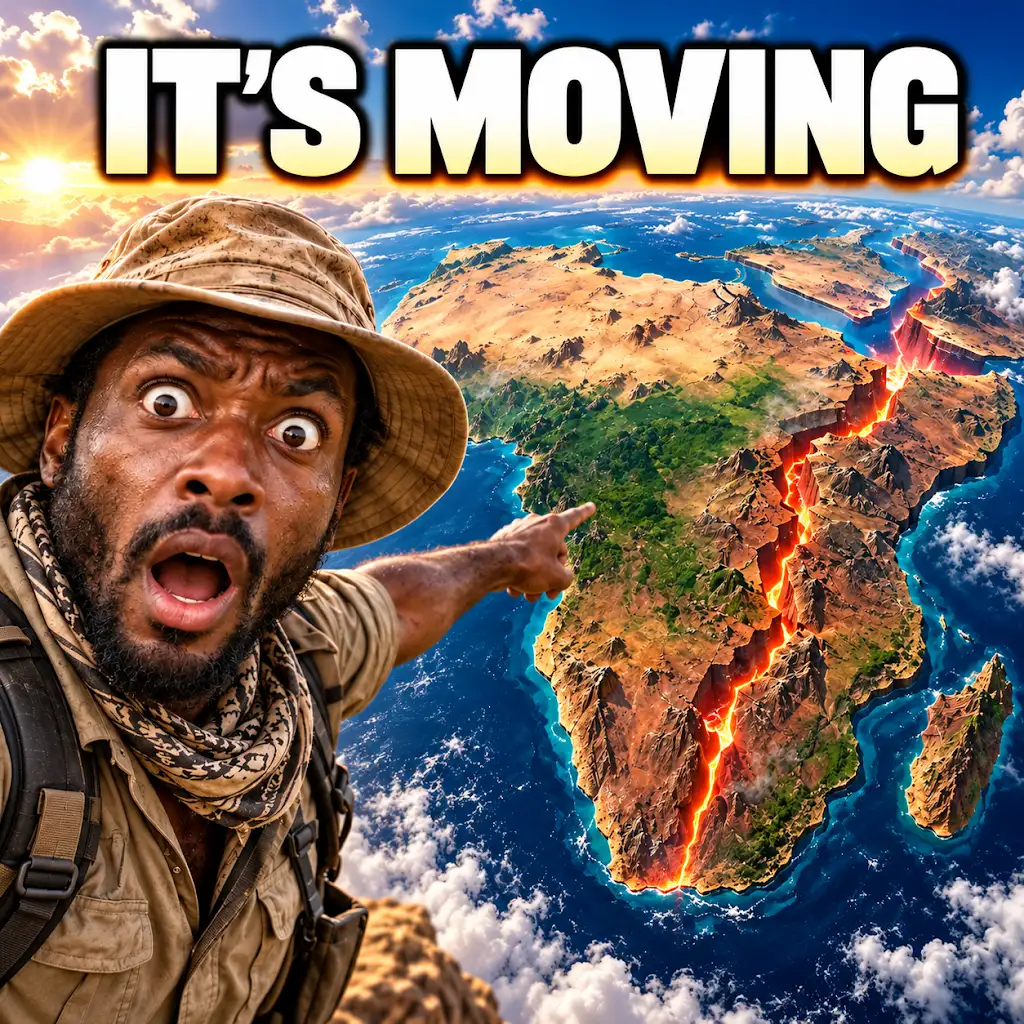
Africa Is Splitting Apart — And a New Ocean Could Be Next
FAQs
What is the birth of a new ocean?
The birth of a new ocean refers to the process of seafloor spreading that leads to the formation of a new ocean basin.
How does a new ocean form?
A new ocean forms when tectonic plates move apart, creating a gap where magma rises to the surface, solidifies, and forms new oceanic crust.
What are the stages involved in the birth of a new ocean?
The stages involved in the birth of a new ocean include rifting of tectonic plates, seafloor spreading, and the eventual formation of a mid-ocean ridge.
Where is the most well-known example of a new ocean forming?
The most well-known example of a new ocean forming is the Mid-Atlantic Ridge, where the North American Plate and the Eurasian Plate are moving apart, creating the Atlantic Ocean.
How long does it take for a new ocean to fully form?
The process of forming a new ocean can take millions of years, as it involves the slow movement of tectonic plates and the gradual accumulation of new oceanic crust.