Mexico City, a sprawling metropolis teeming with life, faces a monumental challenge: providing a consistent and safe water supply to its millions of inhabitants. This isn’t a simple matter of tapping into local aquifers. Instead, the city’s insatiable thirst necessitates an intricate and energy-intensive operation: pumping vast quantities of water from distant sources, often requiring the water to overcome formidable geographical barriers, most notably, the surrounding mountain ranges. The story of Mexico City’s water supply is a testament to human ingenuity, engineering prowess, and the persistent struggle against the limitations of nature and ever-growing demand.
A Growing Population, An Expanding Need
Mexico City’s metropolitan area is one of the largest in the world, a pulsating heart of culture, commerce, and innovation. This dense concentration of people, however, translates directly into an immense demand for water. From daily domestic use to industrial processes and agricultural irrigation in the surrounding regions that feed the city, the per capita consumption, when aggregated across millions, becomes staggering. The historical growth of the city, from its Aztec origins as Tenochtitlan, built on an island in a lake, to its current urban sprawl, has continuously pushed the boundaries of its natural water resources.
The Legacy of the Lakes
The Valley of Mexico, where the capital is situated, was once dominated by a system of interconnected lakes. The Aztecs ingeniously managed and lived with this water system. However, the Spanish conquest, coupled with subsequent urbanization and land reclamation, led to the drainage of these lakes, leaving the city built on a subsiding lakebed. This historical transformation fundamentally altered the region’s hydrology and left Mexico City critically dependent on external water sources. The city now sits in a basin, surrounded by mountains, making the natural flow of water into the urban core an increasingly scarce commodity.
The Geo-Hydrological Paradox
The irony of Mexico City’s water situation lies in its geo-hydrological paradox. While the city itself is built on a low-lying, subsiding lakebed, the surrounding highlands are rich in rainfall and potential water sources. However, accessing these precious reserves requires overcoming the very geographical obstacles that isolate the valley. This necessity has shaped the city’s entire water infrastructure, dictating complex and costly engineering solutions.
In exploring the innovative methods of water distribution in Mexico City, one can find a wealth of information in the article on the challenges and solutions related to water pumped over mountains. This piece delves into the engineering feats required to transport water from distant sources to the urban center, highlighting both the technological advancements and the environmental considerations involved. For more insights on this topic, you can read the full article at My Geo Quest.
Engineering the Ascent: Pumping Water Over Mountains
The Herculean Task of Overcoming Gravity
The most defining characteristic of Mexico City’s water supply system is its reliance on pumping water from altitudes higher than the city itself. This involves an immense expenditure of energy to combat gravity and lift water across significant elevations. The towering mountains that ring the Valley of Mexico, while offering potential water sources, simultaneously present the primary engineering hurdle. The water must be collected in reservoirs or rivers in these elevated areas and then transported, often through a network of tunnels and aqueducts, to pumping stations that push it downhill towards the city.
The Critical Role of Pumping Stations
At the heart of this uphill battle are the numerous, powerful pumping stations strategically located throughout the city’s water infrastructure. These are not mere pumps; they are massive industrial complexes, equipped with colossal turbines and pumps capable of moving millions of liters of water per minute. The energy required to operate these stations is substantial, contributing significantly to the operational costs of the water system and impacting the city’s carbon footprint. The constant hum of these machines, often situated in remote or mountainous areas, is the audible testament to Mexico City’s relentless pursuit of water.
The Ascent to the Capital
The journey of water to Mexico City is a multi-stage process. It begins with collection systems in the surrounding mountain ranges, channeling water into reservoirs. From these reservoirs, gravity might assist initial movement, but then the crucial pumping stages commence. Water is lifted to higher points within the mountainous terrain, then flows down through a complex network of pipelines and tunnels. This often involves intricate hydraulic engineering, with multiple pumping stations working in sequence to ensure a continuous and pressurized flow into the city’s distribution network.
Sources of Supply: Tapping into Distant Reserves
The Cutzamala System: A Lifeline from the Sierra
The most significant and iconic of Mexico City’s distant water sources is the Cutzamala System. This colossal engineering feat draws water from the Cutzamala River in the State of Mexico, a region located hundreds of kilometers away and at a significantly higher elevation than the capital. The system comprises a series of dams, reservoirs, tunnels, and a series of seven powerful pumping stations, each contributing to the Herculean task of lifting water over mountain ranges and through the rugged topography. The Cutzamala System is the primary supplier for a substantial portion of the metropolitan area, a vital lifeline that underscores the city’s dependence on external water sources.
The Lerma System: A Historical and Ongoing Contribution
The Lerma System represents another crucial component of Mexico City’s water supply. This system draws water from the Lerma River basin, also located outside the immediate valley. While its contribution has been significant historically, it has faced challenges due to over-extraction and declining flows in recent years. Nevertheless, the Lerma System continues to be a vital source, with its water often requiring similar pumping and transportation mechanisms to reach the capital. The integration of water from multiple sources is a critical strategy for redundancy and to mitigate the risks associated with relying on a single supply.
Groundwater Extraction: A Shrinking and Risky Option
Historically, Mexico City relied heavily on groundwater extraction from aquifers beneath the valley. However, this practice has led to severe consequences. The over-extraction of groundwater has resulted in significant land subsidence, causing buildings to sink and the city’s infrastructure to be damaged. Furthermore, the remaining groundwater reserves are becoming increasingly depleted and, in some areas, contaminated. While some groundwater extraction continues, it is a shrinking and increasingly risky option, forcing the city to further prioritize surface water imports.
The Challenges and Consequences of Pumping Over Mountains
Energy Consumption: The Price of Water
The sheer scale of pumping water from higher elevations to Mexico City translates into an enormous energy demand. The continuous operation of the pumping stations requires vast amounts of electricity, making the water supply system one of the largest energy consumers in the country. This high energy consumption not only contributes significantly to the operational costs of the water utility but also has considerable environmental implications, particularly in terms of greenhouse gas emissions if the energy is derived from fossil fuels. The quest for water has a palpable energetic price.
Infrastructure Maintenance and Aging Systems
The complex and extensive nature of the water supply infrastructure, including the vast network of pipelines, tunnels, and pumping stations, requires constant and meticulous maintenance. Many of these systems are aging, some dating back decades, and are prone to leaks, breaks, and inefficiencies. The constant stress of pumping, coupled with seismic activity common in the region, exacerbates these issues. Maintaining this colossal infrastructure in good working order is a perpetual and costly undertaking, demanding significant financial investment and skilled labor.
Vulnerability to Drought and Climate Change
Mexico City’s reliance on distant surface water sources makes it particularly vulnerable to drought and the impacts of climate change. Reduced rainfall in the source regions can directly impact the volume of water available for extraction. The Cutzamala System, for instance, has experienced periods of critically low reservoir levels, leading to water restrictions within the city. Climate change projections suggest an intensification of extreme weather events, including prolonged droughts, posing a significant threat to the long-term water security of the metropolis.
The Subsidence Crisis: A Lingering Scar
The legacy of over-extracting groundwater continues to haunt Mexico City. The land beneath the city is actively subsiding, a phenomenon exacerbated by the withdrawal of massive volumes of water. This subsidence causes buildings to tilt and foundations to crack, leading to costly structural repairs and posing a safety hazard. The pumping of surface water, while necessary, does not alleviate the ongoing issue of subsidence, which is a persistent reminder of past unsustainable water management practices.
In exploring the intricate systems that supply water to Mexico City, one can gain further insight by reading a related article that delves into the challenges and engineering feats involved in pumping water over mountains. This process is crucial for ensuring that the city, which faces significant water scarcity issues, receives adequate resources. To learn more about these fascinating developments, you can check out this informative piece on the topic here.
Future Prospects and Sustainable Solutions
| Year | Water Pumped (millions of cubic meters) | Mountains Crossed |
|---|---|---|
| 2015 | 1,200 | Sierra Madre Oriental |
| 2016 | 1,150 | Sierra Madre Occidental |
| 2017 | 1,300 | Trans-Mexican Volcanic Belt |
| 2018 | 1,250 | Sierra Madre del Sur |
Water Conservation: A Collective Responsibility
Addressing Mexico City’s water challenge requires a multi-pronged approach, with water conservation emerging as a paramount strategy. Educating the public about responsible water use, promoting efficient fixtures, and implementing water-saving technologies in both domestic and industrial settings are crucial. Individual actions, when aggregated across millions, can have a profound impact on reducing the overall demand that necessitates such energy-intensive pumping.
Infrastructure Modernization and Efficiency Improvements
Investing in the modernization of aging water infrastructure is essential. This includes repairing leaks in the distribution network, upgrading pumping stations to more energy-efficient models, and exploring advanced technologies for water treatment and distribution. Improving the efficiency of the existing system can reduce water losses and decrease the energy required for pumping, offering both economic and environmental benefits.
Exploring New and Sustainable Water Sources
While the Cutzamala and Lerma systems remain vital, Mexico City is continuously exploring and developing new and sustainable water sources. This includes investigating the potential for treated wastewater reuse for non-potable purposes, such as industrial cooling and irrigation. Furthermore, efforts are being made to better manage and protect existing local water resources and to explore innovative rainwater harvesting techniques, particularly in areas less affected by subsidence.
The Importance of Integrated Water Resource Management
Ultimately, securing Mexico City’s water future hinges on effective and integrated water resource management. This involves coordinated efforts between federal, state, and municipal authorities, as well as active engagement with citizens and stakeholders. A holistic approach that considers the entire water cycle – from source to tap and back – is necessary to ensure the long-term sustainability and resilience of the city’s water supply in the face of growing demand and environmental challenges. The ongoing struggle to pump water over mountains is a stark reminder of the complex and interconnected nature of urban water security.
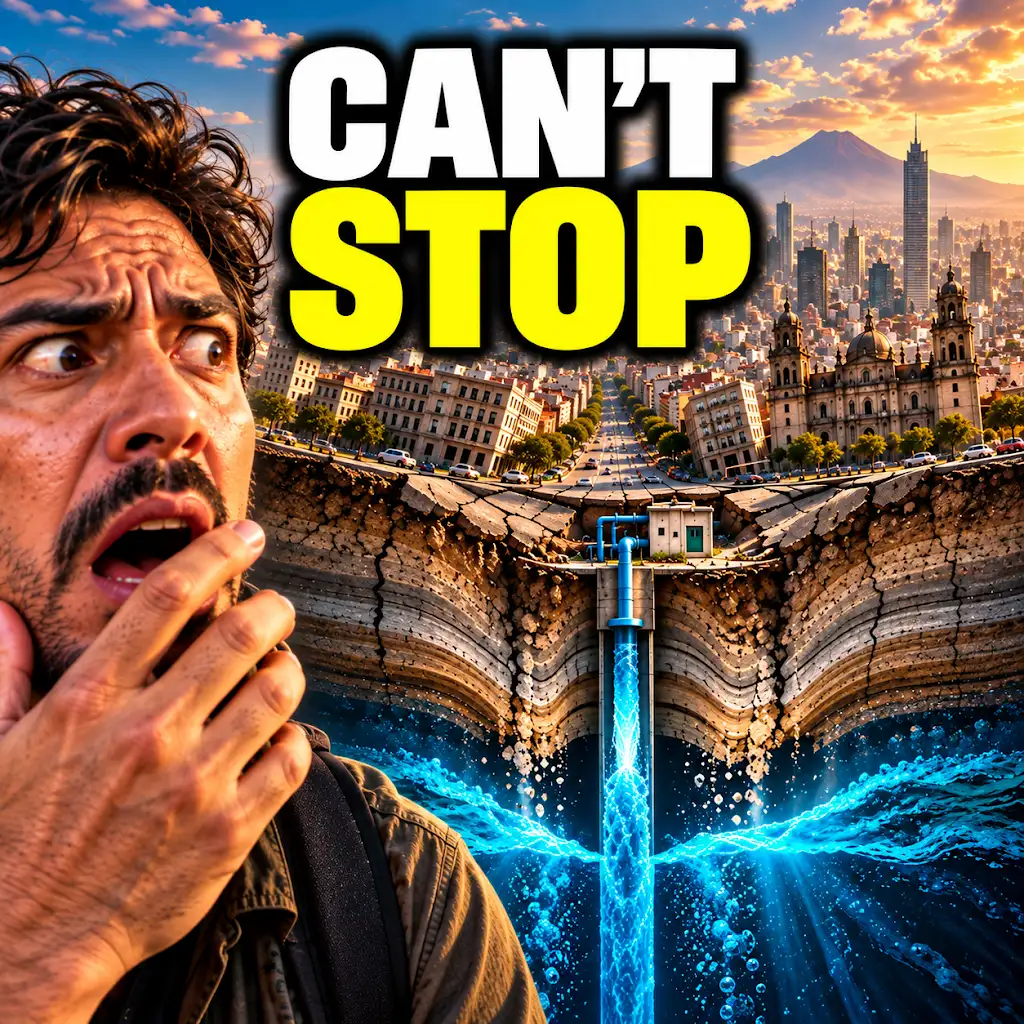
Mexico City Is Sinking Because It Needs Water
FAQs
What is the article about?
The article is about the process of pumping water from Mexico City over mountains to supply water to the city.
Why does Mexico City need to pump water over mountains?
Mexico City is located in a valley surrounded by mountains, which makes it difficult to access water sources. As a result, the city needs to pump water from distant sources over the mountains to meet its water needs.
How does Mexico City pump water over mountains?
Mexico City uses a system of pumping stations and pipelines to transport water from distant sources over the mountains. The water is pumped uphill and then flows downhill through the pipelines to reach the city.
What are the challenges of pumping water over mountains?
Pumping water over mountains presents several challenges, including the need for powerful pumps to overcome the elevation difference, the risk of pipeline leaks or breaks, and the potential environmental impact on the surrounding areas.
What are the benefits of pumping water over mountains for Mexico City?
Pumping water over mountains allows Mexico City to access water from distant sources and meet the water needs of its growing population. It also helps to ensure a more reliable water supply for the city.