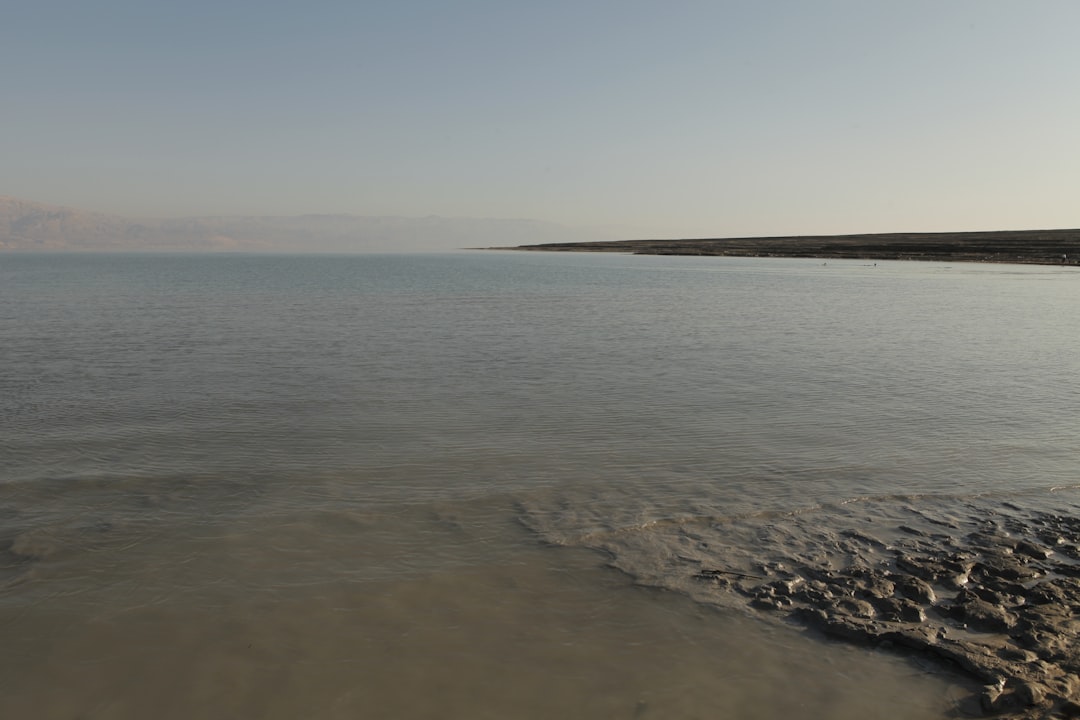
The vast, ethereal expanse of the Dead Sea, a geological marvel cradled between Jordan and Israel, has long captivated scientists and tourists alike. Yet, beneath its famously buoyant surface lies a complex and increasingly urgent environmental narrative: the story of its evaporation ponds. These man-made spectacles, born out of a desire to harness the sea’s mineral wealth, are now themselves a subject of intense scrutiny, revealing a delicate ecosystem under duress. Unraveling the intricacies of these evaporation ponds is not merely an academic exercise; it is a vital step in understanding the future of this iconic saline lake and the communities that depend upon it.
The story of the Dead Sea evaporation ponds is inextricably linked to the immense mineral wealth contained within its hypersaline waters. For millennia, the Dead Sea has been a natural repository of a unique chemical cocktail, a potent brew of salts and minerals, including potassium, magnesium, bromide, and chloride. The economic potential of these resources was recognized centuries ago, but it was in the mid-20th century that large-scale industrial extraction began to take shape. The establishment of significant chemical companies on the shores of the Dead Sea marked the birth of the evaporation pond system as we know it today.
Early Extraction Efforts and the Birth of Industry
The earliest attempts at exploiting the Dead Sea’s minerals were rudimentary, often involving solar evaporation in shallow pools to concentrate salts. However, with the advent of more sophisticated chemical engineering and a growing global demand for these raw materials, the need for dedicated, large-scale facilities became paramount. The establishment of companies like Dead Sea Works in Israel and Arab Potash Company in Jordan transformed the landscape. These enterprises aimed to efficiently harvest valuable minerals, particularly potash, a crucial component in fertilizers, and bromine, used in flame retardants and pharmaceuticals. The economic impetus was undeniable, promising revenue and industrial development for the region.
The Principle of Solar Evaporation: Harnessing Nature’s Power
The fundamental principle behind the evaporation ponds is elegantly simple: harnessing the intense solar radiation and arid climate of the Dead Sea region. The Dead Sea’s location, in a deep depression below sea level, contributes to higher ambient temperatures and lower humidity, creating ideal conditions for evaporation. The process involves pumping water from the Dead Sea into a series of progressively shallower ponds. As the sun beats down, water evaporates, leaving behind increasingly concentrated brines. This natural process, amplified by the controlled environment of the ponds, allows for the selective crystallization and harvesting of different minerals.
Stages of Evaporation and Mineral Concentration
The evaporation ponds are not a monolithic entity. Instead, they are a carefully engineered system of interconnected basins, each serving a distinct purpose in the process of mineral extraction.
Primary Ponds: The Initial Concentration Phase
The first stage typically involves large, shallow ponds where water from the Dead Sea is initially introduced. Here, the primary goal is to begin the process of evaporation, reducing the volume of water and increasing the concentration of dissolved salts. These ponds are often the largest in the system, covering vast swathes of the Dead Sea’s southern basin. The initial evaporation here is driven by the sheer surface area exposed to the sun and wind.
Secondary and Tertiary Ponds: Refining the Brine
As the brine moves through the system, it enters secondary and tertiary ponds. In these successive stages, the concentration of specific minerals becomes more pronounced. Different salts have varying solubilities, and as the water evaporates, they begin to precipitate out of solution at different points. This allows for the selective harvesting of specific mineral compounds. For instance, as the salinity increases, halite (common salt) may precipitate first, followed by other less soluble salts.
Crystallization Ponds: The Final Harvest
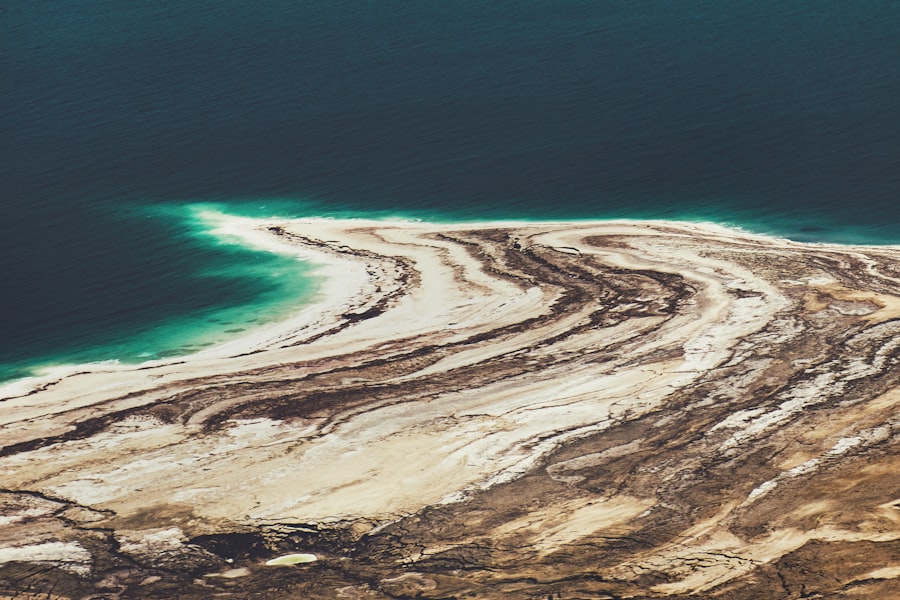
The final stage of the process takes place in specialized crystallization ponds. Here, the brine has reached a high enough concentration for the desired minerals, such as potassium chloride (potash), to crystallize out of solution in significant quantities. These crystals are then mechanically harvested, dried, and further processed into commercial products. The intricate patterns formed by the crystallizing salts in these ponds can be visually striking, adding an unexpected artistic element to the industrial landscape.
The phenomenon of Dead Sea evaporation ponds is a fascinating topic that highlights the unique environmental and economic aspects of this region. For a deeper understanding of how these evaporation ponds work and their impact on the surrounding ecosystem, you can explore a related article that delves into the science and implications of this process. Check it out here: Dead Sea Evaporation Ponds Explained.
The Visual Spectacle: A Mosaic of Colors and Textures
The evaporation ponds are not just an industrial marvel; they are also a striking visual phenomenon. Their sheer scale and the ever-changing nature of the brines create a dynamic and often breathtaking landscape. The colors and textures within these ponds are a direct reflection of the mineral composition and the ongoing processes of evaporation and crystallization.
A Canvas of Unnatural Hues
The most immediately striking aspect of the evaporation ponds is their vibrant and often surreal coloration. These are not the deep blues or greens of natural lakes, but a palette of striking hues, ranging from deep reds and oranges to bright yellows and milky whites. These colors are not artificial dyes but are a result of the presence of various mineral salts and, in some cases, microscopic organisms that thrive in these extreme saline environments.
The Role of Algae and Halophilic Bacteria
In certain ponds, particularly those with slightly less extreme salinity or specific nutrient inputs, microscopic life can flourish. Halophilic bacteria, meaning “salt-loving,” are a common sight in hypersaline environments. Certain types of these bacteria, such as Dunaliella salina, contain pigments that give the water a reddish-orange hue. These organisms are incredibly resilient, adapted to survive and reproduce in conditions that would be lethal to most other life forms. Their presence is a testament to the unique biological adaptations that can occur in extreme environments.
Mineral Pigmentation: From Halite to Potash
Beyond biological coloration, the mineral content itself contributes to the visual tapestry. The crystallization of different salts can impart distinct colors. For instance, impurities within the halite can lead to a grayish or reddish appearance. As more complex mineral salts precipitate, the colors can shift and deepen. The deep red and orange tones often seen in the Dead Sea’s evaporation ponds are frequently attributed to the high concentration of dissolved iron compounds and the pigments produced by halophilic archaea and algae. The visual spectacle is therefore a direct indicator of the chemical processes at play.
Textural Dynamics: From Liquid Mirrors to Crystalline Formations
The visual appeal of the evaporation ponds extends beyond their colors to their ever-changing textures. The surface of the water can transform from a still, glassy mirror reflecting the desert sky to a rippling, dynamic landscape of salt crystals.
Surface Tension and Reflectivity
The high salt concentration significantly impacts the surface tension of the water, leading to remarkable reflectivity. On calm days, the ponds act as perfect mirrors, doubling the vastness of the sky and the surrounding desert. This phenomenon creates an illusion of infinite space and contributes to the otherworldly beauty of the area. The interplay of light on these perfectly reflective surfaces is a photographer’s dream.
Salt Crusts and Crystal Gardens
As evaporation progresses, the edges of the ponds and shallower areas begin to form intricate salt crusts. These can range from delicate, feathery formations to thick, rugged layers. In the crystallization ponds, the formation of salt crystals becomes a dominant textural element. These crystals can grow in a variety of shapes and sizes, creating what can resemble underwater crystal gardens. The constant formation and dissolution of these crystalline structures add a dynamic, ever-shifting texture to the ponds.
Environmental Implications: A Double-Edged Sword
While the evaporation ponds serve a vital economic purpose, their existence and operation have significant environmental implications for the Dead Sea and its surrounding ecosystem. The very process that extracts valuable minerals also contributes to the sea’s alarming shrinkage, a phenomenon with far-reaching consequences.
The Shrinking Dead Sea: A Global Concern
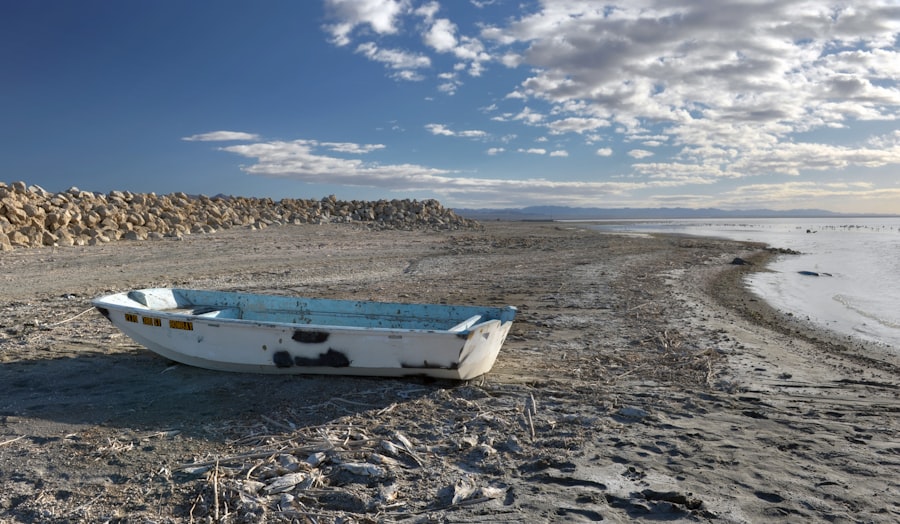
The most significant environmental impact of the evaporation ponds is their contribution to the rapid decline of the Dead Sea’s water levels. The Dead Sea is fed by the Jordan River and several smaller tributaries. However, large quantities of water are diverted upstream for agricultural and domestic use, significantly reducing the inflow. In parallel, the evaporation ponds actively draw water from the Dead Sea for mineral extraction. This dual assault on the water balance has led to a dramatic and accelerating decrease in the Dead Sea’s surface area and volume.
Reduced Inflow and Increased Extraction
The diversion of the Jordan River, once the primary source of fresh water for the Dead Sea, is a critical factor. Upstream dams and water management projects have drastically curtailed the natural flow. Compounding this is the continuous pumping of Dead Sea water into the evaporation ponds. While the water within the ponds eventually evaporates, the salts and minerals remain, effectively removing water from the Dead Sea system without returning it in a usable form. This unceasing extraction, coupled with reduced inflow, creates a severe deficit, leading to the sea’s dramatic retreat.
The Consequence of Lowered Water Levels
The consequences of the Dead Sea’s shrinking are multifaceted and severe. The most visible is the formation of sinkholes along its shores, a dangerous phenomenon that threatens infrastructure and tourism. The increased salinity in the remaining water can also impact the unique halophilic ecosystems. Furthermore, the lowering of the water table can affect coastal communities and the groundwater systems upon which they depend. The economic and ecological losses associated with this environmental crisis are substantial.
Salinity and Ecosystem Shifts: A Delicate Balance Disrupted
The hypersaline nature of the Dead Sea is its defining characteristic, supporting a highly specialized ecosystem. The evaporation ponds, by their very nature, concentrate these salts, potentially altering the delicate balance of both the remaining Dead Sea and the environments within the ponds themselves.
Impact on Halophilic Life
The unique flora and fauna of the Dead Sea are adapted to its extreme salinity. While halophilic organisms can exist and even thrive in the evaporation ponds, changes in salinity and nutrient levels within the ponds, and the overall reduction in water volume, can have profound effects. The concentration of salts in the shrinking Dead Sea itself is increasing, pushing the boundaries of what even these extremophiles can tolerate. Shifts in the composition and abundance of these organisms can cascade through the limited food webs of the Dead Sea.
Changes in Water Chemistry and Mineral Precipitation
The continuous removal of water and the sequential precipitation of minerals within the evaporation ponds fundamentally alter the water chemistry of the Dead Sea. As certain minerals are extracted, the remaining brine becomes enriched in other compounds. This can lead to unpredictable changes in the water’s physical and chemical properties, potentially impacting the dissolved gases, pH, and the availability of essential nutrients for any surviving microbial life. The long-term effects of these altered chemical conditions are still being studied.
The “Dead” Sea’s Paradox: Life in the Ponds
Despite its name, the Dead Sea is not entirely devoid of life. The evaporation ponds, paradoxically, can support a surprising array of extremophilic organisms. These microscopic inhabitants have evolved remarkable adaptations to survive in high-salinity environments.
The Resilience of Halophiles
The dominant life forms in the evaporation ponds are bacteria and archaea belonging to the domain Halobacteria. These organisms possess unique cellular mechanisms, such as the accumulation of compatible solutes (osmolytes) within their cells to counteract the external osmotic pressure. They also often have specialized proteins that are stable in high salt concentrations. Their ability to flourish in these seemingly hostile conditions is a testament to the power of biological adaptation.
Nutrient Dynamics and Microbial Blooms
The nutrient dynamics within the evaporation ponds are complex. While the water is largely devoid of organic matter, nutrients can enter the system through atmospheric deposition or from the surrounding terrestrial environment. These nutrients, combined with the intense sunlight, can sometimes lead to rapid growth of microbial populations, resulting in visible blooms that further contribute to the pond’s distinctive coloration. Understanding these microbial communities is crucial for assessing the overall health of the pond ecosystems.
Technological Innovations and Future Directions
The environmental challenges posed by the Dead Sea’s evaporation ponds have spurred a wave of research and innovation. Scientists and engineers are exploring ways to mitigate the negative impacts, improve efficiency, and potentially even reverse some of the damage.
Sustainable Mineral Extraction Techniques
The traditional methods of mineral extraction, while effective, contribute to the water deficit. Consequently, there is a growing interest in developing more sustainable approaches.
Reduced Water Consumption in Processing
Efforts are underway to reduce the amount of Dead Sea water required for mineral processing. This includes exploring closed-loop systems where water is recycled and reused within the extraction facilities. Advanced filtration and separation technologies are also being investigated to extract minerals with less reliance on vast evaporation areas. The aim is to achieve higher mineral yields with a smaller water footprint.
Alternative Extraction Methods
Beyond traditional solar evaporation, researchers are exploring alternative methods for mineral extraction. These include electrochemical processes, solvent extraction, and membrane-based technologies. While many of these are still in the research and development phase, they hold the promise of more precise and less water-intensive mineral recovery. For example, some technologies aim to selectively extract target minerals without the need for extensive evaporation.
Water Management and Restoration Efforts
Addressing the Dead Sea’s shrinkage requires a multi-pronged approach, including efforts to manage water resources more effectively and explore potential restoration projects.
The Red Sea-Dead Sea Water Conveyance Project
One of the most ambitious proposals is the Red Sea-Dead Sea (RSD) Water Conveyance Project. This massive undertaking aims to pump seawater from the Red Sea to the Dead Sea. The project would not only provide a new water source to help replenish the Dead Sea but also generate hydroelectric power and desalinate water for regional consumption. However, the project faces significant environmental concerns, including potential impacts on marine ecosystems, the effects of brine discharge into the Dead Sea, and the high cost of implementation.
Improving Jordan River Flow Management
Beyond large-scale projects, more localized efforts are being made to improve the management of the Jordan River and its tributaries. This involves international cooperation between countries that share the river basin to optimize water usage and ensure a more consistent flow downstream to the Dead Sea. Sustainable agricultural practices and efficient urban water management are also crucial components of this strategy.
Monitoring and Research: Understanding the Evolving Landscape
Continuous monitoring and in-depth research are essential to understand the complex dynamics of the Dead Sea and its evaporation ponds. Scientists are employing advanced technologies to track changes and inform conservation efforts.
Remote Sensing and Satellite Imagery
Satellite imagery and remote sensing technologies play a crucial role in monitoring the vast expanse of the Dead Sea and its evaporation ponds. These tools allow for the precise measurement of water levels, surface area changes, and the identification of developing environmental issues like sinkhole formation. They also provide valuable data on water temperature, salinity, and even the presence of microbial blooms.
Scientific Research and Ecological Studies
Ongoing scientific research delves into the unique biology, chemistry, and geology of the Dead Sea and its associated evaporation ponds. Studies focus on understanding the resilience of halophilic organisms, the long-term effects of increasing salinity, and the impact of mineral extraction on the overall ecosystem. This research is vital for developing evidence-based conservation strategies and informing policy decisions.
The phenomenon of Dead Sea evaporation ponds is a fascinating topic that highlights the unique environmental and economic aspects of this region. For those interested in exploring this subject further, an insightful article can be found at My Geo Quest, which delves into the processes involved in the evaporation ponds and their impact on the surrounding ecosystem. Understanding these dynamics is crucial for appreciating the delicate balance of nature in this extraordinary area.
The Future of the Evaporation Ponds: Balancing Industry and Ecology
| Evaporation Pond | Area (sq km) | Depth (m) | Salinity (%) |
|---|---|---|---|
| Lagoon A | 4.5 | 2.5 | 25 |
| Lagoon B | 3.2 | 3.0 | 30 |
| Lagoon C | 5.0 | 2.0 | 20 |
The evaporation ponds of the Dead Sea stand as a potent symbol of humanity’s ability to harness natural resources, but also as a stark reminder of the delicate balance between industrial development and environmental preservation. The future of these ponds, and indeed the Dead Sea itself, hinges on finding a sustainable path forward.
The Economic Imperative vs. Ecological Preservation
The mineral resources extracted from the Dead Sea are of significant economic importance to the nations bordering it. Potash, in particular, is a vital commodity for global agriculture. Therefore, completely ceasing operations is not a realistic immediate solution. The challenge lies in finding ways to continue these economically beneficial activities while minimizing their detrimental environmental impact. This requires a careful balancing act, where economic gains are weighed against the irreplaceable ecological value of the Dead Sea.
Stakeholder Collaboration and Policy Development
Addressing the complex issues surrounding the Dead Sea and its evaporation ponds necessitates collaboration among diverse stakeholders. This includes government agencies, chemical companies, scientists, environmental organizations, and local communities. Effective policy development, driven by scientific evidence and a commitment to long-term sustainability, is crucial. International cooperation is also vital, given the transboundary nature of the Dead Sea basin.
The Role of Public Awareness and Education
Raising public awareness about the environmental challenges facing the Dead Sea is paramount. Educating people about the importance of this unique ecosystem and the threats it faces can foster a sense of stewardship and encourage support for conservation efforts. Public pressure can also be a powerful catalyst for change, urging industries and governments to adopt more sustainable practices.
Towards a More Sustainable Model
The goal for the future of the evaporation ponds should be a transition towards a more sustainable model of mineral extraction. This involves continuous innovation, a commitment to environmental stewardship, and a willingness to adapt and evolve practices.
Technological Advancements and Responsible Practices
Investing in and implementing advanced technologies that reduce water consumption and minimize environmental footprint is essential. This includes adopting cleaner production methods, improving waste management, and actively monitoring and mitigating pollution. Responsible operational practices, driven by a deep understanding of the ecosystem, are key.
Long-Term Vision and Ecological Restoration
Ultimately, the long-term vision for the Dead Sea should include not only halting its decline but also exploring possibilities for ecological restoration. While fully restoring the Dead Sea to its historical levels may be a monumental challenge, innovative solutions and a sustained commitment to conservation can help preserve this natural wonder for future generations. The evaporation ponds, once understood as solely industrial tools, must now be viewed within the broader context of the Dead Sea’s ecological health and its future viability. Their story is a compelling narrative of resource utilization, environmental consequence, and the ongoing search for balance.
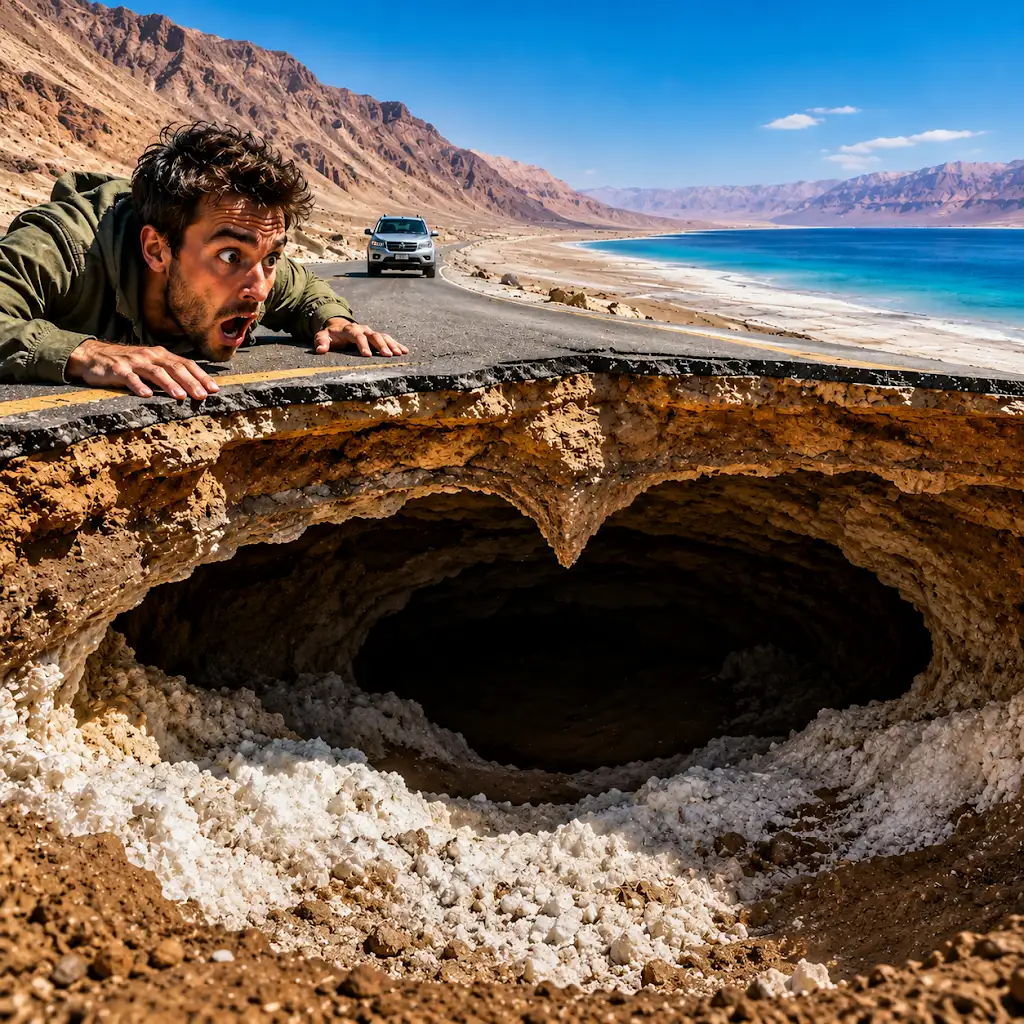
The Dead Sea Is Vanishing — And Leaving Giant Holes Behind
FAQs
What are Dead Sea evaporation ponds?
Dead Sea evaporation ponds are man-made pools designed to extract minerals from the Dead Sea water through natural evaporation. These ponds are used to produce various products such as potash, magnesium, and salt.
How do Dead Sea evaporation ponds work?
The Dead Sea evaporation ponds work by allowing the sun and wind to naturally evaporate the water from the Dead Sea, leaving behind a concentrated solution of minerals. This concentrated solution is then harvested and processed to extract the valuable minerals.
What minerals are extracted from Dead Sea evaporation ponds?
The main minerals extracted from Dead Sea evaporation ponds include potassium chloride (potash), magnesium chloride, and sodium chloride (salt). These minerals are used in various industries such as agriculture, pharmaceuticals, and cosmetics.
What is the environmental impact of Dead Sea evaporation ponds?
The environmental impact of Dead Sea evaporation ponds includes changes in the Dead Sea’s water level, potential harm to local wildlife, and the release of greenhouse gases during the extraction and processing of minerals. Efforts are being made to mitigate these impacts through sustainable practices.
Are Dead Sea evaporation ponds sustainable?
Dead Sea evaporation ponds can be sustainable if managed properly. Efforts to minimize environmental impact, conserve water, and use renewable energy sources are important for the long-term sustainability of the Dead Sea evaporation ponds.