The Dead Sea, a geological marvel and a natural wonder, has long captivated imaginations with its hypersaline waters and therapeutic mud. However, beneath the surface of its iconic status lies a stark and alarming reality: a rapid and relentless retreat of its shoreline. This phenomenon, driven by a complex interplay of human activities and natural processes, poses a profound threat to the delicate ecosystems that depend on this unique body of water and to the surrounding environment. The consequences are far-reaching, impacting not only the natural world but also the economic and cultural fabric of the region.
The Shrinking Sea: Unraveling the Causes
The dramatic decline in the Dead Sea’s water level is not a recent development, but rather a consequence of decades of unsustainable practices. The primary culprit is the diversion of water from the Jordan River and its tributaries, the main source of inflow for the Dead Sea. This diversion, largely driven by the agricultural and industrial needs of bordering nations, has drastically reduced the volume of freshwater reaching the dying sea.
Over-Extraction for Industrial and Agricultural Purposes
The thirst of neighboring countries for water has led to the systematic siphoning of water from the Jordan River system. Israel, Jordan, and Syria all engage in significant water abstraction for irrigation, drinking water, and industrial processes. This has created a severe deficit, leaving the Dead Sea with a fraction of the water it once received. Agriculture, in particular, is a voracious consumer of water, with vast swathes of land being irrigated in arid regions, contributing to the diminishing flow.
Agricultural Water Demand in the Jordan Valley
The Jordan Valley, a fertile region that borders the Dead Sea, relies heavily on irrigation for its agricultural output. While this has brought economic prosperity to some, it has come at a significant cost to the Dead Sea. Extensive irrigation networks, canals, and pumping stations are employed to channel water to crops, further exacerbating the problem. The choice between supporting agricultural economies and preserving a unique natural resource has become a critical and ongoing dilemma.
Industrial Needs and Evaporation Ponds
Beyond agriculture, industrial activities also contribute to the problem. The extraction of minerals and salts from the Dead Sea itself, particularly potash and bromine, involves the creation of vast evaporation ponds. These artificial lakes, while facilitating the extraction of valuable resources, are essentially accelerating the evaporation process, further reducing the overall water volume. The concentrated brine, when no longer part of the main sea, becomes a breeding ground for specific microorganisms but contributes to the loss of the greater aquatic ecosystem.
Climate Change and Increased Evaporation Rates
Compounding the issue of reduced inflow is the undeniable impact of climate change. Rising global temperatures, particularly pronounced in arid and semi-arid regions like the Dead Sea basin, are leading to increased rates of evaporation from the exposed water surface. The already warm climate of the region is becoming even hotter, and the larger the exposed surface area of the Dead Sea becomes due to its receding shoreline, the more water is lost to the atmosphere. This creates a vicious cycle where the shrinking sea leads to even greater evaporation, further accelerating its decline.
Regional Warming Trends
Scientific studies have indicated that the Middle East is warming at a rate significantly higher than the global average. This regional warming trend directly impacts the Dead Sea, intensifying the evaporative forces acting upon its surface. The higher temperatures mean that more water molecules are energized and escape into the atmosphere, a process that is becoming increasingly aggressive with each passing year.
Variations in Precipitation Patterns
While increased evaporation is a primary concern, changes in precipitation patterns also play a role. While less direct than water diversion, shifts in rainfall can impact the tributaries that feed the Jordan River, potentially leading to reduced inflow even if abstraction levels were to remain constant. This adds another layer of complexity to the already challenging situation.
The retreat of the Dead Sea shoreline has significant implications for the region’s ecology and economy, as highlighted in a related article that explores the environmental challenges faced by this unique body of water. For a deeper understanding of the factors contributing to this phenomenon and its potential consequences, you can read more in the article available at My Geo Quest.
Ecological Devastation: A Landscape in Peril
The retreat of the Dead Sea’s shoreline is not merely a visual spectacle of receding waters; it is a catalyst for widespread ecological devastation. The unique hypersaline environment that defines the Dead Sea supports a specific and fragile web of life, and its shrinking dimensions are fundamentally altering these ecosystems.
Loss of Unique Aquatic Life and Habitats
The Dead Sea’s extreme salinity makes it inhospitable to most forms of aquatic life. However, a select group of extremophiles, including certain species of bacteria, algae, and archaea, have adapted to survive and even thrive in these conditions. The shrinking sea reduces the available habitat for these organisms, potentially leading to their decline or even extinction. Moreover, the formation of new, even saltier brine pools in the receding areas can create further barriers to survival for the existing life forms.
The Impact on Halophilic Microorganisms
Halophilic microorganisms, which require high salt concentrations to survive, are the primary inhabitants of the Dead Sea. As the sea shrinks and its salinity potentially fluctuates or becomes unevenly distributed, these delicate microbial communities face unprecedented challenges. Changes in water depth and the resulting alterations in light penetration and nutrient availability can disrupt their life cycles and reduce their population sizes.
Alterations in Ecosystem Dynamics
The entire ecosystem of the Dead Sea is intricately linked. The microbial life forms are at the base of the food chain, supporting a limited but specialized array of small invertebrates and, historically, some fish species that could tolerate the conditions. As these base populations are threatened, the entire food web is destabilized, with cascading effects throughout the ecosystem.
The Rise of Sinkholes: A Dangerous Consequence
One of the most dramatic and dangerous environmental consequences of the Dead Sea’s shrinking shoreline is the proliferation of sinkholes. As the receding saltwater no longer replenishes the underlying underground aquifers, freshwater from inland sources seeps into these newly exposed areas. This freshwater dissolves the salt layers beneath the surface, creating underground cavities that eventually collapse, forming sinkholes.
Dissolution of Salt Layers and Cavity Formation
The geological makeup of the Dead Sea basin is characterized by thick layers of salt. As the sea level drops, the overlying sediment and rock are no longer supported by the buoyant force of the saltwater. When freshwater infiltrates these areas, it acts as a solvent, dissolving the salt and creating underground voids. These voids can expand over time, becoming increasingly unstable.
Threats to Infrastructure and Human Safety
These sinkholes pose a significant and growing threat to human infrastructure and safety. Roads, hotels, tourist facilities, and agricultural land located near the shoreline are increasingly at risk of collapsing. The unpredictable nature of sinkhole formation makes it difficult to predict and mitigate, leading to evacuations, road closures, and a general sense of unease for those living and working in the affected areas. The tourism industry, a vital economic driver for the region, is also directly impacted by these dangers, as many popular tourist sites are located precariously close to the shrinking shoreline.
The Desiccation of Surrounding Wetlands and Coastal Plains
The Dead Sea is not an isolated phenomenon; its health is intrinsically linked to the surrounding environment. The desiccation of the coastal plains and the drying up of associated wetlands represent another significant ecological blow. These areas, once sustained by the presence of the sea and its associated water table, are now becoming arid and barren.
Impact on Flora and Fauna of Coastal Zones
The unique flora and fauna that have adapted to the saline and humid microclimates of the Dead Sea’s coastal zones are now facing severe challenges. Plants that rely on the higher water table are wilting and dying, while animal species that depend on these plants for food and shelter are being displaced or are struggling to survive. This leads to a loss of biodiversity in an already vulnerable region.
Changes in Soil Salinity and Stability
As the coastline recedes, the soil in the newly exposed areas can undergo significant changes in salinity. While some areas may become less saline as freshwater infiltrates, others may become hypersaline as concentrated brine is left behind, making them unsuitable for most plant life. Furthermore, the drying out of the soil can lead to increased erosion and instability of the land.
Economic Repercussions: A Region in Decline
The environmental crisis unfolding at the Dead Sea has profound and cascading economic repercussions for the surrounding region. The once-thriving tourism industry, a significant source of income and employment, is facing an existential threat. Furthermore, the reliance on the Dead Sea for mineral extraction, while contributing to economic activity, is now intertwined with its own demise.
The Declining Tourism Industry
The unique experience of floating in the Dead Sea, applying its mineral-rich mud, and enjoying the dramatic landscapes has drawn millions of tourists over the years. However, the receding shoreline, the increasing number of sinkholes, and the diminished aesthetic appeal of the once-grand sea are deterring visitors.
Reduced Accessibility to Beaches and Resorts
Many of the historical access points to the Dead Sea are now miles inland, rendering popular beaches and resorts inaccessible or requiring significant travel to reach the water’s edge. This loss of easy access directly impacts visitor numbers and the revenue generated by these businesses. The infrastructure built around these former shorelines, including hotels and restaurants, is becoming increasingly stranded and economically unviable.
Negative Perceptions and Safety Concerns
The widespread media coverage of the Dead Sea’s decline, coupled with safety concerns arising from sinkholes, creates negative perceptions of the region as a tourist destination. Potential visitors may opt for safer and more predictable locations, further impacting the already struggling tourism sector. The allure of the Dead Sea is diminishing as its physical presence shrinks.
The Paradox of Mineral Extraction
The Dead Sea is a rich source of valuable minerals like potash, bromine, and magnesium, which are extracted through large-scale industrial operations. While these industries provide employment and contribute to national economies, they are also active participants in the sea’s decline. The paradox lies in the fact that the very resource they depend on is being depleted by their extraction methods, particularly the use of evaporation ponds.
The Role of Evaporation Ponds in Water Loss
As previously mentioned, the large evaporation ponds used for mineral extraction are a significant contributor to the overall water loss from the Dead Sea. These artificial bodies of water are essentially designed to accelerate evaporation, turning the mineral-rich brine into solid salts. While this facilitates extraction, it directly reduces the volume of water in the main Dead Sea.
Sustainability Challenges and Future of the Industry
The long-term sustainability of the mineral extraction industry is questionable if the Dead Sea continues to shrink at its current rate. Without a viable inflow of water, the resource base will eventually be depleted. This raises concerns about the future of these industries, their workforce, and the economic stability of the communities that depend on them. Innovative solutions and a shift towards more sustainable extraction methods are urgently needed.
Efforts Towards Reclamation and Desalination: A Race Against Time
Recognizing the gravity of the situation, various proposals and initiatives have been put forth to try and stem the tide of the Dead Sea’s decline. These range from ambitious regional projects to smaller-scale, localized interventions. However, the scale of the problem, coupled with political complexities and financial constraints, makes any solution a daunting undertaking.
The “Red-Dead” Canal Project: A Controversial Solution
One of the most prominent and debated proposals is the “Red-Dead” Canal project, which aims to pump desalinated water from the Red Sea to the Dead Sea. The idea is to replenish the Dead Sea’s water levels while also providing desalinated water for use in Jordan. However, the project has faced significant criticism due to its potential environmental impacts and high costs.
Potential Environmental Impacts on the Red Sea Ecosystem
Pumping vast quantities of water from the Red Sea raises concerns about the potential impact on the delicate Red Sea ecosystem. Changes in salinity, temperature, and nutrient levels could have unforeseen consequences for the marine life in the Red Sea. The discharge of brine from desalination plants also presents an environmental challenge, with the potential to harm local marine environments.
Financial and Political Obstacles
The sheer cost of constructing and operating such a massive infrastructure project is a significant hurdle. Furthermore, securing the necessary political agreements and cooperation among the bordering nations, each with their own water priorities and concerns, is a complex and challenging diplomatic endeavor. The Red-Dead project, while offering a potential lifeline, is fraught with difficulties.
Desalination Plants and Wastewater Treatment
Smaller-scale desalination plants and advanced wastewater treatment facilities are also being explored and implemented. These technologies can provide freshwater for local consumption and agriculture, thereby reducing the demand for water diversion from the Jordan River. However, these efforts, while important, are often insufficient to address the scale of water loss experienced by the Dead Sea.
Reducing Reliance on Natural Water Sources
By treating and reusing wastewater and by employing desalination technologies, communities can reduce their direct reliance on freshwater sources that ultimately feed the Dead Sea. This can help to alleviate some of the pressure on the Jordan River system, although the overall impact on the Dead Sea itself might be incremental.
The Energy and Cost Implications
Desalination and advanced wastewater treatment are energy-intensive processes, and their widespread implementation can be costly. The economic feasibility and the environmental footprint of these solutions need to be carefully considered to ensure they do not create new problems while attempting to solve existing ones.
The retreat of the Dead Sea shoreline has raised significant concerns about environmental and economic impacts in the region. As water levels continue to drop, various studies have been conducted to understand the implications for local communities and ecosystems. For a deeper insight into this pressing issue, you can read a related article that explores the factors contributing to this phenomenon and its potential consequences. To learn more, visit this informative article that delves into the complexities surrounding the Dead Sea’s retreat.
The Future of the Dead Sea: A Call for Urgent Action
The fate of the Dead Sea hangs precariously in the balance. The continued retreat of its shoreline is a stark reminder of humanity’s impact on the environment and the urgent need for sustainable water management practices. The loss of this unique natural wonder would be an irreplaceable tragedy, with far-reaching environmental, economic, and cultural consequences.
The Need for Regional Cooperation and Sustainable Water Management
Addressing the Dead Sea crisis requires a concerted and coordinated effort from all bordering nations. Sustainable water management policies that prioritize long-term ecological health over short-term economic gains are essential. This includes reducing water abstraction, investing in water-efficient technologies, and exploring innovative solutions for water allocation.
Transboundary Water Agreements and Shared Responsibility
The Jordan River and the Dead Sea are shared resources, and their management necessitates transboundary agreements and a sense of shared responsibility. Collaborative efforts to monitor water levels, implement conservation measures, and invest in joint reclamation projects are crucial for any hope of reversing the current trend.
Investing in Water-Efficient Technologies and Practices
Promoting water-efficient agricultural practices, encouraging water conservation in urban areas, and investing in technologies that minimize water waste are vital steps. From drip irrigation in agriculture to water-saving fixtures in homes, every effort to reduce water consumption contributes to the larger goal of preserving the Dead Sea.
The Ethical Imperative to Protect a Global Treasure
Beyond the economic and environmental arguments, there is an ethical imperative to protect the Dead Sea. It is a unique geological formation, a testament to the power of nature, and a site of historical and religious significance. Allowing it to disappear would be a profound loss for future generations and a stain on humanity’s stewardship of the planet.
Preserving a Unique Natural Heritage for Future Generations
The Dead Sea is more than just a body of water; it is a natural heritage that deserves to be preserved. Its unique chemical composition, its geological history, and the life forms that have adapted to its extreme conditions are invaluable. Future generations should have the opportunity to experience and learn from this extraordinary natural wonder.
The Symbolic Significance of Environmental Stewardship
The Dead Sea crisis serves as a powerful symbol of the broader environmental challenges facing our planet. Its potential demise is a stark warning about the consequences of unsustainable practices and the critical need for global environmental stewardship. The actions taken, or not taken, today will have a lasting impact on the planet’s ecological health and our relationship with the natural world. The retreat of the Dead Sea’s shoreline is not just a local issue; it is a global call to action.
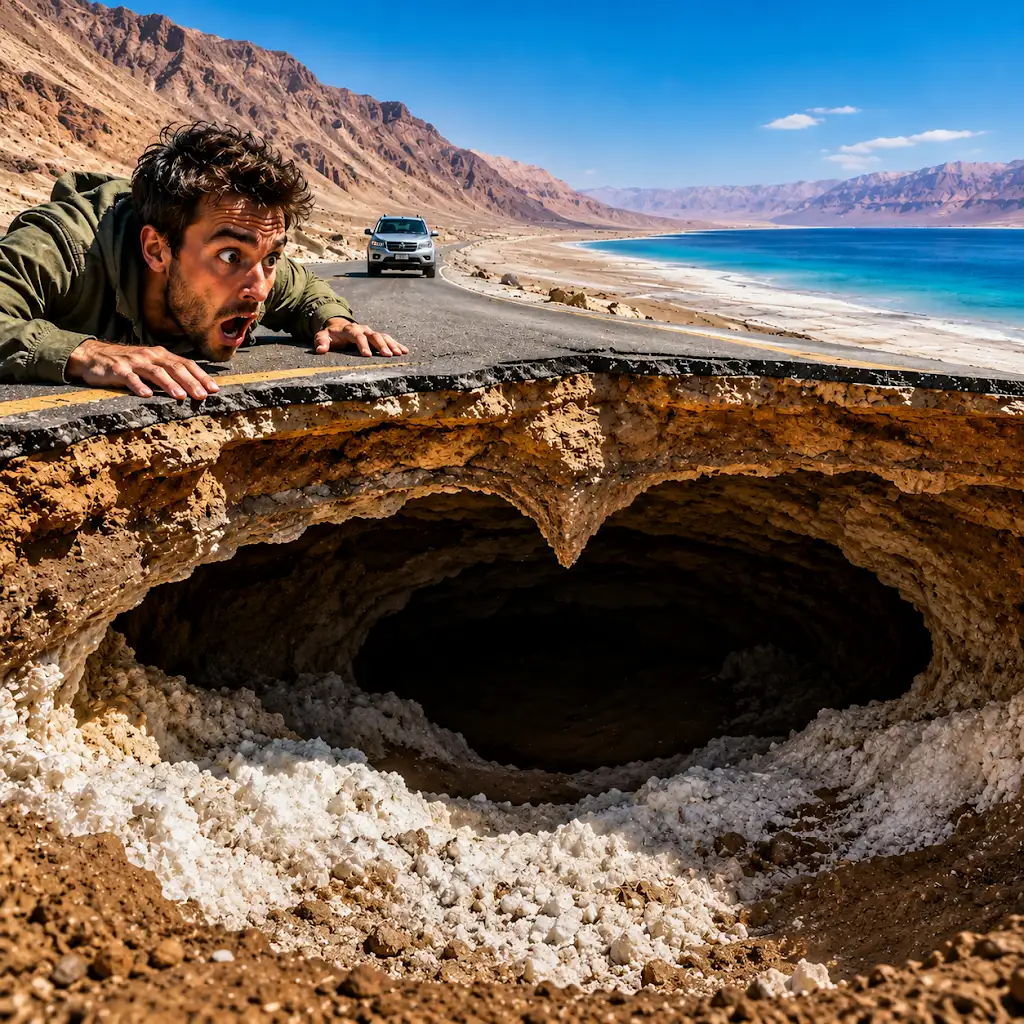
The Dead Sea Is Vanishing — And Leaving Giant Holes Behind
FAQs
What is Dead Sea shoreline retreat?
Dead Sea shoreline retreat refers to the phenomenon of the Dead Sea’s water level decreasing and its shoreline receding over time. This is primarily due to the diversion of water from the Jordan River, which is the main water source for the Dead Sea, for agricultural and industrial use.
What are the causes of Dead Sea shoreline retreat?
The main causes of Dead Sea shoreline retreat are the diversion of water from the Jordan River for human use, mineral extraction activities, and the natural evaporation of water from the Dead Sea. These factors have led to a significant decrease in the water level and the retreat of the shoreline.
What are the environmental impacts of Dead Sea shoreline retreat?
The environmental impacts of Dead Sea shoreline retreat include the formation of sinkholes along the receding shoreline, loss of unique ecosystems and habitats, and increased salinity and mineral concentration in the remaining water. These impacts have also affected the tourism and economic activities in the region.
What efforts are being made to address Dead Sea shoreline retreat?
Efforts to address Dead Sea shoreline retreat include the construction of pipelines to bring water from the Red Sea to the Dead Sea, international cooperation to manage water resources in the region, and the promotion of sustainable water use practices. These efforts aim to stabilize the water level and protect the unique environment of the Dead Sea.
What can individuals do to help mitigate Dead Sea shoreline retreat?
Individuals can help mitigate Dead Sea shoreline retreat by conserving water, supporting sustainable water management practices, and raising awareness about the importance of preserving the Dead Sea. Additionally, supporting initiatives and organizations that work towards protecting the Dead Sea can also make a positive impact.