The vast expanse of Earth, seemingly mapped and cataloged to the last inch, still harbors pockets of existence that defy conventional ownership. These are the unclaimed territories, the unowned places, remnants of a world where borders were drawn and sovereignty asserted, but where some lands slipped through the cracks of human dominion. These enigmatic regions, often inhospitable and remote, represent a fascinating paradox in our increasingly privatized and territorialized planet. They are not merely vacant lots; they are dynamic ecosystems, geological marvels, and, in some cases, stages for curious historical footnotes, all existing beyond the reach of any national flag or legal claim.
The concept of terra nullius, Latin for “nobody’s land,” has historically been a legal and political tool, often used to justify colonial expansion. However, in its truest sense, it refers to territories that have not been brought under the sovereignty of any state. While the era of vast, unclaimed continents is long gone, the 21st century still presents intriguing examples of places where legal ownership is absent, ambiguous, or practically impossible to enforce. These territories are not necessarily empty; they are often home to unique flora and fauna, geological formations of immense scientific interest, or are simply too challenging for human settlement to warrant the cost and effort of establishing control. The allure of these places stems from their wildness, their untouched nature, and the sheer fact that they exist outside the established order of nation-states.
Defining Unclaimed: More Than Just Empty Space
It is crucial to distinguish between truly unclaimed territories and those that are simply sparsely populated or remote. A desert island with no inhabitants is not necessarily unclaimed if it falls within the territorial waters of a recognized nation. Unclaimed territories, on the other hand, are defined by the absence of any sovereign claim, either historical or contemporary. This can arise from a multitude of factors, including geographical remoteness, extreme environmental conditions that deter settlement, ongoing territorial disputes that leave a vacuum, or simply the lack of perceived strategic or economic value by any nation.
The Historical Echo of Unclaimed Lands
Throughout history, the “discovery” and subsequent claiming of lands played a pivotal role in shaping global empires. The Age of Exploration was fueled by the desire to claim new territories, often justified by the principle of terra nullius even when indigenous populations were present. This historical precedent underscores the rarity of truly unclaimed lands today, as the world has been extensively carved up and divided amongst sovereign states. The few remaining examples are testaments to the enduring power of geography and the limitations of human ambition.
In exploring the fascinating concept of unclaimed territories on our planet, you might find the article on MyGeoQuest particularly intriguing. It delves into the various places on Earth that remain unowned and the implications of such territories. For more information, you can read the article here: MyGeoQuest.
Antarctica: The Crown Jewel of Unclaimed (and Claimed) Territories
Without a doubt, Antarctica stands as the most prominent example of a vast continent where sovereignty is deliberately suspended. While several nations have made historic claims to sectors of Antarctica, these claims are not universally recognized and are held in abeyance by the Antarctic Treaty System. This international agreement, signed in 1959, dedicates the continent to peace and scientific research, effectively establishing it as a global commons.
The Antarctic Treaty System: A Unique Governance Model
The Antarctic Treaty System is a remarkable feat of international cooperation. It designates Antarctica as a demilitarized zone, prohibits nuclear testing and the disposal of radioactive waste, and promotes scientific research. Crucially, it also suspends all prior territorial claims. This means that while certain countries assert claims, these are not acted upon, and the continent is, in practice, managed by the international community for the benefit of all humankind.
Scientific Pursuits and the Absence of Sovereignty
The primary focus of human activity in Antarctica is scientific research. Nations maintain research stations, conduct groundbreaking studies in glaciology, meteorology, biology, and astronomy, and collaborate on vital environmental monitoring. The absence of national sovereignty has fostered an environment of scientific exchange and collaboration, free from the political pressures that might otherwise arise from competing territorial interests. This unique governance model serves as a potential blueprint for managing other contested or resource-rich regions in the future.
The Future of Antarctica: Emerging Challenges
Despite the success of the Antarctic Treaty System, the future of the continent is not without its uncertainties. Climate change is leading to increased accessibility, raising concerns about resource exploitation, tourism, and the potential for renewed territorial ambitions. The delicate balance maintained by the treaty is under pressure, and the international community faces the ongoing challenge of preserving Antarctica’s pristine environment and its unique status as an unclaimed scientific sanctuary.
Bir Tawil: The Triangle of Lawlessness
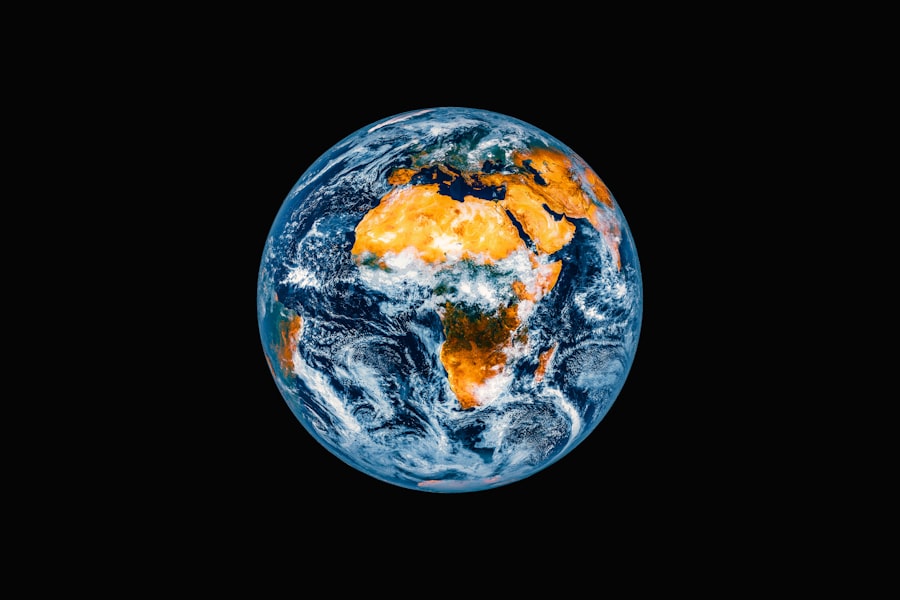
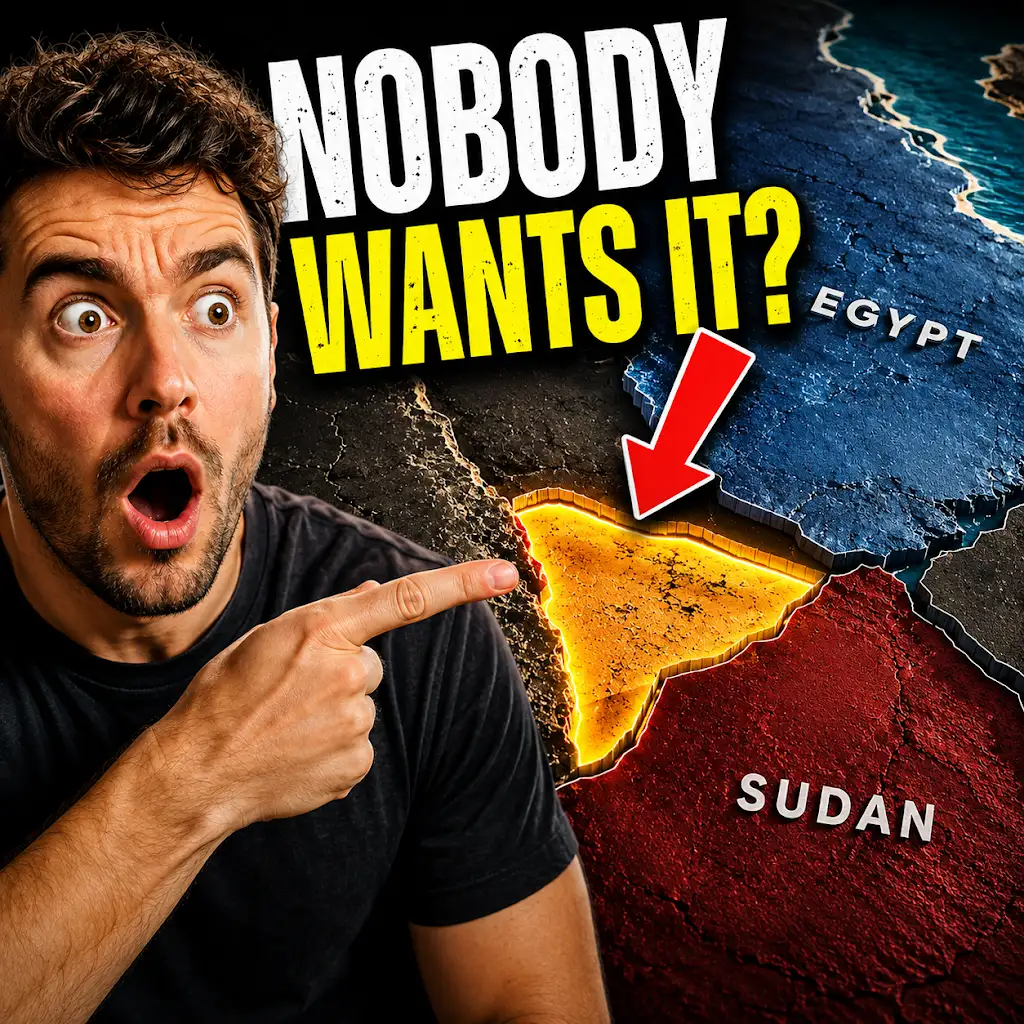
Tucked away in the northeastern corner of Africa, between Egypt and Sudan, lies Bir Tawil. This small, arid region is a geographical anomaly, a testament to poorly drawn colonial borders. Due to a quirk of surveying and historical agreements, Bir Tawil is not claimed by either Egypt or Sudan, nor is it claimed by any other nation. This makes it, arguably, the last remaining unclaimed, habitable (albeit inhospitable) territory on Earth in the traditional sense of a landmass not under any sovereign control.
The Cartographic Conundrum
The borders in this region were established during the colonial era, and the treaties delineating them created a peculiar situation. The 1899 Anglo-Egyptian Sudan Treaty drew a straight line of latitude that would have encompassed Bir Tawil within Sudan. However, a later administrative border drawn in 1902 placed Bir Tawil under the jurisdiction of the governor of the Egyptian border province of Aswan, as it was more convenient for administration. Critically, the treaties that defined the international border between Egypt and Sudan did not explicitly assign Bir Tawil to either. Egypt’s claim extends south to the 22nd parallel, which would include Bir Tawil, but this line is superseded by the administrative arrangement. Sudan’s northern border is defined by the 22nd parallel, which would leave Bir Tawil outside of its territory. Thus, neither country formally claims it, and no other nation has any interest in doing so.
Life in the Unclaimed Triangle
Bir Tawil is an unforgiving desert, characterized by extreme heat and aridity. It is sparsely populated, with nomadic Bedouin tribes occasionally traversing its landscape. These tribes operate outside any formal legal jurisdiction, their lives dictated by tradition and the harsh realities of the desert environment. The lack of formal governance means that any disputes or issues are resolved through customary law rather than national legal systems.
The “King” of Bir Tawil
The notoriety of Bir Tawil has attracted a peculiar brand of hopefuls. Individuals seeking to establish their own micronations have occasionally declared themselves rulers of Bir Tawil, planting flags and attempting to claim sovereignty. However, these declarations hold no legal weight, as they are not recognized by any existing nation-state and lack any basis in international law. The most famous such attempt was by Jeremiah Heaton, who in 2014, planted a flag on behalf of his daughter, Emily, declaring it the “Kingdom of North Sudan.” While a romantic notion, it remains firmly in the realm of playful ambition.
Marie Byrd Land: A Continent Untouched by Sovereignty
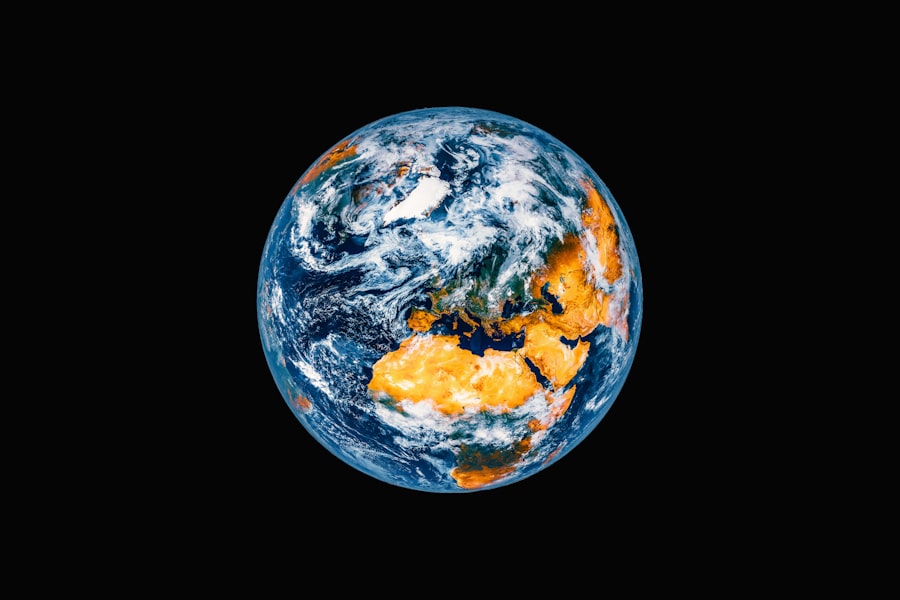
While Antarctica is governed by an international treaty that suspends claims, Marie Byrd Land, a vast region of West Antarctica, is unique in that no nation has ever formally laid claim to it. This is not due to any specific treaty, but rather a deliberate abstention. Located on the Pacific side of the continent, it is an area of extreme remoteness and scientific interest.
The History of Non-Claim
The exploration and eventual mapping of Marie Byrd Land occurred at a time when territorial claims in Antarctica were more actively being made by various nations. However, for reasons that remain somewhat debated, no country has ever formally asserted sovereignty over this specific portion of the continent. Some historians suggest it was a deliberate political move by the United States, which has a significant presence in Antarctica and has not ratified the territorial claims of other nations, to avoid setting a precedent or encouraging further competition. Others believe it simply fell through the cracks of various territorial claims.
Scientific Importance and the Absence of Political Baggage
Marie Byrd Land is a crucial site for glaciological research, offering insights into ice sheet dynamics and their contribution to global sea-level rise. Its remoteness has preserved its pristine environment, making it a valuable natural laboratory. The absence of sovereignty means that scientific research can be conducted without the political considerations that might arise if the land were under the jurisdiction of a particular nation.
The Future of Marie Byrd Land’s Status
As with the rest of Antarctica, the future of Marie Byrd Land remains tied to the evolving landscape of international agreements and the impacts of climate change. While currently free from overt territorial claims, any significant shifts in the geopolitical climate or increased accessibility could potentially lead to future discussions about its status.
In exploring the intriguing concept of unclaimed territories on our planet, one can delve into the fascinating article that discusses various places on Earth nobody owns. These areas, often remote and untouched by human influence, spark curiosity about the nature of ownership and sovereignty. For a deeper understanding of this subject, you can read more in this insightful piece found here. The article highlights not only the geographical aspects but also the historical context behind these unique locations.
The Contested and Ambiguous Zones
| Place | Description |
|---|---|
| Antarctica | The Antarctic Treaty System prohibits any military activity, mineral mining, and nuclear testing on the continent, and it is considered a scientific preserve. |
| International Waters | Areas of the ocean that are not under the jurisdiction of any country and are open to all for navigation and fishing. |
| Outer Space | Outer space is considered the common heritage of mankind and is not subject to national appropriation. |
Beyond these more defined examples, there exist numerous territories whose ownership is actively disputed, creating vacuums of effective control. These “unclaimed” zones are not necessarily unowned, but rather their ownership is in contention, leading to a de facto absence of undisputed sovereignty.
The Abyei Region: A Source of Intermittent Conflict
The Abyei Region, a disputed territory between Sudan and South Sudan, has been a flashpoint for conflict for decades. While a referendum was supposed to determine its status, the results have been contested, and the region has experienced periods of significant violence and displacement. This ongoing dispute leaves the population in a state of perpetual uncertainty, with neither nation fully exercising consistent governance over the entire area.
The Spratly Islands: A Maritime Chessboard
In the South China Sea, the Spratly Islands are claimed in whole or in part by several nations, including China, Vietnam, the Philippines, Malaysia, Brunei, and Taiwan. The lack of a clear resolution to these overlapping claims has led to a complex geopolitical situation, with ongoing tensions and occasional skirmishes. While some islands are occupied and administered by certain nations, the larger archipelago remains a zone of contested sovereignty, effectively creating unadministered areas within its vast maritime expanse.
The Case of Transnistria: A Frozen Conflict’s Unacknowledged Territory
Transnistria, a breakaway region of Moldova, has declared itself an independent republic but is not recognized by any UN member state. While it has its own government, military, and economy, its territory is technically still part of Moldova. This “frozen conflict” creates a peculiar situation where a de facto state exists on territory that is internationally recognized as belonging to another. This leaves its governance in a unique, unrecognized limbo.
The Ecological and Ethical Implications of Unclaimed Territories
The existence of unclaimed territories, however rare, raises important ecological and ethical questions. These lands, often untouched by extensive human development, can harbor unique biodiversity and represent vital ecological systems. Their status, or lack thereof, necessitates careful consideration of our role in their preservation and potential future use.
Guardians of Biodiversity
Many unclaimed territories, due to their remoteness and the absence of human exploitation, are havens for biodiversity. They can be critical breeding grounds for migratory species, home to endemic plants and animals, and represent pristine ecosystems that offer invaluable insights into natural processes. The lack of formal ownership can, in some instances, act as a passive form of protection, preventing the development that might otherwise threaten these fragile environments.
The Ethics of Claiming and Non-Intervention
The question of whether these territories should be claimed or remain as they are is a complex ethical debate. On one hand, international law and the principles of governance suggest that all territories should have a sovereign authority. On the other hand, the successful preservation of these lands as ecological sanctuaries under their current, de facto unowned status, suggests that non-intervention might be the most beneficial approach.
The Future of Unclaimed Lands in a Changing World
As human populations grow and resource demands increase, the pressure to explore and potentially claim previously inaccessible or overlooked territories will likely intensify. Climate change is already making some regions more navigable and economically viable. The ongoing existence of these unclaimed territories serves as a reminder of the vastness of our planet and the enduring power of nature, even in an era of human dominion. Their future, and our interaction with them, will undoubtedly be a significant chapter in the ongoing story of humanity’s relationship with the Earth.
What Happens When No Country Owns a Place?
FAQs
What are some examples of places on earth that nobody owns?
Some examples of places on earth that nobody owns include the high seas, Antarctica, and certain uninhabited islands.
Why does nobody own these places?
These places are considered unowned because they fall outside the jurisdiction of any individual country or government. The high seas, for example, are considered international waters, while Antarctica is governed by a treaty that prohibits any country from claiming sovereignty over the continent.
Can these unowned places be claimed by individuals or countries?
In general, these unowned places cannot be claimed by individuals or countries. The legal status of these areas is determined by international agreements and treaties that prohibit any form of ownership.
What are the implications of these unowned places?
The lack of ownership of these places can lead to challenges in terms of governance, resource management, and environmental protection. International cooperation and agreements are often necessary to address these issues.
Are there any efforts to address the governance of these unowned places?
Yes, there are ongoing efforts to address the governance of unowned places such as the high seas and Antarctica. International organizations and agreements work to establish regulations and protections for these areas to ensure their sustainable management and conservation.