Addressing Power Grid Peak Demand Challenges
The modern world runs on electricity, and the demand for this vital resource is constantly growing. While the overall electricity consumption is a significant metric, it is the fluctuations in demand, particularly the sharp spikes known as peak demand, that present the most formidable challenges to the stability and efficiency of power grids. These periods, typically occurring on hot summer afternoons when air conditioners are running at full blast, or during cold winter mornings when heating systems are activated, place immense strain on the infrastructure. Failing to adequately manage peak demand can lead to a cascade of negative consequences, including rolling blackouts, increased electricity prices, and a greater reliance on less environmentally friendly power sources. Effectively addressing these challenges is paramount to ensuring a reliable, affordable, and sustainable energy future.
Peak demand is not a constant, predictable force; rather, it is a dynamic phenomenon influenced by a complex interplay of factors. Understanding these drivers is the first crucial step in developing effective strategies for mitigation.
Temporal Dynamics of Peak Demand
The timing of peak demand is remarkably consistent in its periodicity, yet highly variable in its intensity. Daily peaks are often observed during the late afternoon and early evening hours, as daylight fades and residential electricity usage surges. Weekly patterns are also evident, with weekdays generally experiencing higher demand than weekends due to industrial and commercial activity. Seasonal variations, however, represent the most significant and impactful peaks. Summer months, driven by widespread air conditioning use, and winter months, fueled by heating systems, consistently produce the highest demand loads. Extreme weather events, such as heatwaves or prolonged cold snaps, can further exacerbate these seasonal peaks, pushing demand to unprecedented levels.
Societal and Behavioral Influences
Beyond environmental factors, human behavior plays a substantial role in shaping peak demand. Lifestyle choices, such as the widespread adoption of energy-intensive appliances and the increasing prevalence of electric vehicles, contribute to growing baseline demand and can amplify peak loads. Urbanization, with its higher concentration of people and businesses, naturally concentrates demand in specific geographic areas, creating localized peak challenges. Moreover, societal norms and economic conditions can indirectly influence demand. For instance, economic growth often correlates with increased industrial production and commercial activity, both of which are significant electricity consumers. Understanding these societal and behavioral influences allows for targeted interventions and the promotion of energy-conscious practices.
The Economic Implications of Peak Demand
The economic ramifications of poorly managed peak demand are substantial. Generating electricity to meet peak loads is inherently more expensive than generating it during off-peak hours. This is because utilities often rely on less efficient, faster-starting “peaker plants” – typically natural gas or oil-fired turbines – to quickly ramp up production when demand surges. These plants have higher operating costs and are often more polluting than baseload power plants. The increased cost of generation during peak periods is ultimately passed on to consumers in the form of higher electricity rates. Furthermore, the underutilization of expensive baseload power generation facilities during off-peak hours also contributes to economic inefficiency.
The challenge of managing power grid peak demand is a pressing issue that utilities face as energy consumption continues to rise. A related article that delves into innovative solutions for this problem can be found at this link. It discusses various strategies, including demand response programs and advancements in energy storage technologies, that can help mitigate the strain on power grids during peak usage times.
Infrastructure Modernization and Smart Grid Technologies
The existing power grid infrastructure, often decades old, was not designed to handle the dynamic and rapidly shifting demands of the 21st century. Modernization efforts, coupled with the integration of smart grid technologies, are essential for creating a more resilient and responsive electricity system.
The Evolution of the Smart Grid
The concept of the “smart grid” represents a fundamental reimagining of the traditional electrical grid. It leverages digital communication technologies, advanced sensors, and automated control systems to enable two-way communication between utilities and consumers. This enhanced connectivity allows for real-time monitoring of electricity flow, improved fault detection and response, and more efficient management of supply and demand. The smart grid moves beyond a unidirectional flow of electricity to a more intelligent and interactive network.
Demand Response Programs and Consumer Engagement
A cornerstone of smart grid implementation is the concept of demand response (DR). DR programs incentivize consumers to reduce their electricity consumption during peak demand periods. This can be achieved through various mechanisms, such as dynamic pricing, where electricity rates are higher during peak times and lower during off-peak times, encouraging consumers to shift their usage. Other DR strategies include direct load control, where utilities can remotely cycle specific appliances (like air conditioners or water heaters) during peak events with prior customer consent, and critical peak pricing, which offers substantial discounts for reductions during very specific, pre-determined peak periods. Effective consumer education and engagement are vital for the success of DR programs, ensuring that participants understand the benefits and how to participate.
Energy Storage Solutions: Bridging the Gap
Energy storage technologies play a crucial role in smoothing out the peaks and valleys of electricity demand. By storing excess electricity generated during off-peak hours, such as from renewable sources like solar and wind, this stored energy can be dispatched during peak demand periods, reducing the need for expensive and polluting peaker plants.
Battery Energy Storage Systems (BESS)
Battery energy storage systems, particularly lithium-ion batteries, have emerged as a leading technology for grid-scale energy storage. Their modularity, declining costs, and rapid response times make them ideal for both grid stabilization and peak shaving applications. BESS can be deployed at various scales, from utility-owned facilities to behind-the-meter installations for commercial and industrial customers.
Other Storage Technologies
Beyond batteries, a range of other energy storage technologies are being explored and deployed. Pumped-storage hydropower, a mature technology, uses excess electricity to pump water uphill to a reservoir, which can then be released to generate electricity when needed. Compressed air energy storage (CAES) stores energy by compressing air into underground caverns or tanks. Thermal energy storage, which stores heat or cold, can also be integrated into the grid to manage demand. The diversity of these technologies allows for tailored solutions to specific grid needs.
Integrating Renewable Energy Sources and Their Impact on Peak Demand
The transition to a cleaner energy future necessitates the increased integration of renewable energy sources, such as solar and wind power. While these sources offer significant environmental benefits, their inherent intermittency presents unique challenges and opportunities when managing peak demand.
The Intermittent Nature of Renewables
Solar power is only available when the sun is shining, and wind power is only generated when the wind is blowing. This inherent variability means that renewable energy generation does not always align with peak demand periods. For example, solar power generation typically peaks in the middle of the day, while peak electricity demand often occurs in the late afternoon and early evening, after solar production has begun to decline. This mismatch can create a “duck curve” phenomenon, where the net load (total demand minus renewable generation) experiences a sharp ramp-up in the late afternoon.
Complementary Roles of Renewables and Storage
The challenges posed by the intermittency of renewables can be effectively mitigated by integrating them with energy storage solutions. When solar power generation is high and demand is low, excess energy can be stored in batteries. This stored energy can then be released to meet demand when solar production wanes or during evening peak periods. Similarly, wind power can be harnessed when available and stored for later use. This synergistic relationship between renewables and storage is critical for decarbonizing the grid while maintaining reliability.
Strategic Siting and Forecasting for Renewables
Optimizing the placement of renewable energy facilities is crucial for maximizing their contribution to meeting demand. Siting solar farms in areas with consistent sunlight and wind turbines in locations with predictable wind patterns can improve their reliability. Furthermore, advancements in weather forecasting and generation modeling allow grid operators to more accurately predict renewable energy output, enabling better planning and resource allocation to balance supply and demand.
Policy and Regulatory Frameworks for Peak Demand Management
Effective policies and regulatory frameworks are essential to incentivize investments, drive innovation, and ensure the efficient management of peak demand. Governments and regulatory bodies play a pivotal role in shaping the energy landscape.
Incentivizing Efficiency and Conservation
Government policies can promote energy efficiency and conservation through various means. Building codes that mandate higher energy efficiency standards, tax incentives for energy-efficient appliances and retrofits, and public awareness campaigns highlighting the importance of reducing energy consumption are all crucial. These measures aim to reduce overall electricity demand, thereby lessening the severity of peak loads.
Market Design and Pricing Mechanisms
The design of electricity markets significantly influences how peak demand is managed. Implementing time-of-use (TOU) pricing, where electricity costs vary throughout the day, encourages consumers to shift their usage away from peak hours. More sophisticated market mechanisms, such as capacity markets, can also be employed to ensure that sufficient generation and demand-side resources are available to meet peak demand reliably. These markets reward generators for providing capacity that can be dispatched when needed, including during peak periods.
Grid Modernization and Investment Policies
Regulatory bodies often oversee utility investments in grid modernization. Policies that encourage and streamline the deployment of smart grid technologies, energy storage, and distributed energy resources (DERs) are vital. This may involve establishing performance-based ratemaking, which allows utilities to earn a return on investments in grid upgrades that improve reliability and efficiency. Clear regulatory pathways for integrating new technologies and business models are also essential.
The challenge of managing power grid peak demand is becoming increasingly critical as energy consumption continues to rise. A related article discusses innovative solutions to this issue, highlighting the importance of demand response programs and renewable energy integration. For more insights on how these strategies can help alleviate stress on the grid, you can read the full article here. Understanding these approaches is essential for ensuring a stable and sustainable energy future.
Future Outlook and Emerging Solutions
“`html
| Year | Peak Demand (GW) | Peak Demand Growth Rate |
|---|---|---|
| 2015 | 800 | 3% |
| 2016 | 820 | 2.5% |
| 2017 | 840 | 2.4% |
| 2018 | 860 | 2.3% |
| 2019 | 880 | 2.2% |
“`
The challenges of peak demand are not static; they evolve with technological advancements, changing consumer behaviors, and the ongoing energy transition. A proactive and adaptive approach is necessary to address these challenges effectively in the future.
The Role of Electric Vehicles (EVs) and Charging Infrastructure
The burgeoning adoption of electric vehicles presents a unique challenge and opportunity for peak demand management. Unmanaged, widespread EV charging during peak hours could significantly exacerbate grid strain. However, with smart charging technologies and vehicle-to-grid (V2G) capabilities, EVs can become a valuable distributed energy resource. Smart charging allows EVs to charge during off-peak hours when electricity is cheaper and cleaner. V2G technology enables EVs to not only draw power from the grid but also to feed stored energy back into the grid during peak demand periods, effectively acting as mobile batteries.
Decentralized Energy Resources and Microgrids
The rise of decentralized energy resources (DERs) – such as rooftop solar, battery storage, and electric heat pumps – is transforming the energy landscape. These resources, often located at the customer’s premises, can reduce reliance on the central grid and provide localized power. Microgrids, which are localized energy grids that can disconnect from the main grid and operate autonomously, offer enhanced resilience and can effectively manage local peak demand within their boundaries.
Artificial Intelligence and Advanced Analytics
Artificial intelligence (AI) and advanced analytics are poised to play an increasingly significant role in peak demand management. AI algorithms can analyze vast amounts of data from smart meters, weather forecasts, and grid sensors to predict future demand patterns with greater accuracy. This enables more precise dispatch of generation resources, optimized deployment of energy storage, and more effective activation of demand response programs. AI can also be used to identify anomalies and potential grid vulnerabilities, allowing for proactive maintenance and preventing cascading failures.
In conclusion, addressing power grid peak demand challenges is a multifaceted endeavor requiring a holistic approach. It necessitates continued investment in infrastructure modernization, the widespread adoption of smart grid technologies, innovative energy storage solutions, and supportive policy frameworks. By embracing these advancements and fostering collaboration among utilities, consumers, policymakers, and technology providers, society can navigate the complexities of peak demand and build a more reliable, sustainable, and resilient energy future.
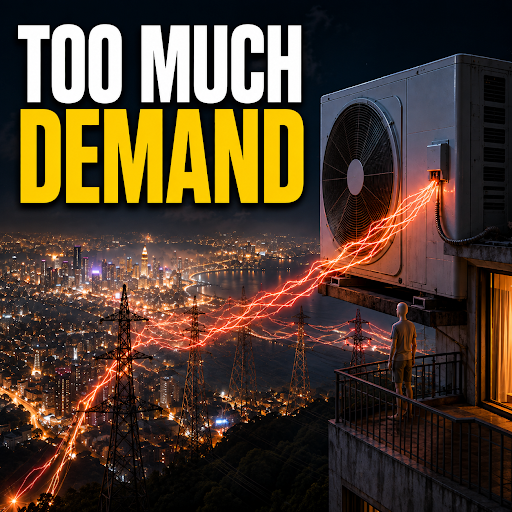
The Air-Conditioning Boom That Could Overwhelm Power Grids
FAQs
What is the power grid peak demand problem?
The power grid peak demand problem refers to the challenge of meeting the highest level of electricity demand during specific periods, typically during extreme weather conditions or times of high energy consumption.
Why is the power grid peak demand problem a concern?
The power grid peak demand problem is a concern because it can lead to strain on the power grid, potential blackouts, and increased costs for electricity generation and distribution.
What are the causes of the power grid peak demand problem?
Causes of the power grid peak demand problem include extreme weather conditions, such as heatwaves or cold snaps, increased use of air conditioning or heating systems, and high energy consumption during peak hours.
How can the power grid peak demand problem be addressed?
The power grid peak demand problem can be addressed through measures such as demand response programs, energy efficiency initiatives, investment in energy storage technologies, and the use of smart grid technologies to better manage and distribute electricity.
What are the potential solutions to the power grid peak demand problem?
Potential solutions to the power grid peak demand problem include increasing renewable energy sources, implementing time-of-use pricing to incentivize off-peak energy consumption, and improving grid infrastructure to handle peak demand more effectively.