
Helium, the second most abundant element in the universe, plays a crucial yet often unseen role in our modern world. From the MRI machines that diagnose our ailments to the balloons that celebrate our milestones, helium’s unique properties make it indispensable. Yet, its terrestrial presence is finite and its extraction is a complex, energy-intensive process that warrants a closer look. This article will unveil the intricate journey of helium, from its subterranean origins to its vital applications, through an exploration of its extraction process.
The Earth’s helium is not, as one might initially assume, a product of a past cosmic event seeping into the planet. Instead, it is a byproduct of a much slower, more terrestrial process: radioactive decay. Understanding this origin is fundamental to grasping why helium is a non-renewable resource and why its extraction is so specialized.
Alpha Decay: The Birth of Helium Atoms
The primary source of terrestrial helium is the radioactive decay of heavy, unstable isotopes found deep within the Earth’s crust and mantle. Specifically, the alpha decay of elements like uranium and thorium is responsible for generating helium. Alpha decay involves the emission of an alpha particle, which is essentially a helium nucleus. This nucleus, consisting of two protons and two neutrons, is the very building block of a helium atom.
- The Process of Radioactive Decay: Uranium and thorium isotopes exist in trace amounts within the Earth’s rocks. Over geological timescales, these isotopes undergo a series of radioactive transformations, emitting alpha and beta particles, and releasing energy. The alpha decay, in particular, is the critical step for helium formation. Each alpha particle emitted carries a helium nucleus.
- Energy and Stability: Uranium-238 and Thorium-232 are two of the most common parent isotopes. Their decay chains are long and complex, involving numerous intermediate daughter isotopes. However, the emission of an alpha particle is a mechanism by which these heavy nuclei attempt to achieve a more stable, lower-energy state. The excess energy is released in the form of kinetic energy of the alpha particle and gamma radiation.
- Accumulation Over Eons: As these radioactive elements have decayed over billions of years, the emitted alpha particles, after losing their kinetic energy and capturing two free electrons from their surroundings, have formed stable helium atoms. These helium atoms are then trapped within the porous rock formations deep underground.
The Role of Shale and Sandstone Formations
The effectiveness of helium accumulation is heavily reliant on the geological characteristics of the subsurface. Specific types of rock formations act as excellent traps for the newly formed helium.
- Porous and Permeable Reservoirs: Helium, in its atomic form, is a very light and inert gas. It can migrate through the Earth’s crust. For helium to accumulate in commercially viable quantities, it needs to be trapped in reservoirs that are both porous (containing small spaces) and permeable (allowing fluids and gases to flow through them). Sedimentary rocks like sandstones and shales are ideal for this purpose.
- Impermeable Caprocks: Crucially, these porous formations must be overlain by an impermeable caprock. This impervious layer, often composed of shale or salt, acts as a seal, preventing the trapped helium from diffusing further upwards and escaping into the atmosphere. This geological trapping mechanism is analogous to how oil and natural gas are preserved underground.
- Natural Gas Association: While uranium and thorium are the ultimate sources, the helium we extract commercially is predominantly found alongside natural gas deposits. This is because the geological conditions that trap helium also tend to trap natural gas, which is often generated from the decay of organic matter. Therefore, the search for helium is often intertwined with the exploration for natural gas.
For a comprehensive understanding of the helium extraction process, you can refer to the related article available on MyGeoQuest, which delves into the various methods and technologies used in the extraction of this valuable gas. The article provides insights into the geological formations that contain helium and the advancements in extraction techniques that have emerged in recent years. To read more, visit MyGeoQuest.
From the Depths: The Natural Gas Connection
The symbiotic relationship between helium and natural gas is not a coincidence but a consequence of the geological processes that create and trap them. The vast majority of commercially extracted helium is a byproduct of natural gas production.
Natural Gas Extraction: A Prerequisite for Helium Recovery
Natural gas, primarily composed of methane, is extracted from underground reservoirs through drilling operations. These reservoirs are often located in similar geological settings that also trap helium.
- Drilling and Production: Exploration geologists identify potential natural gas reservoirs through seismic surveys and other geological techniques. Once a promising location is found, wells are drilled deep into the Earth’s crust to access these reserves. The natural gas, under pressure, flows up the wellbore to the surface.
- The Composition of Raw Natural Gas: Raw natural gas extracted from the ground is not pure methane. It contains a mixture of hydrocarbons and other gases, including nitrogen, carbon dioxide, water vapor, and crucially, helium. The concentration of helium in natural gas can vary significantly, from trace amounts (parts per million) to commercially viable percentages (up to 7%).
- The Economic Driver: The primary economic driver for these drilling operations is the natural gas itself. Helium, in this context, is often considered a valuable co-product or a valuable impurity that needs to be separated. Without the economic viability of natural gas extraction, the recovery of helium from these sources would be significantly less feasible.
The Importance of Helium Concentration
The economic feasibility of extracting helium is directly proportional to its concentration in the natural gas stream. While helium is present in the atmosphere at very low concentrations, its abundance in certain natural gas reserves makes its separation a worthwhile endeavor.
- Commercial Viability Thresholds: While figures can vary, a generally accepted threshold for commercial helium extraction from natural gas is around 0.3% to 0.5% helium by volume. Gas streams with concentrations below this level are typically not economically viable for helium recovery. Some prolific fields, however, can contain as much as 7% or more helium.
- Geographic Distribution: Not all natural gas fields are rich in helium. Certain regions of the world have been identified as having a higher prevalence of helium-rich natural gas deposits. The United States, particularly states like Kansas, Oklahoma, and Texas, has historically been a major producer. Other significant sources are found in Qatar, Algeria, and Russia.
- Depleting Reserves: It is important to note that these helium-rich natural gas reserves are finite. Once extracted, the helium is released into the atmosphere and is lost to future recovery. This inherent non-renewability underscores the importance of efficient extraction and responsible utilization.
The Complex Art of Separation: Cryogenic Distillation
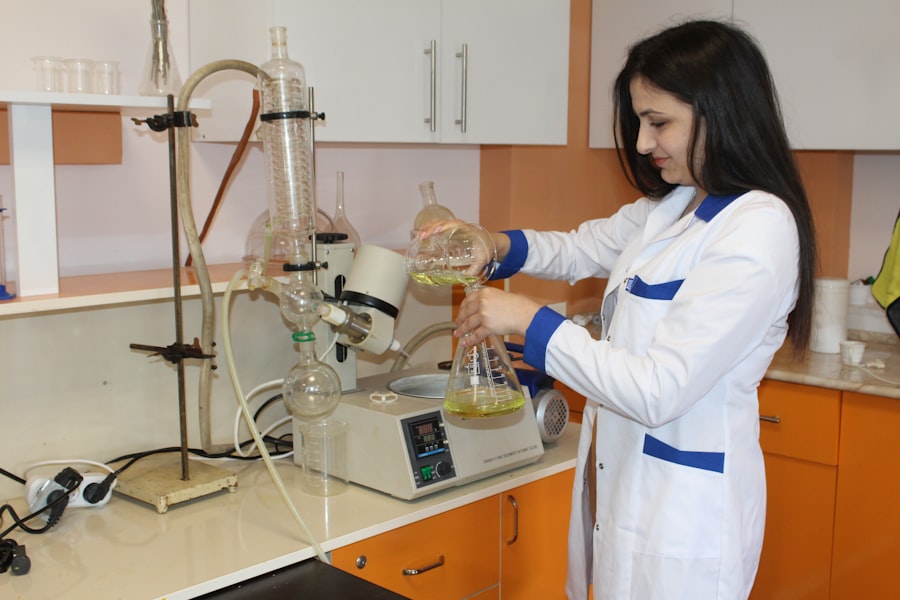
Once a natural gas stream containing a significant concentration of helium is identified, the next critical step is to separate the helium from the other components. This is primarily achieved through a sophisticated process known as cryogenic distillation.
The Principles of Cryogenics: Embracing Extreme Cold
Cryogenic distillation leverages the extremely low boiling points of gases to achieve separation. Helium itself has the lowest boiling point of any known substance, making its isolation particularly challenging.
- Supercooling Gases: The process involves cooling the natural gas mixture to extremely low temperatures. At these frigid temperatures, the different components of the mixture will liquefy and eventually solidify at distinct points. Helium’s boiling point is a mere -269 degrees Celsius (-452 degrees Fahrenheit) at standard atmospheric pressure.
- Phase Transitions: As the temperature is lowered, gases transition from a gaseous state to a liquid state and then, at even lower temperatures, to a solid state. The order in which these phase changes occur is determined by the boiling points of the individual gases.
- Energy Intensive Nature: Achieving and maintaining these cryogenic temperatures requires significant amounts of energy. This contributes to the overall cost and complexity of helium extraction. Refrigeration cycles, often involving the expansion of gases to produce cold, are essential components of the cryogenic plant.
Step-by-Step Separation: A Multi-Stage Process
The cryogenic distillation process for helium extraction is typically a multi-stage process designed to progressively remove other components and concentrate the helium.
- Initial Cooling and Pre-Purification: The raw natural gas is first cooled down to remove water vapor and heavier hydrocarbons. This often involves a series of heat exchangers and separators. The goal is to prevent these contaminants from freezing and clogging the cryogenic equipment.
- Liquefaction of Natural Gas Components: The pre-purified gas is then further cooled to very low temperatures. Methane, ethane, and other components of natural gas will liquefy at significantly higher temperatures than helium. These liquefied components are then separated.
- Nitrogen and Argon Removal: Nitrogen, with a boiling point of -196°C, and argon, with a boiling point of -186°C, are also removed in subsequent cooling stages. As these gases liquefy, they are drawn off, leaving behind a gas stream that is increasingly enriched in helium.
- Helium Enrichment and Final Purification: The remaining gas stream is now highly concentrated in helium. Further cooling and distillation stages are employed to remove any residual impurities, such as neon and hydrogen. The final product is high-purity helium, typically 99.999% pure or higher.
- The Role of Expansion Turbines: Expansion turbines play a crucial role in the cooling process. As a high-pressure gas is expanded through a turbine, it cools down significantly, providing the necessary refrigeration to liquefy the other gases. The energy generated by the turbine can also be used to power other parts of the plant, increasing efficiency.
Beyond Cryogenics: Alternative and Emerging Technologies

While cryogenic distillation remains the dominant method for helium extraction from natural gas, research and development are exploring alternative and supplementary technologies to improve efficiency, reduce costs, and potentially access new sources.
Membrane Separation: A Less Energy-Intensive Approach
Membrane technology offers a potentially more energy-efficient alternative to cryogenic processes for separating gases.
- Selective Permeability: Gas separation membranes are thin films that are selectively permeable to certain gases over others. Different membrane materials will allow different gases to pass through at varying rates.
- Helium Permeability: Helium’s small atomic size and inert nature make it highly permeable through certain types of membranes, such as those made from dense polymers or carbon materials.
- Integration with Cryogenics: Membrane separation can be used as a pre-treatment step to remove bulk impurities before cryogenic distillation, thereby reducing the load on the cryogenic plant. In some cases, it might even be feasible as a primary separation method for natural gas with very high helium concentrations.
- Challenges and Limitations: While promising, membrane technology for helium extraction still faces challenges, including membrane lifespan, fouling, and achieving the ultra-high purity required for some applications. The economic viability of membrane-only systems for large-scale helium production is still under investigation.
Pressure Swing Adsorption (PSA): A Targeted Purification Technique
Pressure Swing Adsorption (PSA) is a technology commonly used for gas separation and purification, and it has applications in helium refinement.
- Adsorbent Materials: PSA systems utilize solid materials called adsorbents, which have a high affinity for certain gases. These adsorbents are packed into columns.
- Cycle of Adsorption and Desorption: The process involves operating under alternating cycles of high and low pressure. At high pressure, the target gas (in this case, impurities) adsorbs onto the material. At low pressure, the adsorbed impurities are released (desorbed), allowing the purified helium to pass through.
- Refinement of Helium Streams: PSA is often used as a polishing step for helium that has already undergone initial separation, such as cryogenics or membrane separation. It effectively removes trace impurities to achieve the desired high purity levels.
- Efficiency and Versatility: PSA systems are generally energy-efficient and can be highly effective for removing specific types of contaminants. Their modular design allows for flexibility in scaling up production.
Direct Helium Extraction from the Atmosphere: A Future Possibility?
While currently not commercially viable, the prospect of directly extracting helium from the atmosphere is a subject of ongoing scientific curiosity.
- Extremely Low Concentrations: Atmospheric helium exists at a concentration of approximately 5.2 parts per million (ppm). This extremely low concentration poses immense challenges for efficient and economical extraction.
- Energy Requirements: The energy required to capture and concentrate such a dilute gas would be astronomically high, far exceeding current technological capabilities and economic feasibility.
- Research and Theoretical Frameworks: Scientists are exploring theoretical concepts and novel materials that might one day make atmospheric helium extraction a possibility. This could involve advanced filtration systems or energy-efficient capture mechanisms. However, this remains firmly in the realm of future research.
The helium extraction process is a fascinating topic that delves into the methods used to obtain this essential gas from natural sources. For those interested in learning more about the intricacies of this process, a related article can be found at this link. Understanding the techniques involved not only highlights the importance of helium in various industries but also sheds light on the environmental considerations associated with its extraction.
The Final Frontier: Purification and Liquefaction for Storage and Transport
| Stage | Process |
|---|---|
| 1 | Drilling a well to access the helium reserve |
| 2 | Extracting the natural gas containing helium |
| 3 | Separating the helium from the natural gas |
| 4 | Purifying the helium to remove impurities |
| 5 | Storing the purified helium in containers |
Once separated, the raw helium is rarely ready for immediate use. A rigorous purification process and careful liquefaction are crucial steps before it can be stored and transported to consumers worldwide.
Achieving Ultra-High Purity: Meeting Demanding Standards
Many applications of helium, particularly in high-tech industries and scientific research, require exceptionally high levels of purity.
- Trace Impurity Removal: Even after cryogenic distillation, trace amounts of other gases can remain. These can include neon, hydrogen, and even small remnants of nitrogen or oxygen.
- Further Purification Techniques: To achieve ultra-high purity (often specified as 99.999% or “five-nines”), additional purification steps are employed. These can include specialized adsorbent beds designed to selectively capture specific lingering impurities.
- Quality Control and Analysis: Rigorous quality control measures are implemented throughout the purification process. Sophisticated analytical equipment, such as gas chromatographs, is used to precisely measure the purity of the helium and ensure it meets the required specifications.
- Impact of Impurities: Even minute impurities can be detrimental in sensitive applications. For example, in the semiconductor industry, impurities can disrupt delicate manufacturing processes, and in scientific instruments, they can interfere with precise measurements.
The Magic of Liquefaction: Making Helium Manageable
Helium’s extremely low boiling point presents a significant challenge for storage and transportation. For efficient handling, it is liquefied into a cryogenic liquid at -269°C (-452°F).
- Thermodynamic Principles: Liquefaction involves compressing the helium gas and then allowing it to expand rapidly in a process known as the Joule-Thomson effect or through expansion turbines. This rapid expansion causes a significant drop in temperature, leading to liquefaction.
- Specialized Cryogenic Tanks: Storing and transporting liquid helium requires highly specialized, super-insulated cryogenic tanks, often referred to as “Dewars.” These tanks are designed to minimize heat ingress from the surroundings and keep the helium in its liquid state for extended periods.
- Evaporation and “Boil-Off”: Despite the advanced insulation, some heat inevitably enters the tanks, causing a small amount of liquid helium to evaporate or “boil off” over time. This boil-off is a characteristic of liquid helium storage and is managed through careful tank design and handling procedures.
- Global Supply Chain: The liquefaction process is essential for creating the global supply chain for helium. Liquid helium is transported by specialized trucks, railcars, and even ships to reach industries and research institutions around the world, supporting a vast array of critical technologies and scientific endeavors. The efficient and safe handling of this volatile cryogenic liquid is a testament to advanced engineering and logistics.

The Most Important Gas You’ve Never Heard Of
FAQs
What is the helium extraction process?
The helium extraction process involves extracting helium from natural gas through a series of steps including purification, liquefaction, and separation.
Where is helium extracted from?
Helium is primarily extracted from natural gas deposits, with the United States being the largest producer of helium in the world.
How is helium extracted from natural gas?
Helium is extracted from natural gas through a process called cryogenic distillation, which involves cooling the natural gas to very low temperatures to separate the helium from other gases.
What are the uses of helium?
Helium is used in a variety of applications including cryogenics, MRI machines, welding, and as a lifting gas in balloons and airships.
Why is helium extraction important?
Helium extraction is important because helium is a non-renewable resource and is crucial for various industrial and scientific applications. It is also essential for medical purposes such as MRI machines.