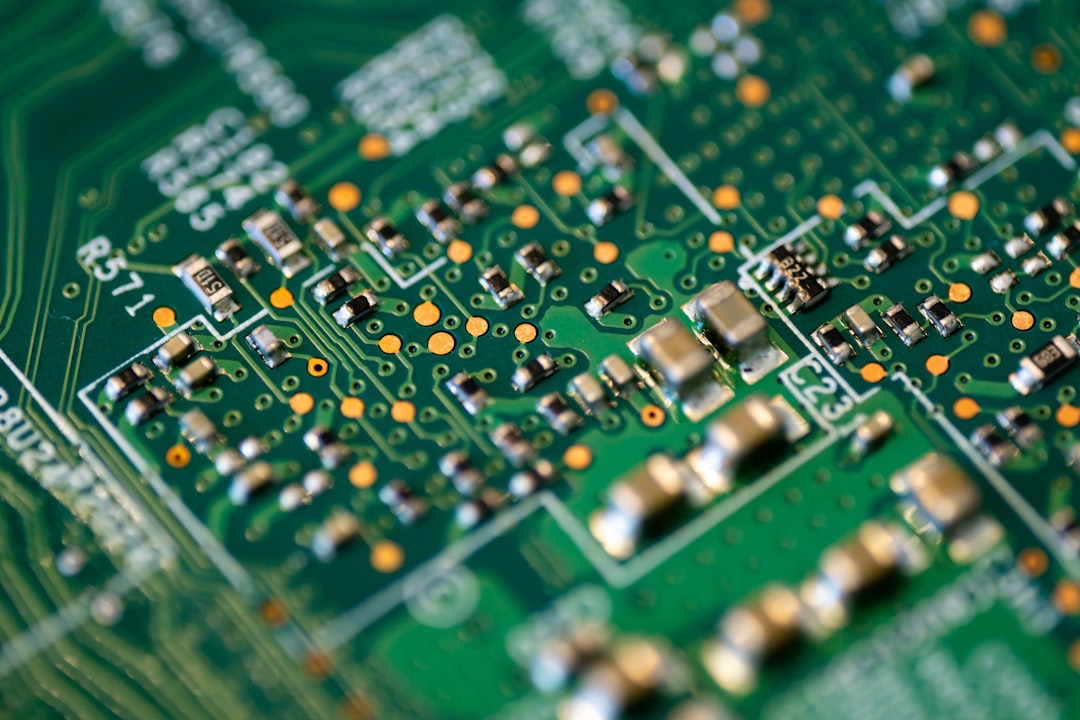
You stand at the precipice of a technological revolution, a world humming with unseen intelligence, and at its very heart, you find the humble semiconductor. It’s easy to overlook these tiny, intricate components, often smaller than your fingernail, yet their impact on your daily life is profound, shaping everything from the smartphone in your pocket to the complex systems that power global communication and advanced scientific research. You rely on them, perhaps unknowingly, for nearly every facet of modern existence. To truly grasp the significance of semiconductors, you must delve into their fundamental nature, their evolutionary journey, and the ubiquitous roles they play.
You might be wondering what makes these materials so special. It all boils down to their unique electrical properties. Unlike conductors, which allow electricity to flow freely, or insulators, which block it almost entirely, semiconductors exhibit a behavior somewhere in between. This “in-between” state is precisely what gives them their power and versatility.
The Magic of Silicon
The undisputed king of semiconductors is silicon. This abundant element, found in sand and quartz, forms the foundation for the vast majority of semiconductor devices.
Understanding the Atomic Structure
At an atomic level, silicon possesses four valence electrons, the outermost electrons involved in chemical bonding. This tetrahedral structure allows silicon atoms to bond with their neighbors in a crystal lattice, creating a stable, yet highly controllable, material.
The Concept of Purity
The key to silicon’s semiconductor magic lies in its extreme purity. Manufacturers strive to achieve purity levels of 99.9999999% or even higher. Even minute impurities, known as dopants, can dramatically alter silicon’s electrical conductivity.
The Art of Doping: Tailoring Conductivity
Doping is the process of intentionally introducing specific impurities into the silicon crystal lattice. This carefully controlled addition is what allows you to create the essential building blocks of modern electronics: transistors and diodes.
N-Type Semiconductors: The Electron Donors
When you introduce elements with five valence electrons, such as phosphorus or arsenic, into pure silicon, these extra electrons become mobile. These free electrons make the silicon more conductive, creating what’s known as an n-type semiconductor. They are called “n-type” because the dominant charge carriers are negative (electrons).
P-Type Semiconductors: The Electron Vacancies
Conversely, introducing elements with three valence electrons, such as boron or gallium, creates “holes” – essentially the absence of an electron in the silicon lattice. These holes can accept electrons, so they act as positive charge carriers. This creates a p-type semiconductor, named for the positive nature of these charge carriers.
Semiconductors play a crucial role in modern technology, influencing everything from smartphones to electric vehicles. For a deeper understanding of their significance and the ongoing advancements in the industry, you can explore a related article that discusses the impact of semiconductor technology on global markets and innovation. To read more, visit this article.
The Dawn of the Semiconductor Era: From Vacuum Tubes to Integrated Circuits
Before semiconductors revolutionized technology, your predecessors relied on bulky, inefficient, and fragile vacuum tubes to control electrical signals. The invention and development of semiconductor devices marked a monumental leap forward, ushering in an era of miniaturization, speed, and efficiency.
The Transistor: A Game-Changer
The invention of the transistor in 1947 at Bell Labs was arguably the single most important development in the history of electronics. It was a direct replacement for the vacuum tube, but with vastly superior characteristics.
The Junction Transistor
Early transistors, like the point-contact transistor, were complex to manufacture. The bipolar junction transistor (BJT) and, later, the field-effect transistor (FET) became the foundational designs. An FET, in particular, allows a small voltage applied to a gate electrode to control a larger current flowing between two other electrodes. This ability to amplify and switch electrical signals is the core function of a transistor.
The Impact of Miniaturization
The sheer size reduction afforded by transistors compared to vacuum tubes was staggering. This paved the way for smaller, more portable, and more affordable electronic devices. You can see the direct lineage from those early bulky radios to the sleek, pocket-sized devices you use today.
The Integrated Circuit (IC): A Symphony of Transistors on a Chip
The next evolutionary step was the integrated circuit, or IC, often referred to as a microchip. This innovation allowed thousands, then millions, and now billions of transistors and other electronic components to be fabricated on a single piece of silicon.
The Birth of the Microchip
The concept of integrating multiple circuit elements onto a single substrate was a radical idea. Early ICs contained only a handful of transistors, but the potential was immediately evident. This was akin to moving from building individual houses to constructing entire cities on a centralized plan.
Moore’s Law: An Exponential Trajectory
You’ve likely heard of Moore’s Law, the observation that the number of transistors on a microchip doubles approximately every two years. While not a physical law, it has served as a powerful prediction and driving force for the semiconductor industry, constantly pushing the boundaries of miniaturization and performance. This exponential growth has enabled the incredible advancements in computing power you experience today.
Semiconductors in Your Pocket: The Ubiquitous Devices You Rely On

Your smartphone is a testament to the pervasive influence of semiconductors. From its processor to its memory, every critical function is powered by these sophisticated chips.
The Heart of Your Smartphone: The Central Processing Unit (CPU)
The CPU is the brain of your smartphone, executing billions of instructions per second. It’s a complex marvel of semiconductor engineering.
Clock Speeds and Core Count
You often see specifications like gigahertz (GHz) for clock speed and the number of cores. These are direct indicators of the semiconductor technology within your phone, determining how quickly and efficiently it can perform tasks. High clock speeds and multiple cores mean faster app loading, smoother multitasking, and better gaming experiences.
Power Efficiency: A Crucial Consideration
As devices become smaller and more portable, power efficiency is paramount. Semiconductor designers are constantly innovating to reduce the power consumption of CPUs and other chips, extending battery life and preventing overheating. This is a delicate balancing act between performance and energy usage.
Memory and Storage: The Digital Memory Banks
Your smartphone and other devices store vast amounts of data, thanks to semiconductor-based memory and storage technologies.
Random Access Memory (RAM)
RAM is your device’s short-term memory, where currently running applications and data are temporarily stored for quick access. Dynamic Random Access Memory (DRAM) is the most common type, and its speed and capacity directly impact your device’s responsiveness.
Solid-State Drives (SSDs) and Flash Memory
For long-term storage, you rely on technologies like NAND flash memory, which forms the basis of Solid-State Drives (SSDs) and the storage in your phone. These non-volatile memory types retain data even when the power is off, allowing you to store photos, videos, and applications permanently.
Connectivity and Communication: The Invisible Threads
Semiconductor chips are also vital for your device’s ability to connect to the world around you.
Wireless Communication Chips
The chips that enable Wi-Fi, Bluetooth, and cellular connectivity (4G, 5G) are all products of advanced semiconductor design. They facilitate the seamless flow of information that you often take for granted. These chips are responsible for encoding and decoding wireless signals, allowing your device to send and receive data.
Sensors: Perceiving the World
Your smartphone is equipped with a suite of sensors – accelerometers, gyroscopes, proximity sensors, and more. These tiny marvels of semiconductor technology allow your device to understand its orientation, detect motion, and interact with its environment. The imaging sensors in your camera are perhaps the most obvious, capturing the visual world.
Beyond Your Pocket: Semiconductors Powering the World
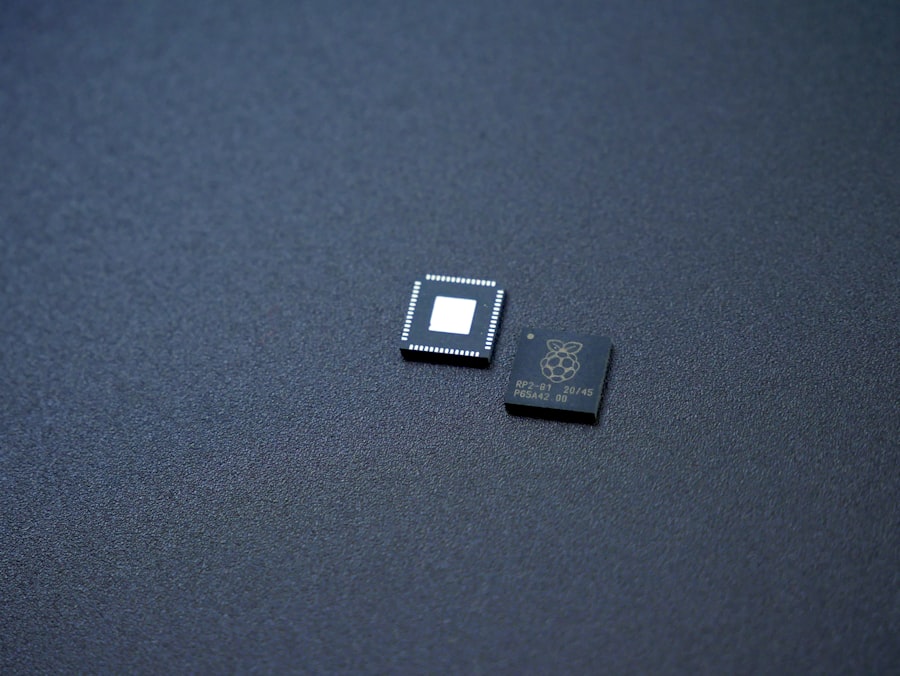
The influence of semiconductors extends far beyond personal devices. They are the backbone of countless industries and technologies that shape our global society.
The Digital Infrastructure: The Internet and Cloud Computing
The internet, a sprawling network of interconnected computers, and the massive data centers that power cloud computing would be impossible without semiconductors.
Networking Equipment
Routers, switches, and modems – the devices that direct internet traffic – are packed with high-performance semiconductor chips. These components are responsible for processing and forwarding vast amounts of data at incredible speeds.
Server Processors and Memory
The servers that host websites, store your cloud data, and run complex applications are powered by specialized, high-density semiconductor processors and copious amounts of memory. The sheer computational power required for these operations is only achievable through advanced semiconductor technology.
Advanced Technologies: Artificial Intelligence and Machine Learning
The current explosion in Artificial Intelligence (AI) and Machine Learning (ML) is inextricably linked to advancements in semiconductor technology.
Specialized AI Accelerators
Training and running complex AI models require immense computational power. This has led to the development of specialized semiconductor chips, such as Graphics Processing Units (GPUs) originally designed for gaming, and dedicated AI accelerators like Tensor Processing Units (TPUs). These chips are optimized for the parallel processing tasks that dominate AI workloads.
Neural Network Chips
Researchers are also developing novel semiconductor architectures specifically designed to mimic the structure and function of the human brain’s neural networks. These neuromorphic chips hold the promise of even more efficient and powerful AI.
The Real World: Automotive and Industrial Applications
Semiconductors are silently transforming industries that were once considered purely mechanical.
The Modern Automobile
Your car is a sophisticated computer on wheels. Engine control units, infotainment systems, advanced driver-assistance systems (ADAS), and even basic functions like power windows rely on an astonishing number of semiconductor chips. Autonomous driving, in particular, demands massive processing power and real-time decision-making capabilities enabled by these components.
Industrial Automation and Robotics
In factories and industrial settings, semiconductors are the keys to automation and efficiency. Programmable Logic Controllers (PLCs), robotic arms, and sensor networks all depend on reliable and powerful semiconductor components to operate. This leads to increased productivity, improved safety, and the ability to manufacture complex goods with higher precision.
Understanding why semiconductors matter is crucial in today’s technology-driven world. For a deeper insight into their significance, you can explore a related article that discusses the role of semiconductors in various industries and their impact on global economies. This article provides valuable information on how these tiny components are essential for everything from smartphones to electric vehicles. To read more about this topic, check out this informative piece here.
The Future is Silicon (and Beyond): Emerging Trends and Challenges
| Reason | Importance |
|---|---|
| Powering electronic devices | Enables the functioning of smartphones, computers, and other gadgets |
| Driving innovation | Facilitates the development of new technologies and products |
| Economic impact | Contributes significantly to the global economy |
| National security | Essential for defense and security systems |
The semiconductor industry is not static; it is a field of constant innovation, always striving to push the boundaries of what’s possible. However, this relentless progress also brings new challenges.
The Quest for Smaller, Faster, and More Efficient
The pursuit of “smaller, faster, and more efficient” continues to drive research and development.
Advanced Lithography Techniques
Creating ever-smaller transistors requires increasingly sophisticated lithography techniques. Extreme ultraviolet (EUV) lithography is the current state-of-the-art, allowing for the patterning of incredibly fine features on silicon wafers.
New Materials and Architectures
While silicon remains dominant, researchers are exploring alternative materials like graphene and gallium nitride (GaN) for specific applications where they offer advantages in speed, power handling, or efficiency. New chip architectures, such as 3D stacking of components, are also being developed to overcome the physical limitations of traditional planar designs.
The Geopolitical Landscape of Semiconductors
The critical importance of semiconductors has also brought them to the forefront of global economics and politics.
Supply Chain Vulnerabilities
The concentration of semiconductor manufacturing in a few key regions has highlighted the fragility of the global supply chain. Disruptions, whether due to natural disasters, political tensions, or pandemics, can have far-reaching consequences for industries worldwide. You’ve seen the impact of semiconductor shortages on everything from car production to the availability of consumer electronics.
National Security and Economic Competition
Access to advanced semiconductor technology is increasingly viewed as a matter of national security and economic competitiveness. Governments are investing heavily in domestic chip manufacturing capabilities and research to ensure their technological independence and leadership. This is leading to a global race to develop and secure advanced semiconductor capabilities.
The Environmental Imperative
The production of semiconductors is an energy-intensive and resource-heavy process.
Sustainable Manufacturing Practices
The industry faces growing pressure to adopt more sustainable manufacturing practices, reduce its carbon footprint, and minimize waste. This includes developing more efficient manufacturing processes, recycling materials, and utilizing renewable energy sources.
Energy Efficiency in Devices
Ultimately, the energy efficiency of the semiconductors themselves directly impacts the overall energy consumption of the devices and systems they power. Continued innovation in this area is crucial for a more sustainable digital future.
In conclusion, you are living in an era defined by semiconductors. They are the silent architects of your digital world, the indispensable enablers of innovation, and the driving force behind the technologies that are reshaping your future. Understanding their importance is not just an academic exercise; it is a key to comprehending the modern world and anticipating the technological marvels yet to come.

The Taiwan Strait: The Most Dangerous Place in the Global Economy
FAQs
What are semiconductors?
Semiconductors are materials that have electrical conductivity between that of a conductor and an insulator. They are the foundation of modern electronics and are used in a wide range of devices, including computers, smartphones, and solar panels.
Why do semiconductors matter?
Semiconductors are crucial for the functioning of modern technology. They enable the creation of transistors, which are the building blocks of electronic devices. Without semiconductors, many of the devices we rely on today would not be possible.
How do semiconductors work?
Semiconductors work by controlling the flow of electrical current. By manipulating the behavior of electrons within the material, semiconductors can be used to create electronic components such as diodes, transistors, and integrated circuits.
What are some common applications of semiconductors?
Semiconductors are used in a wide range of applications, including computer processors, memory chips, LED lights, solar cells, and sensors. They are also essential for the development of emerging technologies such as artificial intelligence and quantum computing.
What is the future of semiconductors?
The future of semiconductors is expected to involve continued advancements in technology, leading to smaller, faster, and more efficient electronic devices. Additionally, there is ongoing research into new materials and technologies that could further expand the capabilities of semiconductors.