
You stand at the precipice of understanding a military force that has undergone a profound transformation. The People’s Liberation Army (PLA) of China is no longer the conscript army of decades past, bogged down by ideology and rudimentary equipment. Today, you are looking at a rapidly modernizing, technologically advanced, and strategically sophisticated force, one that commands global attention and warrants your careful examination. To truly grasp its capabilities and intentions, you must move beyond generalizations and delve into the intricate layers of its military strategy and tactics. This is not an exercise in fear-mongering or alarmism, but a necessary undertaking to comprehend the evolving global security landscape. You are about to embark on a journey to unveil the PLA’s strategic thinking, dissect its operational methodologies, and explore the nuances that define its approach to warfare in the 21st century.
You cannot understand the PLA’s current tactics without first appreciating the intellectual bedrock upon which they are built. Chinese military thought, while influenced by historical precedents and contemporary geopolitical realities, has evolved significantly. It’s a system that blends traditional strategic wisdom with a voracious appetite for adopting and adapting cutting-edge military technologies and doctrines.
The Legacy of Sun Tzu and Other Ancient Strategists
You might initially dismiss the relevance of ancient texts in the age of hypersonic missiles and cyber warfare, but to do so would be a mistake. The principles articulated by Sun Tzu in “The Art of War” are deeply embedded in Chinese military culture. You will find echoes of his wisdom in the PLA’s emphasis on deception, knowing your enemy and yourself, and achieving victory with minimal bloodshed. Concepts like shi (strategic advantage or momentum) and wei qi (surrounding the enemy) are not just historical footnotes; they inform operational planning and strategic maneuvering. You’ll see how this philosophical heritage fosters a long-term, patient approach to strategic objectives, preferring to outmaneuver and outthink rather than engage in direct, attritional warfare. Beyond Sun Tzu, you can also discern influences from other strategists who prioritized strategic positioning, economic warfare, and psychological manipulation. This foundational understanding provides a crucial lens through which to interpret the PLA’s actions and pronouncements.
The Influence of Deng Xiaoping’s “Unhurried Military Buildup”
The path to the PLA’s current status began with Deng Xiaoping’s strategic vision in the late 20th century. His dictum of an “unhurried military buildup” allowed China to focus on economic growth while steadily modernizing its defense capabilities. You can see the fruits of this long-term planning today. This era emphasized gradual but persistent technological advancement, learning from foreign military systems, and building indigenous defense industrial capacity. It was a strategic patience, a calculated approach that avoided provoking immediate backlash while laying the groundwork for future power projection. You will notice how this philosophy has fostered a culture of continuous improvement and adaptation within the PLA, a willingness to experiment and learn from both successes and failures. This measured approach has allowed for a more sustainable and comprehensive transformation than a rapid, externally driven buildup might have achieved.
The Concept of “Active Defense”
The cornerstone of China’s official military doctrine is “active defense.” This isn’t a passive stance; rather, it’s a proactive strategy designed to deter aggression and shape the security environment in China’s favor. You will find that “active defense” encompasses a range of capabilities and operational behaviors. It means being prepared to defend national interests decisively if they are threatened, but also to take the initiative to prevent threats from materializing. This can manifest as forward presence, capacity building in strategically important regions, and the development of robust deterrent capabilities. You’ll also observe how this doctrine allows for a degree of ambiguity, making it harder for adversaries to predict China’s responses and potentially increasing the perceived cost of challenging China’s interests. It’s a strategy that seeks to control the narrative and the battlefield before or at the onset of conflict, rather than relying solely on a reactive response.
In recent discussions about Chinese military strategy, it is essential to consider the implications of their expanding naval capabilities and regional influence. A related article that delves into these themes is available at this link: Chinese Military Strategy and Naval Expansion. This article provides insights into how China’s military developments are shaping its geopolitical ambitions and the potential consequences for global security dynamics.
The PLA’s Evolving Operational Concepts
Beyond its strategic underpinnings, the PLA is actively developing and refining its operational concepts to meet the challenges of modern warfare. You’ll see a significant shift from large-scale, land-centric operations to a more integrated, multi-domain approach.
“Jointness” and Integrated Operations
A primary focus for the PLA has been the concept of “jointness”—the ability to seamlessly integrate forces from different branches of the military (Army, Navy, Air Force, Rocket Force, Strategic Support Force) to achieve common objectives. You are witnessing a transition away from stove-piped operations towards a more unified command structure and coordinated action. This involves establishing robust command and control systems that allow for rapid information sharing and synchronized execution across all domains. You’ll see how exercises are increasingly designed to test this joint capability, involving complex scenarios that require the coordinated employment of air, sea, land, space, and cyber assets. The aim is to create a synergistic effect where the combined strength of different services far exceeds the sum of their individual parts.
Information Warfare and Cyber Operations
In the contemporary battlespace, information is a critical weapon. The PLA has made substantial investments in its Information Warfare (IW) capabilities, which encompass cyber warfare, electronic warfare (EW), psychological operations (PSYOPs), and even the manipulation of social media. You will find that China views information dominance as a prerequisite for success in any modern conflict. This includes developing offensive cyber capabilities to disrupt enemy networks, intelligence, surveillance, and reconnaissance (ISR) assets, and critical infrastructure. Simultaneously, they are bolstering their defensive cyber posture to protect their own networks. You’ll also observe the growing importance of EW, which involves jamming, spoofing, and disrupting enemy communications and sensor systems, effectively blinding and disorienting them. The integration of these capabilities with traditional kinetic operations is a hallmark of 21st-century warfare, and the PLA is a keen proponent of this approach.
“System Destruction Warfare” and Asymmetric Approaches
You will encounter the concept of “System Destruction Warfare,” which reflects the PLA’s ambition to rapidly defeat an adversary by targeting and debilitating their entire system of systems—their command and control, logistics, ISR, and offensive capabilities. This is often achieved through the coordinated use of precision-guided munitions, anti-access/area-denial (A2/AD) strategies, and asymmetric tactics. The PLA recognizes that it may not always have quantitative superiority in all domains against a technologically advanced adversary. Therefore, it focuses on developing qualitative advantages and exploiting an enemy’s vulnerabilities. This can involve using cost-effective but disruptive technologies to achieve disproportionate effects, or employing unconventional methods to bypass an adversary’s strengths. You’ll see how this doctrine encourages innovation and a willingness to embrace novel solutions to achieve strategic objectives.
The PLA’s Modernization and Force Structure
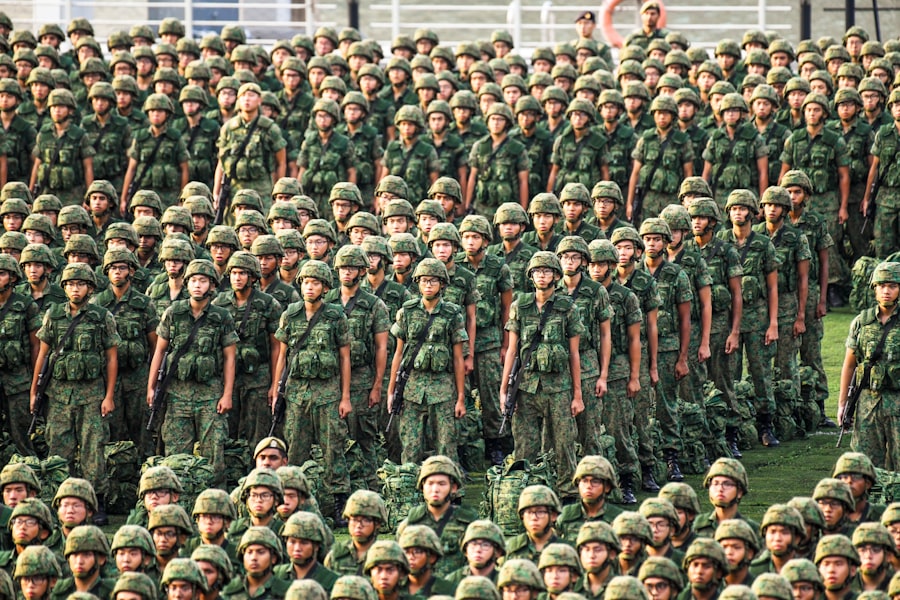
The PLA’s modernization drive is not just about acquiring new equipment; it’s about transforming its force structure and organizational culture to better execute its evolving operational concepts. You are observing a significant shift in emphasis and resource allocation.
Naval Expansion and “Blue Water” Ambitions
The People’s Liberation Army Navy (PLAN) has undergone a dramatic expansion, transforming from a coastal defense force into a capable blue-water navy. You will see evidence of this in the construction of aircraft carriers, advanced submarines, amphibious assault ships, and a growing fleet of modern surface combatants. This expansion is driven by China’s expanding global economic interests and its increasing desire to project power and influence far from its shores. You’ll observe the PLAN’s growing operational tempo in the Indo-Pacific and beyond, its participation in international exercises, and its focus on developing carrier strike group capabilities. This allows China to secure its sea lanes of communication, protect its overseas investments, and potentially intervene in regional crises or conduct power projection operations.
Air Force Modernization and Projecting Air Power
The People’s Liberation Army Air Force (PLAAF) has also seen a remarkable transformation, moving away from largely defensive capabilities to a force capable of projecting air power over long distances. You will witness the introduction of advanced fighter jets, bombers, transport aircraft, and a sophisticated array of airborne early warning and control (AEW&C) systems, as well as mid-air refueling capabilities. This modernization allows the PLAAF to conduct deep penetration strikes, provide close air support for ground and naval forces, and establish air superiority over contested areas. You’ll see how the PLAAF is increasingly operating in contested airspace, conducting patrols and exercises that challenge existing norms and demonstrate its growing reach and capability.
The Role of the Rocket Force and Strategic Deterrence
The PLA Rocket Force (PLARF), formerly known as the Second Artillery Corps, is the linchpin of China’s strategic deterrence. You will find that it possesses a diverse arsenal of conventional and nuclear ballistic and cruise missiles, including some of the most advanced systems in the world. The PLARF is crucial for delivering precision strikes against high-value targets, both regionally and potentially globally, and for maintaining China’s nuclear deterrent. You’ll observe a growing emphasis on survivability, mobility, and accuracy of its missile systems, along with the development of hypersonic glide vehicles, which aim to bypass existing missile defense systems. This force is central to China’s ability to deter aggression and to achieve strategic objectives without necessarily resorting to direct kinetic conflict.
The Strategic Support Force (SSF) and Multi-Domain Operations
Perhaps one of the most significant recent developments is the establishment of the Strategic Support Force (SSF). You can think of the SSF as China’s dedicated force for information warfare, space operations, and cyber warfare. This integration of these crucial domains under a single command structure is designed to facilitate seamless coordination and rapid deployment of capabilities. You will see the SSF playing a critical role in all aspects of modern warfare, providing intelligence, conducting electronic warfare, disrupting enemy communications, and potentially engaging in offensive cyber operations. Its existence signals a clear understanding within the PLA that future conflicts will be fought across multiple domains simultaneously, and that success will depend on the ability to dominate the informational and technological battlefields.
Key PLA Tactics in Practice
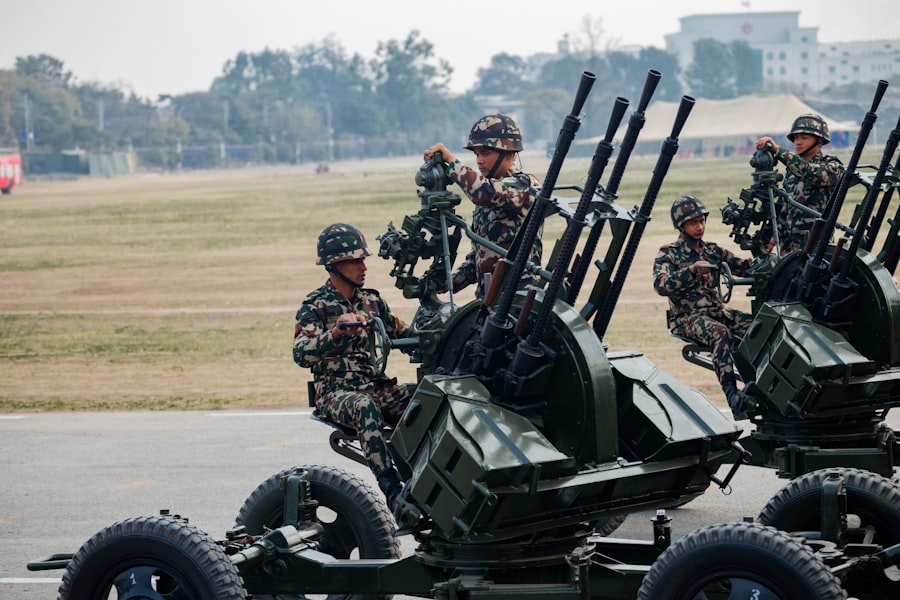
With the strategic and structural foundations in place, you can now examine some of the specific tactics the PLA employs or is developing. These are not exhaustive lists, but rather illustrative examples of their operational thinking.
Anti-Access/Area Denial (A2/AD) Strategies
You will frequently encounter the term A2/AD when discussing Chinese military strategy. This is a core tactic designed to prevent an adversary, particularly the United States, from operating freely within China’s perceived sphere of influence. You’ll see how A2/AD is implemented through a layered defense system that includes anti-ship ballistic missiles (ASBMs), advanced fighter jets, submarines, anti-access mines, electronic warfare capabilities, and sophisticated air and missile defense systems. The goal is to make any potential intervention in a conflict scenario prohibitively costly for an adversary. This could involve sinking aircraft carriers, destroying staging bases, or degrading an enemy’s ability to project power. You’ll observe how this strategy aims to create a “decisive zone” where China has a significant advantage.
Precision Strike and Decisive Attacks
The PLA has heavily invested in precision-guided munitions (PGMs) and the associated ISR capabilities to deliver accurate strikes against high-value targets. You will see a focus on identifying and neutralizing enemy command centers, airfields, naval vessels, and critical infrastructure with speed and accuracy. This tactic aims to disrupt an adversary’s ability to wage war effectively in its initial stages, thereby achieving a rapid and decisive victory. This can also involve the use of ballistic and cruise missiles, as well as precision-guided bombs dropped by aircraft. The emphasis is on minimizing collateral damage while maximizing the strategic impact of each strike.
Deception and Psychological Warfare
Echoing the ancient masters, the PLA continues to value deception and psychological operations. You can expect to see attempts to mislead adversaries about intentions, capabilities, and operational plans. This can manifest in various ways, including disinformation campaigns, the use of decoys, and the staging of exercises to mask real operational preparations. Psychological warfare is also a critical component, aiming to undermine enemy morale and sow discord among the populace. You’ll observe how the PLA may leverage social media and other information channels to influence public opinion and shape narratives both domestically and internationally.
Swarming Tactics and Distributed Operations
In certain scenarios, you might see evidence of the PLA exploring swarming tactics and distributed operations, particularly in naval and air domains. This involves the coordinated deployment of a large number of smaller, less sophisticated but networked platforms to overwhelm an adversary’s defenses. For example, this could involve hundreds of unmanned aerial vehicles (UAVs) or small unmanned surface vessels (USVs) being deployed simultaneously. The idea is to create a saturation effect that makes it difficult for an adversary to track and engage every threat. You’ll observe how this tactic leverages networked technology and mass to achieve operational objectives, often at a lower cost than employing fewer, more expensive platforms.
In recent discussions about Chinese military strategy, an insightful article can be found that delves into the nuances of China’s defense posture and its implications for global security. This piece highlights the evolving nature of military tactics and the strategic objectives that drive China’s actions on the world stage. For a deeper understanding of these dynamics, you can read more in the article available at this link.
The Future Trajectory and Implications
| Aspect | Details |
|---|---|
| Doctrine | Emphasis on “active defense” and “winning local wars under informationized conditions” |
| Capabilities | Investment in advanced weaponry, cyber warfare, and space capabilities |
| Regional Focus | South China Sea, Taiwan, and border disputes with India |
| Modernization | Shift towards joint operations, integrated air defense, and expeditionary capabilities |
| Strategic Goals | Asserting territorial claims, deterring potential adversaries, and projecting power regionally |
Understanding the PLA’s evolving strategy and tactics is crucial for comprehending its future role on the global stage. You are not just analyzing military doctrine; you are examining the potential implications for regional and global security.
The Quest for Regional Hegemony and Global Influence
You will find that the PLA’s modernization and strategic evolution are intrinsically linked to China’s ambitions for regional hegemony in the Indo-Pacific and its growing desire for global influence. You will see how the PLA’s capabilities are being developed to assert China’s territorial claims, secure its economic interests, and project its political power. This can manifest through increased naval presence in disputed waters, more assertive air patrols, and a greater willingness to use military power or the threat of it to achieve diplomatic objectives. You’ll observe how this growing assertiveness is reshaping the security dynamics of the Indo-Pacific, prompting greater defense cooperation among regional actors and a recalibration of global alliances.
Technological Advancement and the Arms Race
The PLA’s relentless pursuit of technological superiority is not happening in a vacuum. You are witnessing a dynamic where advancements in Chinese military technology are spurring similar developments in other nations, leading to a potential arms race. You will see investments in artificial intelligence (AI), quantum computing, directed energy weapons, and advanced robotics, all of which are being integrated into military applications. This technological competition has the potential to destabilize existing power balances and create new forms of conflict. You’ll observe how the development of these cutting-edge technologies further complicates strategic calculations and raises the stakes in any potential military confrontation.
The Importance of Continuous Intelligence and Analysis
For you, as an observer of global security, the key takeaway is the absolute necessity of continuous intelligence gathering and rigorous analysis. The PLA’s strategy and tactics are dynamic, constantly adapting to new technological developments, geopolitical shifts, and lessons learned from exercises and real-world events. You cannot afford to be complacent or rely on outdated information. You must maintain a commitment to understanding the nuances of its doctrine, the specifics of its force modernization, and the observable behaviors that signal its intentions. This ongoing effort is vital for informed decision-making, effective diplomacy, and the maintenance of international peace and stability. You are witnessing a force undergoing a profound transformation, and your informed understanding is your greatest asset in navigating this evolving landscape.

The Taiwan Strait: The Most Dangerous Place in the Global Economy
FAQs
What is Chinese military strategy?
Chinese military strategy refers to the overall plan and approach that the People’s Liberation Army (PLA) of China uses to achieve its military objectives. It encompasses a wide range of tactics, technologies, and doctrines aimed at defending China’s territorial integrity and national interests.
What are the key components of Chinese military strategy?
The key components of Chinese military strategy include the concept of “active defense,” which emphasizes the use of offensive operations to protect China’s national sovereignty and territorial integrity. Additionally, the PLA focuses on developing capabilities in areas such as cyber warfare, space warfare, and information warfare.
How does Chinese military strategy differ from other countries’ strategies?
Chinese military strategy differs from other countries’ strategies in its emphasis on asymmetric warfare, which involves using unconventional tactics and technologies to counter a more powerful adversary. Additionally, the PLA places a strong emphasis on the integration of civilian and military resources to achieve its strategic objectives.
What are China’s military modernization efforts aimed at?
China’s military modernization efforts are aimed at transforming the PLA into a more technologically advanced and capable fighting force. This includes investments in areas such as advanced weaponry, cyber capabilities, and space-based assets, as well as the development of a more agile and flexible command structure.
How does Chinese military strategy impact regional and global security?
Chinese military strategy has significant implications for regional and global security, particularly in the Asia-Pacific region. The PLA’s growing capabilities and assertiveness in territorial disputes, such as in the South China Sea, have raised concerns among neighboring countries and the international community about the potential for conflict and instability.