The relationship between Russia and the North Atlantic Treaty Organization (NATO) is a complex tapestry woven with threads of historical mistrust, geopolitical maneuvering, and evolving security paradigms. What began as a confrontation between opposing Cold War blocs has, in the post-Soviet era, transformed into a dynamic characterized by a deepening chasm of suspicion and a palpable sense of direct confrontation. The recent trajectory of these relations, particularly in the wake of Russia’s full-scale invasion of Ukraine in 2022, has propelled them to a level of tension unseen since the final days of the Cold War, prompting dire warnings of global conflict and a renewed urgency within the alliance to solidify its defenses against a newly defined adversary.
The origins of the enduring friction between Russia and NATO lie buried in the ideological and military confrontation of the Cold War. The establishment of NATO in 1949 was a direct response to the perceived threat of Soviet expansionism. It was a defensive alliance designed to provide collective security for Western European nations and North America against a unified communist bloc, with the Soviet Union at its core.
The Formation of NATO: A Shield Against Soviet Ambition
From the Soviet perspective, NATO’s formation was an aggressive act, a clear signal of the West’s hostile intent. The alliance’s Article 5, stipulating that an attack on one member is an attack on all, was seen as an encircling maneuver, designed to contain and ultimately dismantle the Soviet system. The subsequent formation of the Warsaw Pact in 1955 was the Soviet Union’s retaliatory response, solidifying the bipolar world order and creating a clear division across Europe. For decades, this adversarial relationship shaped global politics, fueled an arms race, and created a constant undercurrent of fear of a catastrophic conflict.
The Dissolution of the Soviet Union: A Glimpse of Hope, a Seeds of Resentment
The collapse of the Soviet Union in 1991 initially offered a tantalizing prospect of a new era of cooperation and integration. Many in the West believed that Russia, now a democratic state, would readily embrace the principles of the international order and seek partnership with NATO. However, this optimistic outlook soon began to fray, giving way to a growing sense of disillusionment within Russia.
The Promise of a “Europe Whole and Free” and the Unfulfilled Expectations
The early post-Soviet years were marked by a rhetoric of inclusion and a vision of a Europe “whole and free.” The idea was that former Warsaw Pact members, now independent nations, would be free to choose their own security arrangements. Yet, for Russia, the subsequent eastward expansion of NATO, which began in 1999 with the accession of Poland, Hungary, and the Czech Republic, was interpreted not as a reflection of these nations’ free choice, but as a betrayal of promises allegedly made by Western leaders that NATO would not expand eastward. This perceived breach of trust became a foundational grievance for Russia, fueling a deep-seated insecurity and a belief that it had been “cheated” by the West.
The complex history between Russia and NATO has been shaped by a series of pivotal events and geopolitical shifts, which are thoroughly explored in the article titled “The Evolution of NATO-Russia Relations.” This piece delves into the origins of NATO, the post-Cold War dynamics, and the ongoing tensions that characterize the relationship today. For a deeper understanding of these historical intricacies, you can read the article here: The Evolution of NATO-Russia Relations.
NATO’s Eastern Expansion: A Red Flag for Moscow
The continued eastward expansion of NATO in the decades following the Cold War has been a central and highly contentious issue in Russia-NATO relations. What NATO viewed as the natural progression of sovereign nations seeking security, Russia increasingly saw as a direct threat to its own security interests and sphere of influence.
The First Waves of Expansion: Integrating Former Warsaw Pact Allies
The initial wave of NATO expansion in 1999 was followed by further enlargements in 2004, bringing in the Baltic states (Estonia, Latvia, and Lithuania), Bulgaria, Romania, Slovakia, and Slovenia. These nations, many of which had once been under Soviet domination, saw NATO membership as a crucial safeguard against any potential resurgence of Russian assertiveness. From Moscow’s perspective, however, this was a direct encroachment upon its historical security zone, bringing an adversarial military alliance to its very doorstep.
The Balkan Interventions: Erosion of Trust and Increased Suspicion
NATO’s interventions in the Balkans, particularly the 1999 bombing campaign against Serbia without a UN Security Council mandate, further eroded trust between Russia and the alliance. Russia viewed these actions as a violation of international law and an assertion of Western dominance. This event deepened the perception in Moscow that NATO was no longer purely a defensive alliance but was willing to act unilaterally and aggressively, further solidifying its view of NATO as a threat rather than a partner.
The Unfulfilled Promise of Partnership: The Russia-NATO Council
In an attempt to bridge the growing divide, the NATO-Russia Council was established in 2002. This forum was intended to foster dialogue and cooperation between Russia and the alliance. However, the council’s effectiveness was consistently hampered by fundamental disagreements on key security issues, notably NATO expansion and Russia’s actions in its near abroad. The council ultimately failed to prevent the deepening of mistrust and instead became a platform for airing grievances.
The 2022 Invasion of Ukraine: A Cataclysmic Turning Point

Russia’s full-scale invasion of Ukraine in February 2022 marked a seismic shift in the relationship between Russia and NATO, shattering any lingering illusions of détente and ushering in an era of unprecedented hostility. The invasion was not only a brutal act of aggression but also a direct challenge to the security architecture of Europe, prompting a decisive and unifying response from the NATO alliance.
The Kremlin’s Rationale and the Perception of Existential Threat
The Kremlin’s stated justifications for the invasion were complex and multifaceted, often citing the alleged “denazification” of Ukraine and the need to protect Russian-speaking populations. However, underlying these pronouncements was a deep-seated grievance that Ukraine’s potential accession to NATO posed an existential threat to Russia. Vladimir Putin had repeatedly warned against NATO expansion and had seen Ukraine’s westward leanings as a provocation that could not be tolerated.
NATO’s Unified Response: Reinforcement and Support for Ukraine
In the immediate aftermath of the invasion, NATO members overwhelmingly condemned Russia’s actions and acted swiftly to bolster the alliance’s defenses on its eastern flank. There was a significant increase in troop deployments to countries bordering Russia and Ukraine, underscoring NATO’s commitment to collective security. Simultaneously, NATO members provided extensive military and financial aid to Ukraine, enabling its resistance against the Russian onslaught.
The Designation of “Direct Confrontation”: A New Reality
The consequences of the invasion have fundamentally reshaped the language and perception of the Russia-NATO relationship. The Kremlin has now officially designated relations between Russia and NATO as having slipped to the level of “direct confrontation.” Spokesperson Dmitry Peskov has accused the alliance of moving military infrastructure closer to Russia’s borders, a claim that NATO disputes, arguing its deployments are defensive in nature. This official pronouncement signifies a grave deterioration of diplomatic ties and an acknowledgment of the stark reality of escalating tensions.
The Strategic Concept and the Defining of Russia as a Threat
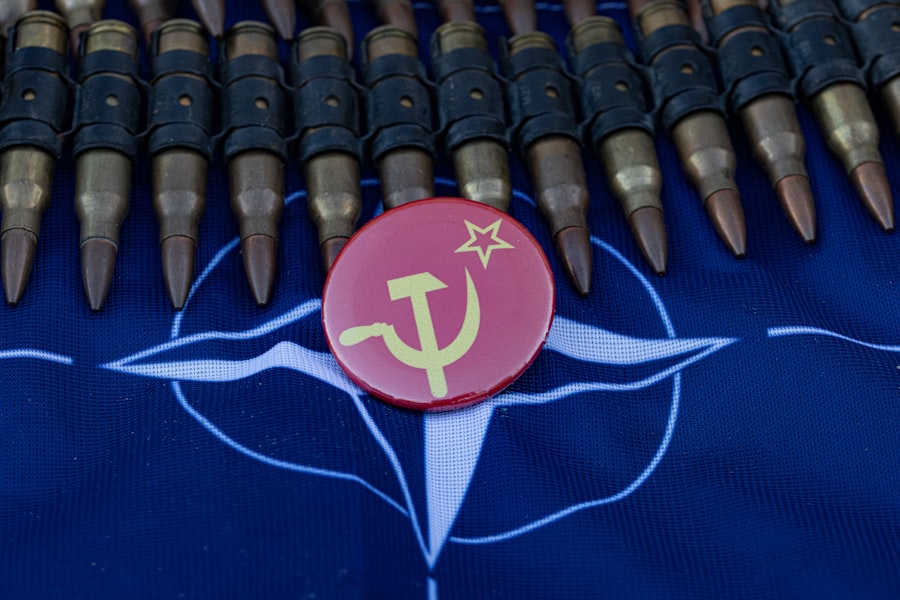
NATO’s revised Strategic Concept, adopted in 2022, explicitly defines Russia as “the most significant and direct threat to Allied security.” This designation represents a stark departure from previous concepts and underscores the profound shift in the alliance’s threat assessment, driven directly by Russia’s aggressive actions.
Acknowledging the “Most Significant Threat”
The wording in the Strategic Concept leaves no room for ambiguity. It is a clear and unequivocal declaration that Russia’s current policies and military posture are viewed by NATO as an immediate and substantial danger to the security of its member states. This declaration is a direct consequence of the invasion of Ukraine and the subsequent destabilization of the European security order.
The Breakdown of Post-Cold War Order
This explicit labeling signifies a complete breakdown of the post-Cold War security order, which had, however imperfectly, sought to integrate Russia into a broader European security framework. The concept acknowledges that the foundational principles of international law and sovereign territorial integrity have been violated by Russia, thus necessitating a fundamental reassessment of the alliance’s posture.
The Impact on Alliance Cohesion and Preparedness
The threat perception outlined in the Strategic Concept has had a galvanizing effect on NATO. It has reinforced the alliance’s sense of purpose and underscored the importance of its collective defense mandate. This declaration has also fueled increased defense spending among member states and a renewed focus on military preparedness and modernization.
The complex history between Russia and NATO has been shaped by a series of events that have influenced international relations for decades. Understanding this intricate relationship can provide valuable insights into current geopolitical tensions. For a deeper exploration of the historical context and key developments, you can read a related article that delves into the evolution of NATO and its interactions with Russia over the years. This article can be found here.
Encroaching on NATO Airspace and Hybrid Warfare: Escalating Incidents
| Year | Event |
|---|---|
| 1949 | Formation of NATO |
| 1955 | Formation of the Warsaw Pact |
| 1991 | Dissolution of the Warsaw Pact |
| 1997 | NATO-Russia Founding Act |
| 2008 | Conflict between Russia and Georgia |
| 2014 | Annexation of Crimea by Russia |
| 2014 | NATO suspends practical cooperation with Russia |
| 2016 | NATO-Russia Council meetings resume |
Beyond the overarching strategic shifts, recent months have been punctuated by a series of concerning incidents, including airspace incursions and disruptions to critical infrastructure, which underscore the volatile nature of the current environment and the potential for unintended escalation.
Russian Airspace Incursions: A Test of Resolve
The incident involving Russian fighter jets intruding into Estonian airspace for a sustained period of 12 minutes serves as a stark reminder of the delicate nature of air borders. Such incursions, even if brief, are viewed as deliberate provocations and a test of NATO’s air defense capabilities and its willingness to respond decisively.
Drone Incidents and Disruptions to Infrastructure
The disruption of Danish and Polish infrastructure by drones, and subsequently Poland shooting down suspected Russian drones, represents a troubling new dimension to the conflict. The shooting down of drones within NATO airspace marks the first aerial confrontation of its kind in the alliance’s history, highlighting the tangible proximity of the conflict and the potential for direct engagement. These drone incidents, often described as part of a “hybrid warfare” strategy, aim to sow confusion, disrupt operational capabilities, and test the limits of NATO’s response.
Activation of Article 4: A Signal of Acute Instability
Poland’s activation of Article 4 of the NATO charter for emergency consultations signifies the acute instability felt on the alliance’s eastern frontier. Article 4 allows any NATO member to request consultations if it believes its territorial integrity, political independence, or security is threatened. This activation underscores the gravity of the security concerns felt by frontline states and the collective recognition of a shared threat.
The Specter of World War Three: Near-Apocalyptic Warnings and Red Lines
The escalating tensions have prompted stark warnings from both sides, with Russian President Vladimir Putin acknowledging the potential for a direct conflict to push the planet closer to World War Three, while NATO leaders have drawn firm red lines regarding territorial violations.
Putin’s Warnings of Global Conflict
Vladimir Putin’s pronouncements about the potential for a direct conflict between Russia and NATO to trigger a third World War are a chilling reminder of the existential stakes involved. These warnings, while potentially serving as a deterrent, also reflect the perceived high stakes and the dangerous trajectory of current events.
NATO’s Firm Stance on Airspace Violations
Conversely, NATO leaders have been equally unequivocal in their response to potential provocations. Their explicit statements that they would take action against Russian military aircraft violating NATO airspace signal a clear red line. This assertive stance is designed to deter further incursions and to reassure member states of the alliance’s commitment to defending its territory. The commitment to defend every inch of NATO territory is a fundamental tenet of the alliance, and any perceived violation will be met with a strong and unified response.
The Finland and Sweden Accessions: A New European Security Landscape
In a significant development that directly contradicts Putin’s stated aim of preventing NATO expansion, Russia’s invasion of Ukraine has catalyzed the accession of Finland and Sweden to the alliance. Finland became a member in April 2023, and Sweden followed in March 2024. These historic shifts, driven by a newfound urgency for security in the face of Russian aggression, have fundamentally altered the security landscape of Northern Europe and the Baltic Sea region, adding a new dimension to the already complex Russia-NATO dynamic and further tightening the alliance’s borders around Russia’s periphery. The historical neutrality of these nations has been overcome by the palpable threat posed by their neighbor.
The complex history of Russia and NATO is a narrative of missed opportunities and deepening animosities. From the ideological battles of the Cold War to the perceived betrayals of the post-Soviet era and the direct confrontation of today, the relationship remains fraught with peril. The recent escalations and the stark rhetoric on both sides point to a prolonged period of heightened tension, with the specter of wider conflict never far from the forefront of global security concerns. The future of this crucial relationship hinges on a delicate balance of deterrence, de-escalation, and the potential for a renewed dialogue, however distant that prospect may seem.

Why Russia Can Never Feel Safe
FAQs
1. What is the history of Russia and NATO relations?
The history of Russia and NATO relations dates back to the end of the Cold War, when the Soviet Union dissolved and Russia emerged as an independent state. In 1991, Russia joined the North Atlantic Cooperation Council, a forum for dialogue and cooperation between NATO and non-NATO countries. However, tensions have arisen over NATO’s expansion into former Soviet bloc countries and Russia’s annexation of Crimea in 2014.
2. When did Russia and NATO officially establish relations?
Russia and NATO officially established relations in 1997 with the signing of the Founding Act on Mutual Relations, Cooperation and Security. This document outlined the principles of cooperation between the two parties, including mutual respect for sovereignty, territorial integrity, and the refraining from the threat or use of force.
3. What are the key points of contention between Russia and NATO?
Key points of contention between Russia and NATO include NATO’s expansion into Eastern Europe, the deployment of missile defense systems in the region, and Russia’s annexation of Crimea. Additionally, disagreements over military exercises, cybersecurity, and the conflict in Ukraine have further strained relations.
4. How has Russia responded to NATO’s expansion?
Russia has responded to NATO’s expansion by expressing concerns about the encroachment of Western military forces on its borders. Russia has also increased its military presence in response to NATO’s activities, including conducting military exercises and deploying advanced missile systems.
5. What efforts have been made to improve Russia-NATO relations?
Efforts to improve Russia-NATO relations have included diplomatic dialogue, confidence-building measures, and arms control agreements. However, tensions persist, and both sides continue to engage in military posturing and strategic competition.