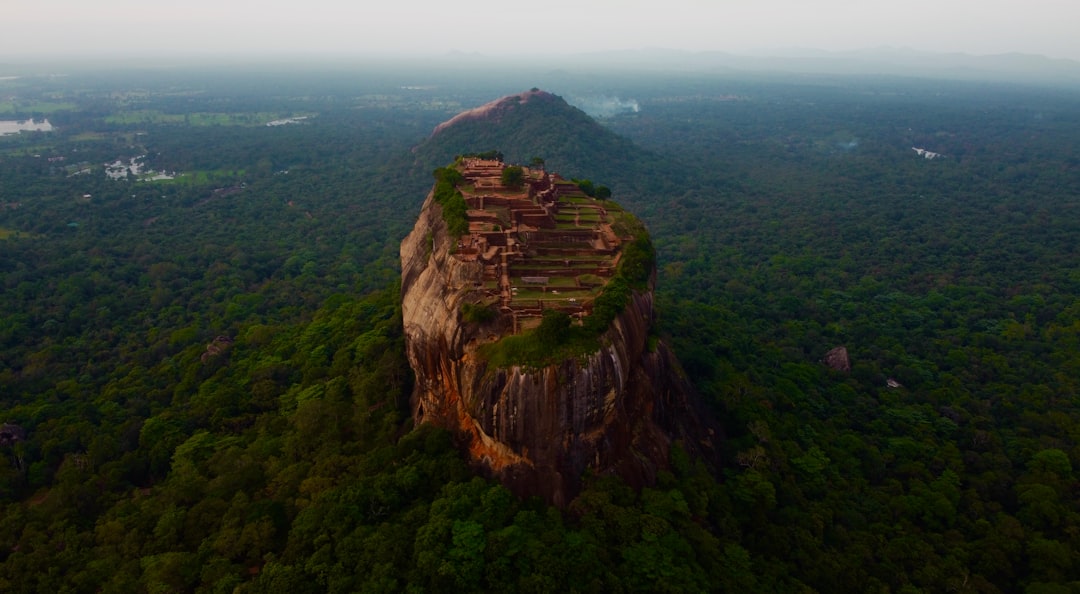
So, you’re interested in Sri Lanka’s geographic quirks and a documentary exploring them. The main idea is that Sri Lanka, despite its relatively small size, packs a surprising punch when it comes to unusual geological features and patterns. This documentary aims to dive into these, explaining why they exist and what makes them stand out.
Sri Lanka’s geography isn’t just about beaches and mountains. There’s a deeper, more complex story etched into its land, and this documentary seems to be all about uncovering those less obvious features. It’s not just the “wow” factor of a unique landscape that’s interesting; it’s understanding the processes that created it.
The Island’s Ancient Foundations
Before we even think about what we see on the surface, it’s essential to grasp what lies beneath. Sri Lanka’s geological history is a long and dramatic one, and that history dictates a lot of its present-day characteristics.
A Piece of Gondwana
You might not immediately associate Sri Lanka with Africa or India, but geologically, it’s deeply connected. The documentary likely delves into the fact that Sri Lanka was once part of the supercontinent Gondwana. This explains several fundamental aspects of its rock formations and mineral deposits. It’s not just a random island that popped up; it has a shared ancestry that influences its very makeup.
Precambrian Rocks: The Old Guard
Much of Sri Lanka’s bedrock dates back to the Precambrian era, making it some of the oldest exposed rock on Earth. This immense age is significant. It means these rocks have witnessed almost the entirety of Earth’s geological history.
Mineral Wealth from Ancient Times
The ancient rocks aren’t just old; they’re rich in certain minerals. Gemstones, for instance, are a prime example. The conditions within these ancient crustal plates, subjected to immense pressure and heat over eons, are perfect for forming precious stones. The documentary probably highlights how this age directly translates to valuable resources.
Understanding Crustal Evolution
Exploring these ancient rocks allows geologists, and by extension the documentary’s audience, to understand broader principles of crustal evolution. It’s a window into how continents form, rift apart, and reassemble. Sri Lanka acts as a compact case study for these massive planetary processes.
The documentary on Sri Lanka’s geographic anomaly offers a fascinating exploration of the island’s unique topography and its impact on biodiversity and culture. For those interested in delving deeper into the subject, a related article can be found at My Geo Quest, which provides additional insights into the geological features and ecological significance of Sri Lanka’s landscape.
The Highland Contradiction: Not Just Hills
When people think of Sri Lanka, they often picture the central highlands – often referred to as “the Hill Country.” But this region hides some geographic anomalies that are more than just scenic beauty.
Altitudinal Extremes in a Small Space
What’s unusual is the rapid transition from coastal plains to a significant elevation within a relatively short distance. Within a few hundred kilometers, you can go from sea level to over 2,000 meters. This sharp rise creates diverse climatic zones and ecosystems in close proximity.
The “Miniature Continent” Analogy
This rapid variation has led some to describe Sri Lanka as a “miniature continent” in terms of its ecological diversity. The documentary likely uses this concept to illustrate how an island of its size can host such a wide array of life and geological conditions. It’s a testament to the dramatic uplift experienced in its central region.
Unique Weather Patterns
The elevated highlands significantly influence Sri Lanka’s weather. They act as a barrier and a catalyst, creating distinct rainfall patterns and microclimates.
The Monsoon’s Dance
The monsoon winds, coming from the Indian Ocean, are dramatically affected by the highlands. The western slopes receive heavy rainfall, leading to lush vegetation and tea plantations. The drier eastern slopes, in contrast, face different agricultural challenges. This is a direct geographic anomaly driven by elevation.
Cloud Forests and Montane Ecosystems
The persistent moisture and cooler temperatures at higher altitudes foster unique cloud forests and montane ecosystems. These are distinct environments not typically found in such close proximity to tropical coastlines. The documentary probably explores these specialized habitats and the species that call them home.
Water’s Peculiar Paths: Rivers and Anomalies
Water, a fundamental element of any landscape, takes some interesting turns in Sri Lanka, presenting its own set of geographic puzzles.
River Drainage Reversals
One of the more striking geographic anomalies is the potential for river drainage systems to have seemingly unusual orientations. While most major rivers flow generally southwest, some tributaries and smaller streams might exhibit patterns that, at first glance, don’t align with the dominant flow.
Tectonic Influences on Drainage
The documentary may explore how subtle tectonic movements over geological time can influence the gradual tilting of the land, thereby affecting the direction of river flow. It’s a slow, continuous process, but one that leaves its mark on the landscape.
The Paradox of Waterfalls
Sri Lanka has an astonishing number of waterfalls, many of them quite spectacular. This abundance is directly linked to the highlands and the rapid elevation changes. However, the way these waterfalls form and persist can also be considered a geographic feature worth exploring.
Erosion’s Sculpting Hand
The constant flow of water over the varying rock strata, particularly the harder Precambrian rocks, leads to differential erosion. This creates the stepped, cascading formations seen in many of Sri Lanka’s famous waterfalls. It’s a demonstration of water as a powerful geological agent.
Endemic Species and Water Sources
The pure, often mineral-rich water sources that feed these waterfalls are also crucial for the survival of many endemic plant and animal species found in the highlands. The documentary might connect the presence of these unique water features to the island’s biodiversity.
Coastal Quirks: Beyond the Beach
Sri Lanka’s coastline, while famous for its sandy stretches, also presents some less obvious geographic anomalies that are critical for understanding its environmental dynamics.
The Jaffna Peninsula’s Limestone Landscape
The northern part of the island, particularly the Jaffna Peninsula, stands out geologically from the rest of Sri Lanka. Its landscape is dominated by sedimentary limestone, a stark contrast to the hard crystalline rocks found in the south and central highlands.
Karst Features and Underground Water
This limestone terrain is known for its karst features, such as sinkholes and underground caves. The documentary would likely highlight how this geology dictates water management, with much of the peninsula relying on groundwater which is recharged through these porous limestone formations.
Salinity and Agricultural Challenges
The porous nature of the limestone also presents challenges with saltwater intrusion, particularly in coastal areas. This affects agriculture and the availability of fresh drinking water, creating specific environmental considerations for the region.
Sandbar Formations and Coastal Dynamics
Sri Lanka’s elongated shape and its position in the Indian Ocean create specific conditions for sandbar formation along its coasts. These aren’t just passive beaches; they are active geological features.
Sediment Transport and Lagools
The documentary might explore how ocean currents and prevailing winds contribute to the movement of sediment, leading to the formation and modification of sandbars and the creation of lagoons. These features play a vital role in coastal ecosystems and fisheries.
The Impact of Sea Level Changes
Understanding these dynamic coastal features, like sandbars and lagoons, is also crucial for assessing the impact of sea-level rise and other climate change effects on Sri Lanka’s coastal communities and environments. Their formation and stability are sensitive indicators.
The documentary on Sri Lanka’s geographic anomaly offers a fascinating insight into the island’s unique topography and its impact on biodiversity. For those interested in exploring more about the intriguing geographical features of different regions, a related article can be found at My Geo Quest, which delves into various geological wonders around the world. This resource complements the documentary by providing a broader context of how geography shapes ecosystems and cultures globally.
The Island’s Unique Mineral Deposits: More Than Just Gems
While Sri Lankan gemstones are world-renowned, the island’s geology has resulted in other mineral concentrations that are equally noteworthy, though perhaps less glamorous.
Graphite: A Prehistoric Legacy
Sri Lanka is famously rich in graphite, and this isn’t a recent discovery. The high-grade graphite deposits are directly linked to the ancient Precambrian metamorphic rocks. The intense heat and pressure that formed these rocks also created the graphite.
Industrial Significance
The documentary might explain the industrial importance of this graphite, used in everything from pencils and batteries to lubricants and advanced materials. Sri Lanka’s historical role as a graphite supplier is a direct consequence of its underlying geology.
Mining Heritage and Contemporary Issues
Exploring this mineral wealth can lead to discussions about Sri Lanka’s mining heritage, the economic benefits derived from these resources, and the environmental considerations associated with their extraction. It’s a connection between ancient geological processes and modern economic realities.
Other Notable Mineral Occurrences
Beyond graphite and gems, Sri Lanka possesses deposits of various other minerals, including quartz, mica, and feldspar. The distribution and type of these minerals are directly dictated by the specific rock types present in different regions.
Geological Mapping and Resource Allocation
Understanding these mineral occurrences is fundamental for geological mapping and resource allocation. The documentary could illustrate how geologists create maps that guide exploration and development based on the underlying rock formations.
The Interplay of Geology and Industry
Ultimately, these mineral deposits highlight the direct link between the island’s geological history and its economic potential, showcasing how ancient planetary events continue to influence contemporary industries. It’s a practical, tangible outcome of Sri Lanka’s unique geographic story.
FAQs
What is the geographic anomaly in Sri Lanka?
The geographic anomaly in Sri Lanka refers to the unique natural features and formations found on the island, including its diverse landscapes, unusual rock formations, and distinct biodiversity.
What are some examples of geographic anomalies in Sri Lanka?
Some examples of geographic anomalies in Sri Lanka include the Sigiriya rock fortress, the Knuckles Mountain Range, the Horton Plains National Park, and the Adam’s Peak, which is a conical mountain considered sacred by multiple religions.
How did these geographic anomalies form in Sri Lanka?
The geographic anomalies in Sri Lanka were formed through a combination of geological processes, including tectonic activity, volcanic eruptions, and erosion over millions of years. These processes have shaped the island’s unique topography and natural features.
What makes the geographic anomalies in Sri Lanka significant?
The geographic anomalies in Sri Lanka are significant due to their cultural, historical, and ecological importance. They have played a crucial role in shaping the island’s identity and have attracted tourists, researchers, and nature enthusiasts from around the world.
Are there any documentaries about the geographic anomalies in Sri Lanka?
Yes, there are documentaries that explore the geographic anomalies in Sri Lanka, showcasing the island’s diverse landscapes, natural wonders, and the stories behind these unique formations. These documentaries provide a deeper understanding of the geological and ecological significance of Sri Lanka’s geographic anomalies.