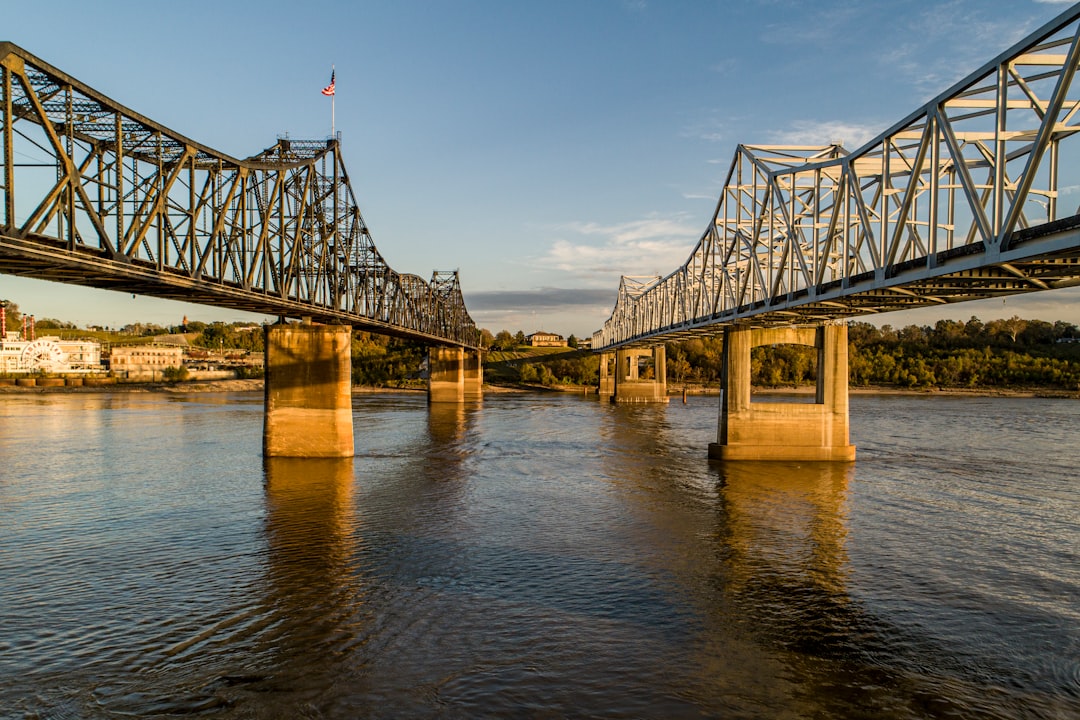
The Mississippi River, a colossal artery of North America, has a history of fluid dynamism, frequently rewriting its own narrative across the landscape. For centuries, its meandering path, a serpent of water, has shaped the American heartland. Yet, the concept of a simulated Mississippi River course change transcends mere academic curiosity; it delves into the intricate interplay of natural forces, human intervention, and the profound implications for flood control, navigation, and ecological balance. This article explores the multifaceted world of simulating such monumental shifts, examining the scientific principles, the technological tools, and the potential consequences of altering the flow of this iconic waterway.
A History Carved in Water and Sediment
The Mississippi’s course is not a static decree but a continuous evolution. Over millennia, the river has sculpted vast floodplains, deposited layers of fertile sediment, and, in its unbridled past, shifted its channel numerous times. These natural avulsions, occasions when the river abandons its existing path for a new, shorter route to the sea, were not infrequent. Ancient channels, now dry and ghost-like depressions, stand as silent witnesses to these grand gestures of geological time. The meandering process itself is a marvel of fluid dynamics, where centrifugal forces push water to the outer banks, causing them to erode, while deposition occurs on the inner banks, building up shoals and land. This constant dance of erosion and accretion is the sculptor’s chisel, continuously reshaping the river and its surroundings. The sheer volume of water and the immense erosive power of the Mississippi mean that its capacity for change is not a theoretical possibility but a historical certainty.
Drivers of Natural Channel Migration
The principal driver of the Mississippi’s natural course changes is the inherent instability of its alluvial valley. As the river flows, it carries a significant sediment load, a granular cargo that influences its behavior. When the river encounters resistance or loses velocity, it deposits this sediment. Over time, these depositions can build up, constricting the channel and increasing the likelihood of avulsion. Furthermore, the topography of the floodplain plays a crucial role. If a lower, more direct route becomes available due to geological subsidence or the formation of a new outlet, the river, with its inherent tendency to seek the path of least resistance, may embrace this new course. Extreme flood events can also act as powerful catalysts, overwhelming existing levees and flood control structures, and forcing the river into new channels. These events are like a sudden, powerful surge, capable of breaking even the most formidable dams.
Human Impact: A Force of Nature in Itself
Human activity has become a colossal force, as significant as any natural phenomenon, in influencing the Mississippi’s course. For over two centuries, engineers have worked to tame the river, primarily for two critical objectives: flood control and navigation. The construction of extensive levee systems along its banks has served to confine the river, preventing its natural tendency to spread across the floodplain during high water. While these levees have saved countless lives and protected valuable land, they have also, paradoxically, intensified the river’s erosive power during floods by concentrating the flow. Dredging operations, essential for maintaining navigable channels deep enough for commercial traffic, also alter the riverbed morphology and flow dynamics. The Atchafalaya River, a distributary of the Mississippi in Louisiana, presents a stark example of human intervention’s potential for altering the river’s destiny. Engineering efforts to divert a portion of the Mississippi’s flow into the Atchafalaya have been ongoing for decades, a constant tug-of-war between man and nature.
In exploring the dynamics of the Mississippi River’s course change, a fascinating article can be found that delves into the simulation models used to predict such alterations. This resource provides valuable insights into the environmental and geological factors influencing the river’s path over time. For more detailed information, you can read the article here: Mississippi River Course Change Simulation.
The Computational Crucible: Simulating the Unthinkable
The Need for Foresight: Why Simulate a River’s Shift?
The notion of simulating a Mississippi River course change is not merely an academic exercise; it is a vital necessity for proactive management and risk assessment. Imagine a colossal, slumbering giant; its path, if altered unexpectedly, could unleash devastation. By simulating potential course changes, we can anticipate and prepare for scenarios that could have catastrophic consequences. The primary motivations for such simulations are:
- Flood Risk Assessment: Understanding how a river’s course change might impact downstream communities in terms of flood height and inundation area is paramount. This allows for targeted preparedness strategies and infrastructure development.
- Navigation Channel Stability: The Mississippi is a vital commercial artery. Simulating future course changes can help predict shifts in navigable depths and identify areas requiring ongoing dredging or structural reinforcement.
- Ecological Impact Analysis: Altering a river’s course can have profound downstream effects on habitats, water quality, and biodiversity. Simulations can help predict these ecological shifts and inform conservation efforts.
- Infrastructure Planning: Bridges, pipelines, and other critical infrastructure are built with the current river course in mind. Simulating potential shifts is crucial for long-term planning and ensuring the resilience of these vital assets.
- Water Resource Management: The distribution of water resources, from agricultural irrigation to municipal supply, is intrinsically linked to the river’s flow. Simulating changes can help in planning for equitable and sustainable water allocation.
The Pillars of Hydrological Modeling
At the heart of simulating river course changes lies the science of hydrological modeling. These are sophisticated computational tools designed to represent the complex physical processes of water flow and sediment transport. They are built upon fundamental principles of fluid mechanics and sediment dynamics.
Governing Equations: The Language of Water
The behavior of water in a river system is governed by a set of fundamental equations. These are the bedrock upon which all hydrological models are built, much like the foundational stones of an ancient aqueduct.
Navier-Stokes Equations: The Grand Symphony of Fluid Motion
At the most fundamental level, the motion of fluids like water is described by the Navier-Stokes equations. These equations represent the conservation of momentum and mass and are notoriously complex to solve directly for intricate systems like river networks. In their full form, they are a differential equation that describes the velocity of a fluid point by point in space and time. For hydrological applications, simplified forms are often employed, capturing the relevant physics without overwhelming computational demands.
Saint-Venant Equations: The 1D Simplification for Rivers
A widely used simplification for modeling river flow is the one-dimensional (1D) Saint-Venant equations. These equations describe the conservation of mass and momentum for a flow that varies significantly in one direction (along the river channel) but is assumed to be relatively uniform across its width and vertical profile. They are particularly effective for simulating flow in long, narrow river channels and are adaptable to modeling flood wave propagation.
Sediment Transport Modeler: The River’s Bedrock
The ability of a river to change its course is inextricably linked to its capacity to move and deposit sediment. Sediment transport models are therefore a crucial component of any simulation aimed at predicting channel shifts.
Bedload and Suspended Load Dynamics
Sediment in rivers exists in two primary forms: bedload, which rolls, slides, or bounces along the riverbed, and suspended load, which is carried within the water column. Models must accurately account for the complex processes that govern the entrainment, transport, and deposition of both these sediment fractions. Factors such as flow velocity, water depth, sediment grain size, and bed roughness all influence these dynamics.
Equilibrium and Unsteady Transport
Models can simulate sediment transport as either in equilibrium (where the river’s capacity to transport sediment is balanced by the sediment supply) or in an unsteady state (where conditions change, leading to erosion or deposition). Simulating unsteady sediment transport is essential for understanding how the riverbed morphology evolves over time, which is a direct precursor to channel migration.
Numerical Methods: Translating Physics into Pixels
Solving these complex governing equations requires sophisticated numerical techniques. These methods discretize the river system into a grid or a series of interconnected points and solve the equations at each point over discrete time steps.
Finite Difference and Finite Volume Methods
Popular numerical methods include the finite difference method, which approximates derivatives using differences between function values at discrete points, and the finite volume method. The finite volume method, often favored for its conservation properties, divides the domain into small control volumes and applies the integral form of the governing equations to each volume. This ensures that quantities like mass and momentum are conserved across computational cells.
Mesh Generation and Computational Grids
The accuracy of a simulation is heavily dependent on the quality of the computational mesh. This grid defines the spatial resolution of the model. For complex river systems with varying channel widths, depths, and topographical features, adaptive meshing techniques are often employed. These techniques refine the mesh in areas of high gradients or significant flow variability, ensuring computational efficiency and accuracy.
The Spectacle of Simulation: Visualizing the River’s Future

Computational Fluid Dynamics (CFD): The Microscopic View
For understanding the intricate details of flow patterns and sediment movement within specific river reaches, Computational Fluid Dynamics (CFD) plays a pivotal role. These simulations offer a more granular perspective than large-scale hydrological models.
Resolving Turbulence and Localized Erosion
CFD models can resolve turbulent flow structures, which are critical for understanding localized erosion and deposition patterns. This microscopic view is like zooming in on a single thread in the river’s tapestry, understanding how it interacts with its immediate neighbors. By accurately capturing turbulence, CFD can predict areas prone to scour around bridge piers or the intricate patterns of sediment deposition in meander bends.
Simulating Hydraulic Structures
CFD is also invaluable for simulating the complex flow interactions around hydraulic structures such as dams, spillways, and groynes. These simulations help engineers assess the impact of these structures on flow patterns and sediment transport, and to design them for optimal performance and minimal adverse environmental effects.
Geographic Information Systems (GIS): The Panoramic View
While CFD offers a microscopic view, Geographic Information Systems (GIS) provide the panoramic perspective. GIS is a powerful framework for integrating, managing, analyzing, and displaying all types of geographically referenced data.
Integrating Diverse Datasets
GIS serves as the central hub for data integration. It can incorporate a vast array of data sources, including:
- Topographic and Bathymetric Data: High-resolution elevation models of the floodplain and detailed maps of the riverbed are essential inputs for hydraulic models.
- Land Use and Land Cover Data: Understanding how different land uses (urban, agricultural, forested) interact with floodwaters is crucial for impact assessment.
- Hydrological and Meteorological Data: Historical rainfall records, streamflow data, and weather patterns inform model calibration and validation.
- Geological and Geotechnical Data: Information on soil types and subsurface geology can influence erosion rates and the stability of riverbanks.
Visualizing Scenarios and Outputs
The true power of GIS in this context lies in its ability to visualize the outputs of complex simulations. Simulated inundated areas, changes in riverbed morphology, and projected flood levels can be overlaid onto maps, providing easily understandable representations of potential future scenarios. This visual storytelling is crucial for communicating complex findings to policymakers and the public.
Hybrid Modeling Approaches: The Best of Both Worlds
Recognizing the strengths and limitations of individual modeling techniques, often the most effective approach involves hybrid modeling strategies. These combine different modeling paradigms to achieve a more comprehensive and accurate representation of the river system.
Linking 1D and 2D Models
A common hybrid approach involves linking one-dimensional (1D) river models with two-dimensional (2D) floodplain models. The 1D model can efficiently simulate flow along the main river channel, while the 2D model can capture the more complex, spatially varying flow dynamics across the floodplain during inundation events. This is akin to having a detailed map of the main highways and a more generalized but broader map of the surrounding countryside.
Integrating Empirical Data with Physical Models
Hybrid approaches can also involve integrating data-driven or empirical models with physically-based models. Empirical models, derived from observed data, can capture relationships that are difficult to represent purely through physical laws. By coupling these with physically-based models, simulations can benefit from both established scientific principles and the nuances learned from real-world observations.
The Ripples of Change: Consequences on Land and Life

Floodplain Dynamics: A Shifting Landscape
A simulated course change, even a minor one, would not occur in a vacuum. The consequences for the floodplain ecosystem would be profound and far-reaching.
Sediment Deposition and Erosion Patterns
As the river reroutes, the patterns of sediment deposition and erosion would intrinsically change. Areas previously subject to frequent inundation might become dry, while new regions could face regular flooding. This would lead to the reworking of soils, altering soil fertility and structure in distinct ways. The delicate balance of landforms, shaped over centuries, would be disrupted. Imagine a potter reshaping their clay; the new form, while beautiful in its own right, would erase the previous contours.
Groundwater Interaction and Hydrology
The interaction between surface water and groundwater is a fundamental aspect of floodplain hydrology. Changes in the river’s course and inundation patterns would inevitably alter groundwater recharge and discharge zones. This could affect the availability of groundwater for wells, the health of riparian vegetation that relies on groundwater, and the overall water table in the region.
Ecological Reverberations: Nature’s Response
The ecological ramifications of a river course change are complex and interconnected.
Habitat Alteration and Biodiversity Shifts
The habitats that currently exist within the Mississippi floodplain are highly adapted to the river’s present conditions. Altering the river’s course would fundamentally change these habitats, leading to potential losses of species dependent on specific flood regimes, water levels, or riparian vegetation. Conversely, new habitats might emerge, potentially favoring different species and leading to shifts in biodiversity. This is nature’s intricate dance of adaptation and survival.
Water Quality and Aquatic Life
Changes in flow velocity, sediment load, and the extent of inundation would directly impact water quality parameters such as dissolved oxygen, nutrient levels, and water temperature. These alterations would, in turn, affect the health and distribution of aquatic organisms, from microscopic plankton to larger fish populations.
Socioeconomic Impacts: Human Systems Under Stress
The socioeconomic fabric of communities living along the Mississippi is intricately linked to the river’s stability. A simulated course change, and the potential for a real one, would present significant challenges.
Infrastructure Vulnerability and Adaptation
Existing infrastructure, including roads, bridges, utilities, and buildings, is designed and situated based on the current riverine environment. A significant course change could render much of this infrastructure vulnerable to flooding or inoperable. This would necessitate costly and complex adaptation strategies, including relocation, reinforcement, or complete rebuilding.
Agricultural and Economic Disruption
The fertile floodplains of the Mississippi are the breadbasket of America, supporting vast agricultural operations. A change in the river’s course could lead to the inundation of valuable farmland or, conversely, the drying out of previously irrigated areas, with devastating economic consequences for farmers and the wider agricultural industry.
Flood Risk Management and Emergency Preparedness
The effectiveness of current flood control measures would be severely compromised by a significant river course change. This would necessitate a complete reevaluation and recalibration of flood risk management strategies, requiring substantial investment in new infrastructure and enhanced emergency preparedness protocols.
Researchers have been exploring the dynamics of river systems, particularly focusing on the Mississippi River’s course change simulation. A related article discusses various modeling techniques used to predict the river’s behavior under different environmental conditions. This insightful piece can be found at MyGeoQuest, where it delves into the implications of these changes on local ecosystems and communities. Understanding these simulations is crucial for effective management and conservation efforts along the river.
The Guardians of the Flow: Mitigating and Managing Risks
| Metric | Value | Unit | Description |
|---|---|---|---|
| Simulation Duration | 50 | Years | Time span over which the river course change is simulated |
| Average Flow Rate | 16,800 | m³/s | Mean discharge of the Mississippi River during simulation |
| Channel Migration Rate | 15 | m/year | Average lateral movement of the river channel per year |
| Sediment Deposition Rate | 120 | tons/day | Amount of sediment deposited along the river course daily |
| Floodplain Expansion | 2.5 | km²/year | Annual increase in floodplain area due to course changes |
| Avulsion Frequency | 1 | Event/decade | Number of major river course shifts per decade |
| Water Surface Slope | 0.0001 | m/m | Gradient of the river surface influencing flow velocity |
Engineering Interventions: Shaping the River’s Destiny
Humanity’s ability to engineer solutions is a powerful tool in managing the Mississippi. However, these interventions must be carefully considered for their long-term effects.
Levee Systems and Floodwalls: The First Line of Defense
Levee systems have historically been the primary engineering solution for flood control. These earthen or concrete barriers are designed to contain the river within its channel during high-water events. However, as noted, intensified flow within confined channels can increase the river’s erosive power and make levee breaches more catastrophic. Floodwalls, which are concrete structures built on top of or behind levees, provide additional height and strength.
Channel Stabilization and Dredging: Maintaining the Artery
Techniques such as bank stabilization using riprap (large stones), gabions (wire mesh cages filled with rocks), or vegetation planting are employed to prevent excessive bank erosion and channel migration. Dredging, the removal of sediment from the riverbed, is essential for maintaining navigable depths for commercial shipping. These interventions are like continuous maintenance on a vital pipeline, ensuring its continued function.
Diversion Structures and Spillways: Releasing the Pressure
Structures designed to divert excess water from the main channel into spillways or auxillary channels, such as the Morganza and Bonnet Carré Spillways, are crucial for relieving pressure on the levees during extreme flood events. The Atchafalaya Basin Floodway is a prominent example of a large-scale diversion project designed to intercept a significant portion of the Mississippi’s flow.
Policy and Planning: Navigating the Future
Effective management of the Mississippi requires robust policy frameworks and long-term planning.
Integrated Water Resource Management (IWRM)
IWRM emphasizes a holistic and coordinated approach to managing water resources, considering all aspects of the water cycle, from source to sea, and engaging all stakeholders. For the Mississippi, this means integrating flood control, navigation, environmental protection, and water supply considerations into a unified strategy.
Land Use Planning and Floodplain Zoning
Prudent land use planning and strict floodplain zoning regulations are essential for minimizing future risks. This involves restricting development in high-risk areas and encouraging development in safer zones, as well as implementing building codes that account for potential flooding.
International and Interstate Cooperation
The Mississippi River basin transcends state and national boundaries. Effective management therefore necessitates strong cooperation and coordinated strategies between different states and, where applicable, international bodies. This ensures that actions taken in one part of the basin do not have unintended negative consequences downstream.
Research and Development: The Continuous Pursuit of Knowledge
The science of hydrological modeling and river management is constantly evolving.
Advancements in Sensor Technology and Remote Sensing
The development of advanced sensors, drones, and satellite imagery provides ever-increasing amounts of high-resolution data on river behavior, sediment transport, and floodplain inundation. This data is invaluable for calibrating and validating simulation models.
Development of More Sophisticated Numerical Models
Ongoing research focuses on developing more computationally efficient and physically accurate numerical models. This includes exploring new algorithms, incorporating advanced turbulence models, and improving the representation of complex sediment transport processes.
Understanding Coupled Human-Natural Systems
A significant area of research is dedicated to understanding the intricate couplings between human activities and natural river systems. This involves developing models that can capture the feedback loops between engineered interventions, land use changes, and the river’s response. Ultimately, simulating the Mississippi River course change, or any significant alteration to its path, is a testament to humanity’s desire to understand and, where necessary, manage the colossal forces of nature that shape our world. It is a venture into the realm of the possible, a critical exercise in foresight, and a stark reminder of the profound responsibility that comes with wielding such power.

WATCH NOW ▶️ SHOCKING: Mississippi: The $12 Trillion Lie Revealed
FAQs
What is a Mississippi River course change simulation?
A Mississippi River course change simulation is a computer-based model or physical experiment designed to study how the river’s path might shift over time due to natural processes like sediment deposition, erosion, flooding, and human interventions.
Why is simulating the Mississippi River’s course changes important?
Simulating course changes helps scientists, engineers, and policymakers understand potential future shifts in the river’s path, which can impact flood risk, navigation, ecosystems, and infrastructure planning along the river.
What factors are considered in a Mississippi River course change simulation?
Simulations typically consider factors such as water flow rates, sediment transport, riverbank erosion, floodplain topography, vegetation, human activities like levee construction, and historical data on past course changes.
How accurate are Mississippi River course change simulations?
The accuracy depends on the quality of input data, the complexity of the model, and how well it incorporates physical processes. While simulations provide valuable insights, they cannot predict exact future changes due to the river’s dynamic nature and unforeseen events.
Who uses Mississippi River course change simulations?
These simulations are used by hydrologists, environmental scientists, civil engineers, government agencies, and planners involved in flood management, river navigation, habitat conservation, and infrastructure development along the Mississippi River.