
The vast, parched expanse of the Aralkum Desert, a testament to ecological catastrophe, holds within its sandy embrace the skeletal remains of Muynak’s once-thriving port. What was once a bustling hub of Soviet fishing fleets and a gateway to the bountiful Aral Sea is now a jarring monument to human ambition and its unforgiving consequences – Muynak’s Ship Graveyard. For those who venture into this desolate landscape, the hushed whispers of the wind carry the echoes of a drowned world, a poignant elegy sung by rusting behemoths stranded on the arid earth.
A Thriving Ecosystem and Economic Hub
For centuries, the Aral Sea was the lifeblood of Central Asia, an immense inland body of water that supported a rich and diverse ecosystem and a thriving human population. Its shores teemed with life, and its waters, teeming with fish, provided sustenance and economic prosperity for the surrounding communities. The Aral Sea, one of the four largest lakes in the world, was more than just a geographical feature; it was a vibrant, pulsating heart that pumped life into the region. Its freshwater inflow was primarily sustained by the Amu Darya and Syr Darya rivers, two mighty arteries that flowed from the distant Pamir and Tien Shan mountains. These rivers, nurtured by glacial melt and seasonal rainfall, were the veins that fed this immense aquatic organism.
The abundance of fish in the Aral Sea was legendary. Species such as carp, sturgeon, and pike perch were not only vital components of the local diet but also formed the basis of a significant fishing industry. The Soviet Union, recognizing the economic potential of this natural resource, invested heavily in its development. Large-scale fishing operations were established, processing plants were built, and a fleet of trawlers and carrier ships was assembled to exploit the sea’s bounty. Muynak, a port town strategically located on the southern Aral coast, quickly rose to prominence as the center of this burgeoning industry.
Soviet Industrialization and Agricultural Ambition
The mid-20th century marked a period of intense industrialization and agricultural expansion across the Soviet Union. Ambitious plans were set in motion to transform vast tracts of desert and semi-arid land into productive cotton fields, a crop highly valued for its textile applications. The Aral Sea basin, with its seemingly boundless water resources, was identified as an ideal location for these grand agricultural projects. The Soviet government, driven by a vision of self-sufficiency and agricultural prowess, embarked on a monumental undertaking: the diversion of the Amu Darya and Syr Darya rivers to irrigate these new cotton plantations.
This era of Soviet ambition, while aiming for an agrarian utopia, inadvertently laid the groundwork for an ecological disaster of unprecedented scale. The construction of a vast network of irrigation canals, including the Karakum Canal, began in the 1960s. These canals, designed to carry water across hundreds of kilometers, were intended to transform barren landscapes into fertile farmlands. However, they were notoriously inefficient. A significant portion of the water diverted from the rivers was lost due to seepage and evaporation before it could reach the fields. This profligate use of water, coupled with the inherently water-intensive nature of cotton cultivation, began to exert immense pressure on the Aral Sea.
The Muynak ship graveyard, once a bustling port on the Aral Sea, now stands as a haunting reminder of environmental change and human impact on nature. For a deeper understanding of this unique site and its historical significance, you can explore the related article on My Geo Quest, which delves into the factors that led to the desiccation of the Aral Sea and the subsequent abandonment of Muynak. Read more about this fascinating topic here: My Geo Quest.
The Great Diversion and the Shrinking Sea
The Karakum Canal and its Unforeseen Consequences
The Karakum Canal, a marvel of Soviet engineering and an artery of agricultural ambition, stands as a stark symbol of the Aral Sea’s demise. Stretching for over 1,300 kilometers, it was designed to irrigate millions of hectares of desert land, primarily for cotton cultivation. The intent was noble in its own way – to feed a nation and boost its economy through agricultural export. However, the execution was flawed, and the consequences were catastrophic.
The canal, largely unlined in its initial construction, proved to be a sieve. It is estimated that as much as 30-50% of the water flowing through it was lost to the sandy soil before it could even reach its intended destination. This inefficient system acted like a leaky faucet, slowly but inexorably draining the lifeblood of the Aral Sea. The sheer volume of water diverted was staggering. The Amu Darya and Syr Darya, once powerful rivers that fed the sea with an average annual flow of over 40 cubic kilometers, saw their contributions drastically reduced. By the 1980s, the Aral Sea was receiving only a fraction of its historical water supply.
The Aral Sea’s Gradual Retreat
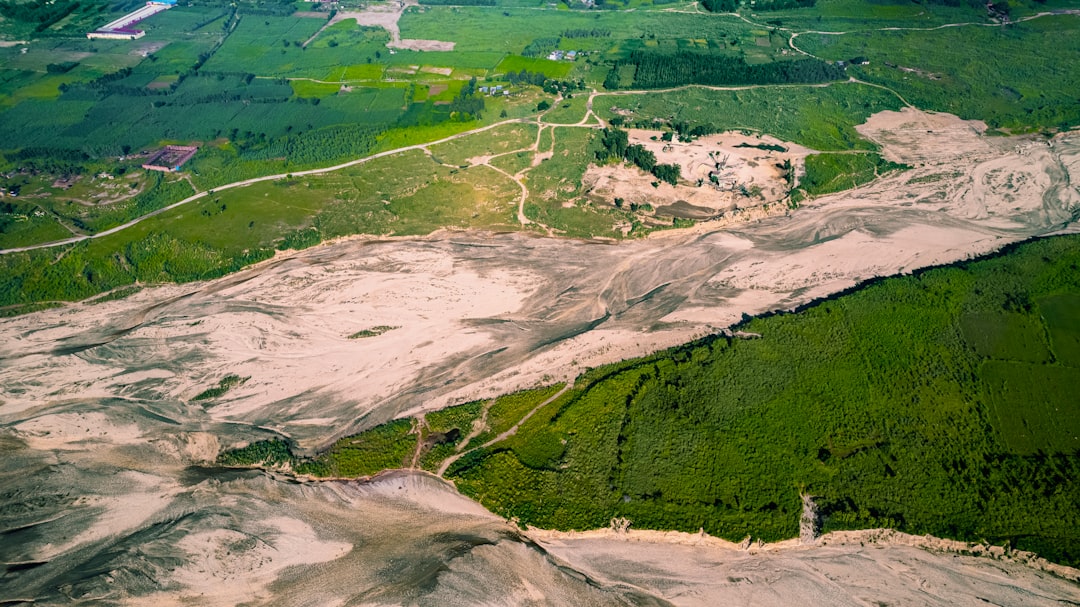
As the rivers dwindled, so too did the Aral Sea. The once vast expanse of water began to recede at an alarming rate, its shoreline a retreating phantom. What was once a thriving port, bustling with activity, found itself stranded. The distance between Muynak and the water’s edge grew year by year, a relentless march of desiccation. The sea became smaller, shallower, and increasingly saline. This salinization affected not only the fish populations, which struggled to survive in the harsh new conditions, but also the soil and groundwater in the surrounding region.
The shrinking of the Aral Sea was not a sudden, dramatic event, but a slow, agonizing dissolution. It was a process akin to watching a loved one fade away, day by agonizing day. The visible evidence of this retreat was a constant, gnawing reminder of the ecological imbalance being wrought. The fisheries collapsed. The processing plants stood silent. The boats that once sailed the open waters were left high and dry, their hulls exposed to the relentless sun and wind. The Aral Sea was transforming from a source of life into a stark symbol of environmental degradation.
The Rise of the Ship Graveyard
Muynak’s Once-Proud Fishing Fleet
Muynak’s existence was inextricably linked to the Aral Sea. Its identity was forged in the rhythm of the tides, the creak of ropes, and the scent of salt and fish. The town was home to a substantial fishing fleet, comprising trawlers, seiners, and smaller vessels, all dedicated to exploiting the sea’s rich harvest. These ships were the lifeblood of Muynak, providing employment and prosperity to thousands. Their daily voyages were the engine that powered the town’s economy.
The decommissioned vessels, once symbols of human endeavor and maritime prowess, began to accumulate on the exposed seabed as the sea withdrew. These were not just discarded machines; they were monuments to a bygone era, their rusting hulls telling tales of successful catches, arduous journeys, and the collective effort that once defined the community. The fishing industry, the very foundation of Muynak’s prosperity, began to crumble as the sea receded. The boats, once vital tools, became obsolete.
The Silent Sentinels of the Aralkum
As the Aral Sea continued its relentless retreat, the once-submerged hulls of the fishing fleet were gradually revealed. What began as a few scattered vessels soon transformed into a macabre yet strangely beautiful spectacle – a graveyard of ships. The sandy expanse, once the seabed, became their final resting place. These ghostly hulks, exposed to the elements, became the silent sentinels of the Aralkum Desert.
The image of these once-proud vessels, stranded miles from any visible water, is a powerful and unsettling one. They stand as stark reminders of the immense power of nature and the hubris of human intervention. The ships, their paint peeling, their decks weathered, and their interiors bearing the marks of time and decay, are like ancient skeletons unearthed from a sandy tomb. The silence that now surrounds them is a profound contrast to the cacophony of their working lives – the rumble of engines, the shouts of fishermen, the lapping of waves against their hulls.
The Environmental Catastrophe’s Legacy
Salt and Dust Storms: A Poisonous Wind
The desiccation of the Aral Sea has unleashed a torrent of environmental problems, the most insidious of which are the toxic salt and dust storms. As the sea shrank, it left behind vast expanses of exposed seabed, laden with salt, pesticides, and other agricultural chemicals. The wind, that ever-present force in desert landscapes, now has a new and devastating weapon at its disposal.
These storms, often carrying fine particles of toxic dust for hundreds of kilometers, are a direct consequence of the Aral Sea’s demise. They deposit these harmful substances onto agricultural land, contaminating crops and groundwater. The health impacts on the local population are severe, with increased rates of respiratory illnesses, cancers, and birth defects. The dust, like a plague of locusts, descends upon the land, a constant reminder of the ecological imbalance that has been created. The very land that was intended to be nourished by the diverted waters is now being poisoned by the remnants of the vanished sea.
Health Impacts and Ecological Collapse
The environmental fallout from the Aral Sea disaster extends beyond the immediate effects of salt and dust storms. The ecological collapse has had a profound impact on the health and well-being of the people living in the region. The loss of the sea has meant the loss of a primary source of food and income. Fishing communities have been decimated, and the once-thriving port towns have become ghost towns, their inhabitants struggling to survive in the harsh new reality.
The air, once fresh and carrying the scent of the sea, is now often thick with dust and pollutants. Respiratory problems are rampant, and the general health of the population has deteriorated significantly. The once-vibrant ecosystem has been replaced by a barren, saline landscape, sparsely populated and struggling to support life. The Aral Sea disaster is not merely an environmental tragedy; it is a humanitarian crisis, a stark illustration of how ecological neglect can have devastating consequences for human populations. The land, once a cradle of life, has become a wasteland, its inhabitants bearing the heavy burden of past decisions.
The history of the Muynak ship graveyard is a poignant reminder of the environmental and economic changes that have affected the Aral Sea region. Once a bustling port, Muynak now stands as a testament to the devastating effects of water diversion and climate change. For those interested in exploring this topic further, you can read a related article that delves into the transformation of this area and its implications for local communities. The article can be found here.
Muynak’s Ship Graveyard as a Symbol
| Year | Event | Details |
|---|---|---|
| 1960s | Aral Sea Shrinkage Begins | Water diversion for irrigation causes the Aral Sea to start shrinking, impacting Muynak’s fishing industry. |
| 1980s | Fishing Industry Decline | Muynak’s once-thriving fishing industry collapses due to the receding sea. |
| 1990s | Formation of Ship Graveyard | Abandoned fishing vessels left stranded on dry seabed, creating the Muynak Ship Graveyard. |
| 2000s | Tourism Development | Ship graveyard becomes a symbol of environmental disaster and attracts tourists and researchers. |
| 2010s | Environmental Awareness | Increased global attention on Aral Sea crisis; efforts to restore parts of the sea begin. |
| 2020s | Ongoing Challenges | Muynak remains a poignant reminder of ecological damage; partial restoration projects continue. |
A Stark Warning to the World
Muynak’s Ship Graveyard stands not just as a local tragedy but as a potent symbol for the entire planet. It is a stark, unambiguous warning about the consequences of unsustainable resource management and unchecked environmental exploitation. The rusting hulks on the desert floor are a tangible manifestation of how grand ambitions, when divorced from ecological understanding, can lead to profound and irreversible damage.
The graveyard serves as a powerful metaphor. Imagine a grand feast, meticulously planned and abundantly provisioned. But then, the stewards of the feast, in their eagerness for more, begin to siphon off the very rivers that feed the banquet hall. Eventually, the hall, once overflowing, begins to empty, leaving behind only the overturned goblets and scattered remnants of a once-magnificent spread. The ships at Muynak are those overturned goblets, left behind as a somber testament to a feast that was carelessly consumed. They speak silently but forcefully to a world that continues to grapple with the delicate balance between human needs and the preservation of the natural world.
The Enduring Power of the Scene
Despite the desolation and the environmental tragedy it represents, Muynak’s Ship Graveyard possesses an undeniable, haunting power. It draws visitors from across the globe, individuals seeking to witness firsthand the dramatic consequences of ecological disaster. The sheer scale of the scene – hundreds of beached ships stretching across the horizon – is awe-inspiring and deeply moving.
The ships, frozen in their final moments of service, evoke a sense of melancholy and reflection. They are not just static remnants of the past; they are narratives etched in metal and rust. Each vessel, in its own way, tells a story of labor, ambition, and ultimately, obsolescence. The wind whistling through their skeletal superstructures seems to carry the sighs of those who once sailed these waters, a ghostly chorus mourning a lost world. The graveyard, in its desolate grandeur, offers a profound and unforgettable encounter with the fragility of ecosystems and the indelible mark of human impact on the planet. It is a place where history and environmental science converge, leaving an indelible impression on all who gaze upon its silent, sandy lament.
▶️ STOP: The Middle Corridor Is A Death Trap
FAQs
What is the Muynak Ship Graveyard?
The Muynak Ship Graveyard is a site located near the town of Muynak in Uzbekistan, where numerous abandoned ships are stranded on what used to be the Aral Sea’s seabed. It serves as a stark reminder of the environmental disaster caused by the shrinking of the Aral Sea.
Why are there ships stranded in Muynak?
The ships are stranded because the Aral Sea, once one of the largest inland seas in the world, has drastically shrunk due to the diversion of rivers for irrigation projects during the Soviet era. As the water receded, the ships that were once used for fishing and transport were left high and dry.
When did the Muynak Ship Graveyard form?
The ship graveyard began to form in the late 20th century, particularly from the 1980s onward, as the Aral Sea rapidly dried up. Over the decades, the water level dropped, leaving the ships abandoned on the exposed seabed.
What is the historical significance of the Muynak Ship Graveyard?
The Muynak Ship Graveyard symbolizes the environmental and economic impact of human activity on the Aral Sea region. It highlights the consequences of unsustainable water management and serves as a poignant reminder of the loss of the once-thriving fishing industry and local livelihoods.
Is the Muynak Ship Graveyard a tourist attraction?
Yes, the Muynak Ship Graveyard has become a unique tourist attraction, drawing visitors interested in environmental history, photography, and the dramatic landscape of the dried-up Aral Sea. It also raises awareness about ecological issues and the need for sustainable water use.