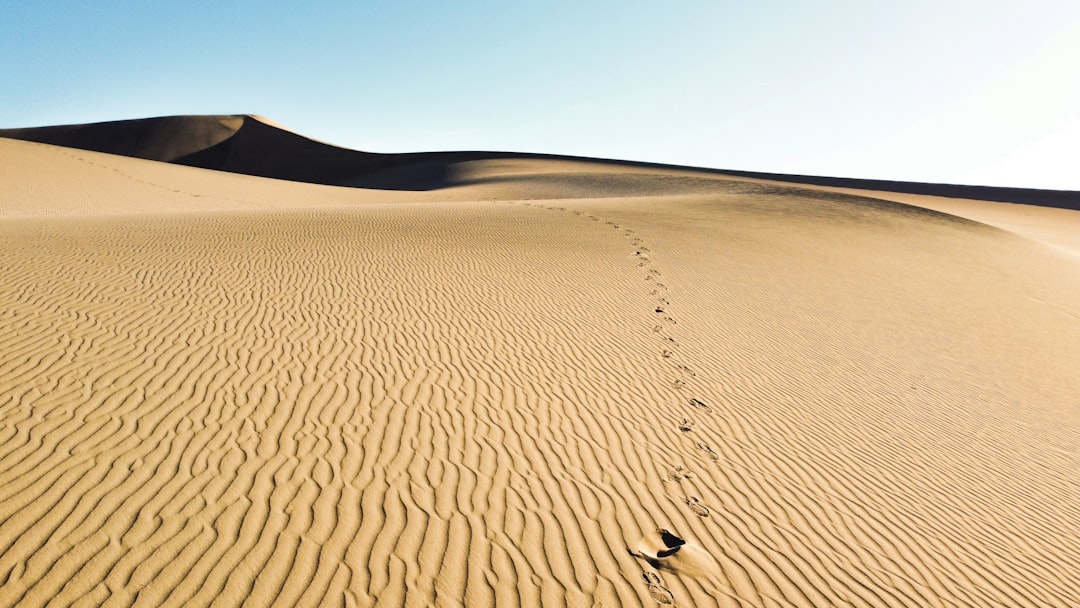
The prevailing image of deserts often conjures vast expanses of undulating sand dunes, a seemingly infinite reservoir of granular material. Intuitively, one might assume this readily available resource would be a primary candidate for concrete production, a cornerstone of modern infrastructure. However, a closer examination reveals a fundamental incompatibility between desert sand and the rigorous demands of concrete, a truth grounded in geological processes and material science. This article delves into the reasons behind this surprising paradox, illustrating why, despite their abundance, desert sands are largely unsuitable for the construction industry.
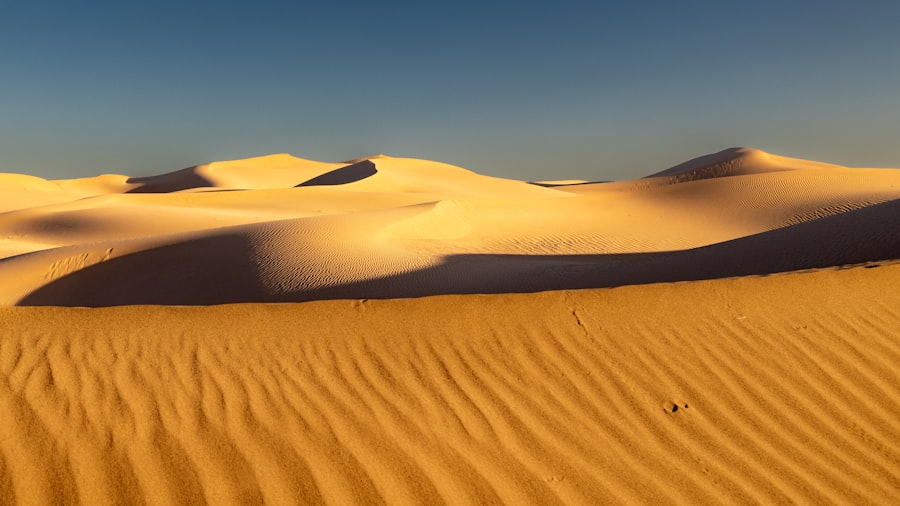
The defining characteristics of desert sand are inextricably linked to its formation. Unlike riverine or glacial sands, which undergo significant water-based transport, desert sands are primarily shaped by aeolian (wind) activity. This process imparts unique physical attributes that render them problematic for concrete.
Aeolian Erosion and Particle Shape
Wind, a less dense and less viscous medium than water, is a less efficient agent of erosion. It tends to abrade sand grains more gently and persistently, rather than tumbling them roughly. This results in:
- Rounded and Polished Grains: The incessant, light-touch buffeting by wind over vast stretches of time smooths the edges of sand particles, progressively transforming them into highly rounded and often polished spheres or sub-spheres. Imagine a rough stone repeatedly caressed by a soft cloth; gradually, its sharp edges yield to a smoother profile.
- Lack of Angularity: This remarkable roundness stands in stark contrast to the angular, irregularly shaped grains typically sought after in concrete aggregates. Angularity is not a mere aesthetic preference; it is a critical structural element.
Uniform Grain Size Distribution
Wind is also exceptionally efficient at sorting particles by size. Lighter, finer particles are carried further, while heavier, coarser particles remain in place. This leads to:
- Poor Grading: Desert sands typically exhibit a very narrow range of particle sizes, often clustering around a specific diameter. This “uniformity” is detrimental to concrete.
- Absence of Fines and Coarse Aggregates: Concrete requires a well-graded aggregate, meaning a mix of various particle sizes from fine sand to coarse gravel. This distribution allows for efficient packing, minimizing voids and maximizing density. Desert sands often lack the necessary proportions of both very fine and coarser particles.
Desert sand, despite its abundance, is not suitable for concrete production due to its unique properties, such as its round shape and smooth texture, which hinder the bonding process with cement. For a deeper understanding of this topic, you can explore the article that discusses the challenges and alternatives to using desert sand in construction. For more information, visit this article.
The Critical Role of Aggregates in Concrete
To understand why desert sand falls short, one must first appreciate the multifaceted role of aggregates in concrete. Aggregates are not simply inert fillers; they are the skeletal framework of the concrete mix, influencing its strength, workability, and durability.
The Interlocking Mechanism: Strength Through Angularity
Within a concrete mix, individual aggregate particles are embedded within a matrix of cement paste. The strength of this composite material relies heavily on the interlocking mechanism between the aggregate grains.
- Angularity and Mechanical Interlock: Angular and sub-angular aggregate particles, with their irregular surfaces and sharp edges, provide numerous points of contact where they can mechanically interlock. This creates a strong, stable framework, akin to tightly fitted puzzle pieces. When subjected to stress, this interlocking action helps to transfer loads efficiently throughout the concrete mass, preventing premature failure.
- Rounded Grains and Reduced Interlock: Conversely, rounded desert sand grains, resembling a pile of ball bearings, offer significantly fewer points of mechanical interlock. When the cement paste hardens around these smooth, spherical particles, the bond is primarily surface adhesion rather than robust mechanical grip. Under stress, these rounded grains can more easily slide past one another or dislodge from the cement paste, compromising the overall strength and stability of the concrete. Imagine trying to build a stable wall with perfectly smooth river stones versus irregularly shaped bricks; the latter provides far greater inherent stability.
Surface Area and Adhesion: The Cement-Aggregate Bond
The bond between the cement paste and the aggregate surface is crucial. This bond is influenced by both the chemical nature of the aggregate and its physical morphology.
- Roughness and Surface Area: Angular aggregates typically possess rougher, more irregular surfaces. This increased surface area, combined with the microscopic topological variations, provides more sites for the cement paste to adhere, forming a strong chemical and physical bond. It’s like trying to get glue to stick to a polished pane of glass versus a piece of sandpaper; the latter offers much more “grip.”
- Smoothness and Reduced Adhesion: The highly polished surfaces of desert sand grains offer less opportunity for robust adhesion. The contact points are fewer and less diverse, leading to a weaker bond that is more susceptible to failure under stress or long-term environmental factors.
The Workability Quandary: Water Demand and Segregation
Beyond strength, the workability of fresh concrete is paramount. Workability refers to the ease with which concrete can be mixed, transported, placed, and compacted without segregation. Here, desert sand presents significant challenges.
Increased Water Demand
The rounded shape of desert sand grains has a profound impact on the water demand of concrete.
- Reduced Frictional Resistance: Smooth, rounded sand particles offer less internal friction when mixed with cement and water. While this might initially seem beneficial for movement, it leads to a need for more water to achieve a desirable slump (a measure of concrete’s fluidity).
- The “Ball Bearing” Effect: Imagine a mix of cement and rounded sand as a collection of miniature ball bearings. To make them flow freely, more lubrication (water) is required to reduce friction between the individual particles.
- Detrimental Effects of Excess Water: For concrete, more water is almost always detrimental. It increases the water-cement ratio, which in turn:
- Reduces Compressive Strength: Excess water creates more voids when it evaporates, leading to a less dense and therefore weaker concrete.
- Increases Permeability: A porous concrete is more susceptible to water ingress, freeze-thaw damage, and chemical attack.
- Increases Drying Shrinkage: Higher water content leads to greater volume reduction as the concrete dries, increasing the risk of cracking.
Segregation and Bleeding
The poor grading and rounded nature of desert sand also exacerbate problems with segregation and bleeding.
- Segregation: This refers to the separation of the constituent materials in fresh concrete, where coarser aggregates settle and finer particles (and cement paste) rise. With poorly graded desert sand where particles are of similar size, there’s less frictional interlock to hold everything together. This makes the mix more prone to segregation during transport and placement, leading to inhomogeneous concrete with variable strength throughout.
- Bleeding: This is the upward migration of excess water to the surface of fresh concrete. The lack of varied particle sizes in desert sand means there’s less surface area for the water to adhere to, facilitating its escape. Bleeding can lead to a weak, porous surface layer (laitance) and an increased water-cement ratio just below the surface, further compromising durability.
Environmental and Economic Considerations: The Broader Impact

The incompatibility of desert sand extends beyond purely technical aspects, touching upon significant environmental and economic implications.
The Paradox of Abundance and Scarcity
The world’s deserts hold an unfathomable quantity of sand, yet paradoxically, there is a global shortage of construction-grade sand. This highlights the crucial distinction between mere abundance and suitability for a specific application.
- Global Sand Mining Crisis: River and marine sands, the preferred types for concrete, are being extracted at unsustainable rates, leading to severe environmental consequences. This includes riverbed degradation, coastal erosion, habitat destruction, and changes in water tables.
- Logistical Challenges: Even if desert sand could be made suitable, the sheer logistics of transporting billions of tons of processed sand from often remote desert locations to urban construction sites would be an economic and environmental nightmare, involving massive energy consumption and carbon emissions.
Processing and Economic Viability
While theoretical methods exist to modify desert sand, the practicalities are daunting:
- Mechanical Crushing: One approach involves mechanically crushing desert sand to introduce angularity. However, individual sand grains are typically very small, and crushing them efficiently and economically on an industrial scale would be exceptionally challenging and energy-intensive. It’s like trying to precisely crush a grain of sugar to change its shape; highly inefficient.
- Blending with Other Aggregates: Desert sand can sometimes be used in small proportions as a filler when blended with well-graded, angular aggregates. However, this dilutes the problem rather than solving it, and the overall performance still relies on the presence of superior aggregates.
- Cost vs. Benefit: The substantial processing required to transform desert sand into a viable concrete aggregate would significantly increase its cost, likely rendering it uncompetitive with naturally occurring angular sands, even with their increasing scarcity. The economic incentives simply aren’t there for large-scale adoption.
Desert sand, despite its abundance, is not suitable for concrete production due to its unique properties, which differ significantly from the sand found in riverbeds or quarries. The grains of desert sand are often too smooth and rounded, leading to poor bonding with cement. For a deeper understanding of this issue, you can explore a related article that discusses the challenges of using desert sand in construction and the implications for sustainable building practices. This insightful piece can be found here.
Alternative Approaches and Future Prospects
| Metric | Description | Impact on Concrete Quality |
|---|---|---|
| Grain Shape | Desert sand grains are typically very smooth and rounded due to wind erosion. | Reduces the bonding strength between sand and cement paste, leading to weaker concrete. |
| Grain Size | Desert sand particles are generally finer and more uniform in size compared to river sand. | Leads to poor compaction and increased voids in concrete, reducing durability. |
| Particle Angularity | Low angularity of desert sand particles results in less mechanical interlock. | Decreases the overall strength and stability of the concrete mix. |
| Surface Texture | Desert sand has a smooth surface texture. | Limits the adhesion between sand and cement paste, weakening the concrete matrix. |
| Impurities | Desert sand may contain salts and other soluble impurities. | Can cause efflorescence and corrosion of reinforcement in concrete. |
| Water Demand | Due to fine and smooth particles, desert sand requires more water for the same workability. | Increases water-cement ratio, which can reduce concrete strength and durability. |
While desert sand in its raw form remains largely unsuitable, ongoing research explores alternative binders and aggregate types, demonstrating humanity’s continuous quest for sustainable construction materials.
Geopolymers and Innovative Binders
Emerging technologies, such as geopolymers, offer a glimmer of hope. These alternative binders do not rely on traditional Portland cement and can potentially utilize different types of aggregates, including some that might be derived from desert environments.
- Alkali-Activation: Geopolymers are created by activating aluminosilicate materials (like fly ash, blast furnace slag, or metakaolin) with alkaline solutions. This process can be less sensitive to the aggregate’s shape.
- Reduced Cement Dependency: Moving away from Portland cement production, which is a major contributor to CO2 emissions, is a significant environmental driver for geopolymer research.
Engineered Sands and Additives
Another avenue involves engineering sand or utilizing specialized additives to compensate for desert sand’s shortcomings.
- Particle Shape Engineering: Advanced manufacturing techniques might one day allow for the efficient reshaping of desert sand particles, though this is currently a distant prospect for mass production.
- Chemical Admixtures: Superplasticizers and other chemical admixtures can improve the workability of concrete with less water, potentially mitigating some of the issues associated with rounded aggregates. However, they cannot fundamentally alter the mechanical interlocking problem.
- Limited Scope: These approaches are generally complex and expensive, typically reserved for niche applications or where conventional aggregates are absolutely unavailable at any cost.
In conclusion, the seemingly endless oceans of desert sand, a testament to geological forces, represent a fascinating paradox in the context of concrete production. Their rounded, uniform grains, a consequence of aeolian erosion, render them largely incompatible with the fundamental requirements of strong, workable, and durable concrete. The lack of mechanical interlock, reduced surface adhesion, increased water demand, and propensity for segregation stand as formidable barriers. While research into alternative binders and aggregates continues, the bedrock truth remains: until significant technological breakthroughs or shifts in material science occur, desert sand, in its natural state, will continue to be a spectator in the grand theater of concrete construction, an abundant resource that remains stubbornly out of reach.
WATCH NOW ▶️ WARNING: Why the World is Running Out of Sand (And You Never Noticed)
FAQs
1. Why is desert sand unsuitable for making concrete?
Desert sand grains are typically very smooth and rounded due to wind erosion, which prevents them from binding well with cement. This lack of angularity reduces the strength and durability of concrete made with desert sand.
2. How does the shape of sand grains affect concrete quality?
Angular and rough-textured sand grains provide better mechanical interlocking and bonding with cement paste, resulting in stronger and more durable concrete. Desert sand grains are usually rounded and smooth, which weakens the concrete structure.
3. Can desert sand be treated or processed to be used in concrete?
While some research explores processing desert sand to improve its properties, such as crushing or mixing with other materials, it is generally not cost-effective or practical compared to using conventional river or crushed sand.
4. What types of sand are preferred for concrete production?
River sand, crushed stone sand, and manufactured sand with angular and rough particles are preferred for concrete because they provide better bonding with cement and improve the strength and durability of the final product.
5. Are there environmental concerns related to using desert sand in construction?
Extracting large amounts of desert sand can disrupt fragile desert ecosystems and lead to environmental degradation. Additionally, the poor quality of desert sand for concrete means its use is limited, encouraging the use of more sustainable and suitable alternatives.