
The concept of a hollow Earth, while captivating to the imagination, holds little scientific standing in the modern era. This article delves into the historical progression of this idea, examines the scientific evidence that refutes it, and explores some of the enduring speculative theories that have attempted to lend it credence. Readers will gain an understanding of why the hollow Earth remains firmly in the realm of pseudoscience, despite its persistent cultural allure.
The notion that the Earth is not a solid sphere but rather contains vast internal spaces, perhaps even another world, is not a recent innovation. Its roots stretch back through millennia, embedded in philosophical ponderings and early cosmological models.
Early Philosophical and Mythological Underpinnings
Ancient civilizations frequently conceived of an underworld, a realm beneath the surface of the Earth. These subterranean domains were often depicted as places of the dead, divine abodes, or reservoirs of great power. While not explicitly “hollow Earth” theories in the modern sense, they laid a conceptual groundwork for interpreting the Earth’s interior as something other than monolithic rock. For instance, some Greek myths spoke of Tartarus, a deep abyss below Hades, implying a vast internal cavity. Similarly, various indigenous cultures have myths involving beings or entire civilizations residing within mountains or beneath the earth’s crust.
Early Scientific and Quasi-Scientific Speculations
As scientific inquiry began to emerge, some thinkers, even those of considerable intellect, entertained the possibility of a hollow Earth. One of the most notable proponents was Edmond Halley, the renowned astronomer. In the late 17th century, Halley proposed a model where the Earth consisted of four concentric spheres, each separated by an atmosphere, with the innermost sphere burning brightly to account for the aurora borealis. This was an attempt to explain compass variations and the planet’s magnetic field, an understanding of which was rudimentary at the time. Halley’s model, though speculative, highlights the intellectual climate where such ideas could gain traction, especially before the advent of modern geophysical techniques.
The concept of a hollow Earth has intrigued scientists and enthusiasts alike for centuries, leading to various theories and explorations. For a deeper dive into the scientific discussions surrounding hollow Earth theories, you can read a related article that explores the historical context and modern interpretations of this fascinating idea. For more information, visit this article.
Unmasking the Inner Earth: Geophysical Evidence
The romantic appeal of a hollow Earth quickly dissipates when confronted with the vast body of scientific evidence accumulated over centuries. Modern geophysics offers an intricate and robust understanding of Earth’s internal structure, a picture painted with seismic waves, gravitational measurements, and the study of planetary formation.
Seismic Tomography: Peering into the Planet’s Core
Perhaps the most compelling evidence against a hollow Earth comes from seismology, the study of seismic waves generated by earthquakes. Imagine throwing a stone into a pond; the ripples spread out and eventually reflect off the edges. Similarly, earthquake waves propagate through the Earth’s interior, and their behavior – how they speed up, slow down, bend, and reflect – provides a detailed map of the materials they encounter.
P-waves and S-waves: The Earth’s X-rays
Seismologists utilize two primary types of seismic waves: P-waves (primary or compressional waves) and S-waves (secondary or shear waves). P-waves, like sound waves, can travel through solids, liquids, and gases. S-waves, however, can only travel through solids; they cannot propagate through liquids. The observation that S-wave “shadow zones” exist on the opposite side of the Earth from an earthquake’s epicenter provides irrefutable evidence of a liquid outer core. If the Earth were hollow, or largely hollow, these seismic wave patterns would be drastically different, betraying the absence of significant solid and liquid layers. The consistent arrival times and amplitudes of these waves at various seismic stations around the globe strongly confirm the layered, solid-to-liquid-to-solid structure of our planet.
The Mantle and Core: A Solid Reality
Furthermore, seismic wave velocities indicate increasing density and pressure with depth, characteristic of solid materials being compressed. The Earth’s mantle, a thick layer between the crust and the outer core, is known to be predominantly solid, though capable of slow convection over geological timescales. The inner core, below the liquid outer core, is again solid, a fact confirmed by the way P-waves are refracted and reflected at its boundaries. The concept of vast internal hollows contradicts every aspect of this finely tuned seismic model.
Gravitational Measurements and Planetary Density
Another powerful line of evidence against a hollow Earth stems from gravitational measurements and the planet’s overall density. Newton’s law of universal gravitation dictates that an object’s gravitational pull is directly proportional to its mass.
Weighing the Earth: More Than Just a Shell
Scientists have precisely measured Earth’s gravitational field. By studying the orbits of satellites and the behavior of pendulum clocks, we can deduce the planet’s total mass. This mass, combined with Earth’s known volume, allows for the calculation of its average density, which is approximately 5.51 grams per cubic centimeter. For comparison, the density of typical crustal rock is around 2.7 grams per cubic centimeter. If the Earth were significantly hollow, its average density would be far lower – a mere fraction of what is observed. The discrepancy is enormous, rendering any “hollow Earth” model physically untenable. It would be like claiming a bowling ball is mostly air when its weight clearly indicates it’s solid.
The Constraints of Planetary Formation

Understanding how planets form provides yet another nail in the coffin for the hollow Earth hypothesis. The processes that give rise to celestial bodies naturally lead to solid, dense structures.
Accretion and Differentiation: Building a Solid Globe
Planets like Earth are formed through a process called accretion. In the early solar system, dust and gas slowly clumped together due to gravity. As these clumps grew, their gravitational pull increased, attracting more material. This process, occurring over millions of years, inevitably leads to a solid, compact body.
The Role of Gravity and Pressure
Once a proto-planet reaches a certain size, its own immense gravity begins to compact the material further. This self-compression generates tremendous pressure and heat in the interior. This heat, along with radioactive decay, causes widespread melting, a process known as differentiation. Denser materials, like iron and nickel, sink to form the core, while lighter materials rise to form the mantle and crust. This process naturally leads to a layered, solid interior, not a hollow shell. Maintaining a vast internal void under such immense gravitational pressure and heat would be physically impossible. The Earth’s interior is not simply holding itself up; it’s being compressed with staggering force. Imagine trying to maintain a large bubble of air at the bottom of a deep ocean; the pressure would immediately collapse it.
The Enduring Allure of the Inner World: Speculative Theories
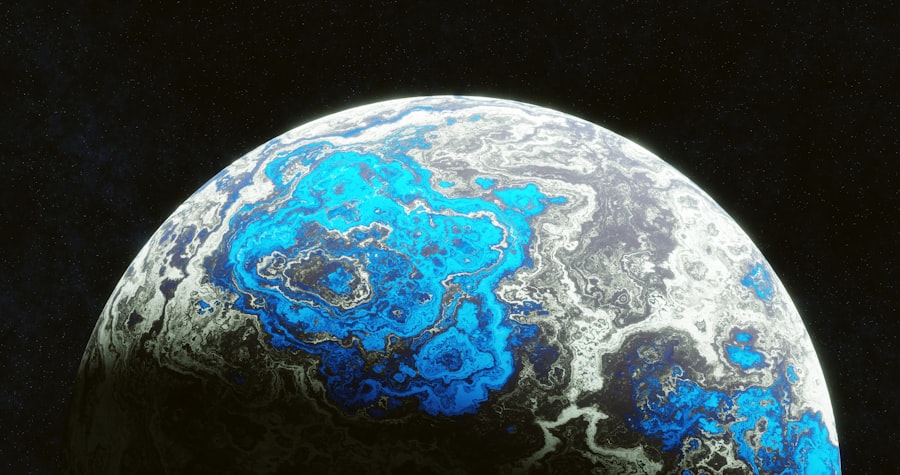
Despite the overwhelming scientific refutation, the hollow Earth concept has persisted in various forms, primarily in literature, fringe theories, and alternative historical narratives. These theories often attempt to bypass scientific constraints through imaginative explanations.
The “Subterranean Worlds” of Fiction and Folklore
The idea of intelligent life or even entire civilizations residing within the Earth has been a rich source of inspiration for authors and storytellers. Jules Verne’s “Journey to the Center of the Earth” is perhaps the most famous example, depicting a hidden world beneath the surface, complete with prehistoric creatures and vast oceans. These fictional narratives, while entertaining, are often mistaken by some as having a basis in scientific possibility.
Agartha and Shambhala: Mythical Subterranean Realms
In some esoteric and spiritual traditions, the concept of a hidden civilization within the Earth, known as Agartha or Shambhala, is believed to exist. These realms are often depicted as technologically advanced or spiritually enlightened, accessible through secret entrances at the poles or in remote mountain ranges. Such beliefs typically fall outside the purview of scientific inquiry, resting instead on faith, tradition, and speculative interpretation.
Post-Halleyan Hollow Earth Theories
After Halley, other individuals proposed their own versions of a hollow Earth, often attempting to integrate contemporary scientific observations, however superficially. Leonhard Euler, the polymath mathematician, famously proposed a single hollow inner sphere containing a central sun that provided warmth and light to its inhabitants. John Cleves Symmes Jr. in the 19th century advocated for a series of concentric spheres separated by habitable atmospheres, with openings at the poles. These theories, while diverse in their specifics, share a common disregard for the increasing knowledge of Earth’s internal structure garnered through more rigorous scientific methods.
Admiral Byrd and the Polar Entrances Myth
A recurring theme in many hollow Earth narratives involves Admiral Richard E. Byrd, the famous polar explorer. Unsubstantiated claims suggest that Byrd, during his expeditions to the North and South Poles, discovered entrances to the inner Earth and encountered advanced beings. These claims often stem from misinterpretations of his expedition logs, sensationalized accounts, or outright fabrications, gaining traction particularly in the mid-20th century among proponents of ufology and conspiracy theories. No credible evidence from Byrd’s extensive records supports such fantastical encounters.
The concept of a hollow Earth has fascinated many, leading to various scientific theories and explorations over the years. One intriguing article that delves into the geological and historical aspects of these theories can be found at My Geo Quest, where it examines the implications of a hollow Earth on our understanding of geology and planetary formation. This exploration not only highlights the scientific debates surrounding the idea but also encourages readers to consider the broader implications of such theories on our knowledge of the Earth.
Conclusion: A Solid Planet, A Rich Understanding
| Theory Name | Proponent(s) | Key Concept | Scientific Evidence | Current Scientific Consensus |
|---|---|---|---|---|
| Hollow Earth Theory | John Cleves Symmes Jr. | Earth is hollow with openings at the poles leading to an inner world | No empirical evidence; disproven by seismic studies and gravity measurements | Rejected by mainstream science |
| Concave Hollow Earth | Edmond Halley (early hypothesis) | Earth consists of multiple concentric shells, possibly inhabited | Early magnetic field theories; disproven by modern geophysics | Considered obsolete and incorrect |
| Inner Sun Hypothesis | Various 19th-century theorists | Inner Earth contains a small sun providing light and heat | No scientific support; contradicts geological and physical data | Not supported by scientific community |
| Seismic Wave Analysis | Modern Geophysicists | Use of seismic waves to map Earth’s interior structure | Strong evidence for solid and liquid layers inside Earth, no hollow spaces | Supports solid Earth model; refutes hollow Earth theories |
| Gravity Measurements | Geophysicists | Measurement of Earth’s gravitational field to infer density distribution | Consistent with a dense, solid Earth; inconsistent with hollow structure | Confirms Earth is not hollow |
In summary, the concept of a hollow Earth, while a fascinating historical and cultural artifact, stands in stark contrast to the vast body of scientific evidence. Geophysical investigations, particularly seismology and gravitational studies, provide an unambiguous picture of a solid, layered planet with a dense, molten outer core and a solid inner core. The processes of planetary formation also dictate the creation of dense, solid bodies rather than hollow shells. While the allure of hidden worlds and secret civilizations within our planet remains a staple of fiction and some fringe beliefs, readers should understand that these notions possess no scientific validity. The Earth, as we understand it through rigorous scientific inquiry, is a testament to the powerful forces of gravity and accretion, a dense, majestic sphere of rock and metal, holding no vast internal voids. Our understanding of its interior, while complex, is built upon a bedrock of empirical data and consistent physical principles, illuminating a deep and dynamic world far more wondrous than any speculative vacío.
FAQs
What is the Hollow Earth theory?
The Hollow Earth theory proposes that the Earth is either entirely hollow or contains a substantial interior space. This concept suggests that there may be large cavities or even entire ecosystems beneath the Earth’s surface.
Are there any scientific evidences supporting the Hollow Earth theory?
No credible scientific evidence supports the Hollow Earth theory. Modern geology, seismology, and geophysics have extensively studied the Earth’s interior, confirming it is composed of solid and molten layers rather than hollow spaces.
How do scientists study the Earth’s interior?
Scientists study the Earth’s interior primarily through seismic wave analysis generated by earthquakes, as well as through magnetic field measurements, gravitational studies, and drilling projects. These methods provide detailed information about the Earth’s layered structure.
When did the Hollow Earth theory originate?
The Hollow Earth concept dates back to ancient times but gained popularity in the 17th and 18th centuries with speculative writings. It was largely debunked by scientific advancements in the 19th and 20th centuries.
Is the Hollow Earth theory considered a scientific hypothesis today?
No, the Hollow Earth theory is not considered a valid scientific hypothesis today. It is regarded as a pseudoscientific idea or a myth, as it contradicts well-established scientific understanding of Earth’s structure.