
The global shipping industry, the lifeblood of international trade, typically operates on meticulously planned routes. However, unforeseen circumstances – from geopolitical conflicts and extreme weather events to infrastructure failures – often necessitate deviations from these established pathways. Such shipping detours, while crucial for maintaining supply chain functionality, carry significant and often underestimated carbon emissions consequences. This article delves into the various facets of these environmental impacts, exploring the mechanisms by which detours inflate emissions and the broader implications for climate change mitigation efforts.
When a vessel deviates from its planned course, it inevitably travels a greater distance. This extended journey directly translates into increased fuel consumption, which in turn leads to a proportional rise in carbon dioxide (CO2) and other greenhouse gas (GHG) emissions. Understanding the underlying mechanics of this process is crucial.
Direct Fuel Consumption and Distance
The most straightforward impact of a detour is the additive distance traveled. A ship designed to transit a specific route, say through the Suez Canal, will consume a certain amount of fuel for that journey. If forced to reroute around the Cape of Good Hope, the vessel’s journey length can increase by thousands of nautical miles. This extended travel time, often measured in days or even weeks, requires continuous operation of the ship’s engines, leading to a direct and substantial increase in fuel consumption. Consider, for instance, a detour adding 5,000 nautical miles to a voyage. At an average fuel consumption rate, this could equate to hundreds of additional tons of fuel burned.
Power Output and Speed
While distance is a primary factor, the speed at which a ship operates also profoundly influences fuel consumption. To compensate for lost time due to a long detour, shipping companies may instruct captains to increase vessel speed – a practice known as “speeding up” or “sailing faster.” The relationship between speed and fuel consumption is not linear; it is often cubic. Doubling a ship’s speed can quadruple its fuel consumption. This exponential increase significantly exacerbates the emissions impact of detours, as vessels attempt to adhere to arrival schedules despite the longer route. This race against the clock, though economically driven, represents a considerable environmental trade-off.
Engine Type and Efficiency
The type of engine and its operational efficiency play a crucial role in determining overall emissions. Older vessels with less efficient engines will naturally produce more emissions per unit of fuel consumed compared to newer vessels equipped with advanced propulsion systems. When facing detours, these less efficient ships contribute disproportionately to the total carbon footprint. The industry’s push for cleaner fuels and more efficient engine designs is therefore even more critical in scenarios involving route disruptions.
The impact of shipping detours on carbon emissions is a critical issue in the context of global trade and environmental sustainability. A related article that delves into this topic can be found at MyGeoQuest, where it explores how altering shipping routes can significantly affect the carbon footprint of maritime transport. By analyzing various case studies, the article highlights the trade-offs between efficiency and environmental responsibility in the shipping industry.
The Ripple Effect on Global Supply Chains
The immediate increase in emissions from a single vessel detour represents only one part of the story. The systemic nature of global shipping means that one disruption can trigger a cascading series of events, leading to a broader emissions footprint across the entire supply chain.
Schedule Delays and Port Congestion
Detours inevitably lead to delays in vessel arrivals at their destination ports. This domino effect can cause significant port congestion, as multiple vessels arrive off-schedule, creating bottlenecks in docking, unloading, and loading operations. When ships are forced to queue outside ports, their auxiliary engines continue to run, consuming fuel and emitting GHGs while awaiting berth availability. This “idling” emissions, though often overlooked, contribute substantially to the overall carbon impact of a disrupted shipping network.
“Catch-Up” Sailing Strategies
To mitigate schedule disruptions and avoid penalties, shipping lines often implement “catch-up” sailing strategies once the detour is cleared or nearing its end. This involves increasing the speed of subsequent voyages to try and realign the shipping schedule. As previously discussed, increased speed leads to a disproportionate increase in fuel consumption and therefore emissions. This reactive measure, while commercially sensible for shipping lines, compounds the environmental burden.
Transshipment and Logistics Adjustments
Complex supply chains often rely on transshipment, where cargo is transferred between different vessels at intermediate ports. Detours can disrupt these intricate transshipment networks, necessitating alternative arrangements. This might involve additional short-haul voyages to reroute cargo, leading to more stops, more engine starts and stops, and ultimately more emissions. The flexibility required to adapt to detours often comes at an environmental cost, as logistical adjustments rarely prioritize carbon efficiency.
The Economic and Environmental Trade-Offs
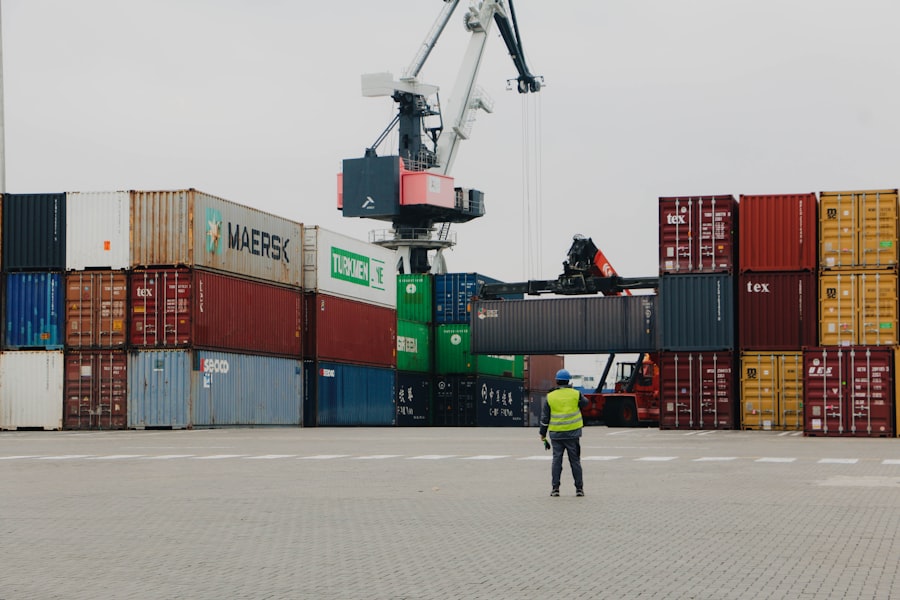
The decision to undertake a detour is rarely made lightly. It involves a complex interplay of economic pressures, commercial obligations, and environmental considerations. Understanding these trade-offs is essential for a comprehensive evaluation of the emissions impact.
Fuel Costs and OpEx Increases
Fuel constitutes a significant portion of a ship’s operational expenses (OpEx). Longer routes directly translate to higher fuel bills, impacting the profitability of shipping companies and potentially driving up the cost of goods for consumers. These increased costs often incentivize shipping lines to take measures that, while saving money in the short term (e.g., delaying maintenance), can indirectly affect emissions in the long run. The economic imperative often overshadows the environmental one when profit margins are squeezed.
Insurance Premiums and Risk Assessments
Geopolitical hotspots or regions prone to piracy, which are often the reasons for detours, carry higher insurance premiums. Shipping companies must factor these increased costs into their operational planning. While not a direct emissions factor, the financial pressure from higher premiums can indirectly influence operational decisions, potentially leading to less environmentally optimal choices if cost-cutting becomes paramount. The risk assessment process, therefore, inadvertently plays a role in shaping the carbon footprint of detours.
Carbon Pricing and Regulatory Pressures
The burgeoning landscape of carbon pricing mechanisms, such as the EU Emissions Trading System (ETS) for shipping, adds another layer of complexity. Longer detours, by increasing emissions, directly translate into higher carbon costs for shipping companies operating under such regulations. This financial penalty, while intended to incentivize emissions reduction, initially represents an additional operational expense. As such, detours not only increase direct fuel costs but also amplify the financial burden associated with carbon taxes or allowances.
Data Gaps and Measurement Challenges

Accurately quantifying the carbon emissions impact of shipping detours presents several significant challenges. The dynamic nature of global shipping, coupled with proprietary operational data, often creates a veil of uncertainty around these calculations.
Lack of Granular Data
While aggregate data on shipping emissions is available, obtaining granular data specific to individual detours is often difficult. Shipping companies typically guard their operational data closely due to commercial sensitivities. This makes it challenging for researchers and policymakers to precisely model the emissions impact of specific routing changes. Without a clear understanding of the ‘before and after’ emissions for a significant number of detours, developing targeted mitigation strategies remains a hurdle.
Real-time Monitoring Limitations
Despite advancements in satellite tracking and vessel monitoring systems, real-time data on fuel consumption and instantaneous emissions for every ship undergoing a detour is not widely accessible or standardized. The ability to track a ship’s speed, engine load, and precise fuel burn rates throughout an unplanned route change would provide invaluable data for accurate emissions assessments. The current limitations mean that many calculations rely on estimations and industry averages, which may not fully capture the nuances of individual detours.
Attribution and Baseline Establishment
Establishing a clear baseline for what constitute “normal” emissions for a given voyage is crucial for accurately attributing additional emissions to a detour. The variability in weather conditions, cargo loads, and even crew behavior can influence fuel consumption on a day-to-day basis. Isolating the specific emissions increase directly attributable to a reroute requires sophisticated analytical models and comprehensive baseline data, which are often lacking.
The impact of shipping detours on carbon emissions has become an increasingly important topic in discussions about environmental sustainability. A recent article highlights how these detours can significantly increase the carbon footprint of maritime transport, emphasizing the need for more efficient routing strategies. For further insights into this pressing issue, you can read more about it in this informative piece on My Geo Quest, which explores the broader implications of shipping practices on global emissions.
Mitigation Strategies and Future Outlook
| Detour Route | Distance Increase (nautical miles) | Additional Fuel Consumption (tons) | Additional CO₂ Emissions (tons) | Percentage Increase in Emissions | Reason for Detour |
|---|---|---|---|---|---|
| Panama Canal to Cape Horn | 3,700 | 150 | 470 | 45% | Canal congestion/closure |
| Suez Canal to Cape of Good Hope | 4,300 | 180 | 560 | 50% | Canal blockage |
| Strait of Malacca to Lombok Strait | 500 | 20 | 62 | 12% | Security concerns |
| English Channel to Northern Sea Route | 1,200 | 55 | 170 | 30% | Weather disruptions |
| Strait of Hormuz to Cape of Good Hope | 3,000 | 120 | 375 | 40% | Geopolitical tensions |
Addressing the carbon emissions impact of shipping detours requires a multi-faceted approach, encompassing technological innovation, operational adjustments, and policy frameworks.
Fuel Efficiency Technologies
Investing in and retrofitting existing vessels with more fuel-efficient technologies, such as advanced hull coatings, optimized propeller designs, and waste heat recovery systems, can significantly reduce fuel consumption across all voyages, including detours. Newbuilds should prioritize these technologies from the outset. Imagine these technologies as tailoring a ship’s attire to be aerodynamic and energy-saving, regardless of the path it takes.
Alternative Fuels and Propulsion
The long-term solution lies in the transition to low-carbon and zero-carbon fuels and propulsion systems. Green hydrogen, ammonia, methanol, and battery-electric power offer promising pathways to decarbonize shipping. While the development and deployment of these alternatives are still in their early stages, their adoption would render the emissions impact of detours negligible. Shifting to these fuels would be akin to changing the very engine of global trade, from a fossil-fueled heart to a renewable one.
Optimized Route Planning and Weather Routing
Advanced weather routing software can help ships navigate detours more efficiently, selecting routes that minimize exposure to adverse weather conditions and optimize for current and wind patterns. This intelligent route planning can reduce fuel consumption even on longer journeys. This is not merely following a map, but using real-time atmospheric data to find the path of least resistance and maximum efficiency.
International Cooperation and Data Sharing
Addressing the global challenge of shipping emissions, particularly those exacerbated by detours, necessitates strengthened international cooperation. Greater transparency in data sharing among shipping companies, port authorities, and regulatory bodies can facilitate more accurate emissions monitoring and the development of targeted mitigation strategies.
Regulatory Incentives for Sustainable Detours
Policymakers could explore mechanisms to incentivize more sustainable practices during detours. This might include preferential treatment at ports for vessels that demonstrate lower emissions during rerouting, or financial support for adopting greener technologies specifically to address the environmental impact of unforeseen route changes.
Infrastructure Resilience
Investing in global shipping infrastructure, making ports more efficient, and enhancing the resilience of critical maritime passages can reduce the frequency and severity of detours in the first place. For example, maintaining the navigability of canals and ensuring the security of shipping lanes directly mitigates the need for rerouting. A robust and resilient network of maritime arteries significantly reduces the instances where vessels are forced to take longer, more polluting veins.
In conclusion, shipping detours, while an essential adaptive measure in global commerce, are not without significant environmental consequences. The longer distances traveled, increased speeds, and logistical complexities inherent in rerouting magnify carbon emissions. Addressing this issue requires a concerted effort from all stakeholders – shipping companies, policymakers, researchers, and ultimately, consumers – to foster a more resilient, efficient, and environmentally responsible global shipping network. The oceans, the silent highways of our world, demand our attention and our commitment to a sustainable future, even when the path is unexpectedly longer.
FAQs
What are shipping detours and why do they occur?
Shipping detours refer to alternative routes taken by vessels that deviate from their usual or shortest path. These detours can occur due to various reasons such as avoiding bad weather, geopolitical conflicts, piracy threats, or to comply with environmental regulations.
How do shipping detours impact carbon emissions?
Shipping detours generally increase the distance traveled and the time at sea, leading to higher fuel consumption. This results in increased carbon dioxide (CO2) emissions, contributing to the overall carbon footprint of maritime transport.
Are there specific regions where shipping detours significantly affect emissions?
Yes, regions with frequent geopolitical tensions, piracy risks, or environmental restrictions—such as the Strait of Hormuz, the Suez Canal, or the Arctic routes—often see shipping detours that can substantially increase emissions due to longer travel distances.
What measures can be taken to reduce the carbon emissions caused by shipping detours?
Measures include optimizing route planning with advanced navigation technologies, using cleaner fuels or energy-efficient vessels, implementing stricter environmental regulations, and improving international cooperation to minimize the need for detours.
How does the shipping industry monitor and report emissions related to detours?
The shipping industry uses monitoring systems like the Automatic Identification System (AIS) to track vessel routes and fuel consumption. Emissions are reported under frameworks such as the International Maritime Organization’s (IMO) Data Collection System (DCS) and the European Union’s Monitoring, Reporting, and Verification (MRV) regulation.