The Panama Canal stands as a testament to human ingenuity and a critical artery in the complex circulatory system of global trade. This man-made waterway, carving its path across the Isthmus of Panama, has fundamentally reshaped maritime transport since its inauguration in 1914. It is not merely a shortcut; it is a linchpin, a vital cog that enables the smooth flow of goods and raw materials across oceans, influencing economies and connecting disparate corners of the world. Understanding the Panama Canal is to grasp a fundamental facet of modern globalization.
The dream of a transoceanic canal connecting the Atlantic and Pacific Oceans has captivated imaginations for centuries. The vast distances and treacherous seas separating these two great bodies of water presented a significant hurdle for trade and naval power. Early Spanish explorers, notably Vasco Núñez de Balboa in the 16th century, recognized the strategic potential of the narrow Isthmus of Panama. However, the technological and financial means to achieve such an ambitious undertaking were centuries away.
Early Visions and Failed Attempts
The allure of a shorter, safer route persisted. Napoleon III of France, after supervising the construction of the Suez Canal, turned his attention to the possibility of a Panamanian passage.
The French Canal Initiative: A Costly Endeavor
In the late 19th century, Ferdinand de Lesseps, the celebrated builder of the Suez Canal, led a French company in a monumental effort to construct a sea-level canal across Panama. This endeavor, however, proved to be a catastrophic undertaking.
Engineering Challenges: A Battle Against Nature
The Isthmus of Panama presented formidable engineering challenges, far greater than those encountered in the sandy terrain of Egypt. The dense jungle, torrential rains, and the formidable Gaillard Cut (originally known as the Culebra Cut) proved to be relentless adversaries. The tropical climate was a breeding ground for diseases that decimated the workforce.
Malaria and Yellow Fever: The Silent Killers
Mosquitoes, carriers of malaria and yellow fever, were an unseen but deadly enemy. These diseases ravaged the labor force, causing an estimated 20,000 deaths during the French attempt. The cumulative toll of disease and accidents was staggering, a stark reminder of the human cost of ambition.
Financial Mismanagement and Corruption
Beyond the physical and biological obstacles, the French project was plagued by financial mismanagement and corruption. De Lesseps, accustomed to the relatively flat terrain of the Suez, underestimated the complexities of Panamanian geology and the immense scale of excavation required. Bribes and inflated contracts further siphoned precious resources.
The Fall of the French Company
Ultimately, the French effort collapsed in financial ruin and public scandal in 1889. The dream of a Panamanian canal seemed to have dissolved into tragedy and despair, a cautionary tale of overreach and underestimation.
The American Intervention: Triumph Through Perseverance
The United States, recognizing the strategic and economic implications of a canal under European control, eventually took up the mantle. The Spanish-American War of 1898 highlighted the necessity of a rapid naval transfer between the Atlantic and Pacific fleets.
The Hay-Pauncefote Treaty: Securing Panamanian Independence
After initial negotiations for a canal route through Nicaragua proved fruitless, the U.S. shifted its focus back to Panama. In 1903, the Hay-Pauncefote Treaty was signed with Great Britain, abrogating an earlier treaty that had granted Britain sole rights to any future canal. Subsequently, the U.S. supported Panama’s declaration of independence from Colombia, paving the way for the Hay-Bunau-Varilla Treaty, which granted the United States control over a Canal Zone in perpetuity.
The Role of Philippe Bunau-Varilla
Philippe Bunau-Varilla, a French engineer who had been involved in the failed French venture, played a pivotal role in orchestrating the U.S. acquisition of the canal rights. His efforts were instrumental in convincing the U.S. to pursue the Panamanian route.
The Roosevelt Corollary and American Hegemony
President Theodore Roosevelt’s bold assertion of American dominance in the Western Hemisphere, often termed the Roosevelt Corollary, provided the political backing for the canal’s construction. The U.S. viewed the canal as a strategic asset vital to its national security and economic interests.
The reliability of the Panama Canal plays a crucial role in global logistics planning, as it serves as a vital conduit for maritime trade between the Atlantic and Pacific Oceans. For an in-depth analysis of how the canal’s operational efficiency impacts supply chains and shipping routes, you can read the related article on this topic at this link. Understanding these dynamics is essential for businesses aiming to optimize their logistics strategies in an increasingly interconnected world.
Engineering a Miracle: The Birth of the Lock System
The American engineers faced the same daunting challenges that had defeated the French, but they brought with them a more advanced understanding of engineering and a formidable commitment of resources. They recognized that a sea-level canal was an impractical and prohibitively expensive undertaking.
The Lock-Type Canal Design: A Stroke of Genius
The groundbreaking decision to adopt a lock-type canal revolutionized the project. This ingenious design allowed ships to ascend and descend through a series of water-filled chambers, overcoming the significant elevation of the continental divide.
The Panama Canal Locks: A Stairway for Ships
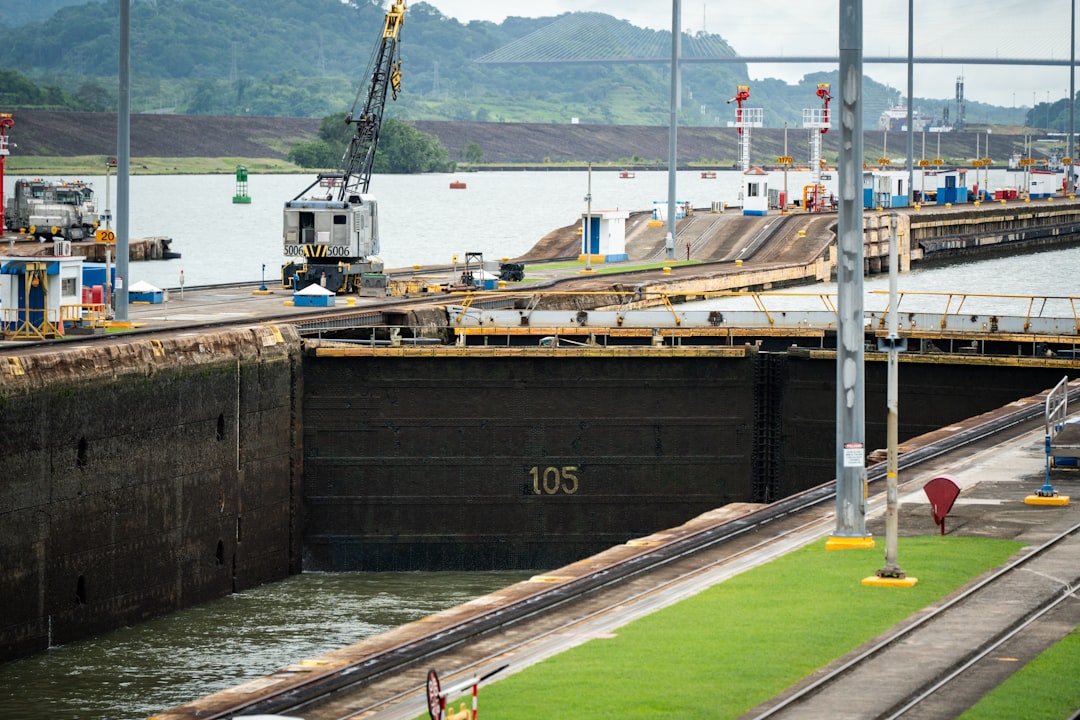
The heart of the Panama Canal lies in its sophisticated system of locks. These massive concrete structures are essentially water elevators for ships.
Ascending the Summit: Gatun Locks
For vessels traveling from the Atlantic to the Pacific, the journey begins with the Gatun Locks, a series of three consecutive chambers that lift ships 85 feet above sea level to the level of Gatun Lake.
Gatun Lake: A Man-Made Reservoir
Gatun Lake, an enormous artificial body of water, was created by damming the Chagres River. This lake serves as the principal water source for the canal, replenished by the abundant rainfall in the region.
Traversing the Continental Divide: The Culebra Cut (Gaillard Cut)
After traversing Gatun Lake, ships enter the Gaillard Cut (formerly the Culebra Cut), a 7.8-mile channel carved through the continental divide. This section, a monumental feat of excavation, still requires constant dredging to remove landslides and debris.
The Challenges of Excavation: A Monumental Undertaking
The excavation of the Gaillard Cut involved moving millions of cubic yards of earth and rock. The unstable geological conditions and frequent landslides presented ongoing engineering challenges.
Descending to the Pacific: Miraflores and Pedro Miguel Locks
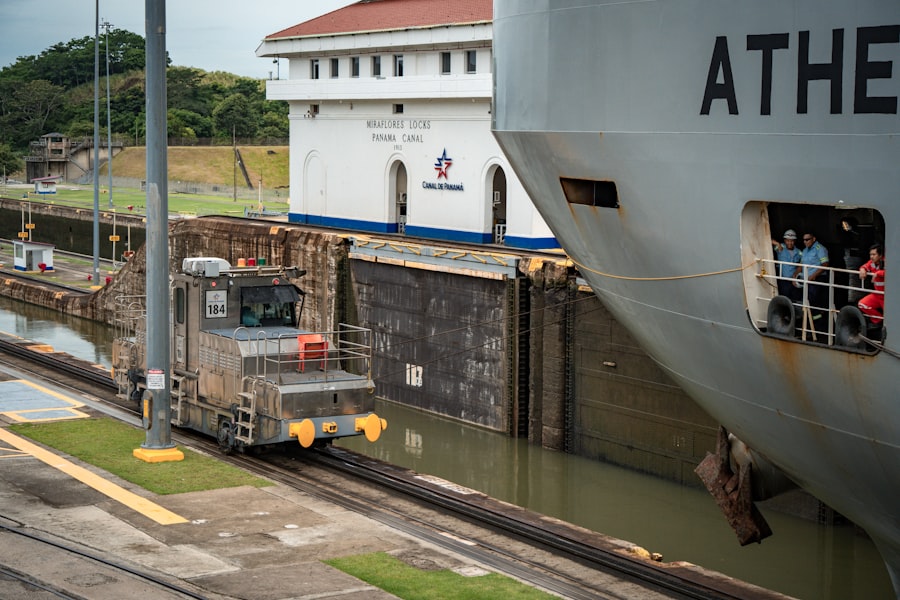
Upon reaching the Pacific side, ships are lowered back to sea level through the Miraflores Locks (two chambers) and the Pedro Miguel Lock (one chamber). These locks, along with Gatun, are the arteries that regulate the flow of water and ships.
The Role of Sanitation and Disease Control
A crucial element of the American success was their emphasis on public health and sanitation. Dr. William C. Gorgas, who had successfully eradicated yellow fever in Havana, Cuba, implemented comprehensive mosquito control programs in Panama.
Eradicating Disease: A Precursor to Construction
Gorgas’s meticulous efforts to drain swamps, fumigate areas, and ensure clean water supplies were instrumental in controlling the spread of malaria and yellow fever, significantly reducing the death toll among workers. This focus on health created a more stable and productive workforce, a critical factor that had been missing in the French attempt. The control of these diseases was as vital as any engineering marvel.
The Canal’s Impact: Reshaping Global Trade Routes
The opening of the Panama Canal in 1914 was a seismic event for international trade. It dramatically reduced transit times and shipping costs, fundamentally altering global trade routes.
Reducing Shipping Distances: A Catalyst for Commerce
The canal shaved thousands of miles off journeys that previously required circumnavigating South America. This reduction in distance translates directly into savings in time, fuel, and labor, making goods cheaper and more accessible.
Trans-Pacific Trade: A New Era of Connectivity
The canal facilitated a surge in trade between the Atlantic and Pacific coasts of North America, as well as between Asia and the East Coast of the United States.
The Opening of New Markets: Global Reach
Businesses could now more efficiently reach customers and source raw materials from a wider range of international markets. The world, in essence, became smaller and more interconnected.
Atlantic-European Trade with East Asia: Shorter Journeys
Trade routes between Europe and East Asia also benefited immensely, allowing for shorter and more direct voyages.
Efficiency Gains: The Lifeblood of Commerce
The efficiency gains realized through the canal have been a driving force behind globalization, enabling the intricate supply chains that define modern commerce.
Economic Implications: A Boon for Panama and Beyond
The economic benefits of the Panama Canal extend far beyond its operational revenue. It has been a significant driver of economic growth for Panama and has had a ripple effect across the global economy.
Panama’s Economic Engine: Sovereignty and Revenue
The U.S. relinquished control of the canal to Panama in 1999, a transfer that has allowed Panama to harness the waterway as a vital source of national income and a symbol of its sovereignty. The tolls collected from transiting ships form a substantial portion of Panama’s GDP.
Toll Revenue: The Canal’s Financial Arteries
The fees charged to ships for passage through the canal are its primary source of revenue, a substantial sum that funds canal operations and maintenance, as well as contributing significantly to Panama’s national budget.
The Economics of Transit Fees: A Global Marketplace
The toll structure is complex, based on factors such as a ship’s size, cargo, and passenger numbers, reflecting its position in the global maritime marketplace.
Facilitating Global Supply Chains: The Backbone of Industry
The canal’s smooth operation is essential for the stability of global supply chains. Disruptions to its flow can have immediate and far-reaching economic consequences.
Just-In-Time Delivery: The Canal’s Role
Modern manufacturing often relies on just-in-time delivery systems, where components arrive precisely when needed. The Panama Canal’s reliability is crucial for maintaining these systems.
The Fragility of Interconnectedness: Lessons from Disruptions
Any disruption to the canal, whether due to weather, operational issues, or external factors, can create bottlenecks and delays, highlighting the delicate nature of global supply chains.
Modernization and Expansion: Adapting to a Changing World
The success of the Panama Canal has led to continuous efforts to adapt and expand its capacity to accommodate the ever-growing volume and size of global shipping.
The Original Locks: A Historical Perspective
The original locks, though marvels of early 20th-century engineering, were designed for a specific era of shipping.
Limitations of the Panamax Size: A Growing Constraint
The dimensions of the original locks define the “Panamax” size of vessels, a standard that has become increasingly restrictive as ships have grown in size.
The Rise of Larger Vessels: A Challenge for the Old System
The trend towards larger container ships and bulk carriers meant that a significant portion of the global fleet could no longer transit the canal. This posed a limitation on trade efficiency.
Container Ship Evolution: From Small to Giant
The increase in container ship capacity, in particular, has necessitated adjustments. Older Panamax vessels are giving way to much larger Neo-Panamax ships.
The Expansion Project: A New Era of Capacity
To address these limitations, Panama undertook a massive expansion project, inaugurated in 2016.
The Neo-Panamax Locks: Welcoming Larger Ships
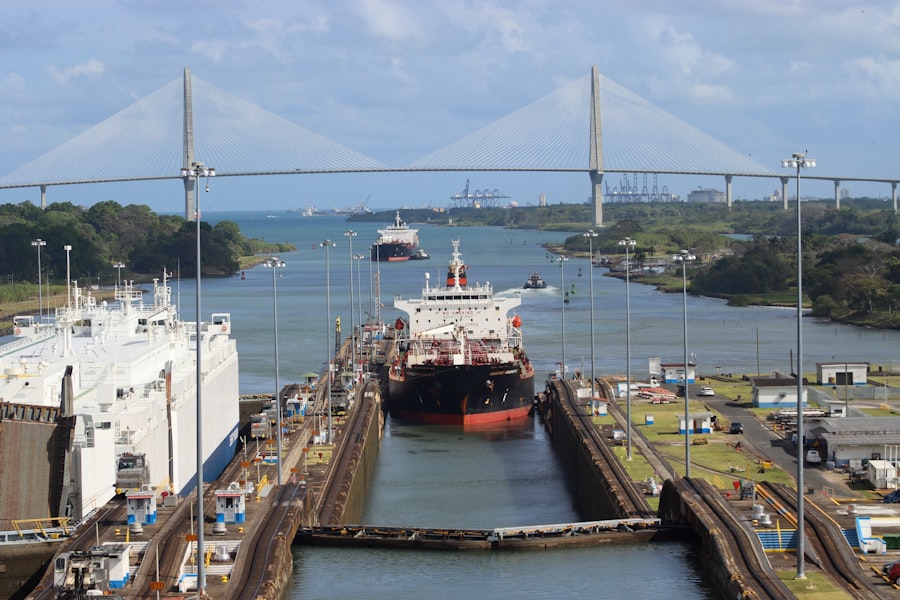
The expansion involved building a new set of larger locks, capable of accommodating Neo-Panamax vessels, which are significantly larger than their Panamax predecessors.
Increased Throughput: A Boon for Global Shipping
These new locks have dramatically increased the canal’s capacity, allowing for the transit of many more ships and larger ships overall.
Container Volume Growth: A Reflection of Demand
The expansion was driven by the need to keep pace with the exponential growth in containerized cargo and the increasing size of vessels designed to carry it.
Water Conservation Measures: A Sustainable Future
The expansion also incorporated advanced water-saving basins within the new locks, significantly reducing the amount of fresh water required for each transit.
Sustainability in Water Management: A Crucial Consideration
Given the canal’s reliance on freshwater from Gatun Lake, water conservation is a critical aspect of its long-term sustainability.
The reliability of the Panama Canal plays a crucial role in global logistics planning, as it serves as a key transit route for maritime trade. A recent article highlights how disruptions in the canal can significantly impact shipping schedules and supply chains worldwide. For those interested in understanding the broader implications of these challenges, you can read more about it in this insightful piece on logistics strategies and their dependence on the canal’s efficiency at MyGeoQuest.
The Canal’s Future: Challenges and Opportunities
| Metric | Description | Value / Data | Source / Notes |
|---|---|---|---|
| Average Transit Time | Time taken for a vessel to pass through the Panama Canal | 8-10 hours | Panama Canal Authority (ACP) |
| Canal Capacity | Number of vessels transiting per day | 35-40 vessels/day | ACP, post-expansion data |
| Reliability Rate | Percentage of scheduled transits completed without delay | ~95% | Industry reports, 2023 |
| Average Delay Time | Average waiting time due to congestion or maintenance | 1.5-3 hours | Logistics analytics, 2023 |
| Impact on Global Shipping Routes | Percentage of global maritime trade volume passing through the canal | ~6-8% | UNCTAD, 2023 |
| Lock System Efficiency | Operational uptime of lock systems | 99.5% | ACP maintenance reports |
| Environmental Impact Metrics | Reduction in fuel consumption due to canal use vs. alternative routes | Up to 40% fuel savings | Maritime environmental studies |
| Global Logistics Planning Impact | Effect on shipping schedules and inventory management | Improved predictability, reduced lead times by 1-2 days | Supply chain case studies |
The Panama Canal remains a vital component of global logistics, but it faces evolving challenges and opportunities that will shape its future.
Environmental Concerns: Water Scarcity and Climate Change
The canal’s operation is intrinsically linked to the availability of freshwater, making it vulnerable to environmental changes.
The Impact of El Niño and Droughts: A Threat to Operations
Periods of drought and the El Niño phenomenon can significantly reduce rainfall in the region, impacting water levels in Gatun Lake and potentially limiting the canal’s operational capacity.
Water Management Strategies: Ensuring Future Flow
Panama is actively investing in water management strategies, including exploring alternative water sources and improving water efficiency in the lock system, to mitigate these risks.
The Delicate Balance: Water Levels and Vessel Loads
The interplay between water levels, rainfall, and the number of transits is a constant balancing act for canal operators.
Climate Change Vulnerabilities: Rising Sea Levels and Extreme Weather
As climate change progresses, the canal and its infrastructure may face new challenges.
Sea Level Rise: Implications for Coastal Infrastructure
Rising sea levels could affect the canal’s coastal infrastructure and the surrounding environment.
Storm Intensification: A Potential Hazard
More intense storms could pose risks to the canal’s operations and infrastructure.
Geopolitical Shifts and Trade Dynamics: Adapting to a New World Order
The global geopolitical landscape is constantly shifting, and the Panama Canal must adapt to these changes.
Emerging Trade Routes: Competition and Diversification
New trade routes and infrastructure projects, such as the Suez Canal expansion and potential land bridges, present both competition and opportunities for diversification.
The Belt and Road Initiative: A Global Reconfiguration
China’s Belt and Road Initiative, for instance, aims to reconfigure global trade routes, and the Panama Canal will need to remain a competitive and efficient option.
The Competitive Edge: Maintaining Efficiency and Reliability
The canal’s continued success will depend on its ability to maintain its competitive edge in terms of efficiency, reliability, and cost-effectiveness.
Technological Advancements: Automation and Digitalization
The integration of new technologies offers opportunities for enhanced efficiency and safety.
Smarter Canal Operations: Leveraging Data
The canal is increasingly leveraging data analytics and automation to optimize operations, improve safety, and enhance transit times.
The Future of Maritime Transport: Innovation and Adaptation
The Panama Canal’s ability to embrace technological advancements will be crucial for its long-term relevance in the evolving landscape of global maritime transport. It is more than just a waterway; it is a dynamic organism, constantly adapting and serving as an indispensable engine of global commerce.
FAQs
What is the Panama Canal and why is it important for global logistics?
The Panama Canal is a man-made waterway in Panama that connects the Atlantic and Pacific Oceans. It is crucial for global logistics because it significantly reduces the travel distance for ships, enabling faster and more cost-effective transportation of goods between the east and west coasts of the Americas and other parts of the world.
How does the reliability of the Panama Canal impact global supply chains?
The reliability of the Panama Canal affects global supply chains by influencing shipping schedules and transit times. Delays or closures can cause disruptions, leading to increased shipping costs, inventory shortages, and delays in the delivery of goods worldwide.
What factors can affect the operational reliability of the Panama Canal?
Operational reliability can be affected by factors such as maintenance activities, weather conditions, water levels in the canal’s reservoirs, technical issues with locks, and increased traffic congestion. These factors can lead to delays or temporary closures.
How do global logistics planners account for Panama Canal reliability in their strategies?
Logistics planners incorporate contingency plans, alternative routing options, and buffer times into their schedules to mitigate risks associated with Panama Canal delays. They also monitor canal traffic and weather conditions to adjust shipping plans proactively.
What recent improvements have been made to enhance the Panama Canal’s reliability?
Recent improvements include the expansion of the canal with new locks (completed in 2016) to accommodate larger vessels, upgraded infrastructure, and enhanced water management systems. These upgrades have increased capacity and improved the canal’s ability to handle traffic efficiently.