
The intricate tapestry of European industry’s supply chains is undergoing a profound transformation. For decades, a model prioritizing efficiency and just-in-time delivery often at the expense of robustness, proved remarkably successful. However, a confluence of global events – from trade wars and pandemics to geopolitical instability and the accelerating urgency of climate change – has exposed the inherent vulnerabilities within these complex networks. Building resilience is no longer an abstract concept; it is an imperative for the continued prosperity and security of European economies. This article examines the challenges, strategies, and emerging trends in fortifying these vital supply chains.
European supply chains, once seen as a well-oiled machine, have revealed cracks under the pressure of recent disruptions. The intricate web of global sourcing, where components and raw materials often traverse continents multiple times before reaching their final destination, has proven to be a double-edged sword. While this globalization fostered cost-effectiveness, it simultaneously created single points of failure, susceptible to a ripple effect from even localized disturbances. The sheer interconnectedness, while a strength in stable times, becomes a critical vulnerability when one link in the chain falters.
Over-reliance on Single Sourcing and Geographic Concentration
For a considerable period, many European industries gravitated towards single-sourcing key components or raw materials, often driven by cost efficiencies or specialized expertise held by a limited number of suppliers. This strategy, akin to placing all one’s eggs in a single, albeit very large, basket, significantly amplifies the risk. When that sole supplier encounters production issues, faces political instability in its operating region, or is impacted by natural disasters, the entire downstream production process for numerous European manufacturers can grind to a halt. Similarly, the geographic concentration of critical suppliers within specific regions, even if diverse suppliers exist, creates a vulnerability to regional-specific shocks. A lockdown in Asia, for instance, can have a disproportionate impact on European manufacturing if a substantial percentage of key inputs originate from that zone.
The Fragility of Just-in-Time (JIT) Models
The widespread adoption of Just-in-Time (JIT) manufacturing principles has been a cornerstone of lean production, minimizing inventory costs and maximizing efficiency. However, JIT inherently relies on the consistent and predictable flow of goods. When this flow is disrupted, as seen during port congestion, shipping container shortages, or sudden demand surges, the absence of buffer stock becomes a critical bottleneck. The lean nature of JIT, while admirable in its pursuit of efficiency, leaves little room for error or unexpected delays. It creates a system that is agile but exceptionally sensitive to external shocks, much like a finely tuned race car requiring pristine track conditions to perform optimally. Any deviation from the ideal environment can lead to a complete breakdown.
The Unseen Impact of Geopolitical Shocks
Geopolitical tensions and conflicts, once considered distant concerns, now cast a long shadow over European supply chains. The Russian invasion of Ukraine, for example, not only disrupted energy supplies but also impacted agricultural commodities and critical raw materials. This event served as a stark reminder that supply chains are not insulated from international relations. Sanctions, trade disputes, and regional instability can swiftly reconfigure the landscape of material availability and cost, forcing rapid and often costly adjustments for businesses. The interconnectedness of the global economy means that events occurring thousands of miles away can directly influence the production lines and bottom lines of European firms.
The Digital Vulnerability: Cybersecurity Threats
In an increasingly digitized global economy, supply chains are prime targets for cyberattacks. Disruptions to these digital networks can cripple operations, compromise sensitive data, and lead to significant financial losses. The interconnected nature of modern logistics and manufacturing means that a breach at one point in the chain can cascade throughout the entire system. Securing these digital arteries is as crucial as securing physical transportation routes.
In recent discussions about supply chain resilience within the European industry, an insightful article titled “Strengthening Supply Chain Resilience in Europe” highlights the strategies that companies are adopting to mitigate risks and enhance their operational robustness. This article delves into the importance of diversifying suppliers, investing in technology, and fostering collaboration among industry players to build a more resilient supply chain. For more information, you can read the full article here: Strengthening Supply Chain Resilience in Europe.
Charting a New Course: Strategies for Enhanced Resilience
The recognition of these vulnerabilities has spurred a proactive approach to building more resilient supply chains. This involves a multi-faceted strategy that spans diversification, technological adoption, and collaborative efforts. The goal is not to abandon efficiency, but to imbue the system with a greater capacity to absorb shocks and recover swiftly.
Diversification of Supply Sources and Geographic Footprints
A primary strategy for bolstering resilience is diversification. This involves moving away from single-source dependencies by identifying and cultivating relationships with multiple suppliers located in different geographical regions. This approach acts as a hedging mechanism, ensuring that if one source is compromised, others can pick up the slack. European companies are increasingly exploring nearshoring and friend-shoring options, bringing production closer to home or to allied nations. This reduces reliance on distant, potentially volatile markets and shortens lead times, offering a dual benefit of reduced risk and improved agility. This is akin to building an investment portfolio with diverse assets; the aim is to mitigate the impact of any single asset’s underperformance.
Strategic Stockpiling and Inventory Management
While the allure of lean inventories remains, a pragmatic approach to resilience necessitates a re-evaluation of inventory management strategies. This includes strategic stockpiling of critical raw materials, components, and finished goods. The extent and nature of this stockpiling will vary by industry and product, but the principle is to create buffer capacity to absorb short-term disruptions. This is not about reverting to outdated models of overstocking, but about a more intelligent, risk-based approach to inventory. It’s about having a lifeboat ready rather than hoping the ship never encounters rough seas.
Investing in Advanced Technologies and Digitalization
Technological advancements offer powerful tools for enhancing supply chain visibility, agility, and resilience. The implementation of Artificial Intelligence (AI) and Machine Learning (ML) can enable predictive analytics for demand forecasting and potential disruption identification. Blockchain technology offers enhanced transparency and traceability, making it easier to track goods and verify their authenticity, thereby mitigating risks associated with counterfeit products and ensuring provenance. The Internet of Things (IoT) can provide real-time data on inventory levels, shipment locations, and operational status, allowing for faster responses to unforeseen events. Digital twins of supply chains can also be used to simulate various disruption scenarios and test mitigation strategies in a virtual environment.
Building Stronger Supplier Relationships and Collaboration
Resilience is not built in isolation; it requires robust collaboration across the entire supply chain. European companies are increasingly focusing on building deeper, more transparent relationships with their suppliers. This involves sharing information, jointly developing risk management strategies, and ensuring fair contractual terms that acknowledge the shared responsibility for resilience. Collaborative platforms and data-sharing initiatives can foster a more integrated and responsive supply chain ecosystem. This symbiotic relationship ensures that all parties are invested in the collective security and success of the chain.
Enhancing Logistics and Transportation Flexibility
The efficiency of transportation networks is a critical determinant of supply chain resilience. Investing in diversifying transportation modes and routes, from sea and air to rail and road, can provide crucial alternatives when one mode is disrupted. The development of more flexible logistics networks, capable of adapting to changing circumstances, is paramount. This includes exploring regional distribution hubs and investing in advanced warehouse management systems that can facilitate rapid inventory rebalancing.
The Role of Policy and Regulation in Fortifying Supply Chains
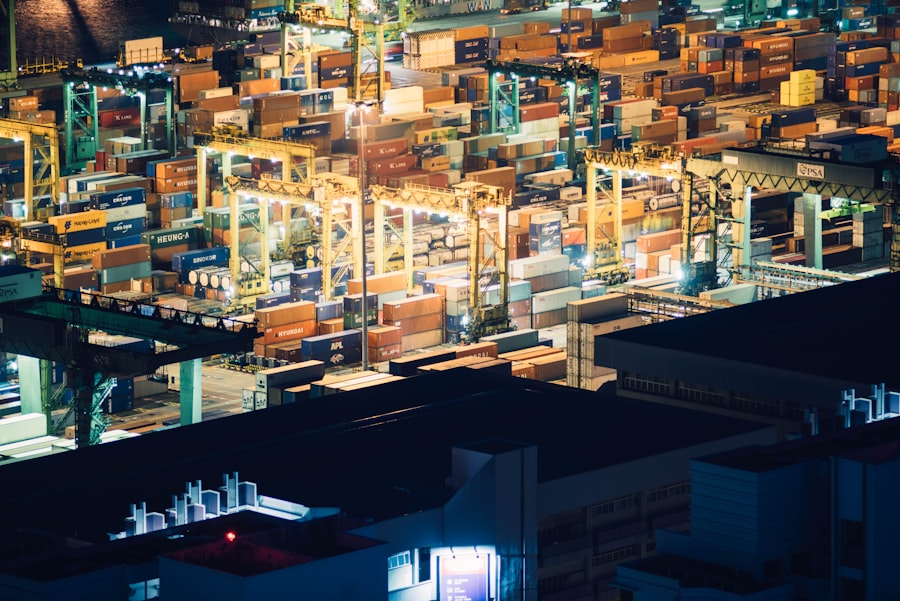
Beyond individual corporate strategies, government policies and regulatory frameworks play a vital role in fostering a more resilient European industrial landscape. A supportive policy environment can incentivize investment in resilience, harmonize standards, and facilitate cross-border cooperation.
Government Incentives and Financial Support
Governments can actively encourage the adoption of resilience-building measures through targeted incentives and financial support. This could include grants for technological upgrades, tax breaks for companies investing in diversified sourcing, or subsidies for establishing strategic raw material reserves. Such measures can help alleviate the upfront costs associated with implementing resilience strategies, making them more accessible to small and medium-sized enterprises (SMEs) who may lack the resources of larger corporations.
Streamlining Trade Facilitation and Reducing Bureaucracy
Efficient and predictable trade processes are essential for supply chain fluidity. Governments can contribute to resilience by streamlining customs procedures, reducing bureaucratic hurdles, and promoting harmonized international standards. This can shorten transit times, reduce the risk of delays at borders, and enhance the overall predictability of goods movement. A well-oiled customs system acts as the efficient gatekeeper of commerce, ensuring smooth passage rather than creating bottlenecks.
Promoting Research and Development in Supply Chain Innovation
Government investment in research and development (R&D) is crucial for driving innovation in supply chain management and resilience technologies. Funding research into areas such as advanced materials, sustainable logistics, AI-driven forecasting, and cybersecurity for supply chains can lead to breakthrough solutions. Collaborative R&D initiatives between industry, academia, and research institutions can accelerate the development and adoption of these innovations.
Fostering Collaboration and Information Sharing Initiatives
Governments can act as facilitators for collaboration and information sharing among businesses, industry associations, and relevant stakeholders. This can involve establishing platforms for sharing best practices, organizing dialogues on emerging risks, and coordinating responses to major disruptions. By creating a more informed and connected industrial ecosystem, governments can empower businesses to collectively build stronger supply chains.
Developing a European Industrial Strategy with a Resilience Focus
A comprehensive European industrial strategy that explicitly prioritizes supply chain resilience is essential. This strategy should identify critical sectors and materials, assess existing vulnerabilities, and outline a roadmap for strengthening European production capabilities and sourcing networks. It needs to be a long-term vision that transcends short-term economic cycles, ensuring that resilience is embedded in the fabric of European industrial policy.
Emerging Trends and Future Outlook

The journey towards building resilient supply chains is an ongoing evolution, shaped by evolving global dynamics and continuous technological advancement. Several key trends are emerging that will further define the future of European industrial supply chains.
The Rise of Regionalized and Localized Supply Chains
As global uncertainties persist, there is a noticeable trend towards the regionalization and localization of supply chains. This involves bringing production closer to end consumers, reducing reliance on long-distance transportation and complex international networks. Nearshoring and reshoring initiatives are gaining momentum, driven by a desire for greater control, reduced lead times, and enhanced responsiveness. This can create new manufacturing hubs within Europe, fostering local economic growth and employment while simultaneously bolstering national and continental security.
Increased Emphasis on Sustainability and Circular Economy Principles
The push for greater sustainability and the adoption of circular economy principles are increasingly intertwined with supply chain resilience. By designing products for longevity, repairability, and recyclability, and by fostering closed-loop systems for materials, companies can reduce their reliance on virgin resources and minimize waste. This not only contributes to environmental goals but also creates more secure and self-sufficient material flows, making supply chains less vulnerable to external shocks related to resource scarcity or geopolitical disruptions. Embracing a circular economy is akin to building a self-sustaining ecosystem within the industrial landscape, minimizing external dependencies.
The Blurring Lines Between Physical and Digital Supply Chains
The integration of physical and digital supply chain operations is accelerating. Advanced analytics, AI, and automation are transforming how goods are tracked, managed, and delivered. This convergence allows for greater visibility, predictive capabilities, and automated decision-making, enabling supply chains to adapt more rapidly to changing conditions. The digital twin concept, where a virtual replica of the physical supply chain is used for simulation and optimization, will become increasingly important in stress-testing and refining resilience strategies.
The Growing Importance of Workforce Skills and Talent Development
A resilient supply chain is underpinned by a skilled and adaptable workforce. Investing in the training and development of individuals in areas such as advanced manufacturing, data analytics, logistics management, and cybersecurity is crucial. As supply chains become more technologically sophisticated, the demand for talent with specialized skills will continue to grow. Upskilling and reskilling initiatives will be essential to ensure that the European workforce can effectively manage and operate these increasingly complex systems.
The Need for Agile and Adaptive Governance Structures
The governance of supply chains needs to become more agile and adaptive to navigate the complexities of the modern global landscape. This involves establishing clear lines of accountability, fostering effective communication channels, and developing robust incident response plans. The ability to quickly pivot and reconfigure supply chain operations in the face of unexpected events will be a key differentiator for resilient organizations. This requires a departure from rigid, hierarchical structures towards more fluid and collaborative decision-making processes.
In recent discussions about the importance of supply chain resilience in the European industry, a related article highlights innovative strategies that companies are adopting to navigate disruptions. These strategies not only focus on enhancing flexibility but also on leveraging technology to improve visibility across the supply chain. For more insights on this topic, you can read the full article here. This exploration of resilience measures is crucial for businesses aiming to thrive in an increasingly unpredictable global market.
Conclusion: A Continuous Imperative
| Metric | Value | Unit | Source | Year |
|---|---|---|---|---|
| Average Supply Chain Disruption Duration | 12 | Days | European Commission Report | 2023 |
| Percentage of Companies with Diversified Suppliers | 68 | % | Eurostat Survey | 2023 |
| Investment in Supply Chain Digitalization | 15 | % of annual budget | Industry Analysis Report | 2023 |
| Supply Chain Risk Management Adoption Rate | 74 | % of companies | European Supply Chain Resilience Study | 2022 |
| Average Inventory Buffer Increase | 20 | % increase | European Manufacturing Survey | 2023 |
| Percentage of Companies Using Local Suppliers | 55 | % | European Industry Report | 2023 |
Building resilience in European industry’s supply chains is not a one-time project but a continuous imperative. The lessons learned from recent disruptions have irrevocably altered the strategic calculus for businesses and policymakers alike. The pursuit of efficiency must now be balanced by a robust commitment to security and adaptability. By embracing diversification, leveraging technological advancements, fostering collaboration, and implementing supportive policies, Europe can build supply chains that are not only robust but also more sustainable and future-proof. The strength of the European industrial tapestry lies not in its individual threads, but in the integrity and interconnectedness of the entire weave, capable of withstanding the strains of a dynamic global environment.
FAQs
What is supply chain resilience in the context of European industry?
Supply chain resilience refers to the ability of European industries to anticipate, prepare for, respond to, and recover from disruptions in their supply chains. This includes managing risks related to geopolitical events, natural disasters, pandemics, and other factors that can impact the flow of goods and materials.
Why is supply chain resilience important for European industries?
Supply chain resilience is crucial for European industries to ensure continuous production, maintain competitiveness, and protect economic stability. Disruptions can lead to delays, increased costs, and loss of market share, so resilient supply chains help mitigate these risks and support sustainable growth.
What are common challenges to supply chain resilience in Europe?
Common challenges include dependency on single suppliers or regions, limited visibility across supply networks, logistical bottlenecks, regulatory complexities, and vulnerabilities to external shocks such as pandemics or geopolitical tensions.
How are European industries improving supply chain resilience?
European industries are enhancing resilience by diversifying suppliers, investing in digital technologies for better supply chain visibility, adopting risk management practices, increasing local sourcing, and collaborating with governments and partners to strengthen infrastructure and regulatory frameworks.
What role does the European Union play in supporting supply chain resilience?
The European Union supports supply chain resilience through policy initiatives, funding for innovation and infrastructure projects, promoting strategic autonomy, and facilitating cooperation among member states to address vulnerabilities and enhance the robustness of critical supply chains.