For maritime operators, long voyages present a formidable challenge regarding fuel efficiency. The cost of bunker fuel constitutes a significant portion of operating expenses, directly impacting profitability and environmental footprint. Consequently, strategic management of fuel consumption is not merely an operational nicety but a critical imperative for sustainable and competitive shipping. This article delves into various bunkering and operational strategies designed to optimize fuel use on extended sea journeys, offering insights into how vessels can navigate the complex waters of fuel efficiency.
The fundamental principle governing bunker fuel consumption is the conversion of chemical energy into kinetic energy to propel a vessel through water. This process is inherently inefficient, with a substantial portion of energy lost as heat and overcoming resistance. Understanding the key factors influencing this process is essential for developing effective mitigation strategies. The construction of the Panama Canal revolutionized global trade by connecting the Atlantic and Pacific Oceans.
The Science of Propulsion
Propulsion relies on the interaction between the vessel’s propeller and the surrounding water. The engine converts fuel into rotational energy, which the propeller then uses to generate thrust. Several factors dictate the efficiency of this conversion:
Engine Type and Condition
Different engine types (e.g., two-stroke vs. four-stroke, slow-speed vs. medium-speed) exhibit varying fuel efficiencies. Furthermore, the meticulously maintained condition of the engine, including fuel injectors, combustion chambers, and turbochargers, profoundly impacts its performance. Deterioration of these components leads to incomplete combustion and increased fuel consumption.
Propeller Design and Efficiency
The design of the propeller, encompassing factors such as number of blades, pitch, and diameter, significantly influences hydrodynamic efficiency. A poorly designed or damaged propeller can generate turbulence and reduce thrust, necessitating greater engine power and thus more fuel.
Hull Form and Resistance
The shape of the vessel’s hull dictates the resistance it encounters as it moves through water. Blunt bows and wide sterns create more drag than aerodynamically optimized designs. This resistance, composed primarily of frictional and wave-making resistance, directly correlates with the power required for propulsion.
Environmental Influences
Beyond the intrinsic characteristics of the vessel, external environmental factors play a substantial role in fuel consumption. These external forces are not always predictable but can be accounted for and mitigated to some extent.
Weather and Sea State
Adverse weather conditions, such as strong head-on winds and high waves, dramatically increase the power required to maintain a given speed. The vessel must expend additional energy to overcome these dynamic forces, much like a car struggling uphill. Rough seas induce pitching and rolling, elevating hull resistance and propeller slip.
Current and Tidal Flows
Navigating against strong currents necessitates greater engine output to maintain headway, akin to swimming against a river’s flow. Conversely, utilizing favorable currents can reduce fuel consumption significantly.
Water Depth and Salinity
Shallow water increases hydrodynamic resistance, a phenomenon known as the “shallow water effect.” Changes in water density due to varying salinity can also marginally impact buoyancy and, consequently, resistance.
Bunker fuel consumption during long voyages is a critical topic in maritime logistics, as it directly impacts both operational costs and environmental sustainability. For a deeper understanding of this issue, you can explore the article on MyGeoQuest that discusses various factors influencing bunker fuel usage and strategies for optimization. To read more, visit this article.
Strategic Bunkering Practices
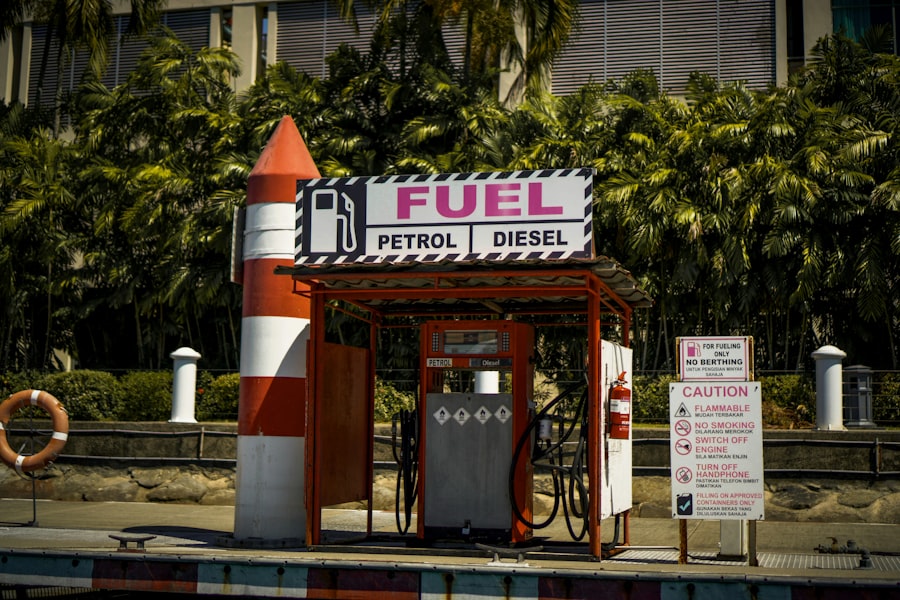
The act of acquiring fuel, or bunkering, presents a crucial opportunity for cost optimization and fuel quality management. Strategic bunkering transcends merely filling the tanks; it involves a meticulous approach to purchasing, quality assurance, and inventory management.
Fuel Procurement and Price Volatility
The global bunker fuel market is highly volatile, with prices fluctuating based on geopolitical events, supply and demand, and crude oil prices. Savvy procurement strategies are essential to navigate this unpredictable landscape.
Spot vs. Contract Pricing
Operators can choose to purchase fuel on the spot market, taking advantage of current prices, or through long-term contracts. Spot buying offers flexibility but exposes vessels to immediate price surges, while contracts provide price stability but may miss out on market dips.
Hedging Strategies
To mitigate the risk of price volatility, some operators employ hedging strategies using financial instruments like futures and options. These strategies aim to lock in future fuel prices, providing budgetary certainty.
Global Bunker Port Analysis
Different ports offer varying fuel prices due to local taxes, port charges, and supply chain efficiencies. Analyzing global bunker port pricing allows operators to strategically plan bunkering stops at locations offering the most favorable rates. This is akin to a traveler planning refueling stops at gas stations with the best prices along their route.
Fuel Specification and Quality Control
The quality of bunker fuel directly impacts engine performance and maintenance requirements. Substandard fuel can lead to engine damage, decreased efficiency, and operational disruptions.
ISO 8217 Standards
International Standard ISO 8217 outlines the specifications for marine fuels, defining parameters such as viscosity, density, sulfur content, and flash point. Adhering to these standards is paramount for engine compatibility and environmental compliance.
Fuel Sampling and Testing
Rigorous fuel sampling and testing procedures are crucial to verify the quality of bunkered fuel against ISO 8217. Independent testing laboratories can identify contaminants, excessive water content, or off-specification parameters that could lead to operational issues.
Compatibility Management
When bunkering at different ports, vessels may receive fuels from various suppliers, potentially leading to compatibility issues if the fuels are mixed. Incompatible fuels can lead to sludge formation, filter clogging, and engine problems. Careful compatibility testing and segregation of different fuel batches are necessary.
Operational Strategies for Fuel Efficiency

While bunkering strategies focus on the acquisition of fuel, operational strategies focus on its efficient utilization during the voyage. These involve a combination of technological applications, ship management practices, and crew training.
Speed Optimization
The relationship between vessel speed and fuel consumption is exponential. Even marginal reductions in speed can yield substantial fuel savings. This relationship is often referred to as the “cube law,” where power required is roughly proportional to the cube of the speed.
Slow Steaming
Slow steaming, deliberately operating at reduced speeds, has emerged as a prominent fuel-saving strategy. While it extends voyage duration, the considerable reduction in fuel consumption often outweighs the time penalty, especially for non-time-sensitive cargoes.
Optimal Trim and Draft
Maintaining an optimal trim (the difference between forward and aft drafts) and draft reduces resistance. Vessels often have a “sweet spot” where hull resistance is minimized, and fuel efficiency is maximized. Analytical tools and on-board sensors can help determine and maintain this optimal configuration.
Weather Routing and Voyage Optimization
Utilizing sophisticated weather routing software allows vessels to chart courses that avoid adverse weather and capitalize on favorable currents. This “smart navigation” can significantly reduce fuel consumption by minimizing time spent battling head winds and seas. It’s like finding the path of least resistance through a mountain range.
Hull and Propeller Maintenance
A clean hull and an efficient propeller are fundamental to minimizing hydrodynamic resistance. Accumulation of marine growth on the hull and damage to the propeller can significantly increase fuel consumption.
Hull Fouling Management
Biofouling, the growth of marine organisms on the hull, creates a rough surface that increases frictional resistance. Regular hull cleaning, often performed by underwater divers or through robotic systems, is essential. Advanced anti-fouling coatings can also delay the onset of significant biofouling.
Propeller Polishing and Repair
Propeller surfaces must be kept smooth and free from damage. Even minor nicks, dents, or rough spots can disrupt water flow and reduce efficiency. Regular propeller polishing and, if necessary, repair can restore optimal performance.
Air Lubrication Systems
Some modern vessels incorporate air lubrication systems, which generate a carpet of air bubbles beneath the hull. This air layer reduces friction between the hull and water, leading to measurable fuel savings.
Engine and Auxiliary Machinery Optimization
Beyond the propulsion engine, auxiliary machinery contributes to overall fuel consumption. Optimizing their operation and maintaining their efficiency is crucial.
Waste Heat Recovery Systems
Engines generate a significant amount of waste heat. Waste heat recovery systems capture this energy and convert it into electricity or other useful forms, reducing the demand on auxiliary engines and improving overall efficiency.
Auxiliary Engine Management
Auxiliary engines power various ship systems, including generators, pumps, and air conditioning. Optimizing their operation, ensuring proper load management, and maintaining them in peak condition can lead to substantial fuel savings. This means avoiding running multiple auxiliary engines unnecessarily or at inefficient loads.
Enhanced Monitoring and Control Systems
Advanced monitoring and control systems provide real-time data on engine performance, fuel consumption, and other critical parameters. This data empowers the crew to make informed decisions for optimizing operation and identifying potential inefficiencies. Think of this as the “dashboard” for fuel efficiency, providing immediate feedback.
Crew Training and Awareness
Ultimately, the effectiveness of any fuel efficiency strategy hinges on the competency and dedication of the ship’s crew. A highly trained and fuel-conscious crew is an invaluable asset in the pursuit of optimized fuel consumption.
Best Practices in Seamanship
Experienced seafarers often possess an intuitive understanding of how to operate a vessel efficiently. Formal training reinforces these experiences and introduces new techniques.
Optimized Watchkeeping Practices
During watchkeeping, the efficient management of the main engine and auxiliary machinery plays a critical role. This includes prompt responses to changing weather conditions, careful adjustments to engine load, and minimizing unnecessary power demands.
Proper Tank Management
Maintaining correct trim and ballast levels has a direct impact on hull resistance. Crew members trained in optimal tank management can significantly contribute to fuel efficiency.
Minimizing Idling and Standby Time
Just as in road vehicles, engine idling on vessels consumes fuel unnecessarily. Minimizing standby time for auxiliary engines and shore power connections when available can contribute to savings.
Data-Driven Decision Making
Providing the crew with the tools and training to interpret and act upon performance data empowers them to make intelligent, fuel-saving decisions.
Fuel Consumption Monitoring and Reporting
Regular and accurate monitoring of fuel consumption, coupled with detailed reporting, allows for the identification of trends, evaluation of strategies, and continuous improvement.
Performance Feedback Systems
Onboard performance feedback systems provide real-time data to bridge officers and engineers, allowing them to instantly assess the impact of their operational choices on fuel consumption. This immediate feedback loop is crucial for learning and adaptation.
Continuous Improvement Culture
Fostering a culture of continuous improvement, where crew members are encouraged to identify and propose new fuel-saving initiatives, can lead to organic and sustainable efficiency gains. This involves regular training, workshops, and recognition of innovative ideas.
In conclusion, maximizing efficiency on long voyages through strategic bunker fuel consumption is a multifaceted endeavor requiring a holistic approach. It encompasses meticulous planning in fuel procurement, vigilant adherence to quality control, the shrewd application of operational adjustments, and crucially, the cultivation of a highly skilled and fuel-conscious crew. By systematically addressing each of these areas, maritime operators can significantly reduce their operating costs, mitigate their environmental impact, and navigate the increasingly competitive waters of global shipping with greater resilience and sustainability. The journey towards optimal fuel efficiency is continuous, demanding constant vigilance and adaptation, yet the rewards—both economic and ecological—are substantial.
WATCH THIS 🔥 YOUR BILL JUST WENT UP: The $50 Billion Panama Canal Lie
FAQs
What is bunker fuel and why is it used for long voyages?
Bunker fuel is a type of heavy fuel oil used to power ships. It is commonly used for long voyages because it is cost-effective and has a high energy density, allowing vessels to travel long distances without frequent refueling.
How does bunker fuel consumption impact the duration of a long voyage?
Bunker fuel consumption directly affects the range and speed of a ship. Efficient fuel use can extend the voyage duration without the need for refueling stops, while excessive consumption may require additional stops, increasing travel time and costs.
What factors influence bunker fuel consumption during a long voyage?
Several factors influence bunker fuel consumption, including the ship’s size and design, engine efficiency, speed, weather conditions, sea currents, and cargo load. Proper route planning and speed management can help optimize fuel use.
Are there environmental concerns associated with bunker fuel consumption on long voyages?
Yes, bunker fuel is a heavy, sulfur-rich fuel that produces significant emissions, including sulfur oxides (SOx), nitrogen oxides (NOx), and particulate matter. These emissions contribute to air pollution and environmental degradation, leading to regulations aimed at reducing their impact.
What measures are being taken to reduce bunker fuel consumption on long voyages?
Measures include using cleaner alternative fuels like LNG or low-sulfur fuels, improving engine and hull efficiency, implementing slow steaming (reducing speed), and adopting advanced technologies such as exhaust gas cleaning systems (scrubbers) and energy-saving devices. International regulations also encourage these practices to minimize environmental impact.