The Mississippi River, a formidable artery traversing the North American continent, has long shaped the destinies of the communities lining its banks. Its waters, a lifeblood, nourish agriculture, facilitate commerce, and, crucially, sustain urban populations. Among the myriad entities entrusted with harnessing this colossal resource, the Mississippi River Municipal Utility (MRMU) stands as a prominent example of modern water management. This article delves into the multifaceted operations of the MRMU, exploring its strategic approaches to water acquisition, treatment, distribution, and the inherent challenges that accompany such a monumental undertaking.
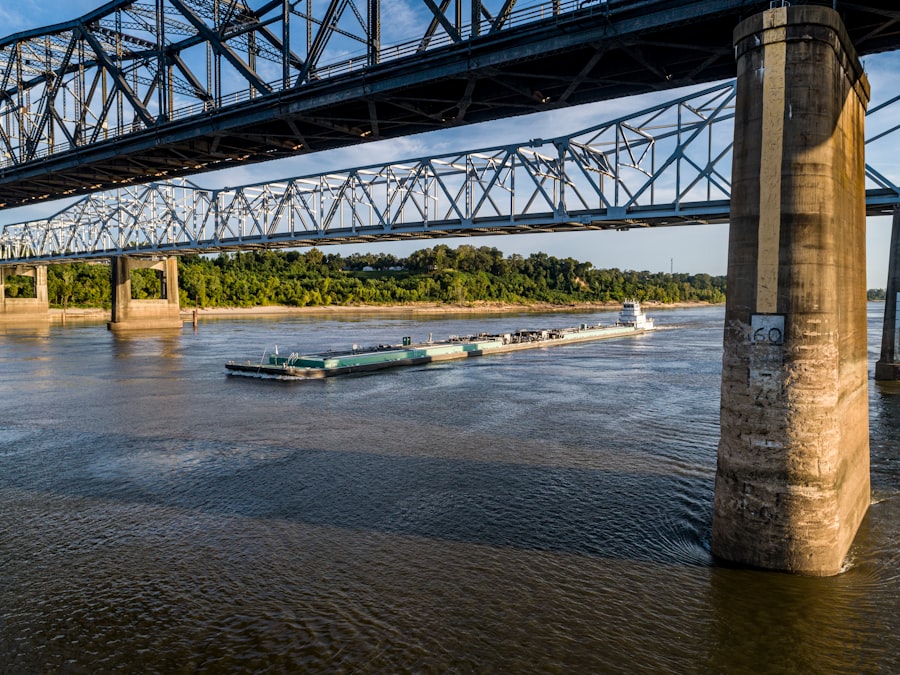
The genesis of the MRMU is intrinsically linked to the burgeoning urban development along the Mississippi River in the early 20th century. As towns grew into cities, the rudimentary systems of individual wells and private water suppliers proved increasingly inadequate to meet the escalating demand. The unregulated discharge of industrial waste and municipal sewage further exacerbated concerns about water quality. These pressures culminated in the recognition that a centralized, scientifically informed approach was imperative for public health and economic prosperity. The recent developments in Mississippi River infrastructure have significantly improved transportation and trade efficiency.
Early Water Provisioning in Riverine Communities
Prior to the formal establishment of entities like the MRMU, water provision in Mississippi River communities often involved a blend of private initiatives and rudimentary public endeavors. Individuals relied on shallow wells, cisterns collecting rainwater, or direct, unfiltered withdrawals from the river. This ad hoc approach, while functional for sparse populations, carried significant risks. Waterborne diseases were rampant, acting as an invisible scythe through communities. The very convenience of the river, in its unfiltered state, became a vector for illness.
The Catalyst for Centralized Management
The late 19th and early 20th centuries witnessed a paradigm shift in public health understanding. The germ theory of disease gained widespread acceptance, illuminating the direct link between contaminated water and illnesses like cholera, typhoid, and dysentery. This scientific revelation, coupled with rapid urbanization and industrial growth, served as the primary catalyst for the movement towards centralized water management. Visionary leaders and public health advocates began to champion the cause of regulated, treated water supplies. The establishment of the MRMU, therefore, was not merely an administrative decision but a crucial public health imperative born from a deeper scientific understanding.
The Mississippi River serves as a vital source of water for numerous municipalities along its banks, highlighting the importance of sustainable water management practices. For an in-depth exploration of how municipal water utilities are adapting to challenges posed by climate change and urbanization, you can read a related article on this topic at MyGeoQuest. This resource provides valuable insights into the strategies being implemented to ensure safe and reliable water supply for communities relying on the Mississippi River.
Water Acquisition and Source Management
The Mississippi River, a dendritic system of tributaries converging into a mighty main stem, offers a seemingly inexhaustible supply of water. However, the raw water is a mosaic of dissolved minerals, suspended solids, microorganisms, and sometimes, anthropogenic pollutants. The MRMU’s first responsibility is to draw this raw water efficiently and responsibly, a process that requires sophisticated infrastructure and continuous monitoring.
Intake Structures and Pumping Stations
The MRMU employs strategically located intake structures designed to draw water from optimal points in the river. These structures are often robust, equipped with coarse screens to prevent the ingress of larger debris such as logs, branches, and aquatic fauna. The placement of these intakes is a critical engineering decision, factoring in river currents, sedimentation patterns, and potential upstream pollution sources. Powerful pumping stations, a symphony of motors and impellers, then lift the raw water from the river to the primary treatment facilities. These pumps must be resilient, capable of operating continuously, and possess sufficient capacity to meet peak demand, often necessitating redundancies to ensure uninterrupted service.
Raw Water Quality Monitoring
Before any treatment commences, a rigorous regimen of raw water quality monitoring is in place. This is not a static process but a dynamic, real-time assessment. Sensors continuously measure parameters such as turbidity, pH, temperature, and conductivity. Regular laboratory analyses are conducted to detect the presence of pathogens (e.g., E. coli, Giardia, Cryptosporidium), heavy metals, pesticides, pharmaceutical residues, and a growing list of “contaminants of emerging concern.” This proactive monitoring acts as an early warning system, allowing the MRMU to adjust treatment protocols in response to fluctuations in raw water quality, thereby safeguarding the integrity of the entire supply chain.
Water Treatment Processes
The raw water from the Mississippi River, despite its abundance, is far from potable. It is a complex mixture that requires a multi-stage purification process to render it safe and palatable for human consumption. This process, a triumph of chemical engineering and public health science, transforms a murky river into a clear, wholesome beverage.
Coagulation, Flocculation, and Sedimentation
The initial stages of treatment focus on removing suspended solids. Coagulation involves the introduction of chemical coagulants, such as aluminum sulfate or ferric chloride, into the raw water. These chemicals neutralize the negative charges on suspended particles, causing them to clump together. The subsequent process, flocculation, involves gentle mixing, allowing these small clumps to aggregate into larger, heavier particles called “floc.” Following flocculation, the water flows into large sedimentation basins. Here, gravity takes over, and the dense floc settles to the bottom, forming a sludge that is periodically removed. This primary removal step significantly reduces turbidity and the overall suspended solids load.
Filtration Technologies
After sedimentation, the water undergoes filtration to remove any remaining suspended particles, including smaller floc that did not settle. The MRMU utilizes various filtration technologies, often in combination, to achieve optimal results. Rapid sand filters, a common choice, consist of layers of sand, gravel, and sometimes anthracite. The water passes through these media, trapping particulate matter. In some instances, more advanced membrane filtration systems, such as microfiltration or ultrafiltration, may be employed. These membranes, with their microscopic pore sizes, provide an even finer level of particulate removal, including many microorganisms.
Disinfection Methods and Residual Control
The final and arguably most critical step in water treatment is disinfection. The primary goal is to inactivate or destroy pathogenic microorganisms that may have escaped previous treatment stages. Chlorine is the most widely used disinfectant due to its effectiveness and ability to maintain a residual disinfectant level throughout the distribution system. This “chlorine residual” acts as a guardian, preventing microbial regrowth as the water travels through miles of pipes. Other disinfectants, such as chloramines (a combination of chlorine and ammonia) or ultraviolet (UV) light, may also be employed, sometimes in conjunction with chlorine, to address specific pathogen concerns or minimize disinfection byproducts. The careful management of disinfectant levels is crucial; too little compromises safety, while too much can lead to aesthetic issues or the formation of undesirable byproducts.
Water Distribution Network
Once treated to exacting standards, the potable water embarks on its journey through an intricate subterranean labyrinth – the MRMU’s distribution network. This sprawling system, a testament to civil engineering, comprises thousands of miles of pipes, hundreds of pumping stations, and numerous storage facilities, all working in concert to deliver water on demand to every tap.
Pumping Stations and Pressure Zones
The distribution of water across a geographically diverse service area necessitates a sophisticated network of pumping stations. These stations overcome the forces of friction and gravity, ensuring that water reaches even the highest elevations and furthest extremities of the service grid. The MRMU typically divides its service area into distinct pressure zones. Each zone is served by dedicated pumps and regulated to maintain optimal pressure, preventing both excessive pressure that could lead to pipe bursts and insufficient pressure that causes inconvenience to customers. The efficient operation of these pumps is a major operational cost, making energy efficiency a continuous focus.
Storage Reservoirs and Water Towers
Storage reservoirs and water towers are vital components of the MRMU’s distribution system. Ground-level reservoirs temporarily hold treated water, providing a buffer against fluctuations in demand and allowing for the optimization of treatment plant operations. Elevated water towers, on the other hand, leverage gravity to maintain consistent water pressure throughout the distribution network, particularly during periods of high demand or power outages affecting pumping stations. They are a visible testament to the invisible infrastructure beneath, ensuring a steady flow of water to homes and businesses.
Leak Detection and Infrastructure Maintenance
Maintaining the integrity of the distribution network is a perpetual challenge. Water mains, like arteries, are subject to wear and tear. Leaks, often hidden underground, represent a significant loss of treated water and can compromise water quality. The MRMU employs advanced leak detection technologies, including acoustic sensors, ground-penetrating radar, and correlation loggers, to identify and pinpoint leaks. A proactive program of infrastructure maintenance, including pipeline rehabilitation, replacement, and periodic flushing, is essential to minimize water loss, prevent breaks, and ensure the long-term reliability of the system. This continuous investment is a cornerstone of responsible water management.
The Mississippi River Municipal Water Utility plays a crucial role in providing clean and reliable water to communities along the river. For those interested in learning more about the impact of municipal water systems and their management, a related article can be found here. This resource delves into the challenges and innovations faced by water utilities, highlighting the importance of sustainable practices in ensuring safe drinking water for future generations.
Challenges and Future Outlook
| Metric | Value | Unit | Notes |
|---|---|---|---|
| Water Source | Mississippi River | – | Primary source for municipal water supply |
| Average Daily Water Treatment | 150 | Million Gallons per Day (MGD) | Typical volume treated for municipal use |
| Number of Customers Served | 500,000 | People | Approximate population served |
| Water Quality Compliance | 99.8 | Percent | Compliance with EPA drinking water standards |
| Annual Water Loss | 8 | Percent | Water lost due to leaks and inefficiencies |
| Average Water Pressure | 60 | PSI (Pounds per Square Inch) | Standard pressure in distribution system |
| Energy Consumption | 1,200 | MWh per year | Energy used for water treatment and distribution |
Managing a resource as vital and dynamic as the Mississippi River’s water supply is fraught with challenges, both current and emerging. The MRMU operates at the confluence of environmental concerns, technological advancements, and societal expectations. Addressing these challenges is paramount to ensuring sustainable water provision for future generations.
Climate Change Impacts and Water Scarcity
Climate change looms as a significant long-term threat to water resources. Altered precipitation patterns, including more extreme droughts and intense flooding events, can directly impact the quality and quantity of water available for treatment. Lower river levels during droughts concentrate pollutants and increase water temperature, affecting treatment efficacy. Conversely, intense rainfall can increase runoff and introduce higher levels of turbidity and pathogens. The MRMU is actively engaged in scenario planning and exploring adaptation strategies, such as diversifying water sources, optimizing reservoir operations, and promoting water conservation, to build resilience against these shifting climatic realities.
Aging Infrastructure and Funding Needs
Much of the existing water infrastructure, laid down in the mid-20th century, is approaching or has exceeded its expected lifespan. Aging pipes are more prone to leaks and breaks, contributing to water loss and costly repairs. Treatment plants require upgrades to meet evolving regulatory standards and incorporate new technologies. The sheer scale of infrastructure replacement and modernization represents a monumental financial challenge. The MRMU continually advocates for adequate funding, explores innovative financing mechanisms, and strategically prioritizes infrastructure investments to maintain a reliable and efficient system. This unseen decay beneath our streets often goes unappreciated until a major rupture, but its prevention requires continuous, substantial investment.
Regulatory Compliance and Emerging Contaminants
The regulatory landscape for drinking water quality is constantly evolving, driven by new scientific understanding and public health concerns. The MRMU must continuously adapt its treatment processes and monitoring protocols to comply with increasingly stringent federal and state regulations. A particular challenge lies in addressing “contaminants of emerging concern” (CECs), such as pharmaceutical residues, microplastics, and per- and polyfluoroalkyl substances (PFAS). These substances, often present in very low concentrations, require highly sophisticated detection methods and, frequently, advanced treatment technologies to remove, placing additional pressure on resources and expertise.
Water Conservation and Demand Management
While the Mississippi River offers a vast supply, efficient utilization remains critical. The MRMU actively promotes water conservation among its customers through public education campaigns, incentives for water-efficient appliances, and tiered rate structures that encourage reduced consumption. Demand management strategies aim to reduce peak water usage, thereby optimizing treatment plant operations and easing the strain on the distribution network. Fostering a culture of water stewardship within the community is not just an environmental imperative but an economic one, extending the lifespan of existing infrastructure and postponing the need for costly new supply development. The river, while seemingly limitless, still represents a finite resource in terms of treated, potable water.
Public Engagement and Trust
Maintaining public trust is fundamental to the MRMU’s mission. Transparency in operations, clear communication regarding water quality, and proactive engagement with the communities it serves are paramount. This includes providing easily accessible water quality reports, responding promptly to customer inquiries, and involving stakeholders in planning decisions. In an era of widespread information and misinformation, fostering an informed and confident public is as crucial as the technical excellence of water treatment itself. The public, after all, is not just a consumer of water but a vital partner in its sustainable management.
WATCH THIS! 🚨CRACKING: Why America’s $5 Trillion Dam is Failing Right Now
FAQs
What is the Mississippi River Municipal Water Utility?
The Mississippi River Municipal Water Utility (MRMWU) is a public water utility that provides potable water services to municipalities and communities along the Mississippi River. It sources, treats, and distributes water to ensure safe and reliable supply for residential, commercial, and industrial use.
Where does the Mississippi River Municipal Water Utility source its water?
The utility primarily sources its water from the Mississippi River. The river serves as the main raw water supply, which is then treated at water treatment plants to meet health and safety standards before distribution.
Which areas are served by the Mississippi River Municipal Water Utility?
The MRMWU serves multiple municipalities located along the Mississippi River. The exact service area can vary but typically includes cities and towns that rely on the river for their municipal water needs.
How does the Mississippi River Municipal Water Utility ensure water quality?
The utility follows strict water treatment protocols, including filtration, disinfection, and regular testing. It complies with federal and state regulations such as those set by the Environmental Protection Agency (EPA) to maintain water quality and safety.
Is the water from the Mississippi River Municipal Water Utility safe to drink?
Yes, the water provided by the MRMWU is treated and monitored to meet or exceed all drinking water standards, making it safe for consumption by the public.
How can customers report issues or get information from the Mississippi River Municipal Water Utility?
Customers can contact the utility’s customer service department via phone, email, or through their official website. Many utilities also provide online portals for billing, service requests, and updates.
What are common challenges faced by the Mississippi River Municipal Water Utility?
Challenges include managing water quality amid environmental changes, maintaining infrastructure, addressing pollution concerns, and ensuring sustainable water supply during droughts or floods.
Does the Mississippi River Municipal Water Utility have conservation programs?
Many municipal water utilities, including those along the Mississippi River, implement water conservation programs to encourage efficient water use and reduce waste. These programs may include public education, incentives, and usage monitoring.
How is the Mississippi River Municipal Water Utility funded?
Funding typically comes from customer water rates, municipal budgets, state and federal grants, and sometimes bonds issued for infrastructure projects.
Can industrial users receive water from the Mississippi River Municipal Water Utility?
Yes, industrial users within the service area can receive water from the utility, often under specific agreements that address volume, quality, and pricing.