
Fault-controlled brine pockets are geological formations where tectonic activity creates isolated reservoirs of saline water, typically found in sedimentary basins. These pockets form when tectonic plate movement causes rock layers to fracture, trapping concentrated salt solutions in subsurface cavities. The study of these formations has practical applications in resource exploration, environmental assessment, and subsurface fluid behavior analysis.
Research into fault-controlled brine pockets provides several important benefits. First, they serve as geological markers that reveal information about a region’s tectonic history and past structural events. Second, their chemical composition indicates how fluids move and interact within the Earth’s crust.
Third, as demand for natural resources increases, knowledge of these brine pockets supports the exploration and extraction of minerals and petroleum deposits, making them valuable targets for geological and resource management professionals.
Key Takeaways
- Fault-controlled brine pockets form due to geological faults influencing fluid accumulation.
- Identifying these pockets requires understanding fault structures and brine characteristics.
- Geophysical methods are essential tools for locating and studying brine pockets.
- Brine pockets have significant implications for resource exploration and environmental management.
- Ongoing research addresses challenges and aims to improve exploration techniques for these geological features.
Understanding the Formation of Brine Pockets
The formation of brine pockets is a multifaceted process that involves various geological mechanisms. At its core, brine formation occurs when seawater or other saline water infiltrates sedimentary rocks, often through faults or fractures. Over time, evaporation and concentration processes can lead to the development of highly saline solutions trapped within these geological structures.
The interplay between tectonic activity and sedimentation plays a pivotal role in determining where and how these brine pockets form. In many cases, the presence of faults is critical to the formation of brine pockets. Faults can create pathways for fluids to migrate through the subsurface, allowing saline water to accumulate in specific areas.
Additionally, the movement along these faults can lead to changes in pressure and temperature, further influencing the solubility of minerals and the concentration of salts in the brine. Understanding these processes is essential for geologists seeking to map and characterize brine pockets within various geological settings. Learn about the environmental impacts of lithium mining in this informative video.
Identifying Fault-Controlled Brine Pockets in Geology

Identifying fault-controlled brine pockets requires a combination of geological mapping, geophysical surveys, and chemical analysis. Geologists often begin by examining surface features and rock formations that may indicate the presence of underlying faults. These surface expressions can include linear features, changes in vegetation, or variations in soil moisture that suggest fluid movement beneath the surface.
Once potential locations are identified, geophysical methods such as seismic reflection and resistivity surveys are employed to gain insights into subsurface structures. These techniques allow researchers to visualize the geometry of faults and associated brine pockets without extensive drilling. Additionally, chemical sampling of groundwater can provide information about salinity levels and mineral content, helping to confirm the presence of brine pockets and their characteristics.
The Role of Faults in Brine Pocket Formation
Faults play a fundamental role in the formation and evolution of brine pockets. As tectonic forces act on the Earth’s crust, they create fractures that can serve as conduits for fluid movement. These faults not only facilitate the migration of saline water but also influence the pressure and temperature conditions within the subsurface environment.
The interaction between faulting and fluid dynamics is complex; as faults slip or shift, they can either enhance or inhibit fluid flow, leading to varying concentrations of brine in different locations. Moreover, faults can act as barriers that trap fluids in specific areas, creating localized zones of high salinity. This trapping mechanism is particularly important in sedimentary basins where layers of impermeable rock can seal off brine pockets from surrounding formations.
Understanding how faults interact with fluids is essential for predicting where brine pockets may be found and how they might change over time due to ongoing tectonic activity.
Exploring the Characteristics of Brine Pockets
| Parameter | Description | Typical Values | Measurement Techniques |
|---|---|---|---|
| Brine Salinity | Concentration of dissolved salts in the brine pocket | 50,000 – 300,000 mg/L TDS | Water sampling, Ion chromatography |
| Temperature | Temperature of the brine within the pocket | 25°C – 90°C | Downhole temperature logging |
| Depth | Depth at which the brine pocket is located | 500 m – 3000 m | Drilling logs, Seismic surveys |
| Fault Type | Geological fault controlling the brine pocket | Normal, Reverse, Strike-slip | Seismic interpretation, Structural mapping |
| Porosity | Porosity of the host rock surrounding the brine pocket | 5% – 25% | Core analysis, Well logging |
| Permeability | Permeability of the fault zone and host rock | 0.01 – 100 mD | Core testing, Well testing |
| Brine Volume | Estimated volume of brine contained in the pocket | 10,000 – 1,000,000 m³ | Reservoir modeling, Geophysical surveys |
| Mineral Content | Major dissolved minerals in the brine | NaCl, CaCl2, MgCl2 concentrations | Chemical analysis, Spectroscopy |
Brine pockets exhibit a range of characteristics that make them unique geological features. One of the most notable aspects is their salinity, which can vary significantly depending on the source of the saline water and the geological context. In some cases, brine may be nearly saturated with salts, while in others, it may contain lower concentrations that still classify it as brine.
The chemical composition of these pockets can also provide insights into their origins; for instance, some brines may contain dissolved minerals such as halite or gypsum, indicating specific environmental conditions during their formation. In addition to salinity and chemical composition, temperature and pressure conditions within brine pockets are critical factors that influence their behavior. These parameters can affect fluid density and viscosity, impacting how brines migrate through geological formations.
Furthermore, understanding the physical properties of brine pockets is essential for resource exploration efforts, as these characteristics can dictate how easily fluids can be extracted or utilized.
Utilizing Geophysical Methods to Locate Brine Pockets
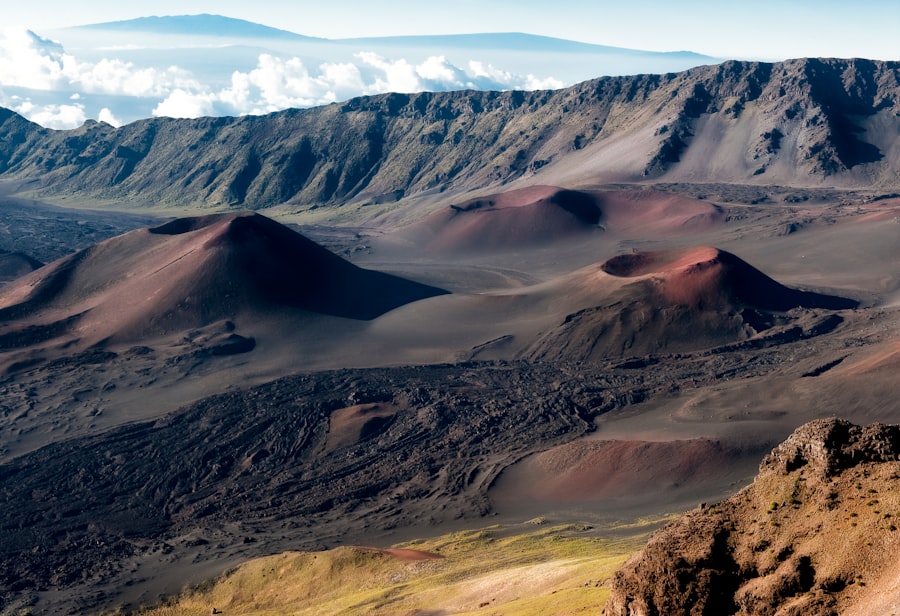
Geophysical methods have become indispensable tools for locating and characterizing fault-controlled brine pockets. Techniques such as seismic reflection surveys allow geologists to create detailed images of subsurface structures by analyzing how seismic waves travel through different materials. This method can reveal fault lines and potential brine accumulations without invasive drilling.
Another effective technique is electrical resistivity imaging (ERI), which measures how easily electrical currents pass through subsurface materials. Since brines typically have lower resistivity compared to surrounding rocks, ERI can help identify areas where saline water is present. By combining these geophysical methods with traditional geological mapping and sampling techniques, researchers can develop a comprehensive understanding of where brine pockets are located and how they relate to surrounding geological features.
Implications of Brine Pockets for Resource Exploration
The presence of fault-controlled brine pockets has significant implications for resource exploration, particularly in terms of mineral extraction and hydrocarbon production. These saline reservoirs can be associated with valuable minerals such as lithium, potassium, and magnesium, which are increasingly sought after for various industrial applications. As demand for these resources grows, understanding where brine pockets are located becomes crucial for efficient exploration and extraction.
Moreover, brine pockets can also influence hydrocarbon reservoirs by providing a source of pressure that aids in oil and gas migration. The interaction between saline fluids and hydrocarbons can create favorable conditions for resource accumulation, making it essential for geologists to consider brine dynamics when assessing potential drilling sites. As exploration technologies advance, the ability to accurately locate and characterize brine pockets will play a vital role in optimizing resource extraction strategies.
Environmental Considerations of Brine Pocket Exploration
While exploring fault-controlled brine pockets offers numerous opportunities for resource extraction, it also raises important environmental considerations. The extraction process can potentially disrupt local ecosystems and groundwater systems if not managed carefully. For instance, excessive withdrawal of brines may lead to land subsidence or changes in water quality that could impact surrounding habitats.
Additionally, there are concerns regarding the disposal of produced waters from extraction activities. These waters often contain high concentrations of salts and other contaminants that must be handled responsibly to prevent environmental degradation. As such, it is imperative for researchers and industry professionals to develop sustainable practices that minimize ecological impacts while maximizing resource recovery from brine pockets.
Case Studies of Successful Brine Pocket Exploration
Several case studies highlight successful exploration efforts focused on fault-controlled brine pockets across various regions. One notable example is found in South America’s Lithium Triangle, which encompasses parts of Argentina, Bolivia, and Chile. Here, extensive research has revealed vast lithium-rich brines located within fault-controlled basins.
The unique geological conditions have made this area a hotspot for lithium extraction due to its high concentrations and favorable economic conditions. Another significant case study involves the Gulf Coast region of the United States, where extensive oil and gas exploration has uncovered numerous fault-controlled brine reservoirs. These findings have not only contributed to hydrocarbon production but have also provided valuable insights into the relationship between saline fluids and hydrocarbon migration patterns.
Such case studies underscore the importance of understanding fault-controlled brine pockets in advancing both scientific knowledge and resource management strategies.
Challenges and Future Directions in Brine Pocket Research
Despite advancements in understanding fault-controlled brine pockets, several challenges remain in this field of research.
Additionally, there is often limited access to deep subsurface data due to drilling costs and technical limitations.
Future research directions may focus on integrating advanced modeling techniques with geophysical data to better predict fluid behavior within fault-controlled systems. Furthermore, interdisciplinary approaches that combine geology with hydrology and environmental science will be essential for addressing both resource exploration needs and environmental concerns associated with brine pocket exploitation.
The Importance of Understanding Fault-Controlled Brine Pockets in Geology
In conclusion, fault-controlled brine pockets represent a critical area of study within geology that holds significant implications for resource exploration and environmental management. By understanding their formation processes, characteristics, and interactions with surrounding geological features, researchers can unlock valuable insights into subsurface fluid dynamics. As demand for natural resources continues to rise, comprehending these unique geological formations will be essential for sustainable exploration practices.
The ongoing research into fault-controlled brine pockets not only enhances scientific knowledge but also informs practical applications in resource management and environmental stewardship. As geologists continue to explore these fascinating features, they contribute to a deeper understanding of our planet’s complex systems while paving the way for responsible resource utilization in an ever-evolving world.
For a deeper understanding of this topic, you can explore the article on MyGeoQuest, which provides valuable insights into the geological processes that lead to the formation of these brine pockets. Check it out here: MyGeoQuest.
WATCH THIS! 🌍 “THE WATER IS GONE: Inside the Desert Killing the EV Revolution
FAQs
What are fault controlled brine pockets?
Fault controlled brine pockets are accumulations of highly saline water trapped within geological formations, where their distribution and containment are influenced by faults in the Earth’s crust. These faults act as barriers or conduits, controlling the movement and concentration of brine.
How do faults influence the formation of brine pockets?
Faults can create pathways or seals within rock layers, affecting fluid flow. In some cases, faults compartmentalize reservoirs, trapping brine in pockets. In others, they may facilitate the migration of saline water, leading to the development of concentrated brine zones along or near fault planes.
What geological settings are typical for fault controlled brine pockets?
Fault controlled brine pockets are commonly found in sedimentary basins, especially in areas with significant tectonic activity. They often occur in porous rock formations such as sandstones or carbonates that are intersected by faults, which influence fluid distribution.
Why is the study of fault controlled brine pockets important?
Understanding these brine pockets is crucial for various applications, including hydrocarbon exploration, groundwater management, and mineral extraction. Brine pockets can impact reservoir quality, influence drilling safety, and serve as sources of valuable minerals like lithium.
How are fault controlled brine pockets detected?
Detection methods include geophysical surveys (such as seismic reflection), drilling and sampling, and geochemical analysis of fluids. Faults and associated brine pockets can be identified by anomalies in resistivity, density, or seismic velocity data.
Can fault controlled brine pockets pose risks to drilling operations?
Yes, encountering high-pressure brine pockets during drilling can lead to well control issues, such as blowouts or equipment damage. Proper geological assessment and monitoring are essential to mitigate these risks.
What role do brine pockets play in mineral resource extraction?
Brine pockets often contain dissolved minerals like salts, lithium, and other economically valuable elements. Extracting these minerals from brines is an important aspect of resource development, especially for battery materials.
Are fault controlled brine pockets permanent features?
Brine pockets can change over geological time due to tectonic activity, fluid migration, or chemical reactions. Fault movements may alter their size, location, or salinity, making them dynamic features within the subsurface.