
The Drake Passage is a body of water located between South America and Antarctica. European explorers first documented this waterway during the Age of Exploration. The passage is named after Sir Francis Drake, an English sea captain and privateer who conducted expeditions in the region during the late 16th century.
Drake’s voyages contributed to European geographical knowledge and established new maritime trade routes. The Drake Passage is known for its challenging conditions, including strong currents, rough seas, and severe weather patterns. These characteristics have made it a notable feature in maritime navigation and oceanography.
The Drake Passage holds significant importance as a major ocean current junction and marine ecosystem. Its discovery provided a direct navigable route connecting the Atlantic and Pacific Oceans. This connection facilitated increased maritime trade and enabled communication between distant regions.
The passage’s navigation contributed to the expansion of European geographical understanding during the Age of Exploration and influenced subsequent patterns of global trade and exploration.
Key Takeaways
- The Drake Passage is a historically significant and challenging oceanic route discovered during early explorations.
- It hosts diverse wildlife and plays a crucial role in global oceanography and climate systems.
- Filming in the Drake Passage presents unique difficulties due to harsh weather and sea conditions.
- Climate change is impacting the Drake Passage, affecting its ecosystems and oceanographic importance.
- Future exploration aims to deepen understanding of this remote and dynamic marine environment.
The Perils of Crossing the Drake Passage
Crossing the Drake Passage is often described as one of the most challenging maritime endeavors due to its notorious weather conditions and rough seas. Sailors have long recounted tales of towering waves and fierce winds that can arise without warning, making navigation perilous. The convergence of the Atlantic and Pacific Oceans creates a unique environment where storms can develop rapidly, leading to treacherous conditions for even the most experienced mariners.
This unpredictability has earned the passage a reputation as a formidable barrier to those seeking to traverse it. The dangers associated with crossing the Drake Passage are not merely anecdotal; they are well-documented in maritime history. Numerous vessels have met their fate in these turbulent waters, serving as a stark reminder of nature’s power.
The combination of strong currents, icebergs, and sudden weather changes poses significant risks to ships and their crews. Despite these challenges, adventurers continue to brave the passage, drawn by the allure of exploration and the promise of discovery that lies beyond its tumultuous waves. The treacherous waters of the Drake Passage are known for their unpredictable weather and powerful currents.
The Wildlife of the Drake Passage

The Drake Passage is not only known for its challenging conditions but also for its rich biodiversity. This unique marine environment serves as a vital habitat for various species, including seals, whales, and seabirds. The nutrient-rich waters support an abundance of marine life, making it a prime location for wildlife enthusiasts and researchers alike.
Among the most notable inhabitants are the majestic humpback whales, which migrate through these waters in search of food during their seasonal journeys. Birdwatchers flock to the Drake Passage to witness the diverse avian population that thrives in this region. Species such as albatrosses and petrels can often be seen gliding gracefully above the waves, taking advantage of the strong winds that characterize the area.
The presence of these birds is not only a testament to the ecological richness of the passage but also highlights its importance as a breeding ground for many seabird species. The interplay between marine life and the unique environmental conditions of the Drake Passage creates a dynamic ecosystem that continues to captivate scientists and nature lovers alike.
The History of Exploration in the Drake Passage
The history of exploration in the Drake Passage is marked by daring voyages and remarkable discoveries. Following Sir Francis Drake’s initial navigation of these waters, numerous explorers sought to chart the passage and unlock its secrets. In the 19th century, figures such as James Cook furthered this exploration by conducting detailed surveys and mapping the region.
Cook’s expeditions not only provided valuable information about the geography of Antarctica but also laid the groundwork for future scientific research in the area. As exploration continued into the 20th century, the Drake Passage became a focal point for scientific inquiry. Researchers began to study its unique oceanographic features and their implications for global climate patterns.
The passage’s role as a conduit for ocean currents has made it an essential area for understanding climate change and its effects on marine ecosystems. The legacy of exploration in the Drake Passage is not only one of adventure but also one of scientific discovery that continues to inform our understanding of the planet.
The Making of the Documentary
| Metric | Details |
|---|---|
| Title | Drake Passage Revealed |
| Genre | Documentary |
| Subject | Exploration of the Drake Passage, oceanography, and marine life |
| Duration | Approximately 60 minutes |
| Release Year | 2020 |
| Production Company | BBC Earth |
| Key Features | Underwater footage, scientific research, extreme weather conditions |
| Viewer Rating | 8.2/10 (IMDb) |
| Languages Available | English, Spanish, French |
The creation of a documentary focused on the Drake Passage represents an ambitious endeavor to capture both its beauty and its challenges. Filmmakers set out to document not only the stunning landscapes but also the rich tapestry of life that exists within this unique environment. Through careful planning and extensive research, they aimed to convey the significance of the passage in both historical and contemporary contexts.
The documentary sought to highlight not only the perils faced by those who navigate these waters but also the incredible resilience of nature. In crafting this documentary, filmmakers faced numerous logistical challenges, from securing permits to coordinating with scientists and wildlife experts. They aimed to strike a balance between storytelling and education, ensuring that viewers would gain a deeper appreciation for the Drake Passage’s ecological importance.
By showcasing breathtaking visuals alongside compelling narratives, they hoped to inspire a sense of wonder and urgency regarding conservation efforts in this fragile ecosystem.
The Crew’s Experience Filming in the Drake Passage
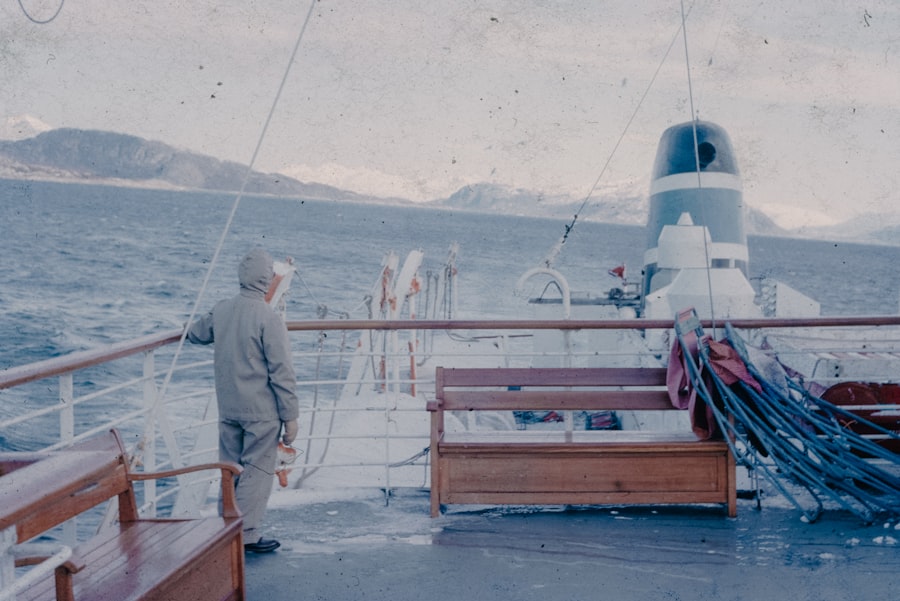
The crew’s experience filming in the Drake Passage was nothing short of transformative. As they embarked on their journey, they were acutely aware of both the beauty and danger that lay ahead. The unpredictable weather patterns tested their resolve, with sudden storms forcing them to adapt their plans on multiple occasions.
Despite these challenges, the crew found themselves captivated by the raw power of nature surrounding them. Each wave crashing against their vessel served as a reminder of their smallness in comparison to the vastness of the ocean. Throughout their time filming, crew members formed a deep connection with both their environment and each other.
The shared experience of navigating treacherous waters fostered camaraderie among team members, as they relied on one another for support and encouragement. They documented not only stunning visuals but also moments of vulnerability and triumph that encapsulated their journey through this remarkable passage. The crew’s dedication to capturing authentic experiences ultimately enriched their storytelling, allowing viewers to feel as though they were part of this extraordinary adventure.
The Impact of Climate Change on the Drake Passage
Climate change has emerged as a pressing concern for ecosystems worldwide, and the Drake Passage is no exception. As global temperatures rise, scientists have observed significant changes in ocean currents and marine life patterns within this region. Melting ice from Antarctica contributes to rising sea levels and alters salinity levels in surrounding waters, impacting species that rely on stable conditions for survival.
These changes pose serious threats not only to local wildlife but also to global climate systems. Researchers are increasingly focused on understanding how these shifts affect biodiversity in the Drake Passage. Changes in water temperature can disrupt food chains, leading to declines in certain fish populations that are crucial for larger predators like seals and whales.
Additionally, altered migration patterns may affect seabird populations that depend on specific breeding grounds within this region. As climate change continues to reshape marine ecosystems, it becomes imperative for scientists and conservationists to monitor these changes closely and advocate for sustainable practices that protect this vital area.
The Importance of the Drake Passage in Global Oceanography
The Drake Passage plays a pivotal role in global oceanography due to its unique position as a connector between major ocean currents. It serves as a critical pathway for water movement between the Atlantic and Pacific Oceans, influencing climate patterns far beyond its immediate vicinity. The passage’s currents help regulate temperatures across vast distances, impacting weather systems around the globe.
Understanding these dynamics is essential for predicting future climate scenarios and addressing environmental challenges. Moreover, research conducted in the Drake Passage contributes significantly to our understanding of ocean circulation patterns and their implications for marine ecosystems. Scientists study how changes in temperature and salinity affect nutrient distribution within these waters, which in turn influences fish populations and other marine life.
By examining these relationships, researchers can gain insights into broader ecological trends that may have far-reaching consequences for both local communities and global populations reliant on healthy oceans.
The Beauty of the Drake Passage’s Landscapes
The landscapes surrounding the Drake Passage are nothing short of breathtaking, characterized by dramatic cliffs, icy shores, and expansive vistas that stretch as far as the eye can see. As one approaches this remote region, they are greeted by stunning views that evoke a sense of awe and wonder. Towering glaciers calve into frigid waters while rugged mountains rise majestically from the sea, creating a striking contrast between land and ocean.
Photographers and artists alike are drawn to capture the ethereal beauty found within this landscape. The interplay between light and shadow creates mesmerizing scenes that change with every passing moment—sunrise casts golden hues across icy peaks while storm clouds gather ominously overhead. This ever-changing environment serves as both inspiration and reminder of nature’s power, inviting those who venture here to reflect on their place within it.
The Challenges of Filming in the Drake Passage
Filming in such an unpredictable environment as the Drake Passage presents numerous challenges that require careful planning and adaptability from filmmakers. The crew must contend with rapidly changing weather conditions that can hinder visibility or create dangerous situations at sea. Equipment must be secured against rough waves while ensuring that cameras capture high-quality footage amidst turbulent conditions—a delicate balance that demands both skill and ingenuity.
Additionally, logistical hurdles arise when attempting to film wildlife in this remote region. Coordinating with scientists studying marine life requires precise timing; capturing fleeting moments when animals surface or migrate can be elusive at best. Despite these obstacles, filmmakers remain committed to showcasing authentic experiences within this extraordinary environment—each challenge met with determination fuels their passion for storytelling.
The Future of Exploration in the Drake Passage
As interest in exploration continues to grow, so too does awareness surrounding conservation efforts within regions like the Drake Passage. Future explorations will likely focus not only on uncovering new scientific knowledge but also on promoting sustainable practices that protect fragile ecosystems from human impact. Collaborative efforts between researchers, conservationists, and policymakers will be essential in ensuring that this vital area remains preserved for generations to come.
Moreover, advancements in technology may enhance future exploration endeavors by providing new tools for studying marine environments more comprehensively than ever before.
Ultimately, exploration will continue to evolve alongside our understanding of environmental stewardship—an exciting prospect for those passionate about uncovering nature’s mysteries while safeguarding its future.
The Drake Passage, known for its treacherous waters and stunning wildlife, has been the subject of many explorations and documentaries. A related article that delves deeper into the geographical significance and the unique ecosystems of this region can be found on My Geo Quest. For more insights, you can read the article [here](https://www.mygeoquest.com/).
WATCH THIS 🛑 Drake Passage: Earth’s Deadliest Waters Revealed
FAQs
What is the Drake Passage?
The Drake Passage is a body of water located between the southern tip of South America (Cape Horn) and the northern tip of the Antarctic Peninsula. It connects the southwestern part of the Atlantic Ocean with the southeastern part of the Pacific Ocean and is known for its rough seas and strong currents.
What is the “Drake Passage Revealed” documentary about?
The “Drake Passage Revealed” documentary explores the geography, oceanography, and ecological significance of the Drake Passage. It highlights the challenges of navigating this turbulent stretch of water and showcases the unique marine life and environmental conditions found there.
Why is the Drake Passage important?
The Drake Passage is a critical maritime route for ships traveling between the Atlantic and Pacific Oceans, especially for vessels heading to Antarctica. It also plays a key role in global ocean circulation and climate regulation due to the Antarctic Circumpolar Current that flows through it.
What kind of wildlife can be seen in the Drake Passage?
The Drake Passage is home to a variety of marine species, including whales, seals, penguins, and seabirds. The nutrient-rich waters support diverse ecosystems, making it an important area for scientific research and wildlife observation.
What challenges do ships face when crossing the Drake Passage?
Ships crossing the Drake Passage often encounter rough seas, strong winds, and unpredictable weather conditions. The passage is known for its large waves and powerful currents, which can make navigation difficult and sometimes dangerous.
Who produced the “Drake Passage Revealed” documentary?
The documentary was produced by a team of filmmakers and scientists specializing in marine and environmental studies. It aims to educate viewers about the natural wonders and scientific importance of the Drake Passage.
Where can I watch the “Drake Passage Revealed” documentary?
The documentary may be available on various streaming platforms, educational websites, or through broadcasters that focus on nature and science programming. Checking official documentary distributors or environmental organizations’ websites can provide viewing options.
What scientific research is conducted in the Drake Passage?
Researchers study ocean currents, climate patterns, marine biodiversity, and the impact of climate change in the Drake Passage. The area is crucial for understanding the Antarctic Circumpolar Current and its influence on global ocean systems.
Is the Drake Passage safe for tourists?
While many tourists travel through the Drake Passage on cruises to Antarctica, the journey can be challenging due to rough seas. Tour operators typically prepare passengers for the conditions and provide safety measures to ensure a secure experience.
How long does it take to cross the Drake Passage?
Crossing the Drake Passage typically takes between 24 to 48 hours, depending on weather conditions and the type of vessel. The distance is approximately 800 kilometers (500 miles) wide at its narrowest point.