
The Suez Canal is a 193-kilometer artificial waterway connecting the Mediterranean and Red Seas through Egypt’s Isthmus of Suez. Opened in 1869, the canal eliminates the need for ships to navigate around the Cape of Good Hope at Africa’s southern tip, reducing the journey between Europe and Asia by approximately 8,900 kilometers. The canal handles approximately 12% of global trade, with over 20,000 vessels transiting annually.
Major cargo includes petroleum products, containerized goods, and bulk commodities. The waterway can accommodate ships up to 20.1 meters in draft and 77.5 meters in beam, though recent expansions have increased capacity for larger vessels. Egypt derives significant revenue from canal operations, generating approximately $5-7 billion annually in transit fees.
The Suez Canal Authority, a state-owned entity, manages operations and collects revenues that constitute roughly 2-3% of Egypt’s GDP. The canal’s strategic importance extends beyond economics, as it serves as a critical chokepoint for international shipping.
Disruptions to canal operations, such as the 2021 Ever Given grounding, can impact global supply chains and commodity prices. The waterway remains under Egyptian sovereignty following the nationalization in 1956, though international maritime law governs transit rights for commercial vessels.
Key Takeaways
- The Suez Canal is a critical maritime route that significantly shortens global shipping distances.
- Its history reflects major geopolitical shifts and international interests over time.
- Navigating the canal presents challenges such as congestion, security threats, and environmental risks.
- The canal plays a vital role in global trade, impacting economies worldwide.
- Future developments and technological advancements aim to enhance the canal’s capacity and security.
History of the Suez Canal
The history of the Suez Canal is a tale of ambition, engineering prowess, and geopolitical maneuvering. The idea of constructing a canal to connect the Mediterranean and Red Seas dates back to ancient times, with various attempts made by different civilizations. However, it was not until the mid-19th century that the modern Suez Canal took shape under the leadership of Ferdinand de Lesseps.
His vision culminated in the canal’s official opening on February 17, 1867, marking a monumental achievement in engineering and altering global trade patterns forever. The canal’s construction was not without its challenges. It faced significant opposition from various quarters, including competing colonial interests and local populations.
Despite these hurdles, de Lesseps and his team persevered, employing innovative techniques to excavate the canal’s path through challenging terrain. The completion of the Suez Canal not only revolutionized maritime navigation but also had profound implications for colonial powers, as it facilitated quicker access to colonies in Asia and Africa. Over time, control of the canal became a contentious issue, leading to conflicts that would shape regional politics for decades.
Geopolitical Significance of the Suez Canal
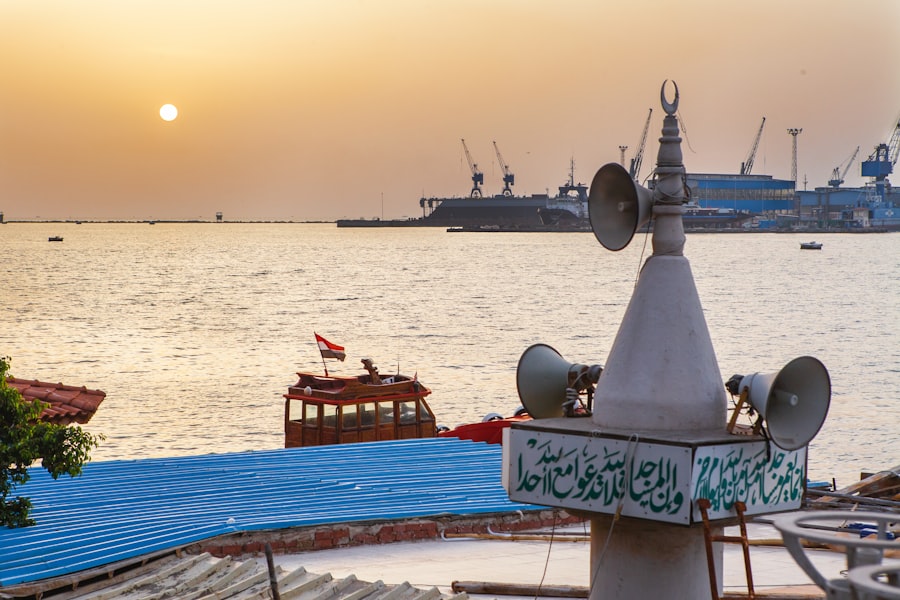
The geopolitical significance of the Suez Canal cannot be overstated. As a critical chokepoint in global trade routes, it has been at the center of numerous international conflicts and power struggles. Control over the canal has historically been sought after by various nations due to its strategic importance in facilitating trade and military movements.
For instance, during the Suez Crisis of 1956, Egypt’s nationalization of the canal led to a military intervention by Britain, France, and Israel, highlighting how control over this vital waterway can provoke international tensions. In contemporary geopolitics, the Suez Canal continues to be a focal point for global powers. Its role in energy transportation is particularly noteworthy; a significant percentage of the world’s oil and liquefied natural gas passes through this narrow passage.
As nations vie for energy security and influence in the Middle East, the canal remains a critical asset that shapes diplomatic relations and strategic alliances. The ongoing importance of the Suez Canal underscores its status as not just a physical waterway but also a symbol of power dynamics in an increasingly interconnected world.
Challenges of Navigating the Suez Canal
Navigating the Suez Canal presents several challenges that can impact shipping efficiency and safety. One of the primary concerns is the canal’s narrow width and limited depth, which can restrict the size of vessels that can pass through. Larger ships, known as ultra-large container vessels (ULCVs), have become increasingly common in global shipping; however, their size poses significant challenges for navigation within the canal.
The risk of grounding or collisions increases with larger vessels, necessitating careful planning and coordination among shipping companies and canal authorities. Additionally, weather conditions can complicate navigation through the Suez Canal. Sandstorms and fog can reduce visibility and create hazardous conditions for vessels attempting to transit.
Moreover, the canal’s location in a region prone to geopolitical tensions can lead to disruptions in shipping schedules. Incidents such as blockages or accidents can have ripple effects throughout global supply chains, underscoring the need for robust contingency plans and effective management strategies to address these challenges.
Impact of the Suez Canal on Global Trade
| Metric | Value | Unit | Description |
|---|---|---|---|
| Length | 193 | km | Total length of the Suez Canal |
| Average Daily Transits | 50 | ships/day | Average number of ships passing through daily |
| Annual Tonnage | 1.2 | billion tons | Total cargo tonnage passing annually |
| Transit Time | 12-16 | hours | Average time for a ship to transit the canal |
| Maximum Ship Length | 400 | meters | Maximum allowed length of vessels |
| Maximum Ship Draft | 20.1 | meters | Maximum allowed draft of vessels |
| Revenue (Annual) | 6.3 | billion | Annual revenue generated by canal tolls |
| Year Opened | 1869 | year | Year the canal was officially opened |
| Geopolitical Importance | High | n/a | Strategic maritime chokepoint connecting Europe and Asia |
The impact of the Suez Canal on global trade is profound and far-reaching. By providing a direct route between Europe and Asia, it has facilitated an unprecedented flow of goods across continents. The canal has become a lifeline for international commerce, enabling countries to engage in trade more efficiently than ever before.
This efficiency has contributed to lower shipping costs and faster delivery times, ultimately benefiting consumers worldwide by providing access to a diverse array of products. Furthermore, the Suez Canal has played a pivotal role in shaping global economic trends. The rise of globalization has been closely linked to advancements in maritime trade facilitated by this waterway.
As economies become increasingly interdependent, the canal serves as a critical conduit for goods ranging from raw materials to finished products. Its influence extends beyond mere transportation; it has also fostered economic growth in regions surrounding the canal by attracting investment and promoting trade-related industries.
Environmental Concerns in the Suez Canal
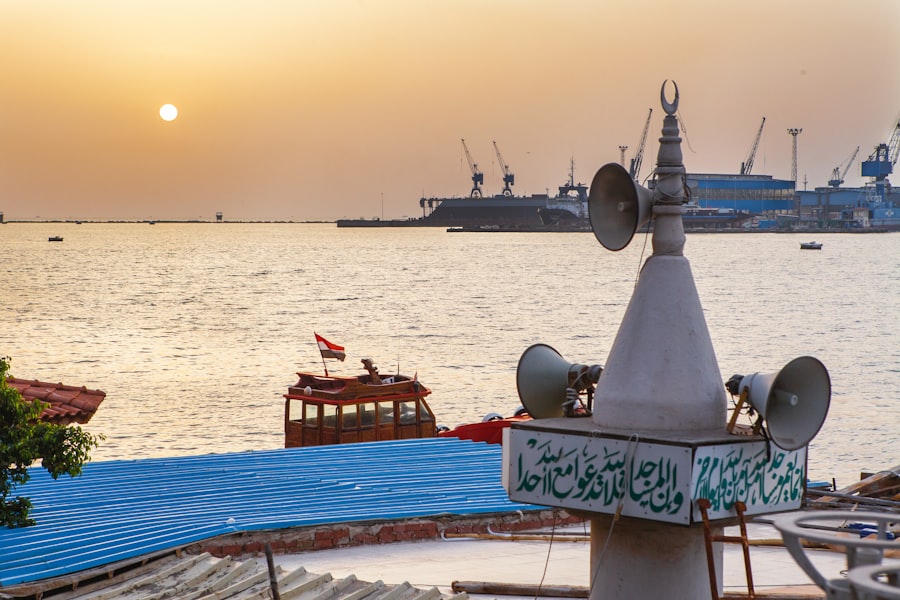
While the Suez Canal is essential for global trade, it also raises significant environmental concerns that warrant attention. The construction and operation of the canal have had lasting impacts on local ecosystems and biodiversity. Dredging activities required to maintain navigability can disrupt marine habitats and alter natural water flow patterns.
Additionally, increased shipping traffic contributes to pollution in the form of oil spills, ballast water discharge, and emissions from vessels. Efforts to mitigate these environmental impacts are ongoing but face challenges due to competing interests between economic development and ecological preservation. The need for sustainable practices in managing maritime traffic is becoming increasingly urgent as awareness grows regarding climate change and its effects on marine environments.
Balancing economic benefits with environmental stewardship will be crucial for ensuring that the Suez Canal remains a viable trade route while protecting its surrounding ecosystems.
Technology and the Suez Canal
Technological advancements have played a significant role in enhancing the efficiency and safety of operations within the Suez Canal. Modern navigation systems equipped with GPS technology allow vessels to traverse this critical waterway with greater precision than ever before. These systems provide real-time data on vessel positions, weather conditions, and potential hazards, enabling captains to make informed decisions during transit.
Moreover, advancements in dredging technology have improved maintenance efforts within the canal. Regular dredging is essential to ensure that depths remain sufficient for larger vessels; new techniques allow for more efficient removal of sediment while minimizing environmental disruption. Additionally, automation is beginning to play a role in canal operations, with automated systems being explored for managing traffic flow and enhancing overall safety measures.
Piracy and Security in the Suez Canal
Piracy remains a concern in maritime routes around the world, including those leading to and from the Suez Canal. While incidents within the canal itself are relatively rare due to heightened security measures, threats from piracy in nearby waters can impact shipping operations significantly. The Gulf of Aden and parts of the Red Sea have been hotspots for piracy activities, prompting shipping companies to adopt stringent security protocols when transiting these regions.
To address these security challenges, international cooperation among naval forces has become essential. Various nations have deployed naval assets to patrol vulnerable areas and deter piracy attempts.
Ensuring safe passage through these waters is crucial not only for protecting cargo but also for maintaining confidence in global trade routes.
Future Developments in the Suez Canal
Looking ahead, future developments in the Suez Canal are likely to focus on enhancing capacity and efficiency while addressing environmental concerns. Plans are already underway to expand certain sections of the canal to accommodate larger vessels and increase overall traffic flow. These expansions aim to bolster Egypt’s position as a key player in global trade while ensuring that shipping routes remain competitive.
Additionally, there is growing interest in implementing sustainable practices within canal operations. Initiatives aimed at reducing emissions from vessels transiting through the canal are gaining traction as part of broader efforts to combat climate change. Investments in green technologies and infrastructure improvements will be essential for ensuring that the Suez Canal remains relevant in an evolving global landscape.
Economic Implications of the Suez Canal
The economic implications of the Suez Canal extend far beyond Egypt’s borders; they resonate throughout global markets and industries reliant on maritime trade. The revenue generated from tolls paid by passing vessels contributes significantly to Egypt’s national income, supporting public services and infrastructure development. This financial influx underscores how vital control over such strategic assets can be for national economies.
Moreover, fluctuations in shipping traffic through the canal can have ripple effects on global supply chains. Disruptions caused by accidents or geopolitical tensions can lead to delays that impact industries worldwide. Conversely, increased efficiency within canal operations can enhance trade flows and stimulate economic growth across various sectors.
Understanding these economic dynamics is crucial for policymakers seeking to navigate an increasingly interconnected world.
The Suez Canal in the 21st Century
In the 21st century, the Suez Canal continues to evolve as a critical component of global trade infrastructure. Its significance remains undiminished despite emerging challenges such as climate change and shifting geopolitical landscapes. As nations grapple with these issues, finding ways to adapt operations within this vital waterway will be essential for maintaining its relevance.
Furthermore, technological advancements will likely play an increasingly prominent role in shaping how vessels navigate through the canal. Innovations aimed at improving safety measures and reducing environmental impacts will be paramount as stakeholders seek sustainable solutions for future operations. Ultimately, as global trade continues to expand and evolve, so too will the importance of the Suez Canal as a linchpin connecting economies across continents.
The Suez Canal serves as a critical maritime chokepoint, facilitating a significant portion of global trade. For a deeper understanding of its strategic importance and the challenges it faces, you can read more in this related article on MyGeoQuest: Suez Canal Insights. This resource provides valuable information on the canal’s role in international shipping and the implications of disruptions in this vital waterway.
FAQs
What is the Suez Canal?
The Suez Canal is an artificial waterway in Egypt that connects the Mediterranean Sea to the Red Sea. It provides a crucial maritime route for ships traveling between Europe and Asia, significantly reducing the journey compared to the alternative route around the southern tip of Africa.
Why is the Suez Canal considered a maritime chokepoint?
The Suez Canal is considered a maritime chokepoint because it is a narrow and strategic passage through which a significant portion of global maritime trade passes. Its limited width and depth mean that any blockage or disruption can severely impact international shipping and global supply chains.
How long is the Suez Canal?
The Suez Canal is approximately 193 kilometers (120 miles) long.
When was the Suez Canal opened?
The Suez Canal was officially opened on November 17, 1869.
What types of vessels use the Suez Canal?
The Suez Canal accommodates a wide range of vessels, including container ships, oil tankers, bulk carriers, and passenger ships. It is a vital route for transporting oil, natural gas, manufactured goods, and raw materials.
What are the economic implications of the Suez Canal?
The Suez Canal significantly reduces shipping time and costs between Europe and Asia, facilitating global trade. It generates substantial revenue for Egypt through toll fees and plays a critical role in the global supply chain.
What happens if the Suez Canal is blocked?
If the Suez Canal is blocked, ships must take the longer route around the Cape of Good Hope at the southern tip of Africa, which increases travel time and fuel costs. Such disruptions can lead to delays in the delivery of goods, increased shipping costs, and potential shortages of critical supplies worldwide.
Who manages and operates the Suez Canal?
The Suez Canal is managed and operated by the Suez Canal Authority, a state-owned entity of the Egyptian government.
Are there any recent incidents involving the Suez Canal?
One notable recent incident was in March 2021, when the container ship Ever Given became lodged across the canal, blocking traffic for six days and causing significant disruption to global shipping.
Can the Suez Canal accommodate the largest ships?
The canal has undergone expansions and deepening projects to accommodate larger vessels, including some of the largest container ships and oil tankers. However, there are still size limitations compared to some other global ports and waterways.